The Quick Answer: Are Children's Electric Cars Worth It?
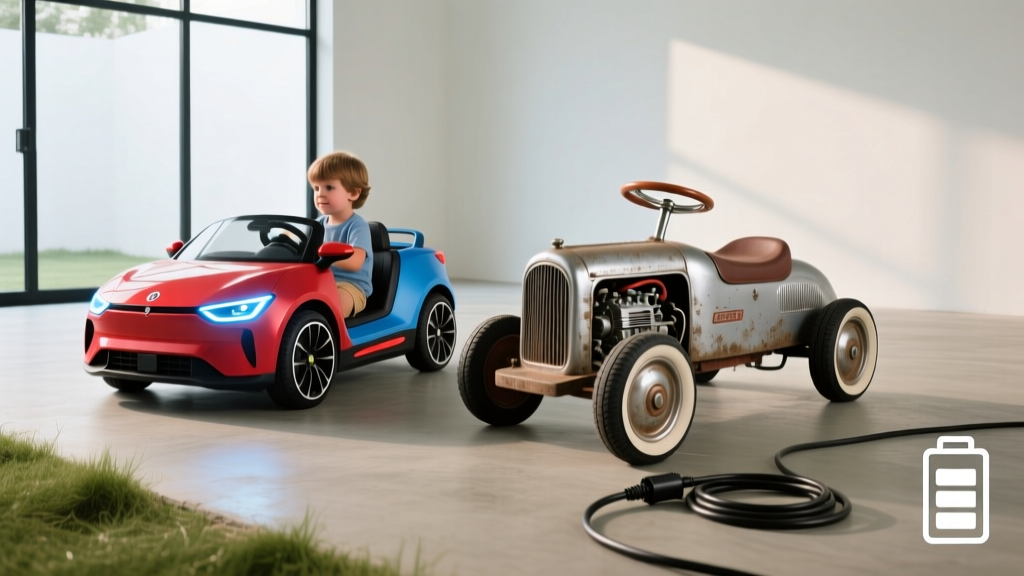
Bottom line: Children's electric cars (battery-powered ride-ons for kids ages 1–8) cost $150–$900 upfront, use 6V–24V sealed lead-acid or lithium-ion battery packs (typically 4Ah–20Ah), and deliver 45–90 minutes of run time per 8–12 hour charge. Compared to gas-powered youth ride-ons (mini ATVs, pocket bikes), they eliminate fuel costs ($0.02–$0.05 per charge vs. $2–$4 per tank of gas), remove exhaust and noise, and require near-zero drivetrain maintenance. The trade-offs: limited range, slower speeds (2–6 mph typical), and battery replacement every 2–4 years ($30–$120).
If your child will ride on paved driveways or flat yards for under an hour at a time, a 12V or 24V electric ride-on is the practical and economical choice. If you need off-road trail use, longer continuous run times, or speeds above 10 mph for an older child, a gas youth ATV may still be the better tool.
Children's Electric Cars vs. Gas Ride-Ons: Spec-by-Spec Comparison
The youth ride-on market splits into two powertrain camps: battery-electric (the dominant segment, led by brands like Power Wheels, Best Choice Products, and Peg Perego) and small-displacement gas (49cc–110cc mini ATVs and dirt bikes from brands like Coleman, Apollo, and SSR Motorsports). Here's how they stack up on the metrics that matter to parents.
| Specification | Electric Ride-On (12V–24V) | Gas Youth ATV (49cc–110cc) |
|---|---|---|
| Top Speed | 2–6 mph (up to 10 mph on 24V sport models) | 15–35 mph |
| Run Time | 45–90 minutes continuous | 1.5–3 hours per tank |
| "Refuel" / Recharge Time | 8–12 hours (standard trickle charger) | 2 minutes (fill 0.5–1.5 gal tank) |
| Energy Cost per Session | $0.02–$0.05 (electricity) | $2–$4 (87-octane gas + oil mix) |
| Noise Level | 50–65 dB (conversation level) | 85–100 dB (hearing protection needed) |
| Emissions at Point of Use | Zero | CO, NOx, unburned hydrocarbons |
| Drivetrain Maintenance | Near zero (no oil, filters, spark plugs) | Oil changes, air filters, carb tuning, chain lube |
| Typical Age Range | 1–8 years | 6–16 years |
| Base Price Range | $150–$900 | $600–$2,500 |
| Weight | 30–75 lbs | 90–200 lbs |
The comparison makes clear that these aren't really competing products for the same buyer. Electric ride-ons serve toddlers and young children in controlled environments. Gas youth ATVs serve older kids and teens who need genuine off-road capability and longer range. The overlap is narrow — mostly 6–8-year-olds on flat terrain where either could technically work.
Battery Specs, Charging, and Real-World Run Time
Understanding children's electric car batteries requires the same kW vs. kWh distinction that applies to full-size EVs, just at a smaller scale:
- Voltage (V): Determines power and top speed. Common configs are 6V (toddlers, 2 mph), 12V (ages 3–6, 3–5 mph), and 24V (ages 5–8, 5–10 mph).
- Amp-hours (Ah): The energy capacity — analogous to kWh in a full-size EV. A 12V 12Ah battery holds roughly 144 watt-hours (Wh) of energy. Higher Ah = longer run time.
- Chemistry: Most ride-ons use sealed lead-acid (SLA) batteries — heavy, affordable ($20–$50 replacement), but with 200–400 charge cycles before significant capacity loss. Premium models (Peg Perego, some aftermarket upgrades) use lithium iron phosphate (LiFePO4/LFP), which offers 1,000–2,000 cycles, 60% less weight, and faster charging (3–5 hours vs. 8–12), but at 2–3× the replacement cost ($60–$120).
| Battery Type | Voltage/Ah | Run Time | Charge Time | Cycle Life | Replacement Cost |
|---|---|---|---|---|---|
| SLA (Lead-Acid) | 6V 4.5Ah | 30–45 min | 8–10 hrs | 200–300 | $15–$25 |
| SLA (Lead-Acid) | 12V 12Ah | 60–90 min | 10–14 hrs | 250–400 | $30–$50 |
| SLA (Lead-Acid) | 24V 12Ah | 45–70 min | 10–14 hrs | 250–400 | $60–$90 |
| LFP (Lithium) | 12V 12Ah | 60–90 min | 3–5 hrs | 1,000–2,000 | $60–$90 |
| LFP (Lithium) | 24V 10Ah | 50–80 min | 3–5 hrs | 1,000–2,000 | $80–$120 |
Real-world run time caveat: Manufacturer claims assume flat, paved surfaces with a single child at the rated weight limit. Grass, gravel, hills, cold weather (below 50°F), and carrying two children can reduce run time by 30–50%. A 12V ride-on rated for 90 minutes may deliver only 45–60 minutes on a hilly grassy backyard.
Total Cost of Ownership: 3-Year Breakdown
Here's what parents actually spend over three years of typical use (roughly 3 sessions per week, ~150 sessions total), comparing a mid-range 12V electric ride-on to a 49cc gas youth ATV.
| Cost Category | 12V Electric Ride-On | 49cc Gas Youth ATV |
|---|---|---|
| Purchase Price | $350 | $900 |
| Energy / Fuel (3 years) | $15 (electricity) | $450 (gas + 2-stroke oil) |
| Battery / Engine Maintenance | $40 (1 SLA replacement) | $180 (oil, filters, spark plug, carb clean) |
| Tires / Brakes / Wear Items | $0–$20 | $60–$120 |
| Safety Gear (helmet, pads) | $40 | $80 (DOT helmet required) |
| Insurance / Registration | $0 | $0–$150 (varies by state for off-road) |
| 3-Year Total | $445–$465 | $1,670–$1,800 |
The electric ride-on wins on cost by a wide margin — roughly $1,200 less over three years. But this comparison is somewhat apples-to-oranges because the products serve different age groups and use cases. The real decision isn't "which is cheaper" but "which is appropriate for my child's age, environment, and riding goals."
Safety Data and Common Misconceptions
Children's electric cars are often perceived as completely risk-free because they're slow and battery-powered. That's partially true but not the full picture. Let's separate myth from fact:
| Myth | Fact |
|---|---|
| "They're too slow to be dangerous." | Even 3–5 mph can cause injury on hard surfaces if a child falls out or tips over. The U.S. Consumer Product Safety Commission reports thousands of ride-on toy injuries annually, mostly from tip-overs and collisions, not speed. |
| "No gas means no safety risk." | SLA batteries can vent hydrogen gas during charging. Always charge in a ventilated area. Lithium batteries carry thermal runaway risk if damaged or charged with incorrect voltage. Use only the OEM charger. |
| "My 2-year-old can handle a 12V model." | Manufacturers set age and weight limits for a reason. A 12V ride-on rated for ages 3+ with a 65-lb weight limit is not appropriate for a toddler. Start with 6V models with parent remote override. |
| "All children's electric cars are the same." | Build quality varies enormously. Budget models ($150–$250) use thin plastic, weak motors, and undersized batteries. Premium models ($400–$900) include seat belts, rubber tires, spring suspension, and parent remote control. |
| "I can leave it charging overnight unattended." | Modern chargers with auto-shutoff are generally safe, but older or aftermarket chargers can overcharge and damage batteries. Treat it like any lithium/lead-acid device: don't leave it unattended for extended periods. |
Safety best practices: Always use the included seat belt (or install one). Choose models with parent remote-override control for children under 4. Require closed-toe shoes and consider a helmet even at low speeds. Never allow riding near streets, pools, or steep slopes. Inspect battery terminals and wiring annually for corrosion.
Decision Framework: Which Children's Electric Car (or Gas Ride-On) Is Right?
Use this if-then framework to narrow your choice:
If your child is 1–3 years old → Choose a 6V electric ride-on with parent remote control. Expect $150–$250. Top speed 2 mph. Run time 30–45 minutes. Best for flat, paved surfaces with constant adult supervision.
If your child is 3–6 years old, riding on pavement or flat grass → A 12V electric ride-on is the sweet spot. Expect $250–$500. Top speed 3–5 mph. Run time 60–90 minutes. Look for models with seat belts, rubber tires, and adjustable speed settings.
If your child is 5–8 years old and wants more speed or off-road capability → A 24V electric ride-on handles mild terrain at 5–10 mph. Expect $400–$900. Run time 45–70 minutes. If they need genuine trail riding, hills, or run times over 90 minutes, consider a gas youth ATV instead.
If your child is 8+ and wants real off-road performance → Gas youth ATVs (49cc–110cc) or higher-powered electric youth dirt bikes (36V–48V, brands like Razor MX500 or KTM SX-E) become appropriate. Expect $800–$2,500. DOT helmet and riding gear mandatory. Parent supervision still essential.
If you don't have reliable outdoor charging access → Gas ride-ons eliminate the charging bottleneck. A full recharge takes 8–14 hours for SLA batteries, which can be a problem if your child rides multiple times per day or you forget to plug in after use.
If noise is a concern (suburban neighborhoods, early mornings) → Electric is the clear winner. At 50–65 dB, a children's electric car is quieter than normal conversation. Gas youth ATVs at 85–100 dB require hearing protection and will generate neighbor complaints.
What First-Time Buyers Should Know Before Purchasing
If you've never bought a children's electric car, here are the practical ownership realities that product listings don't emphasize:
Battery degradation is real. Just like full-size EVs, ride-on batteries lose capacity over time. SLA batteries typically retain 70–80% of original capacity after 2 years of regular use. You'll notice shorter run times before the battery fully fails. Budget for one replacement battery during the product's useful life.
Charge time is the biggest friction point. A 10–14 hour charge cycle means you can't quickly "top off" between rides. If your child wants to ride morning and afternoon, you either need two batteries (swap system) or a faster LFP upgrade. Many parents report this as the #1 frustration.
Weight limits are strict. Exceeding the rated weight limit strains the motor and dramatically reduces run time. A 12V ride-on rated for 65 lbs will struggle and overheat with an 80-lb child, even if they physically fit in the seat.
Aftermarket batteries and upgrades exist. Enthusiast communities (particularly on forums and YouTube) document SLA-to-LFP conversions, voltage upgrades (12V to 18V or 24V), and motor swaps. These void warranties and can create safety hazards if done improperly, but they extend run time and speed for handy parents.
Storage matters. SLA batteries self-discharge and can sulfate if stored depleted for months. If the ride-on won't be used for 4+ weeks (winter storage), charge it fully first and recharge every 4–6 weeks. LFP batteries tolerate storage better but still benefit from periodic top-ups.
Frequently Asked Questions
Can children's electric cars be used on grass and hills?
Yes, but with significant caveats. Grass increases rolling resistance by 30–50%, which reduces run time and top speed proportionally. A 12V ride-on that does 5 mph on pavement may drop to 2–3 mph on thick grass. Hills steeper than 10–15% grade will strain most 12V motors; 24V models handle inclines better. If your yard is hilly or heavily grassed, consider a 24V model or a gas-powered alternative.
How long do the batteries last before needing replacement?
SLA batteries last 2–4 years (200–400 charge cycles) under normal use. LFP batteries last 4–8 years (1,000–2,000 cycles). Factors that shorten battery life: frequent deep discharge (running to zero), leaving the battery uncharged for long periods, extreme heat during charging, and consistently overloading the weight limit.
Are there any federal tax credits for buying children's electric cars?
No. The IRS §30D Clean Vehicle Credit applies only to new qualified plug-in electric vehicles with a gross vehicle weight rating under 14,000 lbs that are manufactured primarily for use on public roads. Children's ride-on toys don't meet these criteria. Some local utilities offer rebates for EV charging equipment, but these don't apply to toy chargers either.
What's the safest age to start with a children's electric car?
Most manufacturers recommend 12–18 months for 6V models with parent remote control, and 3+ years for 12V models with child-operated pedals. The American Academy of Pediatrics advises that any motorized ride-on should be used only with direct adult supervision, appropriate safety restraints, and on surfaces free of traffic, water, and steep drop-offs.
Should I buy a Power Wheels brand or a cheaper alternative?
Fisher-Price Power Wheels commands a price premium ($300–$500 vs. $150–$300 for generic brands) but offers better build quality, more reliable batteries, wider parts availability, and stronger safety testing documentation. Budget brands (Best Choice Products, Costzon, Aosom) can be acceptable for light use but often use thinner plastics, weaker motors, and may lack UL certification on chargers. If you plan to hand the ride-on down to siblings or resell it, the Power Wheels premium typically pays for itself.