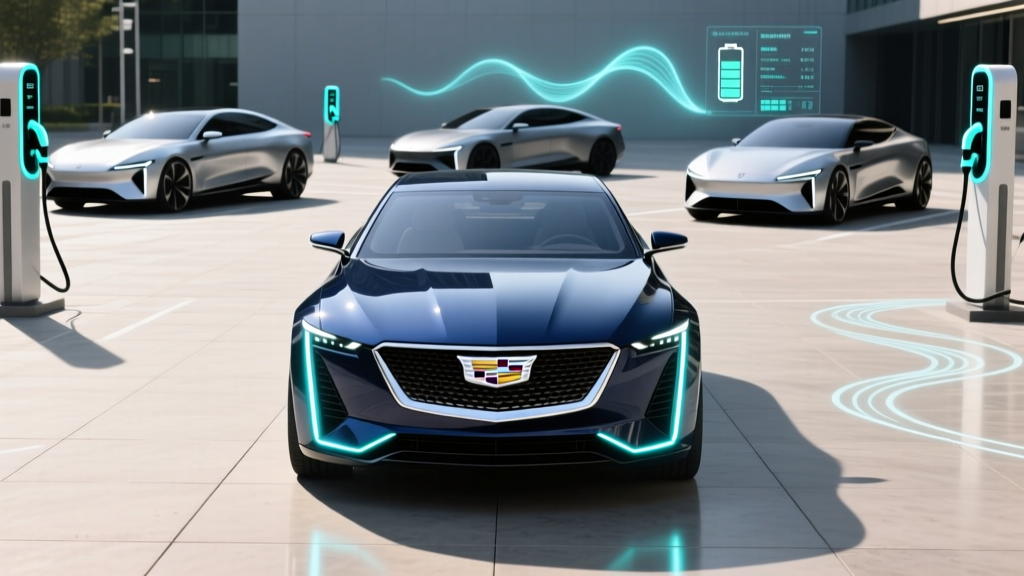
Quick Answer: Cadillac's current EV sedan offering centers on the ultra-luxury Celestiq, priced from approximately $340,000 with an EPA-estimated 300+ miles of range, a 111 kWh Ultium battery, and 200 kW DC fast charging. For mainstream buyers, Cadillac has announced additional EV sedans on the Ultium platform expected later in the decade. If you need a luxury electric sedan today under $100K, Cadillac does not yet have one — you'll want to cross-shop the BMW i5, Mercedes EQE, or Tesla Model S. If budget is no object and exclusivity matters, the Celestiq delivers hand-built craftsmanship with legitimate EV performance.
What Cadillac EV Sedans Exist in 2026?
Cadillac's electrified sedan strategy in 2026 is bifurcated: the halo Celestiq sits at the pinnacle, while the brand's broader sedan electrification remains in development. The Celestiq is not a volume play — Cadillac builds roughly two per day by hand at its Factory Zero facility in Detroit. It is a bespoke, coachbuilt luxury sedan competing with the Rolls-Royce Spectre and Bentley's electrified ambitions.
For buyers searching for a Cadillac EV sedan in the $50,000–$90,000 range, the honest answer is that Cadillac has not yet released a mainstream electric sedan as of early 2026. The CT5 and CT4 remain internal combustion vehicles. Cadillac has confirmed future Ultium-based sedans, but specific model names, pricing, and release dates remain unannounced.
Celestiq Specs: Range, Battery, and Charging
The Celestiq rides on GM's Ultium platform and packs a massive battery. Here are the exact figures you need:
| Specification | Cadillac Celestiq (2026) |
|---|---|
| EPA Range (est.) | 300+ miles |
| Real-World Range (highway/cold) | ~240–270 miles |
| Battery Capacity | 111 kWh (usable), NMC chemistry |
| Powertrain | Dual-motor AWD |
| Horsepower | ~600 hp |
| 0–60 mph | ~3.8 seconds |
| Max DC Fast Charge | 200 kW |
| 10–80% Charge Time | ~30 minutes |
| Level 2 Charging | 19.2 kW (est. ~37 mi/hr) |
| Base MSRP | ~$340,000 |
| Battery Warranty | 8 years / 100,000 miles |
Real-World Range Reality: The Celestiq's 300+ mile EPA estimate assumes moderate temperatures and mixed driving. Expect 250–270 miles on sustained highway runs at 70–80 mph. In sub-freezing weather, plan for 20–30% range reduction, bringing usable range to roughly 210–240 miles. The 111 kWh Ultium battery provides a generous buffer, but the Celestiq's 5,900+ lb curb weight and large frontal area work against efficiency. Source: fueleconomy.gov and manufacturer data.
Charging Curve Realities
The Celestiq peaks at 200 kW on a compatible DC fast charger, but like all EVs, it does not sustain peak rate throughout the session. Expect the charge rate to taper significantly above 60% state of charge (SoC). A typical 10–80% session takes approximately 30 minutes at a 350 kW-class charger. On a 150 kW station, expect roughly 40–45 minutes. Preconditioning the battery via the navigation system is essential for achieving advertised charge speeds — arriving at a fast charger without preconditioning can add 10+ minutes to your session.
Celestiq vs. Gas Luxury Sedans: Cost Comparison
At this price tier, total cost of ownership looks different than a mainstream EV. Buyers here aren't optimizing for fuel savings — they're optimizing for exclusivity, technology, and driving experience. Still, the numbers tell an interesting story.
| 5-Year Cost Factor | Cadillac Celestiq (EV) | Bentley Flying Spur (Gas) |
|---|---|---|
| Purchase Price | $340,000 | $225,000 |
| Fuel/Energy (75K miles) | $4,500 (home L2 @ $0.15/kWh) | $18,750 (14 MPG, $3.50/gal) |
| Maintenance (5 yr) | $3,000 | $12,000+ |
| Insurance (avg/yr × 5) | $30,000 | $22,500 |
| Depreciation (est. 5 yr) | $100,000+ | $90,000+ |
| Estimated 5-Year Total | $477,500+ | $378,250+ |
The Celestiq costs more to own over five years, primarily due to its higher purchase price and steeper insurance premiums. However, maintenance savings are genuine — no oil changes, no transmission fluid, fewer brake replacements thanks to regenerative braking. For ultra-luxury buyers, the value proposition is the hand-built experience and EV silence, not the spreadsheet.
Federal Tax Credit: Does the Celestiq Qualify?
No. Under current IRS §30D rules, the federal EV tax credit has an MSRP cap of $55,000 for sedans. The Celestiq, at $340,000, exceeds this cap by a factor of six. Additionally, buyer income limits apply ($150K single / $300K joint for the modified adjusted gross income). Ultra-luxury EV buyers should not factor any federal incentive into their purchase decision.
§30D Tax Credit Requirements (2026):
- Sedan MSRP must not exceed $55,000
- Buyer MAGI: $150K single / $225K head of household / $300K joint
- Battery critical minerals and component sourcing thresholds
- Vehicle must be assembled in North America
- Point-of-sale transfer available at participating dealers
Consult a tax professional for your specific eligibility. Rules subject to change.
Ownership Realities: What First-Time EV Buyers Must Know
If you're considering any luxury EV sedan — Celestiq or a future mainstream Cadillac — these ownership factors apply universally:
Home Charging Is Non-Negotiable for Convenience
The Celestiq supports 19.2 kW Level 2 AC charging. On a dedicated 100-amp circuit with a hardwired wall connector, you'll recover approximately 37 miles of range per hour, or a full charge overnight from 20% SoC. Installation costs for a 100-amp circuit typically range from $2,500 to $5,000, potentially more if your home's electrical panel requires an upgrade to 200-amp service. Without home charging, you'll rely on public DC fast charging, which at $0.35–$0.50/kWh costs significantly more per mile than home charging and adds time to your routine.
Cold-Weather Range Loss Is Real
NMC Ultium batteries in the Celestiq lose capacity and efficiency in freezing temperatures. Battery chemistry slows ion movement, and cabin heating draws significant energy (unlike a gas car, which uses waste heat). Expect 20–30% range reduction in sustained sub-32°F driving. The Celestiq's heat pump system helps, but physics wins. If you live in Minnesota or Maine and need every mile of range, factor this into trip planning.
Insurance Premiums Are Higher
EVs, particularly high-value ones, carry elevated insurance rates. The Celestiq's bespoke construction, aluminum and carbon fiber body panels, and $340K+ value push premiums to $5,000–$8,000+ annually depending on your profile. Get quotes before purchase.
Myths vs. Facts About Cadillac's EV Sedans
| Myth | Fact |
|---|---|
| "Cadillac has a full lineup of EV sedans" | Only the Celestiq is currently available. Mainstream EV sedans are announced but not yet on sale. |
| "The Celestiq qualifies for the $7,500 tax credit" | No. The §30D sedan MSRP cap is $55,000. The Celestiq is $340,000. |
| "300 miles of range means I'll always get 300 miles" | EPA estimates assume ideal conditions. Highway, cold weather, and terrain reduce real-world range by 15–30%. |
| "EV batteries need replacing every few years" | GM warrants the Ultium battery for 8 years/100,000 miles with a capacity retention threshold. Most EV batteries outlast their vehicles. |
| "I can charge at any public station" | The Celestiq uses the CCS1 connector (verify NACS adapter availability with your dealer). Not all networks are equally reliable — plan routes around proven stations. |
Decision Framework: Is a Cadillac EV Sedan Right for You?
Choose the Cadillac Celestiq if:
- Budget exceeds $350,000 and you want a hand-built, exclusive luxury EV sedan
- You value Ultium platform technology, 600 hp, and 300+ mile range
- You have reliable home Level 2 charging
- Exclusivity and American craftsmanship matter more than depreciation
Wait for a future mainstream Cadillac EV sedan if:
- Your budget is $50,000–$90,000
- You want Cadillac styling with Ultium technology at volume pricing
- Tax credit eligibility matters to your purchase decision
Cross-shop these alternatives today if you need a luxury EV sedan now:
- BMW i5 — from ~$70,000, EPA 295 miles, refined driving dynamics
- Mercedes-Benz EQE — from ~$75,000, EPA 305 miles, tech-forward interior
- Tesla Model S — from ~$80,000, EPA 402 miles, Supercharger network access
- Lucid Air — from ~$87,000, EPA 419+ miles, class-leading efficiency
Frequently Asked Questions
Does Cadillac make an affordable EV sedan?
Not as of early 2026. The only Cadillac EV sedan currently in production is the Celestiq at ~$340,000. Cadillac has confirmed future Ultium-based sedans are in development, but pricing and release dates have not been announced. The Cadillac Lyriq and Optiq are SUVs, not sedans.
What connector does the Celestiq use for charging?
The Celestiq uses the CCS1 (Combined Charging System) connector for DC fast charging and J1772 for Level 2 AC charging. GM has committed to NACS (Tesla-style) adoption across its lineup, but verify adapter availability and Supercharger network access directly with your Cadillac dealer, as transition timelines vary by model.
How long does it take to charge the Celestiq at home?
On a 19.2 kW Level 2 home charger (requires a dedicated 100-amp circuit), the Celestiq adds roughly 37 miles of range per hour. A full charge from 10% to 100% takes approximately 7–8 hours. On a standard 48-amp / 11.5 kW Level 2 setup, expect closer to 12–14 hours for a full charge and roughly 22 miles of range per hour.
Is the Celestiq self-driving?
No. The Celestiq offers Super Cruise, which is an SAE Level 2 driver-assistance system. It enables hands-free driving on compatible mapped highways (over 750,000 miles of roads in North America), but the driver must remain attentive, eyes on the road, and ready to take over at any time. This is not autonomous driving — it is supervised driver assistance. Only Level 4 services like Waymo operate without a human driver.
What is the Celestiq's real-world range in winter?
In sustained freezing temperatures (below 32°F), expect the Celestiq's real-world range to drop to approximately 210–240 miles from its 300+ mile EPA estimate. Using seat heaters and steering wheel heat instead of cabin air heating can recover some range. Preconditioning the battery while plugged in also helps preserve capacity.