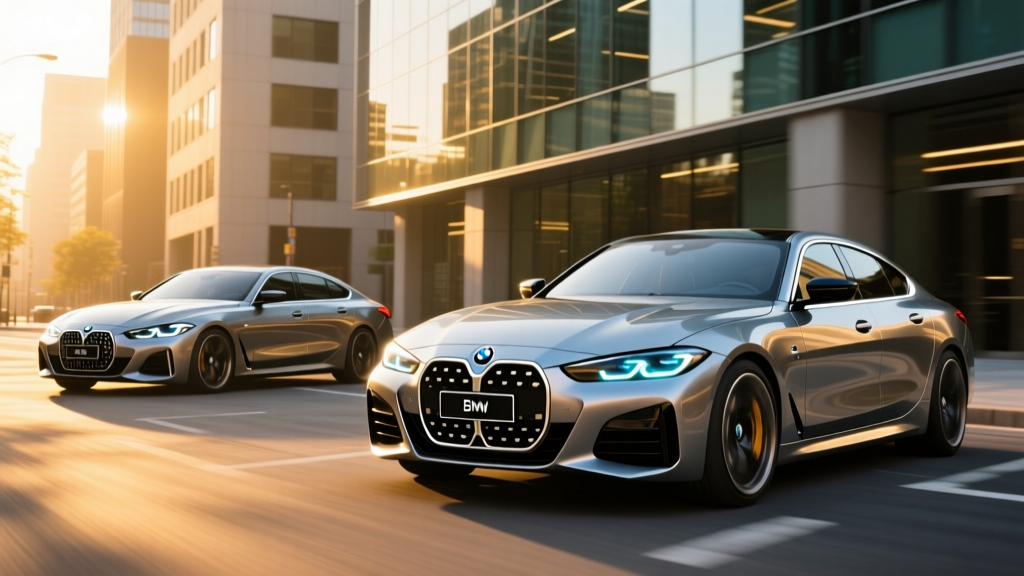
If you're shopping for a BMW electric sedan, you have three choices in 2026: the compact i4 (EPA range up to 307 miles, starting ~$52,200), the midsize i5 (up to 295 miles, starting ~$57,900), or the flagship i7 (up to 318 miles, starting ~$105,700). All three use BMW's fifth-generation eDrive powertrain with NMC battery chemistry, DC fast charging up to 205–250 kW, and Level 2 home charging at up to 11 kW. The right pick depends on your budget, back-seat needs, and whether you can install a Level 2 home charger.
Quick Verdict
Best value: BMW i4 eDrive40 — 307 mi EPA, ~$52k, practical hatchback cargo.
Best daily luxury: BMW i5 eDrive40 — 295 mi EPA, more room, newer platform.
Best flagship: BMW i7 xDrive60 — 318 mi EPA, executive-level comfort, but six-figure pricing.
Key caveat: None of these currently qualify for the full $7,500 federal §30D tax credit due to battery-sourcing requirements. Check the latest IRS rules before purchasing.
BMW Electric Sedan Lineup: Side-by-Side Specs
Here's how the three BMW electric sedans compare on the numbers that matter most for ownership. All figures reflect 2026 model-year data.
| Spec | BMW i4 eDrive40 | BMW i5 eDrive40 | BMW i7 xDrive60 |
|---|---|---|---|
| EPA Range | 307 mi | 295 mi | 318 mi |
| Battery (usable) | 81.5 kWh (NMC) | 81.2 kWh (NMC) | 101.7 kWh (NMC) |
| Horsepower | 335 hp | 335 hp | 536 hp |
| 0–60 mph | 5.5 sec | 5.7 sec | 4.5 sec |
| Max DC Fast Charge | 205 kW | 205 kW | 250 kW |
| 10–80% DCFC Time | ~31 min | ~30 min | ~28 min |
| Level 2 Rate (AC) | 11 kW | 11 kW | 11 kW |
| MPGe (combined) | 99 MPGe | 96 MPGe | 82 MPGe |
| Base MSRP | $52,200 | $57,900 | $105,700 |
| Drivetrain | RWD | RWD | AWD |
| Cargo Volume | 16.6 cu ft | 17.3 cu ft | 17.7 cu ft |
| Battery Warranty | 8 yr / 100,000 mi | 8 yr / 100,000 mi | 8 yr / 100,000 mi |
Sources: fueleconomy.gov, BMW USA official specifications.
Real-World Range: What the EPA Sticker Doesn't Tell You
The EPA numbers above are measured under controlled conditions. In real-world driving, expect variation based on speed, temperature, and terrain.
Real-World Range Expectations
Highway (70–80 mph): Subtract 10–15% from EPA. An i4 rated at 307 mi will deliver roughly 260–275 mi on a flat interstate run.
Cold weather (below 32°F): Subtract 20–30%. The i4 may drop to 215–245 mi in freezing temps, even with BMW's heat pump and battery preconditioning.
City / moderate climate: You may slightly exceed EPA thanks to regenerative braking and lower average speeds.
BMW includes a heat pump on all three models, which helps in cold weather by reducing the energy needed for cabin heating. Preconditioning the battery while plugged in — using the iDrive system or the BMW app — also recovers range by warming the pack before departure and before DC fast charging sessions.
Charging at Home and on the Road
All three BMW electric sedans use the CCS1 connector for DC fast charging and the J1772 connector for Level 2 AC charging. BMW has not adopted the Tesla NACS port on these models as of the 2026 model year, though adapters may be available.
| Charging Level | Power | Miles Added per Hour | Typical Use |
|---|---|---|---|
| Level 1 (120V outlet) | ~1.4 kW | ~3–4 mi/hr | Emergency / trickle top-up |
| Level 2 (240V, 48A) | 11 kW | ~30–35 mi/hr | Home / workplace daily charging |
| DC Fast (peak) | 205–250 kW | ~150–190 mi in 10 min | Road trips, highway corridors |
Home Charging Setup Costs
A Level 2 home charger is essential for practical BMW EV ownership. Here's what installation typically costs:
| Component | Estimated Cost |
|---|---|
| Level 2 charger (e.g., ChargePoint Home Flex, BMW Wallbox) | $400–$700 |
| Electrician labor (240V/48A circuit run) | $500–$2,000 |
| Permit / inspection | $50–$200 |
| Electrical panel upgrade (if needed) | $1,500–$3,500 |
| Total (no panel upgrade) | $950–$2,900 |
| Total (with panel upgrade) | $2,450–$6,400 |
Most BMW owners will fully charge overnight on Level 2. An i4 with an 81.5 kWh battery charging at 11 kW takes roughly 7.5 hours from 10% to 100% — plug in at bedtime, wake up full. If your daily commute is under 60 miles, even a standard 120V outlet may suffice, but it's painfully slow for larger batteries.
DC Fast Charging Reality
The 205–250 kW peak charge rate is exactly that — a peak. BMW's charge curve tapers significantly above 80% state of charge to protect battery longevity. Expect the 10–80% sprint to take 28–31 minutes on a compatible 350 kW charger (like Electrify America or Ionity stations). Charging from 80–100% can add another 20–25 minutes. For road trips, plan stops around the 10–80% window to minimize time at the charger.
BMW Electric Sedan vs. Gas and Hybrid Alternatives
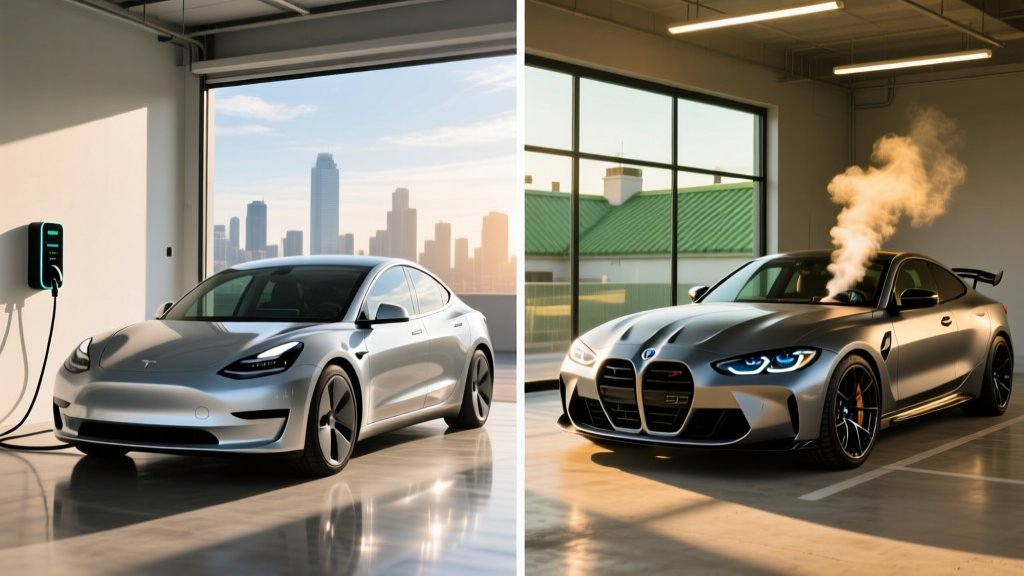
How do BMW's EVs stack up against their internal-combustion and hybrid siblings?
| Metric | BMW i4 eDrive40 (EV) | BMW 430i Gran Coupe (Gas) | BMW 530i (Gas) |
|---|---|---|---|
| Base MSRP | $52,200 | $48,300 | $58,900 |
| EPA Combined | 99 MPGe | 30 MPG | 30 MPG |
| "Fuel" cost per mile | ~$0.04 (home) / ~$0.12 (DCFC) | ~$0.14 ($3.50/gal) | ~$0.14 ($3.50/gal) |
| Annual fuel/energy (12k mi) | $480–$1,440 | $1,680 | $1,680 |
| Maintenance (annual avg) | ~$300 | ~$700 | ~$800 |
| 0–60 mph | 5.5 sec | 6.2 sec | 6.1 sec |
On a pure cost-per-mile basis, the BMW i4 wins decisively when charging at home. At the national average residential electricity rate of ~$0.16/kWh, the i4's 3.0 mi/kWh efficiency translates to roughly $0.05 per mile. Gasoline at $3.50/gallon and 30 MPG comes to $0.12 per mile. Over 5 years and 60,000 miles, that's a fuel savings of roughly $4,200 for the EV — though the i4's higher purchase price partially offsets that.
The tradeoff: EVs typically carry higher insurance premiums (10–20% more than equivalent gas models) and may depreciate faster in the current market. Factor those in when calculating total cost of ownership.
Total 5-Year Ownership Cost Breakdown
| Cost Category (5 yr / 60k mi) | BMW i4 eDrive40 | BMW 430i Gran Coupe |
|---|---|---|
| Purchase price (MSRP) | $52,200 | $48,300 |
| Federal tax credit (§30D) | $0–$7,500* | $0 |
| Estimated depreciation | $22,000 | $18,000 |
| Fuel / energy | $2,400–$7,200 | $8,400 |
| Maintenance | $1,500 | $3,500 |
| Insurance (est.) | $10,500 | $8,500 |
| Estimated 5-yr total | $35,900–$42,700 | $38,400 |
*The federal §30D tax credit is subject to MSRP caps (sedans: $55,000), buyer income limits, and critical-mineral/battery-sourcing requirements. As of 2026, most BMW EVs do not meet the sourcing criteria for the full credit. Always verify current eligibility at irs.gov.
Federal Tax Credit and Incentives: What You Actually Get
§30D Clean Vehicle Credit Checklist (2026)
- MSRP cap: Sedans must be ≤$55,000. The i4 eDrive40 qualifies; i5 and i7 do not.
- Buyer income cap: AGI ≤$150k (single) / ≤$300k (joint).
- Battery sourcing: Critical minerals and battery components must meet phased-in thresholds from qualifying trade partners. Most BMW EVs currently fail this test.
- Point-of-sale transfer: If eligible, the credit can be applied at the dealer as an upfront discount.
- State incentives: Vary widely. Check your state's energy office or AFDC incentive database for local rebates.
Bottom line: Don't count on the federal credit for a BMW electric sedan purchase in 2026. Build your budget without it, and treat any credit as a bonus.
Common Misconceptions About BMW EVs
| Myth | Fact |
|---|---|
| "The battery will need replacing in 5 years." | BMW warranties the battery for 8 years/100,000 miles at ≥70% capacity. Real-world data shows NMC packs losing ~10–15% over 150k+ miles with normal use. |
| "You can't road-trip an EV." | The CCS network (Electrify America, EVgo) covers most US interstates. A 600-mile trip in an i4 requires two 25-minute DC fast stops. |
| "EVs are worse in winter." | Range drops 20–30% in freezing temps, but preconditioning and heat pumps mitigate this. Remote cabin heating while plugged in is a comfort advantage gas cars can't match. |
| "Maintenance-free means no service." | Tires, cabin filters, brake fluid, wipers, and the 12V battery still need attention. But no oil changes, spark plugs, or transmission fluid. |
| "Level 2 driving assist means self-driving." | BMW's Driving Assistant Professional is an SAE Level 2 system. You must keep your hands near the wheel and eyes on the road at all times. |
Decision Framework: Which BMW Electric Sedan Is Right for You?
Choose the BMW i4 if:
- Your budget is under $60k and you want the best value in BMW's EV lineup.
- You primarily commute solo or with one passenger.
- You want a hatchback-style cargo area (16.6 cu ft with a wide liftgate).
- You can charge at home and your daily driving is under 100 miles.
Choose the BMW i5 if:
- You need genuine rear-seat comfort for adults on longer drives.
- You want the latest BMW iDrive 8.5 interface and a slightly more refined ride.
- Your budget allows $58k–$75k depending on options and trim.
- You prefer a traditional sedan trunk profile.
Choose the BMW i7 if:
- Budget is not a constraint ($105k+ before options).
- You want flagship luxury with executive rear seating, theater screen, and AWD.
- You value the longest range in the lineup (318 mi EPA) and the fastest DC charging (250 kW).
- You understand this is a luxury purchase, not a cost-savings play.
Skip all three and consider a PHEV (like the BMW 530e) if:
- You lack reliable home charging access.
- You frequently drive 400+ mile routes through areas with sparse DC fast-charging infrastructure.
- You want electric-only commuting (up to ~35 mi) with gas-engine range flexibility.
What First-Time BMW EV Buyers Should Know
1. Home charging is non-negotiable for satisfaction. Relying solely on public DC fast charging is expensive ($0.35–$0.50/kWh at many stations) and time-consuming. Before purchasing, confirm you can install a 240V/48A circuit in your garage or driveway.
2. Plan for charging-curve taper. The "205 kW" peak lasts only in a narrow state-of-charge window (roughly 10–40%). Above 60%, charging slows substantially. On road trips, target 10–80% stops and avoid charging to 100% unless it's your final destination.
3. Insurance will cost more. Get quotes before committing. BMW EVs carry 10–20% higher premiums than gas equivalents due to repair costs and battery replacement risk. Some insurers offer EV-specific discounts.
4. BMW's Connected Charging ecosystem works well. The iDrive navigation system routes you through charging stations, preconditions the battery automatically when a DC charger is your destination, and shows real-time charger availability. Use it.
5. Battery health monitoring is built in. The iDrive system displays State of Health (SoH) data. BMW's 8-year/100,000-mile battery warranty covers capacity loss below 70%. In practice, most BMW EV batteries retain 85–90% capacity at the 100k-mile mark based on fleet data.
Frequently Asked Questions
Does any BMW electric sedan qualify for the $7,500 federal tax credit?
As of 2026, most BMW electric sedans do not qualify for the full §30D credit due to battery-sourcing and critical-mineral requirements. The i4 eDrive40 falls under the $55,000 MSRP cap for sedans, but sourcing rules remain a barrier. Check the IRS clean vehicle credit page and fueleconomy.gov for the latest eligibility list before purchasing.
How long does a BMW EV battery last before replacement?
BMW warranties its high-voltage batteries for 8 years or 100,000 miles (whichever comes first) with a capacity-retention threshold of 70%. Real-world data from BMW's global EV fleet suggests most NMC packs retain 85–90% capacity at 100,000 miles. Full battery replacement, if ever needed out of warranty, costs $15,000–$25,000 depending on the model.
Can I use Tesla Superchargers with a BMW i4, i5, or i7?
Not natively. BMW's electric sedans use the CCS1 connector. Tesla's NACS Supercharger network requires a CCS-to-NACS adapter, which BMW has not officially endorsed. Some third-party adapters exist, but compatibility and safety vary. The broader Electrify America, EVgo, and ChargePoint CCS networks remain the primary DC fast-charging option.
Is the BMW i4 cheaper to own than a gas BMW 4 Series?
Over 5 years, the i4 can be cheaper to own if you charge primarily at home and drive under 15,000 miles per year. Energy savings (~$4,200 over 5 years) and lower maintenance (~$2,000 savings) help offset the higher purchase price and insurance premiums. Without the federal tax credit, the break-even point is close — making it a near-wash financially, with the EV winning on driving refinement and daily convenience.
What's the best home charger for a BMW electric sedan?
The BMW Wallbox (~$550) integrates cleanly with the BMW app, but the ChargePoint Home Flex ($500–$650) offers adjustable amperage (16A–50A) and a longer cable. Both deliver up to 11 kW on a 48A circuit. Whichever you choose, hire a licensed electrician to install a dedicated 240V/60A breaker circuit (the charger draws 48A continuous, which requires a 60A breaker per NEC derating rules).