Quick Answer: In 1900, electric cars were the best-selling vehicle type in the United States — outselling both gasoline and steam-powered cars. The 1900 electric car market was led by models like the Baker Electric, Columbia Electric, and Detroit Electric, which offered 30–50 miles of range at speeds of 12–20 mph, priced between $850 and $3,000 (roughly $30,000–$105,000 in 2026 dollars). Electric vehicles held about 38% of the U.S. auto market in 1900, compared to 22% for gasoline cars and 40% for steam. They lost dominance within 15 years due to cheap Texas oil, the electric starter (1912), and Henry Ford's mass-produced Model T. Today's EVs deliver 250–400+ miles of EPA range at a fraction of the cost-per-mile — a complete reversal of the 1900 equation.
The 1900 Electric Car Market: A Snapshot
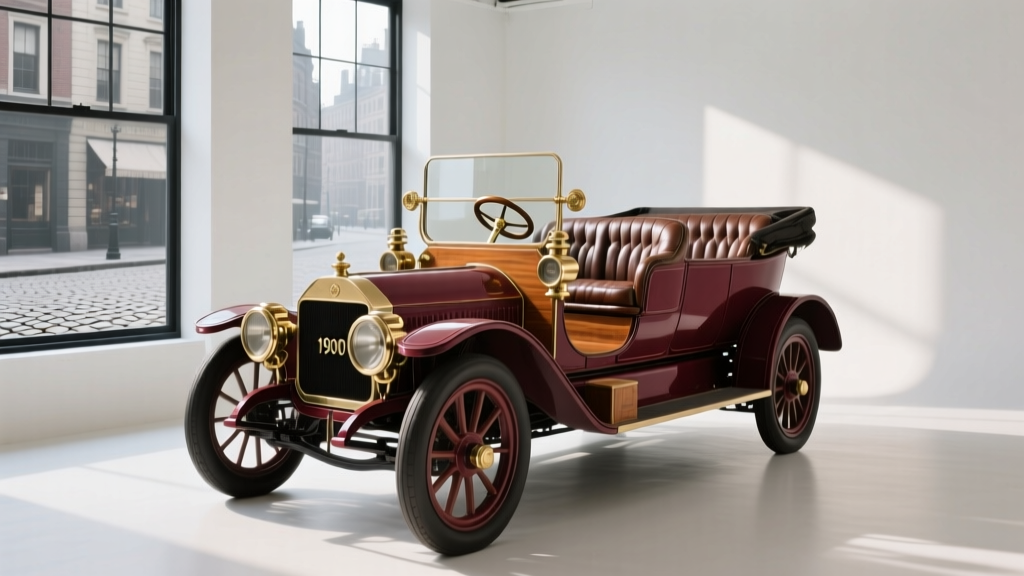
If you had walked into an American auto showroom in 1900, the most refined, quiet, and easy-to-operate vehicles on the floor were electric. At the turn of the 20th century, the automobile was still a novelty, and three propulsion technologies competed for dominance: steam, gasoline, and electricity.
The 1900 U.S. automobile census recorded approximately 4,192 vehicles produced that year. Of those, 1,575 were electric (roughly 38%), 936 were gasoline (22%), and 1,681 were steam (40%). Electric vehicles were particularly dominant in cities like New York, Boston, and Chicago, where paved roads and short travel distances played to their strengths.
Key manufacturers included:
- Baker Motor Vehicle Company (Cleveland) — the best-selling EV maker in 1900, producing the Baker Electric Runabout with ~50 miles of range
- Electric Vehicle Company / Columbia (Hartford) — the largest auto manufacturer in the U.S. in 1900 by unit volume, producing both electric cabs and private cars
- Detroit Electric (Detroit) — launched in 1907, later became the most famous early EV brand, eventually selling over 35,000 vehicles through the 1930s
- Riker Electric (Brooklyn) — produced competitive electric runabouts and delivery wagons
1900 Electric Car Specs vs. 2026 EVs: The Numbers
The technological gap between a 1900 electric car and a 2026 model is staggering. Here's a direct specification comparison using representative models from each era.
| Specification | 1900 Baker Electric Runabout | 2026 Tesla Model Y (Long Range AWD) | 2026 Hyundai Ioniq 5 (Long Range RWD) |
|---|---|---|---|
| Battery chemistry | Lead-acid | NMC (nickel manganese cobalt) | NMC |
| Battery capacity | ~8–12 kWh (estimated) | 75 kWh (usable) | 77.4 kWh (usable) |
| Range | 30–50 miles | 320 miles (EPA) | 361 miles (EPA) |
| Top speed | 12–14 mph | 125 mph (electronically limited) | 115 mph |
| 0–60 mph | N/A (never reached 60) | 4.8 seconds | 7.2 seconds |
| Charging / refueling time | 8–12 hours (home AC) | ~25 min (10–80% at 250 kW DC) | ~18 min (10–80% at 235 kW DC) |
| Weight | ~2,600 lbs (batteries ~1,000 lbs) | 4,363 lbs | 4,431 lbs |
| Horsepower | ~3.5 HP | 384 HP | 225 HP |
| Original price | $850–$1,200 (~$32,000–$45,000 adjusted) | $46,630 MSRP | $46,650 MSRP |
| Warranty | None | 8 yr / 120,000 mi battery | 10 yr / 100,000 mi battery |
The energy density improvement is the most dramatic figure. A 1900 lead-acid battery stored roughly 30–40 watt-hours per kilogram. A 2026 NMC lithium-ion cell stores approximately 250–275 Wh/kg — a 7x improvement in energy density. That's why a modern EV carries a 75+ kWh battery weighing ~1,000 lbs, while a 1900 EV carried a ~10 kWh battery that also weighed ~1,000 lbs.
Why the 1900 Electric Car Won (Initially)
Electric vehicles in 1900 held genuine advantages that made them the preferred choice for many buyers, particularly urban professionals and women drivers:
No hand-cranking. Early gasoline cars required a dangerous hand crank to start. Kickback from the crank could — and did — break arms. Electric cars started instantly with a switch. The electric starter motor didn't appear in gas cars until Cadillac introduced it in 1912.
Quiet and clean. No exhaust smoke, no engine vibration, no gear-grinding. In an era before mufflers and refined engines, gas cars were loud, smelly, and dirty. Electric cars were marketed as the civilized alternative.
Simple operation. No manual transmission, no choke, no spark advance lever. An electric car had a single speed controller — essentially a steering tiller and a throttle lever. This made them accessible to drivers who didn't want to master complex mechanical controls.
Adequate for city life. Most driving in 1900 happened within 20 miles of home, on paved urban streets. The 30–50 mile range of an electric car was sufficient for daily errands, social calls, and short commutes. Roads between cities were unpaved and often impassable, making long-distance travel impractical in any vehicle.
Why Electric Cars Lost by 1915 — and Why Gas Won
The 1900 electric car's advantages eroded rapidly due to a convergence of technological and economic shifts:
Cheap gasoline. The discovery of large petroleum reserves in Texas (Spindletop, 1901) drove gasoline prices down dramatically. Fuel became abundant and affordable, eliminating one of the gas car's biggest drawbacks.
The electric starter (1912). Cadillac's introduction of the electric starter eliminated the dangerous hand crank. Suddenly, gas cars were nearly as easy to start as electric ones.
The Model T (1908). Henry Ford's mass-production techniques brought the Model T's price down to $650 by 1912 and eventually to $260 by 1925. Electric cars, still hand-built in small numbers, couldn't compete. A Baker Electric cost $2,000+ in 1910 — several times the price of a Model T.
Improved rural roads and the desire for distance. As roads improved and people wanted to travel between towns, the 40-mile range of an electric car became a hard limitation. Gasoline cars could refuel in minutes and travel 150+ miles.
Electricity access was limited. Outside major cities, electrical infrastructure barely existed in 1910. Gasoline could be delivered anywhere by rail and wagon. This is an eerily relevant parallel to modern charging-desert concerns in rural areas.
1900 vs. 2026 Ownership Costs: The Economics Flipped
In 1900, the electric car was the premium product with lower operating costs but a high purchase price. In 2026, the purchase-price gap has narrowed dramatically, and the operating-cost advantage of EVs is backed by real data.
| Cost Category | 1900 Electric Car | 1900 Gas Car (Model T era) | 2026 EV (avg. mid-size) | 2026 Gas Car (avg. mid-size) |
|---|---|---|---|---|
| Purchase price | $850–$2,500 | $650–$850 | $42,000–$52,000 | $32,000–$42,000 |
| Fuel/energy cost per mile | ~$0.01 (electricity) | ~$0.02 (gasoline) | ~$0.04–$0.06 (home charging) | ~$0.12–$0.16 (gas at $3.50/gal, 28 MPG) |
| Annual fuel/energy (12,000 mi) | ~$120 | ~$240 | ~$480–$720 | ~$1,440–$1,920 |
| Maintenance per year | Minimal (no engine) | Moderate (oil, plugs, belts) | ~$300–$500 | ~$800–$1,200 |
| Federal tax credit | None | None | Up to $7,500 (§30D, if eligible) | None |
| 5-year fuel savings vs. gas | — | — | ~$4,800–$7,200 savings for EV | |
According to fueleconomy.gov, the average 2026 EV costs approximately $0.04–$0.06 per mile to charge at home (at the U.S. average electricity rate of ~$0.17/kWh and an efficiency of 3–4 miles per kWh). A comparable gas car at $3.50/gallon and 28 MPG combined costs $0.125/mile. That's a 2–3x fuel cost advantage for the EV — remarkably similar to the ratio in 1900, but now applied to vastly more vehicles and miles driven.
For the federal §30D clean vehicle credit, eligibility in 2026 depends on MSRP caps ($80,000 for SUVs/pickups/vans, $55,000 for sedans), buyer income limits ($300,000 joint / $150,000 single AGI), and critical-mineral and battery-component sourcing requirements. The credit can be applied at point of sale as a price reduction. Always verify current-year rules with the IRS or a tax professional, as sourcing requirements tighten annually.
What the 1900 Electric Car Teaches Today's EV Buyers
The rise and fall of the early electric car offers practical lessons that remain directly relevant to anyone considering an EV purchase in 2026.
Decision Framework: Is an EV Right for You?
- IF you have access to home charging (garage, driveway, or workplace Level 2) AND your daily driving is under 80 miles round-trip → THEN an EV is almost certainly your lowest-cost, lowest-hassle option. You'll save $1,000–$1,500/year on fuel and maintenance vs. gas.
- IF you live in an apartment without charging access AND rely solely on public charging → THEN a PHEV (plug-in hybrid) may be a better fit. You get 25–45 miles of electric-only range for daily errands plus a gas engine for longer trips, eliminating range and charging-access concerns.
- IF you regularly drive 300+ miles in a single day AND live in an area with sparse DC fast-charging infrastructure → THEN consider a hybrid or wait for the charging network to mature in your region. Check the AFDC charging station locator to map your routes.
- IF you experience extreme cold winters (below 10°F regularly) → THEN budget for 20–30% range loss in winter, choose an EV with a heat pump (standard on most 2026 models), and oversize your battery relative to your daily needs. An EV with 320 miles of EPA range will deliver ~225–255 real-world miles in deep cold.
The 1900 electric car failed not because the technology was fundamentally flawed, but because infrastructure and economics shifted against it. Gasoline became cheap and ubiquitous; electricity didn't. Today, the situation is inverted: electricity is available at every home, gasoline costs 3x more per mile, and battery technology has improved by a factor of 7 in energy density.
Common Misconceptions: 1900 vs. Today
| Myth | Fact |
|---|---|
| "EVs are a new, unproven technology" | Electric cars predate gasoline cars. The first practical EV was built in the 1880s. They dominated the 1900 auto market. The technology is 140+ years old — the batteries are what's new. |
| "EVs always had range problems" | In 1900, 40 miles of range was adequate because roads were terrible and no one drove far. The problem wasn't range — it was that gas cars could go anywhere once roads improved. Today's 300+ mile EPA range covers 95%+ of daily driving needs. |
| "Batteries won't last" | 2026 EV batteries are warranted for 8–10 years and 100,000–150,000 miles, with a guaranteed capacity retention of 70% or more. Real-world data from high-mileage Tesla and Hyundai fleets shows most NMC batteries retain 85–90% capacity at 100,000 miles. LFP (lithium iron phosphate) batteries in models like the Tesla Model 3 RWD and base Ioniq 5 show even slower degradation. |
| "EVs are more expensive to own" | Higher purchase price is offset by the §30D credit (up to $7,500), $1,000–$1,500/year in fuel savings, and significantly lower maintenance (no oil changes, fewer brake replacements due to regenerative braking, no transmission fluid). A Consumer Reports analysis found lifetime maintenance costs for EVs are approximately half those of gas vehicles. |
| "I need a gas car for road trips" | A 2026 EV with 320+ miles of EPA range and 200+ kW DC fast charging can add 180–220 miles in a 20-minute stop. Plan charging around rest breaks and you'll arrive just as rested as in a gas car. For the 2–3 road trips per year that are genuinely inconvenient, renting a gas car is cheaper than year-round gasoline costs. |
First-Time EV Buyer Essentials: What No One Tells You
If the history of the 1900 electric car teaches anything, it's that infrastructure and daily usability determine whether an EV works in your life. Here's what matters in 2026:
Home charging is non-negotiable for the best experience. A Level 2 home charger (240V, 32–48 amps / 7.7–11.5 kW) adds 25–40 miles of range per hour of charging. Overnight, that's a full battery every morning. Installation costs range from $500 (simple outlet near the panel) to $3,000+ (long wire runs, panel upgrades). Get a quote from a licensed electrician before buying the car.
kW vs. kWh — know the difference. kW (kilowatts) measures power — how fast energy flows, like water pressure. kWh (kilowatt-hours) measures energy — how much is stored, like the size of the tank. A 77.4 kWh battery charged at 11.5 kW takes about 6.7 hours from empty. That same battery charged at a 250 kW DC fast charger can go from 10% to 80% in roughly 20 minutes.
Real-world range is less than the EPA sticker. Expect 85–95% of EPA range in mild weather at city speeds, 75–85% at sustained 75 mph highway speeds, and 65–80% in cold weather (below 30°F) depending on whether the vehicle has a heat pump. A 361-mile EPA rating (like the Ioniq 5 Long Range RWD) translates to roughly 305–325 real-world highway miles in summer and 235–290 in winter.
Charging slows above 80%. DC fast charging follows a curve: peak speed (e.g., 235 kW) is sustained only from roughly 10% to 50–60% state of charge, then tapers significantly. The 10–80% time is the useful metric — ignore claims based on "peak" kW alone.
Insurance can cost 15–25% more. EVs generally have higher insurance premiums due to repair costs and battery replacement pricing. Get a quote before purchasing. Some insurers offer EV-specific discounts that partially offset this.
Frequently Asked Questions
Were electric cars really popular in 1900?
Yes. Electric vehicles accounted for approximately 38% of all automobiles sold in the U.S. in 1900, making them the single most popular propulsion type that year (steam was 40%, gasoline 22%). By 1900, the Electric Vehicle Company was the largest automobile manufacturer in America by production volume.
What happened to the early electric car companies?
Most went bankrupt or pivoted by the early 1920s. Baker Electric merged with Rauch & Lang in 1915 and shifted to industrial trucks. Detroit Electric survived longest, producing limited-run electric cars through 1939. Columbia became part of a complex corporate consolidation that eventually dissolved. The combination of the electric starter (1912), cheap gasoline, and the Model T's low price made electric cars commercially unviable for personal transportation by 1920.
How is a 2026 EV fundamentally different from a 1900 EV?
Beyond the 7x improvement in battery energy density, modern EVs have lithium-ion cells (vs. lead-acid), regenerative braking (which recovers kinetic energy and extends range), sophisticated thermal management systems (which protect battery longevity and enable fast charging), heat pumps (for efficient cabin heating without draining range), and DC fast charging at 200–350 kW. A 1900 EV charged at roughly 1 kW. The charging speed difference alone is over 200x.
Is buying an EV in 2026 like buying one in 1900 — a risky bet?
No. In 1900, the automobile itself was unproven, roads were poor, and the winning technology was genuinely uncertain. In 2026, EVs are a mature technology with over 40 million on roads globally, a rapidly expanding charging network, 8–10 year battery warranties, and declining prices. The risk is much lower — the main variables are your personal charging access and driving patterns, not whether the technology works.
Do I qualify for the federal EV tax credit?
The §30D clean vehicle credit offers up to $7,500 for new EVs, but eligibility depends on several factors: the vehicle's MSRP must be under $80,000 (SUVs/pickups/vans) or $55,000 (sedans), your adjusted gross income must be under $300,000 (joint) or $150,000 (single), and the vehicle must meet critical-mineral and battery-component sourcing thresholds that tighten each year. The credit can be transferred to the dealer at point of sale as an immediate price reduction. Check the current rules at irs.gov or consult a tax professional.