The Three-Row EV Dilemma: Space vs. Battery Packaging
When shopping for a family vehicle, three rows of seating and ample cargo space are non-negotiable. However, transitioning to an electric vehicle (EV) introduces a unique packaging challenge. The massive high-voltage battery packs required to push these heavy, three-row SUVs past the 300-mile range mark inherently eat into the interior volume. Unlike internal combustion engine (ICE) vehicles where the fuel tank is tucked away, an EV's battery is a flat, heavy slab stretching across the entire floorpan. This raises the floor height, impacts third-row headroom, and limits under-floor cargo storage.
For budget-conscious families, the question is no longer just 'Does it fit the stroller?' but rather 'How much am I paying for every cubic foot of usable space?' In this comprehensive cost and value breakdown, we rank the top three-row electric SUVs on the market by analyzing their passenger dimensions, maximum cargo capacity, and overall financial value proposition.
Our Cost and Space Value Methodology
To determine the true value of these electric haulers, we are moving beyond simple MSRP comparisons. We have developed a Cost Per Cubic Foot (CPCF) metric. By dividing the base MSRP of the vehicle by its maximum cargo capacity (with the second and third rows folded flat), we can objectively measure how efficiently your dollar is being converted into usable hauling space. We also evaluate the 'Cost Per Seat' and factor in the real-world utility of the third row, as many three-row SUVs offer third-row seats that are only suitable for small children or groceries.
According to the U.S. Department of Energy, EV packaging and aerodynamics play a massive role in overall efficiency and interior design. Vehicles that manage to maximize interior volume without drastically increasing the battery size ultimately offer better range and better value. Let us dive into the rankings.
1. Kia EV9: The Space-to-Cost Champion
The Kia EV9 has disrupted the electric family hauler segment by offering genuine, full-size SUV interior space at a mainstream price point. Built on Hyundai Motor Group's E-GMP platform, the EV9 features a flat floor and a boxy, upright design that maximizes interior volume.
Space & Passenger Metrics
- Max Cargo Space: 82.2 cubic feet
- Cargo Behind 3rd Row: 20.2 cubic feet
- 3rd Row Legroom: 32.0 inches
- Front Headroom: 39.8 inches
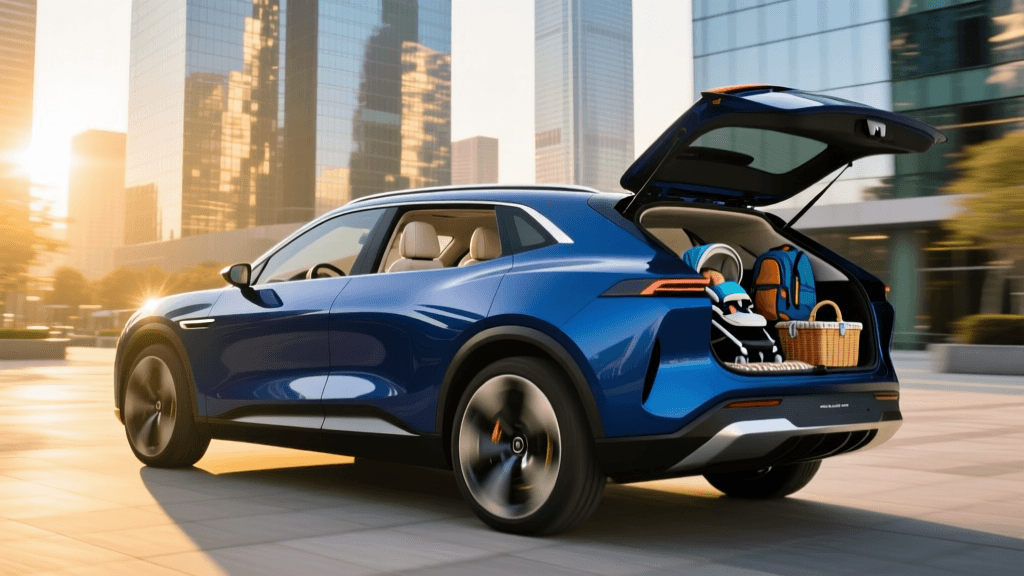
With 20.2 cubic feet behind the third row, the EV9 easily swallows a double stroller and several bags of groceries without requiring a roof box. The third row is genuinely usable for adults on shorter trips, a rarity in the midsize SUV segment.
Cost & Value Breakdown
Starting at an MSRP of roughly $54,900 for the base Light RWD model, the EV9 yields an incredible CPCF of $667. This is the undisputed best value on this list. You are getting premium space and decent range (up to 304 miles) without crossing into luxury luxury pricing. For families prioritizing pure utility per dollar, the EV9 is the mathematical winner.
2. Rivian R1S: The Adventure-Ready Hauler
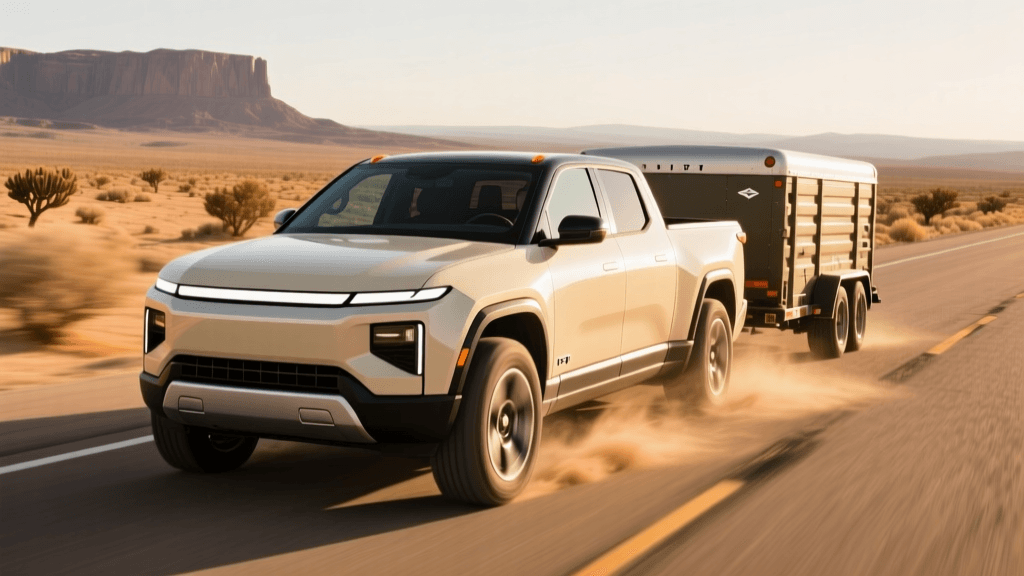
The Rivian R1S approaches the three-row EV concept from an off-road, adventure-first perspective. While it commands a premium price, its clever packaging, including a front trunk (frunk) and a gear tunnel, adds unique cargo solutions that traditional SUVs lack.
Space & Passenger Metrics
- Max Cargo Space: 92.3 cubic feet (including frunk)
- Cargo Behind 3rd Row: 18.0 cubic feet
- 3rd Row Legroom: 30.4 inches
- Front Headroom: 41.2 inches
The R1S offers massive total volume when you include the 11.0-cubic-foot frunk and the 11.6-cubic-foot gear tunnel. However, the third row is notably cramped compared to the EV9, making it strictly a 'kids-only' zone. When the second and third rows are folded, the flat load floor is exceptionally long, ideal for camping gear or lumber.
Cost & Value Breakdown
With a starting MSRP hovering around $79,900, the R1S results in a CPCF of $865. While more expensive than the Kia, the R1S offers unparalleled off-road capability, a dual-motor AWD standard setup, and a premium, rugged interior. The value here is derived from its multi-role capability: it is a family hauler, an off-roader, and a luxury vehicle wrapped into one.
3. Tesla Model X: The Tech-Forward Veteran
The Tesla Model X remains a benchmark for electric performance and technology, but its aging platform and sleek, aerodynamic roofline severely compromise its third-row utility and overall cargo efficiency relative to its high price tag.
Space & Passenger Metrics
- Max Cargo Space: 88.1 cubic feet (including frunk)
- Cargo Behind 3rd Row: 15.6 cubic feet
- 3rd Row Legroom: 32.7 inches
- Front Headroom: 41.7 inches
The sloping, teardrop roofline of the Model X severely limits headroom in the rear. While the third-row legroom is technically adequate, the claustrophobic headroom and small rear windows make it an unpleasant place for passengers on long road trips. The 15.6 cubic feet of space behind the third row is also quite shallow.
Cost & Value Breakdown
Starting at approximately $77,990, the Model X delivers a CPCF of $885. From a pure 'cost per cubic foot' perspective, it trails the Kia EV9 and the Rivian R1S. You are paying a premium for the Tesla Supercharger network, the yoke steering, and the 350-mile range, rather than interior packaging efficiency. If maximum cargo space is your primary goal, the Model X represents a poor financial value.
4. Mercedes-Benz EQS SUV: The Luxury Space Cruiser
The Mercedes-Benz EQS SUV is a technological masterpiece, offering a whisper-quiet ride, an opulent Hyperscreen dashboard, and exceptional comfort. However, luxury demands a premium, and the EQS SUV's curvy, aerodynamic shape limits its ultimate hauling potential.
Space & Passenger Metrics
- Max Cargo Space: 74.2 cubic feet
- Cargo Behind 3rd Row: 14.0 cubic feet
- 3rd Row Legroom: 32.3 inches
- Front Headroom: 40.4 inches
With only 14.0 cubic feet behind the third row, the EQS SUV struggles to carry passengers and their luggage simultaneously. The max cargo space of 74.2 cubic feet is the lowest on this list, heavily penalized by the thick battery floor and the sweeping roofline.
Cost & Value Breakdown
With a starting MSRP of $104,400, the EQS SUV yields a staggering CPCF of $1,406. You are paying nearly double per cubic foot compared to the Kia EV9. The value proposition here is entirely rooted in prestige, ride quality, and luxury amenities, not spatial efficiency. For buyers who need to haul large items, the EQS SUV is a financial misstep.
Comparative Data Table: Space & Value Breakdown
| Vehicle | Base MSRP | Max Cargo (cu ft) | Behind 3rd Row (cu ft) | Cost Per Cu Ft (CPCF) |
|---|---|---|---|---|
| Kia EV9 | $54,900 | 82.2 | 20.2 | $667 |
| Rivian R1S | $79,900 | 92.3 | 18.0 | $865 |
| Tesla Model X | $77,990 | 88.1 | 15.6 | $885 |
| Mercedes EQS SUV | $104,400 | 74.2 | 14.0 | $1,406 |
Hidden Costs: Maximizing Your EV Cargo Investment
When evaluating the total cost of ownership for a three-row EV, the purchase price and CPCF are only the beginning. To truly maximize your investment, consider the following practical, space-saving, and cost-mitigating strategies:
1. Roof Cargo Boxes and Aerodynamic Drag
Because many of these EVs (like the Model X and EQS SUV) lack cargo space behind the third row, families often resort to roof boxes. Be aware that adding a roof box to an EV can reduce your highway range by 15% to 20% due to increased aerodynamic drag. If you must use a roof box, choose an aerodynamic, low-profile model and reserve it strictly for road trips, removing it for daily commuting to preserve your battery efficiency.
2. Child Seat Safety in the Third Row
If you plan to install car seats in the third row, space becomes an even more critical metric. According to guidelines from the National Highway Traffic Safety Administration (NHTSA), proper installation and accessibility of child seats are paramount for safety. The boxy Kia EV9 and the Rivian R1S offer wider door apertures and more upright seatbacks, making the physical act of buckling in a toddler significantly easier than in the sloping Tesla Model X.
3. The Frunk Advantage
Do not underestimate the financial and spatial value of a Front Trunk (Frunk). The Rivian R1S and Tesla Model X offer deep frunks that can hold charging cables, muddy boots, or groceries. This keeps the main cabin clean and frees up precious rear cargo space. The Kia EV9's 'frunk' is disappointingly small (only about 1.8 cubic feet on AWD models), which is a slight mark against its otherwise stellar utility score.
Final Verdict: Which EV Offers the Best Space Value?
If your primary goal is to move a family of six and their gear without taking out a second mortgage, the Kia EV9 is the undisputed champion of value. At $667 per cubic foot, it offers the best third-row accessibility and rear cargo volume in the mainstream market. It proves that you do not need to spend six figures to get a highly capable, spacious electric family hauler.
For those who need their family hauler to double as a weekend off-road warrior, the Rivian R1S justifies its higher CPCF with unmatched versatility, clever storage solutions like the gear tunnel, and robust performance. Ultimately, understanding the Cost Per Cubic Foot allows buyers to look past the shiny screens and luxury badges, focusing instead on the practical, everyday utility that a three-row EV must provide. For further research on total EV ownership costs and efficiency metrics, the Consumer Reports EV Buying Guide remains an invaluable resource for comparing long-term value across different electric platforms.