Quick Answer: Are Mini EVs Worth It in 2026?
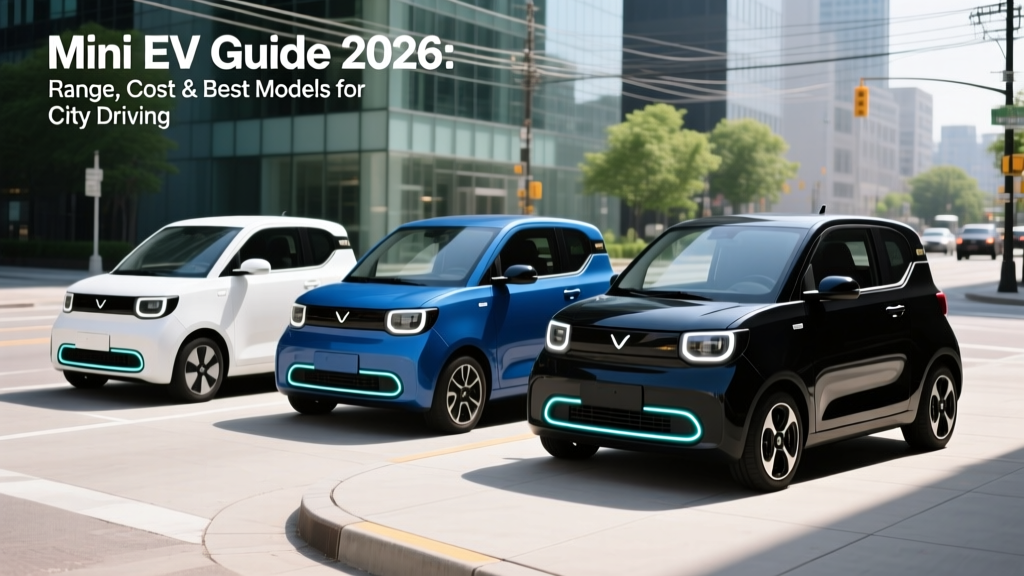
A mini EV (also called a micro-EV or neighborhood electric vehicle at the low end) is a small, lightweight battery-electric vehicle designed primarily for urban commuting and short trips. In 2026, the most relevant mini EVs for US buyers include the Mitsubishi eK X (announced for limited US import), the Baojun Yep / Chevy Spark EV successor platforms, and the growing class of low-speed electric vehicles (LSVs) like the Wink Motors NEV. Typical specs: 80–150 miles EPA range, 20–40 kWh batteries, 6–8 kW Level 2 charging, and MSRP from $18,000–$32,000 before incentives.
Bottom line: A mini EV makes financial and practical sense if your daily driving is under 40 miles, you have access to Level 1 or Level 2 home charging, and you primarily drive in cities or suburbs at speeds under 65 mph. If you regularly drive highways, take road trips, or live in extreme cold climates, a compact crossover EV or PHEV will serve you better.
What Exactly Is a Mini EV — and What's Available in the US?
The term "mini EV" covers a spectrum. On one end, you have highway-capable subcompact EVs like the discontinued-but-lingering Chevrolet Spark EV (used market) and newer entries like the Nissan Sakura (Japan-only, ~112-mile WLTP range, 20 kWh battery). On the other end, you have federally classified Low-Speed Vehicles (LSVs) — street-legal up to 25 mph, with basic safety equipment, often priced under $15,000.
For 2026, the US market remains thin on true mini EVs from major automakers. Here's what's realistically available or announced:
| Model | Battery (kWh) | EPA Range | Peak DC Charge | 0–60 mph | Base MSRP |
|---|---|---|---|---|---|
| Nissan Sakura (import/gray market) | 20 kWh (NMC) | ~112 mi (WLTP; ~90 mi EPA est.) | ~40 kW | ~15.0 sec | ~$22,000 (est. import) |
| Mitsubishi eK X EV (announced) | 20 kWh (NMC) | ~110 mi (WLTP; ~88 mi EPA est.) | ~40 kW | ~15.0 sec | TBA |
| Fiat 500e (2026 US return) | 42 kWh (NMC) | 149 mi (EPA) | 85 kW | 9.0 sec | $34,095 |
| Mini Cooper SE (2026) | 54.2 kWh (NMC) | 157 mi (EPA) | 95 kW | 7.3 sec | $33,200 |
| Wink NEV (LSV, 25 mph max) | 7–14 kWh (LFP) | 40–60 mi | N/A (L1 only) | N/A | $9,995–$13,995 |
Key takeaway: If you want a highway-capable mini EV from a mainstream brand with US dealer support and warranty coverage, the Mini Cooper SE and Fiat 500e are the strongest 2026 options. True kei-car-class mini EVs (Sakura, eK X) remain difficult to source in the US due to federal homologation rules.
Real-World Range: What the EPA Sticker Doesn't Tell You
The EPA range figure assumes a mix of city and highway driving at moderate temperatures. For mini EVs with small batteries (20–42 kWh), real-world conditions can significantly shrink that number.
Mini Cooper SE (2026) — Range Reality Check
- EPA sticker: 157 miles
- Real-world city (55°F, 35 mph avg): ~145–155 miles
- Real-world highway (70 mph, 75°F): ~120–135 miles
- Cold weather (25°F, city mix): ~100–115 miles (30–35% loss)
- Cold weather + highway: ~85–100 miles
Source: fueleconomy.gov and owner-reported data.
Mini EVs are disproportionately affected by cold weather because their smaller battery packs have less thermal mass, and many lack heat pumps (the Mini Cooper SE uses a resistance heater in base trims). If you live in the upper Midwest, New England, or any region with sustained sub-30°F winters, plan for 25–35% range loss and size your expectations accordingly.
For city commuters driving 20–30 miles round trip, even cold-weather range of 100 miles leaves comfortable margin. But if your commute is 50+ miles one way, a mini EV's highway range shortfall becomes a genuine problem.
Charging a Mini EV: Speeds, Costs, and Home Setup
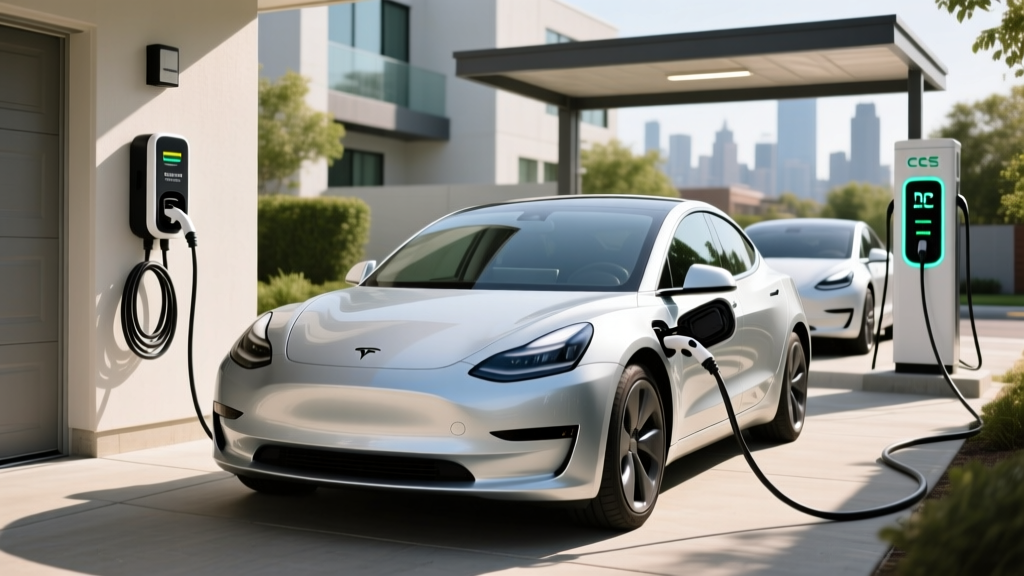
Mini EVs charge slower than larger EVs in absolute kW terms, but their smaller batteries mean a full charge still completes in reasonable time.
| Level | Power (kW) | Miles Added per Hour | 0–100% Time | Typical Cost per Full Charge |
|---|---|---|---|---|
| Level 1 (120V household outlet) | 1.2–1.4 kW | 4–5 mi/hr | 30–35 hours | $5.50 (at $0.13/kWh) |
| Level 2 (240V, 32A home charger) | 7.2 kW | 25–28 mi/hr | 5.5–6 hours | $5.50 |
| DC Fast Charge (public) | 85–95 kW peak | ~180 mi/hr (peak) | 10–80% in ~28 min | $9–$14 (at $0.30–$0.45/kWh) |
Critical charging nuance: Peak DC charge rate is not sustained. A Mini Cooper SE peaking at 95 kW will typically hold that rate only from ~10–40% State of Charge (SoC), then taper to 50–60 kW through 60%, and drop below 25 kW above 80%. A 10–80% session takes ~28 minutes; an 80–100% top-off can take another 25–30 minutes. Plan road-trip stops around the 10–80% window.
Home charging cost for installation: A Level 2 home charger (e.g., Emporia Vue, ChargePoint Home Flex) runs $500–$700 for equipment. Electrician installation with a 240V/40A circuit typically costs $800–$2,000 depending on panel proximity. If your home has a 100-amp panel that's near capacity, a panel upgrade to 200A adds $1,500–$3,000. Many mini EV owners get by on Level 1 (standard outlet) since a 42 kWh battery refills overnight in ~30 hours from near-empty — adequate if you drive under 40 miles daily and plug in every night.
Mini EV vs Gas Compact vs Hybrid: The Real Cost Breakdown
Let's compare the 2026 Mini Cooper SE (EV) against the 2026 Honda Civic (gas) and the 2026 Toyota Prius (hybrid) over 5 years and 60,000 miles.
| Category | Mini Cooper SE (EV) | Toyota Prius (HEV) | Honda Civic (Gas) |
|---|---|---|---|
| Base MSRP | $33,200 | $28,350 | $24,950 |
| Federal Tax Credit (§30D) | $0–$7,500* | $0 | $0 |
| Effective Purchase Price | $25,700–$33,200 | $28,350 | $24,950 |
| Fuel/Energy (60k mi) | $2,600 (home L2) | $5,100 (57 MPG, $3.25/gal) | $7,500 (33 MPG, $3.25/gal) |
| Maintenance (60k mi) | $900 | $2,400 | $2,800 |
| Insurance (avg, 5 yr) | $8,500 | $7,200 | $6,800 |
| Estimated Depreciation | $14,000 | $10,500 | $9,800 |
| Total 5-Year Cost | $51,700–$59,200 | $53,550 | $51,850 |
*The §30D federal tax credit for 2026 requires: vehicle MSRP under $55,000 (cars), buyer AGI under $150K single / $300K joint, battery minerals and components meeting phased-in sourcing thresholds, and final assembly in North America. The Mini Cooper SE is assembled in the UK — it may NOT qualify for the full credit in 2026 due to assembly requirements. Always verify current eligibility at irs.gov.
The EV wins on fuel and maintenance — saving roughly $4,000–$5,000 over 5 years versus gas, and $2,500+ versus hybrid. But higher insurance premiums (EVs typically cost 15–25% more to insure due to repair costs) and steeper depreciation eat into those gains. The math improves dramatically if you qualify for the full $7,500 credit or a state incentive.
Common Mini EV Misconceptions — Fact vs Fiction
| Myth | Fact |
|---|---|
| "Mini EVs can't handle highways." | The Mini Cooper SE has a top speed of 93 mph and 218 hp — it merges and passes fine. The limitation is range at highway speeds (~120–135 mi real), not capability. |
| "You need to spend $2,000+ on home charging installation." | Many mini EV owners charge on Level 1 (120V) since 42 kWh refills overnight from partial discharge. A Level 2 install averages $1,300–$2,700 total — but isn't mandatory for low-mileage drivers. |
| "The battery will need expensive replacement within a few years." | Modern NMC batteries in the Mini Cooper SE and Fiat 500e carry 8-year/100,000-mile warranties guaranteeing ≥70% capacity retention (Mini USA warranty). Real-world degradation data from similar platforms shows ~10–12% loss at 100K miles. |
| "Mini EVs are unsafe." | The Fiat 500e earned a 5-star Euro NCAP rating (2024 test). The Mini Cooper SE received a 4-star Euro NCAP. Both include standard AEB, lane-keep, and multiple airbags. They're not LSVs — they meet full FMVSS safety standards. |
| "You'll save $10,000+ going EV." | After accounting for higher insurance, depreciation, and potentially no tax credit (if assembled outside North America), 5-year savings vs a gas compact are typically $0–$3,000. The real savings come at 8+ years of ownership or with full incentive eligibility. |
Who Should Buy a Mini EV — Decision Framework
Choose a Mini EV If:
- Your daily round-trip commute is under 50 miles
- You have reliable overnight parking with at least a 120V outlet (garage, driveway, or dedicated spot)
- You live in a mild-to-moderate climate (rare sub-20°F days)
- You want a second car for errands and commuting while keeping a larger vehicle for road trips
- You value low running costs (electricity + minimal maintenance) over interior space
- You qualify for state or local EV incentives that offset the MSRP premium
Choose a Compact Crossover EV or PHEV Instead If:
- Your daily driving exceeds 60 miles or includes frequent highway trips over 100 miles
- You live in a region with harsh winters (sustained sub-25°F) and need reliable 200+ mile range
- You don't have access to any form of home or workplace charging
- You regularly carry more than one passenger or need cargo space for gear/groceries
- This will be your only vehicle and you take road trips more than twice a year
Choose a Low-Speed Vehicle (LSV) Only If:
- Your driving is entirely within a 10-mile radius at speeds under 35 mph
- You're in a planned community, retirement community, or small town that permits LSVs on local roads
- You understand LSVs lack crash protection comparable to full-size vehicles
What First-Time Mini EV Buyers Must Know
1. Tax Credit Eligibility Is Not Guaranteed
For 2026, the §30D credit requires North American final assembly. Many mini EVs (Mini Cooper SE built in the UK, Fiat 500e built in Europe) may not qualify. Always check the latest eligible vehicle list at fueleconomy.gov before purchasing. Point-of-sale transfer is available for eligible vehicles, letting you apply the credit as a down payment reduction at the dealer.
2. Insurance Costs More — Get Quotes Before Buying
EV insurance premiums run 15–25% higher than equivalent gas vehicles due to specialized repair requirements and battery replacement costs. Get quotes from at least three insurers (Geico, Progressive, State Farm) on the specific VIN before signing a purchase agreement.
3. Plan Your Charging Strategy Before Delivery Day
If you'll use Level 2, schedule the electrician 4–6 weeks before vehicle delivery. If you're on an apartment or condo, check whether your building has EV charging infrastructure or plans to install it — retrofitting shared garages can take months and require HOA approval.
4. Battery Degradation Is Slow but Real
Expect 1.5–2% capacity loss per year under normal use (daily charging to 80%, avoiding frequent DC fast charging). After 8 years, a 42 kWh battery will likely hold ~35–37 kWh usable — reducing your 157-mile EPA range to ~130–140 miles. This is still adequate for most city commutes.
5. Resale Value Is Uncertain for Niche Models
Mini EVs from brands with limited US EV presence (Fiat, Mitsubishi) may depreciate faster than mainstream EVs like the Tesla Model 3 or Hyundai Ioniq 5. If you plan to sell within 3–4 years, factor in 45–55% depreciation rather than the 35–40% typical of high-volume EVs.
Frequently Asked Questions
Can a mini EV be my only car?
Yes, if your lifestyle fits the range envelope. Single-car mini EV ownership works for urban dwellers who drive under 40 miles daily, fly or take trains for long trips, and have reliable home charging. It does not work if you regularly drive 80+ miles one way, tow anything, or live in a charging desert.
Do mini EVs qualify for the $7,500 federal tax credit?
It depends on the specific model and 2026 sourcing rules. The vehicle must have final assembly in North America, meet critical mineral and battery component thresholds, and fall under the $55,000 MSRP cap for sedans/hatchbacks. Many mini EVs are built overseas and may not qualify. Verify at irs.gov before committing.
How long does it take to charge a mini EV at home?
On a standard 120V outlet (Level 1), a 42 kWh battery adds roughly 4–5 miles of range per hour — adequate to replenish a 30-mile daily commute in 6–7 hours overnight. On a 240V Level 2 charger (7.2 kW), a full charge takes about 5.5–6 hours. Most mini EV owners plug in nightly and never start a day with less than 80% charge.
Are mini EVs safe in a crash?
Highway-capable mini EVs like the Mini Cooper SE and Fiat 500e meet all FMVSS crash standards and include modern ADAS features (AEB, lane-keep assist). Euro NCAP has rated the Fiat 500e at 5 stars and the Mini Cooper SE at 4 stars. However, physics matters — in a collision with a full-size SUV or truck, a 2,900-lb mini EV is at a disadvantage versus a 4,000-lb vehicle. LSVs (under 3,000 lbs, no crash testing) are a different category and should not be confused with highway-capable mini EVs.
What's the cheapest mini EV I can buy new in 2026?
Among highway-capable models with full safety equipment, the 2026 Mini Cooper SE starts at $33,200. The Fiat 500e starts at $34,095. For non-highway LSVs, the Wink NEV starts around $9,995 but is limited to 25 mph and lacks highway crash protection. On the used market, a 2016–2019 Chevrolet Spark EV can be found for $8,000–$12,000 with ~80 miles of range.