The 2025 Heavyweight EV Showdown: Spec-Sheet Battles
The electric vehicle market is rapidly transitioning from early-adopter experimentation to a mature, spec-driven battleground. As we look toward the 2025 model year, automakers are no longer just promising electrification; they are engineering highly specialized platforms designed to push the boundaries of range, charging speed, and performance. For buyers, this means navigating a complex web of anticipated specifications, battery chemistries, and voltage architectures.
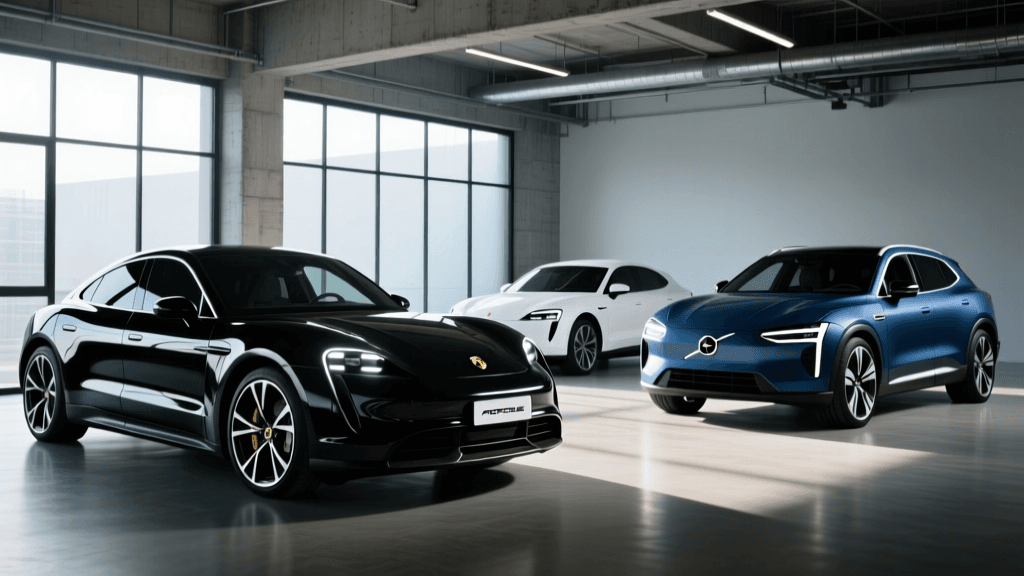
In this head-to-head product showdown, we are ranking three of the most highly anticipated new electric cars launching for the 2024 and 2025 model years: the Lucid Gravity, the Porsche Macan EV, and the Volvo EX90. Rather than relying on vague marketing promises, we are breaking down the hard data—battery capacity, peak charging rates, powertrain output, and aerodynamic efficiency—to determine which upcoming EV truly deserves the top spot on your garage wish list.
The Contenders: Anticipated Specs at a Glance
Before diving into the engineering deep-dive, let us look at the raw numbers. The following table highlights the core anticipated specifications that define each vehicle's market positioning.
| Specification | Lucid Gravity (Grand Touring) | Porsche Macan EV (Turbo) | Volvo EX90 (Twin Motor) |
|---|---|---|---|
| Est. EPA Range | 440+ miles | ~280 miles | ~300 miles |
| Battery Capacity | 123 kWh (NMC) | 100 kWh (NMC) | 111 kWh (NMC) |
| Architecture | 900V+ Class | 800V Nominal | 400V Nominal |
| Peak Charge Rate | 300+ kW | 270 kW | 250 kW |
| 0-60 mph | ~3.5 seconds | 3.3 seconds | 4.7 seconds |
| Est. Starting Price | $94,900 | $105,000 | $80,000 |
Round 1: Range, Efficiency, and Battery Tech
When evaluating anticipated specs, range remains the ultimate equalizer. However, achieving high range through sheer battery mass is an outdated strategy; true engineering prowess is measured in efficiency (miles per kWh).
Lucid Gravity: The Efficiency King
Lucid Motors has consistently proven that its powertrain miniaturization and aerodynamic obsession yield industry-leading efficiency. The upcoming Gravity SUV leverages the same Wunderbox technology found in the Air sedan. According to Lucid Motors, the Gravity Grand Touring targets an EPA-estimated range of over 440 miles. By utilizing a highly optimized 900V+ electrical architecture and custom stator winding in its compact drive units, the Gravity achieves this massive range without requiring a prohibitively heavy 150 kWh battery pack. The result is a three-row SUV that handles like a much smaller vehicle while outlasting almost everything else on the highway.
Porsche Macan EV: Performance Over Distance
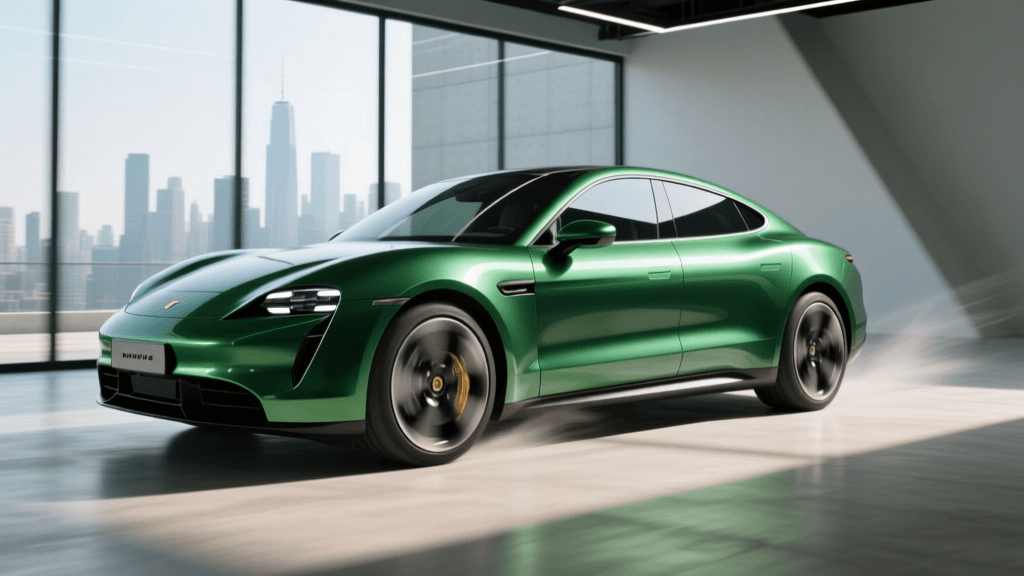
Porsche’s approach with the new Macan EV is unapologetically focused on driving dynamics. Built on the Premium Platform Electric (PPE) co-developed with Audi, the Macan EV houses a 100 kWh battery. As noted by Car and Driver, the Macan EV's aerodynamic profile and aggressive performance tuning result in an estimated range hovering around 280 miles for the high-output Turbo variant. While it trails the Gravity in sheer distance, the Macan's battery thermal management system is designed to sustain high power outputs lap after lap, prioritizing track-ready endurance over cross-country hypermiling.
Volvo EX90: The Balanced Cruiser
Volvo’s flagship EX90 utilizes a massive 111 kWh battery pack. However, because the EX90 is a large, boxy, and heavy three-row luxury SUV, its efficiency is naturally compromised compared to sleeker counterparts. Volvo Cars estimates the range to be approximately 300 miles. While adequate for most family road trips, the EX90's heavier curb weight means it will consume more energy per mile in stop-and-go traffic compared to the Lucid or Porsche.
Round 2: Charging Speed and Voltage Architecture
A large battery is only as good as the speed at which you can replenish it. This is where voltage architecture dictates the ownership experience.
- Lucid Gravity (900V+): Capable of accepting peak charge rates exceeding 300 kW, the Gravity can theoretically add 200 miles of range in roughly 15 minutes on a V3 Supercharger or high-speed CCS station. Its high-voltage system minimizes heat generation during fast charging, preserving long-term battery health.
- Porsche Macan EV (800V): The Macan EV peaks at 270 kW. Thanks to its 800V system, it can charge from 10% to 80% in about 21 minutes under ideal conditions. Furthermore, Porsche includes a 'bank charging' feature that splits the battery into two 400V halves when using older, lower-voltage DC fast chargers, ensuring maximum compatibility and speed across diverse networks.
- Volvo EX90 (400V): The EX90 operates on a standard 400V architecture, capping its peak charging speed at 250 kW. Charging from 10% to 80% takes approximately 30 minutes. While perfectly acceptable for highway rest stops, it falls behind the Porsche and Lucid in pure electrons-per-minute delivery.
Round 3: Powertrain Output and Chassis Dynamics
Spec sheets must translate to the tarmac. The Porsche Macan EV takes the crown for pure cornering capability, featuring an available rear-axle steering system and a two-valve adaptive air suspension that actively manages pitch and roll. The Macan Turbo generates up to 630 horsepower with launch control engaged, delivering a brutal 3.3-second 0-60 mph time.
The Lucid Gravity counters with a dual-motor setup producing over 800 horsepower in its top trims. Despite its family-hauler dimensions, its low center of gravity and sophisticated five-link rear suspension allow it to hit 60 mph in roughly 3.5 seconds, making it one of the quickest three-row vehicles ever produced.
The Volvo EX90 Twin Motor Performance produces 510 horsepower and 671 lb-ft of torque. It is undeniably quick for its size (4.7 seconds to 60 mph), but its suspension tuning is heavily biased toward plush, isolated luxury rather than the aggressive sportiness of the Porsche or the planted agility of the Lucid.
The Verdict: Ranking the Best Upcoming EVs by Specs
Based on the head-to-head comparison of anticipated specifications, engineering efficiency, and charging capabilities, here is our final ranking for the Best New Electric Cars Launching.
#3: Volvo EX90 (The Safety and Tech Vanguard)
Why it ranks third: The EX90 is a masterclass in interior luxury, bidirectional charging capabilities, and next-generation safety (thanks to its standard LiDAR array). However, in a strict spec-sheet showdown regarding range efficiency and charging speed, its 400V architecture and heavy curb weight hold it back from the top tier of EV performance. It is the best choice for safety-obsessed families, but not the spec-sheet champion.
#2: Porsche Macan EV (The Driver's Choice)
Why it ranks second: The Macan EV's 800V PPE platform is a marvel of German engineering. Its 270 kW charging speed and bank-charging flexibility solve real-world infrastructure issues, and its chassis dynamics are unmatched. It loses the top spot solely because its 280-mile range estimate in the Turbo trim requires more frequent stops on road trips compared to its rivals. If driving engagement is your primary metric, move this to number one.
#1: Lucid Gravity (The Undisputed Spec Champion)
Why it takes the crown: The Lucid Gravity wins this showdown by achieving the seemingly impossible: combining three-row utility with over 440 miles of range and 900V+ charging speeds. Its powertrain efficiency is currently unrivaled in the industry, proving that you do not need to sacrifice cargo space or passenger comfort to achieve sports-car-like energy consumption. For buyers looking at the raw data of range, charge rate, and horsepower per pound, the Gravity is the most impressive piece of EV engineering launching this cycle.
Actionable Advice: Preparing for High-Spec EV Ownership
If you are planning to purchase one of these high-performance, high-capacity EVs, you must prepare your home infrastructure to match their specs:
- Upgrade to a 60-Amp Circuit: While many older EVs were fine with 32-amp Level 2 chargers, the massive batteries in the Gravity and EX90 require a 48-amp (or higher) continuous charge rate to wake up to a full battery. Hire a licensed electrician to install a dedicated 60-amp breaker with a NEMA 14-50 receptacle or a hardwired Wall Connector.
- Verify Panel Capacity: Adding a 11.5 kW home charger is equivalent to running two central air conditioning units simultaneously. Ensure your home's main electrical panel has at least 200 amps of total service capacity before installation.
- Master Thermal Preconditioning: To achieve the advertised 270+ kW DC fast charging speeds in the Porsche and Lucid, you must use the vehicle's native navigation system to route to the charger. This triggers the battery thermal management system to precondition the cells to the optimal temperature window before you even arrive at the plug.
By understanding the real-world implications of these anticipated specs, you can confidently choose the EV that best aligns with your driving habits, road-trip frequency, and performance desires.