Quick Answer: Does Ford Make an Electric Bronco?
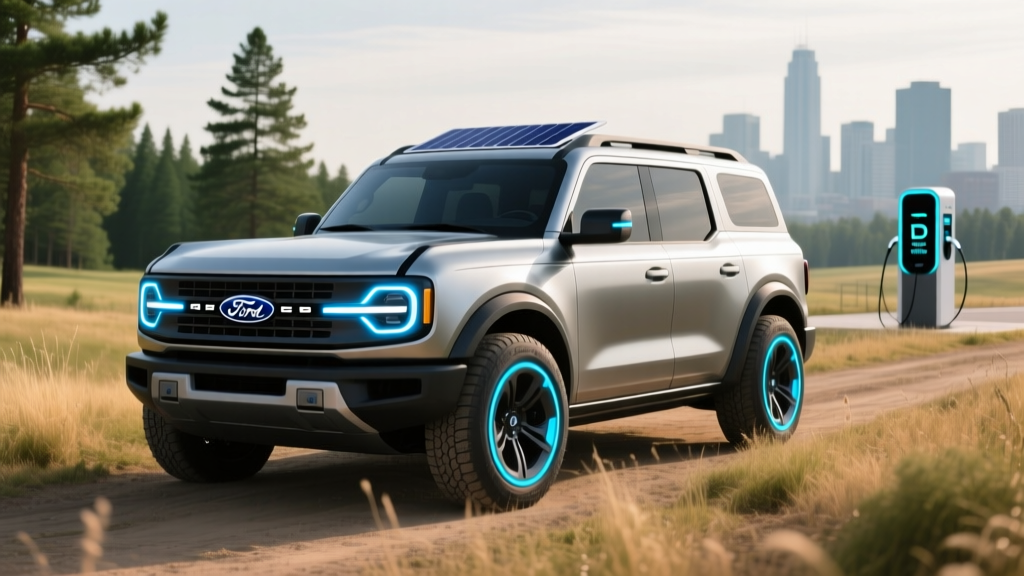
No. As of early 2026, Ford does not sell a fully electric Bronco. The current sixth-generation Bronco (two-door, four-door, Bronco Sport, and Bronco Raptor) is offered exclusively with internal combustion engines — a 2.3L EcoBoost I4, a 2.7L EcoBoost V6, and a 3.0L EcoBoost V6 in the Raptor. Ford has not announced an official production date, pricing, or specs for a battery-electric Bronco.
However, Ford's broader EV strategy and trademark filings suggest an electrified Bronco is under development. Until it arrives, buyers who want a rugged, electric-capable SUV must look at alternatives like the Rivian R1S, Jeep Wrangler 4xe (PHEV), or the upcoming electric Jeep Recon.
What We Know About Ford's Electric Bronco Plans
Ford has been coy about a battery-electric Bronco, but the breadcrumbs are real. In 2022, Ford filed a trademark for "Bronco EV" with the USPTO, and CEO Jim Farley has repeatedly stated that Ford's iconic nameplates — Mustang, F-150, and Bronco — are the pillars of its electrification roadmap. The F-150 Lightning proved Ford can electrify a heritage model without alienating loyalists, and the Mustang Mach-E (despite its controversial name) showed the company is willing to extend brands into new segments.
Ford's current EV lineup for 2026 includes the Mustang Mach-E, F-150 Lightning, E-Transit commercial van, and the newly launched three-row Explorer EV (built on VW's MEB platform for Europe). A Bronco EV would likely ride on Ford's next-generation flexible EV architecture, which the company has teased for mid-to-late-2020s product introductions.
What this means practically: If you need an electric off-roader now, the Bronco EV is not an option. If you can wait 2–4 years and are flexible on specs, it's worth monitoring Ford's announcements.
The Current Gas Bronco: What You're Comparing Against
Before weighing EV alternatives, it helps to understand what the 2026 gas-powered Bronco delivers — and what it costs to run. The Bronco's appeal is its removable doors and roof, serious off-road hardware (front/rear lockers, sway-bar disconnect, G.O.A.T. modes), and retro styling. None of that is inherently incompatible with an electric powertrain, but Ford has to engineer it carefully.
| Spec | 2026 Bronco (2.3L EcoBoost 4dr) | Bronco EV (Estimated) | 2026 Rivian R1S (Dual-Motor Max) |
|---|---|---|---|
| Powertrain | 2.3L Turbo I4, 10-speed auto | Dual/Tri-motor BEV (speculative) | Dual-motor AWD, 149 kWh pack |
| Horsepower | 300 hp | 400–550 hp (est.) | 533 hp |
| 0–60 mph | ~6.8 sec | ~4.0–5.0 sec (est.) | 4.5 sec |
| EPA Range / MPG | 20 MPG combined (~330 mi per tank) | 280–350 mi (est. EPA) | 410 mi (EPA) |
| Energy Capacity | 16.9-gallon tank | ~100–130 kWh (est.) | 149 kWh (NMC) |
| Max DC Charge Rate | N/A | 150–200 kW (est.) | 200 kW peak |
| 10–80% Charge Time | ~5 min (gas pump) | ~25–35 min (est.) | ~29 min |
| Base MSRP | $39,995 (Big Bend 4dr) | $55,000–$65,000 (est.) | $79,900 |
| Federal Tax Credit (§30D) | $0 | Up to $7,500 (if eligible) | $0 (exceeds MSRP cap) |
The gas Bronco gets roughly 20 MPG combined per EPA data on fueleconomy.gov, meaning a 330-mile road trip requires about 16.5 gallons of fuel — roughly $55–$65 at 2026 national averages. An electric equivalent would consume roughly 45–55 kWh for the same trip, costing $6–$14 on home electricity (at $0.13–$0.25/kWh) or $15–$30 on public DC fast chargers.
Best Electric & Plug-In Alternatives You Can Buy Today
If the question "does Ford make an electric Bronco" brought you here because you want an electrified off-road SUV, here are the realistic options in 2026:
Rivian R1S — The Closest Electric Bronco Equivalent
The R1S is the only fully electric, body-on-frame-style SUV with genuine off-road chops currently on sale. With up to 410 miles of EPA range (Max Pack), air suspension offering 6.5–14.9 inches of ground clearance, and a wading depth of over 3 feet, it matches or exceeds the Bronco's trail capability. The trade-off: a starting price of $79,900 for the Dual-Motor Standard and no eligibility for the $7,500 federal credit (the R1S exceeds the §30D MSRP cap of $80,000 for SUVs once options push it over). Rivian's quad-motor variant pushes 1,025 hp but starts above $100,000.
Jeep Wrangler 4xe — A Plug-In Hybrid Compromise
Not a BEV, but the Wrangler 4xe delivers 21 miles of electric-only range and 49 MPGe combined, per fueleconomy.gov. For drivers with short commutes (under 20 miles) and home Level 2 charging, most daily driving happens on electrons. The 17 kWh battery recharges in about 2.5 hours on Level 2. Starting around $51,790, the 4xe may qualify for a partial or full $7,500 credit depending on battery sourcing and your tax liability — check current IRS §30D guidance. It retains the Wrangler's solid axles, removable doors, and trail-rated hardware.
Jeep Recon (Expected Late 2026) — The Electric Wrangler
Stellantis has confirmed the Jeep Recon as an all-electric, off-road-focused SUV built on the STLA Large platform. It's expected to offer ~300+ miles of range, front/rear e-lockers, and a one-pedal trail mode. Pricing and final EPA numbers haven't been published, and Jeep has not opened reservations as of early 2026. This is the closest thing to an "electric Bronco competitor" that's actually confirmed for production.
Ford Explorer EV (Europe Only) — Not the Bronco, But Relevant
Ford's electric Explorer, built on Volkswagen's MEB platform, is currently sold only in Europe. It offers up to 335 miles WLTP (~280 mi EPA equivalent) and starts around €45,000. It's a unibody crossover, not a body-on-frame off-roader, and Ford has not announced US availability. It signals Ford's EV ambition but doesn't fill the Bronco-shaped hole.
Real Ownership Costs: Gas Bronco vs. Electric Alternatives
The purchase price is only the beginning. Here's a 5-year cost comparison assuming 15,000 miles/year, $3.50/gallon gas, and $0.16/kWh home charging:
| Cost Category | 2026 Bronco Big Bend ($39,995) | Rivian R1S Dual-Motor ($79,900) | Wrangler 4xe Sport ($51,790) |
|---|---|---|---|
| Purchase Price (after incentives) | $39,995 | $79,900 | $44,290 (est. after $7,500 credit) |
| Fuel / Energy (75k mi) | $13,125 (gas) | $3,600 (home electricity) | $5,400 (mixed gas/electric) |
| Maintenance (5 yr) | $3,500 | $1,200 | $3,200 |
| Insurance (5 yr avg) | $8,500 | $12,500 | $9,000 |
| Estimated Depreciation | $14,000 | $28,000 | $16,000 |
| Total 5-Year Cost | $79,120 | $125,200 | $77,890 |
| Cost Per Mile | $1.05/mi | $1.67/mi | $1.04/mi |
Key takeaways: The gas Bronco and Wrangler 4xe are remarkably close in 5-year cost, with the 4xe pulling ahead if you charge at home and drive short distances. The R1S is significantly more expensive upfront, and its higher depreciation (luxury EV segment reality) widens the gap. However, the R1S delivers dramatically more power, technology, and range — you're paying for capability, not cost savings.
Common Misconceptions About an Electric Bronco
| Myth | Fact |
|---|---|
| "EVs can't off-road — they'll run out of battery on trails." | Low-speed rock crawling actually consumes less energy than highway driving. Rivian's R1S and GMC Hummer EV have proven EVs can handle serious trails. Range loss is a concern on high-speed desert runs, not technical crawling. |
| "An electric Bronco would be too heavy for soft terrain." | Battery weight is a factor (~1,500+ lbs for a 130 kWh pack), but EVs have a lower center of gravity and instant torque with precise modulation. Wide tires and traction control compensate on sand and mud. |
| "Ford already sells an electric Bronco in other markets." | Ford does not sell any Bronco variant — gas or electric — outside the Americas and select Middle East markets. There is no "Europe-only electric Bronco." |
| "I can convert my gas Bronco to electric." | Aftermarket EV conversions exist but cost $30,000–$60,000+, void all factory warranties, and typically yield only 100–150 miles of range. Not practical for most buyers. |
| "The Bronco EV will qualify for the full $7,500 tax credit." | It depends on final MSRP (must be ≤$80,000 for SUVs under §30D), battery sourcing (critical minerals and component rules), and your income (≤$300k joint / $150k single). Check IRS rules at time of purchase. |
Decision Framework: Should You Wait or Buy Now?
Use this framework to decide your next move:
- Choose the gas Bronco now if: You need a rugged, removable-doors SUV today, your budget is under $50,000, you frequently drive in areas with poor charging infrastructure, or you tow heavy loads (the Bronco tows up to 3,500 lbs; most EVs lose significant range when towing).
- Choose the Wrangler 4xe now if: You want electric commuting with gas-powered trail freedom, you have home Level 2 charging, your daily drive is under 25 miles, and you value the Wrangler's aftermarket ecosystem and solid-axle articulation.
- Choose the Rivian R1S now if: Your budget exceeds $75,000, you want a fully electric SUV with real off-road capability and 300+ mile range, you value over-the-air updates and tech-forward design, and you don't need removable doors or a folding windshield.
- Wait for the Bronco EV if: The Bronco's specific design (removable roof/doors, retro styling) is non-negotiable, you can wait 2–4 years, and you're comfortable with Ford being early in its EV learning curve (the F-150 Lightning's initial production stumbles are worth remembering).
- Wait for the Jeep Recon if: You want an electric off-roader from a brand with decades of 4x4 credibility, you're okay with a 2026–2027 delivery window, and you want something in the $50,000–$65,000 range (projected).
What First-Time EV Buyers Should Know Before Going Electric
If the search for an electric Bronco is your entry point into EVs, here are the ownership realities that spec sheets don't highlight:
Home charging is the foundation. Over 80% of EV charging happens at home. A Level 2 home charger (240V, 32–48 amps) adds 25–40 miles of range per hour and costs $500–$2,000 installed, depending on whether your electrical panel needs an upgrade. If you live in an apartment or lack a dedicated parking spot with outlet access, public charging becomes your primary source — and it's more expensive ($0.30–$0.55/kWh on DC fast networks) and less reliable.
Real-world range is 15–30% below the EPA sticker in cold weather. If a future Bronco EV is rated at 320 miles EPA, expect 220–270 miles in sub-freezing temperatures. Highway driving at 75+ mph also reduces range by 10–20% versus the combined cycle. This matters for off-road excursions into remote areas.
Charging speed is not constant. A vehicle that advertises "200 kW peak charging" only sustains that rate for a portion of the session. Above 80% state of charge, speeds taper dramatically to protect battery health. Plan road trips around 10–80% charges, not 0–100%.
Insurance costs 15–30% more for EVs. Higher repair costs (battery damage, specialized labor, sensor recalibration after collisions) drive premiums up. Get quotes before committing.
Frequently Asked Questions
Will Ford make an electric Bronco Sport?
Ford has not confirmed an electric Bronco Sport. The current Bronco Sport uses a 1.5L or 2.0L EcoBoost engine. Given that the Bronco Sport is built on the unibody C2 platform (shared with the Escape), which Ford has not yet electrified in the US, an electric Bronco Sport is plausible but not announced.
How much would an electric Bronco cost?
Based on Ford's current EV pricing and the gas Bronco's trim structure, a Bronco EV would likely start between $55,000 and $65,000 for a base model and reach $75,000+ for a high-performance variant. If the MSRP stays at or below $80,000, it could qualify for the federal §30D tax credit, subject to battery sourcing and buyer income requirements.
Can I charge an electric SUV at a regular outlet?
Yes, but slowly. Level 1 charging (120V household outlet) adds about 3–5 miles of range per hour. For a 100+ kWh battery in a large SUV, a full charge from empty would take 3–5 days. Level 2 (240V) is the practical minimum for daily EV ownership.
Are electric SUVs good for towing?
They can tow, but range drops significantly — expect a 30–50% range reduction when towing at highway speeds. The Rivian R1S is rated to tow 7,700 lbs, but real-world range while towing drops from 410 to roughly 200–250 miles. The gas Bronco tows 3,500 lbs with minimal range penalty.
What's the best off-road electric SUV available right now?
The Rivian R1S is the most capable all-electric off-road SUV you can buy in 2026. For a plug-in hybrid alternative with more traditional trail hardware, the Jeep Wrangler 4xe remains the benchmark. The GMC Hummer EV SUV offers extreme power (830 hp) and CrabWalk capability but starts above $98,000 and is far larger than a Bronco.