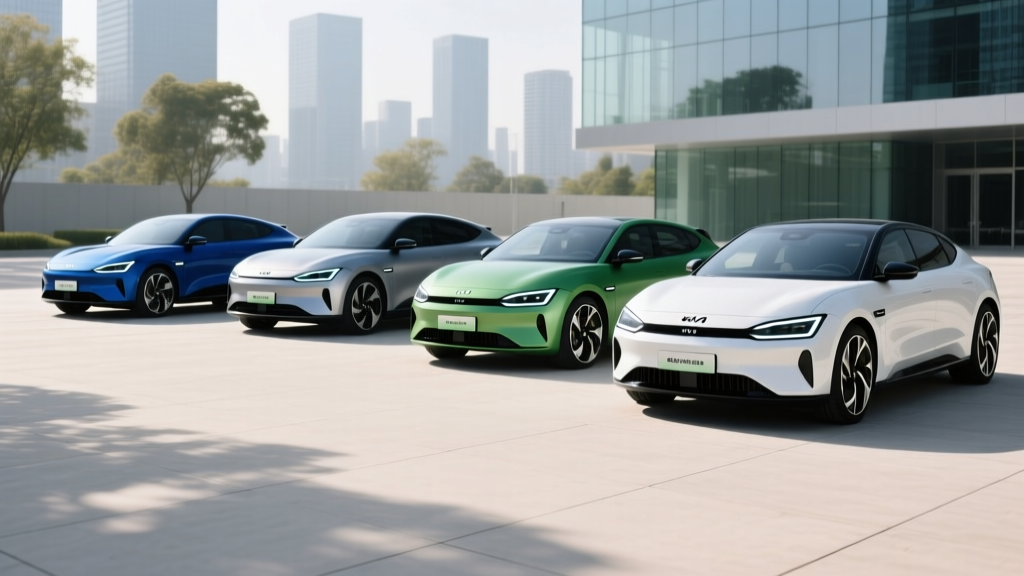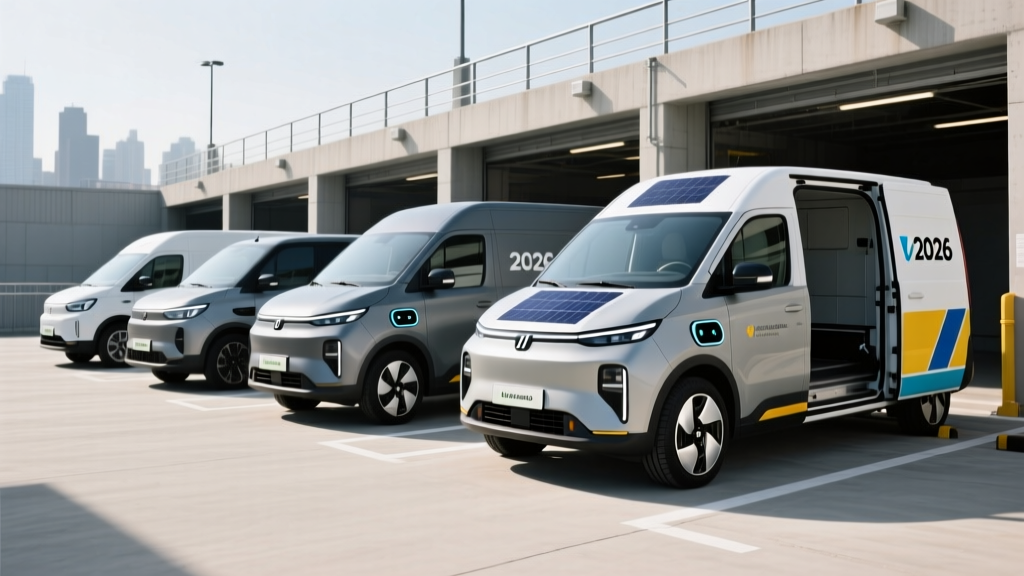
Quick answer: If your fleet or solo trade business runs predictable routes under 150 miles a day and can install depot Level 2 charging, a 2026 EV cargo van like the Ford E-Transit (EPA 126 mi, ~$52,000 base) or BrightDrop Zevo 600 (EPA 162 mi, ~$59,000 base) will cost significantly less per mile to operate than a gas equivalent. For longer or more variable routes, the Mercedes-Benz eSprinter (EPA 186 mi with the 113 kWh battery, ~$72,000) is the current range leader. Commercial EVs over 14,000 lb GVWR don't qualify for the §30D consumer credit, but the §45W Commercial Clean Vehicle Credit can cover up to $40,000 per qualifying van.
Why Fleets and Trades Are Switching to EV Cargo Vans
The economics of electric work vans have shifted dramatically. Where early EV cargo vans were essentially compliance experiments, the 2026 lineup delivers genuine payload capability, usable range for last-mile and regional routes, and per-mile operating costs that undercut gasoline by 40–60% in most utility-rate regions.
The typical commercial van route is 60–110 miles per day with overnight depot parking — the exact scenario where an EV cargo van excels. Regenerative braking in stop-and-go urban delivery extends range, and the lack of an internal combustion engine eliminates oil changes, transmission service, spark plugs, and exhaust system repairs. Ford's own fleet data has shown maintenance cost reductions of roughly 40% for E-Transit vs. the gas Transit, consistent with broader BEV ownership studies.
But EV cargo vans aren't a universal replacement. If your routes regularly exceed 200 miles, if you operate in extreme cold without depot preconditioning, or if you can't install charging at your base of operations, a gas or diesel van remains the pragmatic choice today.
The 2026 EV Cargo Van Lineup: Specs Compared
Here's how the three major players stack up on the numbers that matter for fleet procurement:
| Spec | Ford E-Transit (2026) | BrightDrop Zevo 600 (2026) | Mercedes-Benz eSprinter 250 (2026) |
|---|---|---|---|
| EPA Range | 126 mi | 162 mi | 186 mi (113 kWh pack) |
| Battery (usable) | 68 kWh, NMC | 85 kWh, NMC | 113 kWh, NMC |
| Max DC Fast Charge | 115 kW | 120 kW | 115 kW |
| 10–80% DC Charge | ~45 min | ~42 min | ~50 min |
| Level 2 Charge Rate | 10.5 kW (AC) | 11.5 kW (AC) | 9.6 kW (AC) |
| Horsepower / Torque | 266 hp / 317 lb-ft | 320 hp / 390 lb-ft | 201 hp / 332 lb-ft |
| Max Payload | ~3,330 lb (low-roof) | ~2,890 lb | ~2,620 lb (250, std roof) |
| Cargo Volume (max) | 487.3 cu ft (high-roof ext.) | 599 cu ft | 532.6 cu ft (high-roof) |
| Starting MSRP | ~$52,000 | ~$59,000 | ~$72,000 |
| Battery Warranty | 8 yr / 100,000 mi | 8 yr / 100,000 mi | 8 yr / 100,000 mi |
Source: Manufacturer spec sheets and fueleconomy.gov. Payload and cargo volume vary by roof height, wheelbase, and GVWR configuration. Always confirm exact specs for your chosen trim.
Real-World Range: What the EPA Sticker Doesn't Tell You
EPA range figures for cargo vans assume a relatively light load and mixed driving. In actual fleet use, you need to budget for variables that can shave 15–35% off the sticker number:
- Payload weight: A fully loaded E-Transit carrying 2,500+ lb of tools or freight will see range drop roughly 10–15% vs. an empty van.
- Cold weather: At 20°F, lithium-ion batteries lose efficiency and cabin/cargo heating draws heavily. Expect a 25–35% range reduction in northern-winter conditions without depot preconditioning.
- Highway speeds: Cargo vans are boxy with poor aerodynamics. Sustained 70 mph highway driving drops range approximately 15–20% vs. the EPA combined cycle.
- Accessory load: Lift gates, refrigeration units (for cold-chain delivery), and aftermarket shelving all draw power or add weight.
Real-world range reality check: The Ford E-Transit's EPA 126 miles translates to roughly 95–110 miles in cold weather with a moderate payload, and 105–115 miles in mild conditions on urban delivery routes with regen braking. Plan routes to return at ~20% SoC to preserve battery health and provide a safety buffer.
This is why route analysis is non-negotiable before ordering. Pull GPS data from your current gas vans. If 95th-percentile daily mileage exceeds 130 miles for an E-Transit or 170 miles for an eSprinter, you'll need mid-day DC fast charging or a gas backup.
EV Cargo Van vs. Gas Van: Total Cost of Ownership
The purchase price of an EV cargo van is higher than its gas counterpart — a Ford Transit T150 gas cargo van starts around $48,000, while the E-Transit starts around $52,000. But total cost of ownership (TCO) tells a different story over a 5-year / 75,000-mile holding period:
| Cost Category (5 yr / 75k mi) | Ford E-Transit (EV) | Ford Transit T150 (Gas) |
|---|---|---|
| Purchase Price (base) | $52,000 | $48,000 |
| Federal Tax Credit (§45W) | −$7,500 (under 14k lb GVWR)* | $0 |
| Fuel / Electricity | ~$3,400 (at $0.13/kWh avg.) | ~$10,500 (at $3.50/gal, 16 MPG) |
| Maintenance | ~$2,100 | ~$3,500 |
| Insurance (est.) | ~$9,500 | ~$8,500 |
| Net 5-Year Cost | ~$59,500 | ~$70,500 |
*Vans under 14,000 lb GVWR may qualify for the §45W Commercial Clean Vehicle Credit of up to $7,500; vans over 14,000 lb GVWR may qualify for up to $40,000. Credit amount depends on battery sourcing, manufacturer caps, and your business tax liability. Consult a tax professional.
The E-Transit comes out roughly $11,000 ahead over five years in this scenario, driven primarily by fuel savings (~$7,100) and reduced maintenance (~$1,400). The gap widens in states with high gasoline prices and narrow in states with expensive commercial electricity rates.
Charging Cost Deep Dive
Charging at your depot on a commercial or residential rate is where the savings materialize. Here's what a full charge costs for each model:
- Ford E-Transit (68 kWh usable): ~$8.84 at $0.13/kWh (residential avg.) or ~$11.56 at $0.17/kWh (commercial avg.)
- BrightDrop Zevo 600 (85 kWh): ~$11.05 residential / ~$14.45 commercial
- Mercedes eSprinter (113 kWh): ~$14.69 residential / ~$19.21 commercial
Compare that to filling a gas Transit's 25-gallon tank at $3.50/gallon: $87.50 per fill-up. The per-mile energy cost for an EV cargo van is typically $0.04–$0.06/mile, vs. $0.18–$0.22/mile for a gas equivalent getting 14–18 MPG combined.
If your utility offers time-of-use (TOU) rates or commercial EV charging tariffs, overnight depot charging can drop your effective rate to $0.06–$0.09/kWh, making the per-mile cost as low as $0.02–$0.03/mile.
Depot Charging Setup: What You Actually Need
Unlike passenger EVs, cargo vans in fleet service almost always charge at a depot or home base. Here's what that involves:
| Component | Single Van (Home/Small Shop) | 3–5 Van Fleet Depot |
|---|---|---|
| Level 2 Charger (40A–48A, hardwired) | $600–$1,200 | $600–$1,200 per unit |
| Electrical Panel Upgrade (if needed) | $1,500–$3,500 | $5,000–$15,000 |
| Electrician Labor + Permit | $800–$2,500 | $3,000–$8,000 |
| Utility Service Upgrade (if needed) | $0–$2,000 | $5,000–$25,000 |
| Networked Fleet Management Software | $0–$20/mo | $10–$30/charger/mo |
| Total Estimated Install | $2,900–$9,200 | $16,600–$56,600 |
For a single-van operation (plumber, electrician, courier), a 48A Level 2 charger on a 60A circuit delivers roughly 10–12 kW of charging power. That's enough to fully replenish an E-Transit's 68 kWh battery in about 6–7 hours — perfect for overnight charging.
For fleet depots, consider networked chargers with load management (e.g., ChargePoint, EV Connect, or Blink Fleet). These systems stagger charging across vehicles to avoid peak-demand charges from your utility, which can add $10–$20/kW/month to your bill if you hit peak simultaneously.
Critical note: Always have a licensed electrician assess your panel capacity before purchasing chargers. A 200A residential panel can typically support one 48A Level 2 circuit, but adding a second may require a panel upgrade to 300A or 400A.
Common Misconceptions About EV Cargo Vans
| Myth | Fact |
|---|---|
| "EV vans can't handle real payloads." | The E-Transit handles up to 3,330 lb — comparable to a gas Transit T150. Instant electric torque actually improves low-speed drivability when loaded. |
| "The battery will need replacing in 5 years." | All three major vans carry 8-year/100,000-mile battery warranties with ≥70% capacity retention thresholds. Real-world fleet data from early E-Transit deployments shows ~5–8% degradation at 60,000 miles — well within warranty. |
| "Charging takes too long for a workday." | Overnight depot Level 2 charging fully replenishes any van in the lineup in 7–11 hours. Mid-day DC fast charging adds ~80 miles in 20 minutes on the E-Transit (115 kW peak). |
| "There are no tax incentives for commercial EVs." | The §45W Commercial Clean Vehicle Credit provides up to $7,500 for vans under 14,000 lb GVWR and up to $40,000 for heavier commercial EVs. Many states and utilities add rebates on top. |
| "EV vans don't work in cold climates." | Range drops 25–35% in sub-freezing weather, which is real. But depot preconditioning (warming the battery and cabin while plugged in) mitigates much of the loss. Fleets in Minneapolis and Chicago operate E-Transits year-round with route planning adjusted for winter. |
Which EV Cargo Van Fits Your Operation?
Choose the Ford E-Transit if:
- Your daily routes are under 100 miles (giving a comfortable buffer from the 126-mi EPA range)
- You want the lowest entry price and the widest dealer/service network
- Payload matters more than range (3,330 lb max)
- You already have a Ford Transit relationship and want common fleet tooling
Choose the BrightDrop Zevo 600 if:
- You need maximum cargo volume (599 cu ft — the largest in this class)
- Your routes run 100–140 miles daily and you want a 162-mi EPA buffer
- You prioritize a modern, EV-native platform with strong telematics integration
- You're a larger fleet operator who can work with BrightDrop's direct-sales model
Choose the Mercedes-Benz eSprinter if:
- Your routes regularly push 140–170 miles and you need the longest range available (186 mi EPA)
- You value the Sprinter's established upfitter ecosystem and body-shop familiarity
- You need high-roof, long-wheelbase configurations with premium driver tech
- Budget allows the ~$72,000+ starting price (offset partly by §45W credits)
Stick with a gas or diesel van if:
- Your daily mileage regularly exceeds 200 miles with no mid-day charging option
- You operate in rural areas with no DC fast-charging infrastructure
- You cannot install depot charging (rented space, no electrical capacity, landlord restrictions)
- You tow heavy trailers (current EV cargo vans have limited or no tow ratings)
What First-Time EV Van Buyers Need to Know
If you're transitioning from a gas fleet or a single gas work van, here's the practical groundwork:
- Audit your routes first. Pull 30 days of GPS/mileage data. Calculate your 95th-percentile daily mileage. If it's under 80% of the EV's real-world range (accounting for load and weather), you're a good candidate.
- Get an electrical assessment before ordering the van. A licensed electrician should evaluate your depot or home panel. Lead times for panel upgrades can be 4–8 weeks.
- Understand the tax credit before relying on it. The §45W credit has battery-component and critical-mineral sourcing requirements that change annually. Check the IRS Commercial Clean Vehicle Credit page and confirm with your tax advisor before purchase.
- Train your drivers on regen braking. One-pedal driving in an EV cargo van is different from a gas van's coasting behavior. Loaded vans with aggressive regen can shift cargo if drivers aren't accustomed to it.
- Plan for cold-weather operations. If you're above the 35th parallel, precondition the van while plugged in every morning. This warms the battery, preserves range, and makes the cabin comfortable without draining the pack on the road.
- Budget for higher insurance premiums. Commercial EV insurance runs 10–20% higher than gas equivalents due to repair costs and battery valuation. Get quotes before committing.
Frequently Asked Questions
Can I charge an EV cargo van on a standard 120V outlet?
Technically yes, but Level 1 charging (120V) delivers only about 1.2–1.4 kW — adding roughly 3–4 miles of range per hour. Fully recharging an E-Transit's 68 kWh battery from empty would take over 50 hours. For any commercial use, a 240V Level 2 circuit is essential.
How long do EV cargo van batteries last?
Current NMC battery packs in the E-Transit, Zevo 600, and eSprinter are warrantied for 8 years / 100,000 miles with a minimum 70% capacity retention. Based on degradation curves from similar NMC packs in passenger EVs, expect 85–92% capacity at 100,000 miles under normal use. Battery replacement out of warranty would cost roughly $12,000–$20,000 depending on the pack, but most fleets retire or remark vans before reaching that point.
Are EV cargo vans eligible for the $7,500 federal tax credit?
It depends on the vehicle's GVWR and your business structure. Vans under 14,000 lb GVWR (like the E-Transit cutaway in some configurations) may qualify for up to $7,500 under §45W. Heavier configurations qualify for up to $40,000. The credit is non-refundable, meaning it can only offset actual tax liability. It's available for both purchase and certain lease structures. Always verify current-year eligibility on irs.gov.
What happens if I run out of charge on the road?
The same thing that happens with an empty gas tank — you need a tow. But unlike gas stations, DC fast chargers can add 60–80 miles of range in 15–20 minutes. Ford, Mercedes, and BrightDrop all integrate route planning with charge-station locators in their navigation systems. The real risk is poor route planning, not the van itself.
Can I upfit an EV cargo van with shelving, racks, or refrigeration?
Yes. The E-Transit and eSprinter both have established upfitter programs. However, any electrically powered upfit (refrigeration, lift gates) draws from the traction battery or a secondary auxiliary battery. Factor that parasitic load into your range calculations — a refrigeration unit can reduce effective range by 10–20% depending on ambient temperature and duty cycle.
Is an EV cargo van practical for a one-person trade business?
If you have a garage or driveway where you can install a Level 2 charger, and your daily job-site travel is under 100 miles round-trip, an E-Transit is a strong fit. You'll save $1,500–$2,500 per year on fuel alone, eliminate oil changes, and the Pro Power Onboard feature (available on E-Transit) lets you run power tools directly from the van's battery — up to 2.4 kW of 120V AC power at a job site without a generator.