Quick Answer: An electric vehicle rideshare operation can save drivers $4,000–$7,000 annually on fuel and maintenance compared to a gas sedan, but profitability depends on home charging access, local electricity rates, and daily mileage. The best rideshare EVs in 2026 — like the Tesla Model 3 ($38,990), Hyundai Ioniq 6 ($37,500), and Chevrolet Equinox EV ($33,600) — offer 300+ miles of EPA range and DC fast charging under 25 minutes (10–80%). The federal §30D tax credit of up to $7,500 and rideshare-specific EV incentive programs in select cities can drop effective purchase prices below $28,000. However, drivers without reliable home or depot charging should consider a hybrid instead.
Why Rideshare Drivers Are Switching to Electric in 2026
The economics of rideshare have always been a fuel-and-maintenance game. Drive 40,000–60,000 miles per year for Uber or Lyft, and every cent per mile matters. In 2026, the math increasingly favors battery-electric vehicles — but only for drivers who meet specific conditions.
The core advantage is energy cost. At a national average residential electricity rate of $0.16/kWh and an efficiency of 3.5 miles/kWh (typical for a midsize EV sedan), the cost per mile on electricity is roughly $0.046. A comparable gas sedan getting 32 MPG combined at $3.40/gallon costs $0.106 per mile. That's a $0.06/mile savings — which translates to $3,000/year at 50,000 miles, or $6,000 at 100,000 miles over two years.
Maintenance savings compound the advantage. EVs eliminate oil changes, spark plugs, transmission fluid, and exhaust system repairs. Brake pad life extends dramatically thanks to regenerative braking — many rideshare EV drivers report original brake pads at 80,000+ miles. According to fueleconomy.gov, EV maintenance costs average roughly half those of internal combustion vehicles over the first 100,000 miles.
Uber and Lyft have both introduced EV incentive programs in major metros. Uber's Zero Emissions program, for example, offers an additional $1 per trip (capped at $4,000/year in participating cities) for drivers using qualifying battery-electric vehicles. Lyft has partnered with charging networks like EVgo to offer discounted rates for drivers. These programs vary by market and change frequently — check your local Uber/Lyft driver dashboard for current availability.
Best EVs for Rideshare in 2026: Spec Comparison
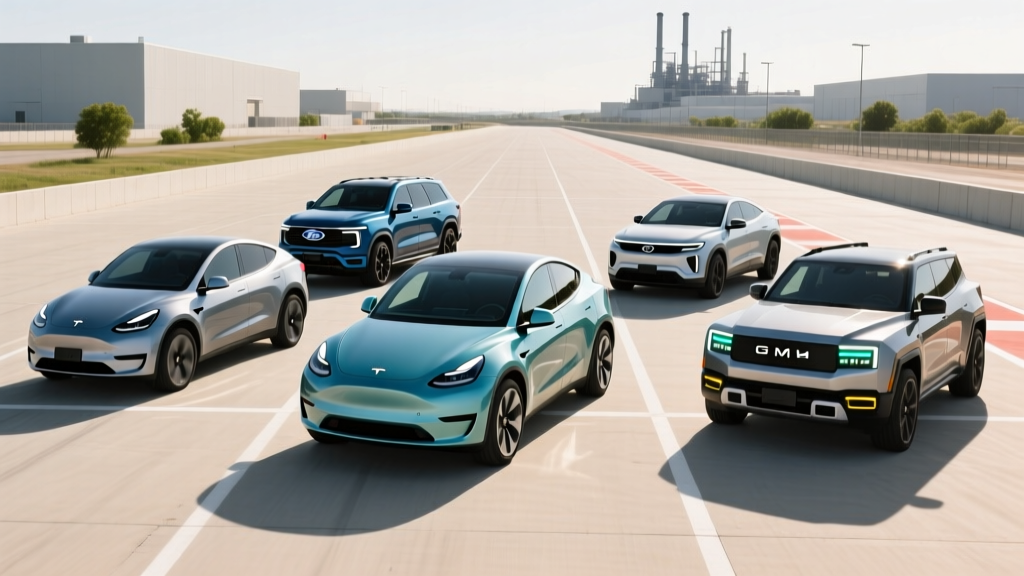
Not every EV is suited for rideshare duty. The vehicle needs to clear three thresholds: 300+ miles of EPA range (to handle a full shift without mid-day charging panic), rear-seat comfort and cargo space (passenger ratings matter), and fast DC charging capability (sub-25-minute 10–80% sessions so you can charge during a lunch break and get back to earning). Here's how the top contenders stack up:
| Model | Base MSRP | EPA Range | Battery (kWh) | Chemistry | DC Fast Charge (Peak kW) | 10–80% Time | 0–60 mph | HP |
|---|---|---|---|---|---|---|---|---|
| Tesla Model 3 Long Range | $42,490 | 341 mi | 79 kWh (usable) | NMC | 250 kW | ~22 min | 4.2 sec | 346 |
| Tesla Model 3 RWD | $38,990 | 272 mi | 60 kWh (usable) | LFP | 170 kW | ~25 min | 5.8 sec | 271 |
| Hyundai Ioniq 6 SE Long Range | $37,500 | 361 mi | 77.4 kWh | NMC | 240 kW | ~18 min | 6.9 sec | 225 |
| Chevrolet Equinox EV 3RS | $33,600 | 319 mi | 85 kWh (usable) | NMC | 190 kW | ~28 min | 7.8 sec | 288 |
| Kia EV6 Wind AWD | $42,900 | 310 mi | 77.4 kWh | NMC | 240 kW | ~18 min | 5.1 sec | 320 |
Real-world range caveat: These EPA figures assume moderate temperatures and mixed driving. In real rideshare conditions — highway-heavy routes, summer A/C, or winter cold — expect 15–25% less range. The Ioniq 6's 361-mile EPA rating might deliver 280–300 miles on a cold day at highway speeds. The Model 3 RWD's LFP battery handles cold somewhat better in terms of longevity, but still loses range in freezing temps.
Charging curve reality: The peak kW figures above are just that — peaks. Most EVs sustain their maximum rate only between 10–40% state of charge, then taper progressively. A 240 kW peak doesn't mean 240 kW average. The Ioniq 6's 18-minute 10–80% time is among the best in its class because its 800V architecture sustains higher rates deeper into the charge curve.
The Real Cost of Running an EV Rideshare
Purchase price is only the start. Here's a 5-year total cost of ownership comparison for a rideshare driver logging 50,000 miles per year (250,000 miles total):
| Cost Category | EV (Hyundai Ioniq 6 SE) | Gas (Toyota Camry LE) |
|---|---|---|
| Purchase Price (MSRP) | $37,500 | $28,500 |
| Federal Tax Credit (§30D) | −$7,500* | $0 |
| Effective Purchase Price | $30,000 | $28,500 |
| Fuel/Energy (250k miles) | $11,500 (home charging avg) | $26,560 (32 MPG, $3.40/gal) |
| Maintenance (250k miles) | $3,200 | $7,800 |
| Tires (250k miles) | $3,600 (heavier vehicle, faster wear) | $2,800 |
| Insurance (5-year avg) | $12,500 | $9,800 |
| Battery Replacement Risk | $0 (under warranty) | N/A |
| 5-Year Total | $60,800 | $75,460 |
| Cost Per Mile | $0.243 | $0.302 |
*Tax credit caveats: The §30D credit of up to $7,500 requires meeting buyer income caps ($150k single / $300k joint), vehicle MSRP caps ($55k sedans), and critical-mineral/battery-sourcing requirements that shift annually. As of 2026, the Ioniq 6 qualifies for the full credit, but always verify current eligibility on irs.gov before purchasing. Point-of-sale transfer is available, meaning the dealer applies the credit at purchase rather than waiting for tax filing.
The net result: Even with higher insurance and tire costs, the EV saves roughly $14,660 over five years — or about $2,932/year. For full-time rideshare drivers covering more miles, savings scale proportionally.
Charging Logistics: The Make-or-Break Factor
The single biggest variable in rideshare EV profitability is charging access. Here's the hierarchy:
Best case — Home Level 2 charging: A 240V Level 2 home charger (7.2–11.5 kW) adds 25–44 miles of range per hour. A full overnight charge from 20% to 100% takes 6–9 hours, more than enough for a next-day shift. Installation costs $500–$2,000 depending on electrical panel capacity and run distance. If you own your home or have landlord permission, this is the path to maximum savings.
Workable — Depot/apartment Level 2: Many apartment complexes and rideshare-specific charging depots now offer Level 2 chargers. Rates vary ($0.10–$0.25/kWh). You'll pay more than home charging but still save significantly versus gas.
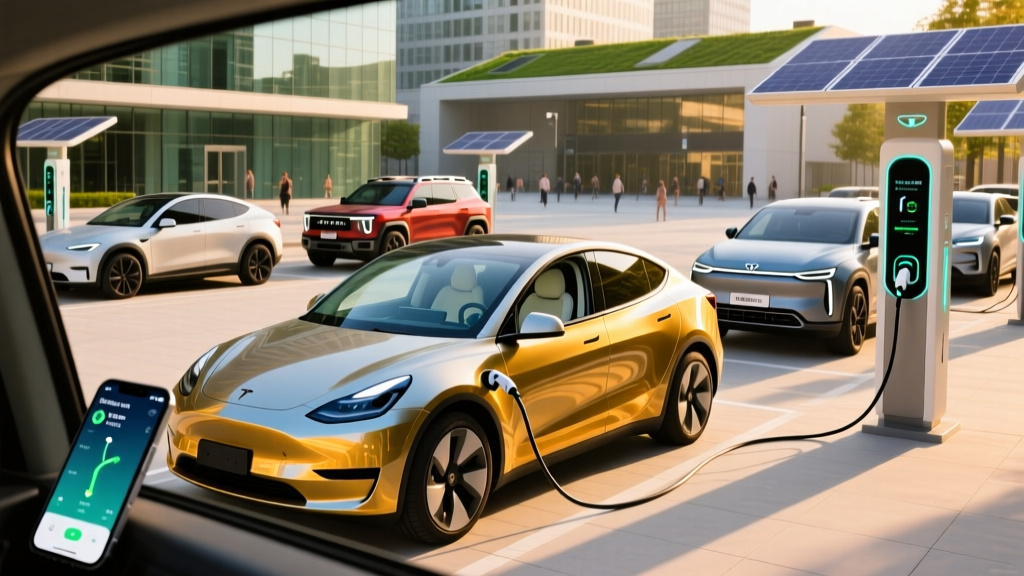
Challenging — Public DC fast charging only: If you rely exclusively on public DC fast chargers (Electrify America, EVgo, Tesla Superchargers), your energy cost rises to $0.28–$0.48/kWh — roughly $0.08–$0.14/mile. That cuts your fuel savings roughly in half versus home charging, and you lose 20–30 minutes of earning time per session. Some cities offer subsidized rideshare charging rates, but availability is inconsistent.
Not viable — No reliable charging: If you lack consistent access to any charging infrastructure, an EV rideshare vehicle will cost you time and money. Consider a hybrid (like the Toyota Prius, rated at 57 MPG combined) instead.
Common EV Rideshare Misconceptions
| Myth | Fact |
|---|---|
| "EVs can't handle a full rideshare shift." | A 300+ mile EPA range covers most 8–12 hour shifts (typically 150–250 miles). Strategic mid-day top-ups during lunch handle the rest. |
| "The battery will die and cost $20,000 to replace." | All major manufacturers warranty batteries for 8 years/100,000 miles (Hyundai: 10yr/100k). Real-world degradation data shows most packs retain 85–90% capacity at 150,000 miles. At 250k miles, expect 75–82% retention — still functional. |
| "Charging takes too long for rideshare." | Modern 800V EVs (Ioniq 6, EV6) charge 10–80% in ~18 minutes. Combined with meal breaks, this adds minimal dead time to a shift. |
| "EVs are worse in winter." | Range drops 15–30% in freezing temperatures — real, but manageable. Preconditioning the battery while plugged in and using seat heaters (which draw less power than cabin air heating) mitigates the loss. |
| "The $7,500 tax credit applies to everyone." | §30D has income caps, MSRP caps, and battery-sourcing requirements that change yearly. Verify eligibility on irs.gov before purchasing. |
EV vs. Hybrid vs. Gas: Which Is Right for Your Rideshare?
| Factor | Battery EV (Ioniq 6) | Hybrid (Toyota Prius) | Gas (Toyota Camry) |
|---|---|---|---|
| Cost Per Mile (fuel) | $0.046 (home) / $0.10 (public DC) | $0.060 | $0.106 |
| EPA Range / MPG | 361 mi / 140 MPGe | 57 MPG combined | 32 MPG combined |
| Refuel/Recharge Time | 18–28 min (DC) / 7 hr (L2) | 5 min | 5 min |
| Maintenance (per year) | ~$640 | ~$1,200 | ~$1,560 |
| Upfront Price (after credits) | ~$30,000 | ~$28,000 | ~$28,500 |
| Home Charging Needed? | Strongly recommended | No | No |
| Cold-Weather Penalty | 15–30% range loss | Minimal MPG loss | Minimal MPG loss |
| Best For | High-mileage drivers with home L2 | Drivers without home charging | Part-time, low-mileage drivers |
Insurance, Depreciation, and Hidden Costs
Rideshare insurance is non-negotiable — personal auto policies typically exclude commercial use, and Uber/Lyft coverage only applies during active trip periods. Most drivers need a rideshare endorsement or a commercial policy.
Insurance premiums: EVs carry 15–25% higher insurance premiums than equivalent gas vehicles. Higher repair costs (specialized body panels, sensor recalibration after minor collisions) and battery replacement risk drive this gap. Expect $2,200–$3,000/year for a rideshare-endorsed EV policy, versus $1,700–$2,200 for a gas sedan. Shop quotes from Geico, Progressive, and Allstate — EV insurance rates vary wildly by carrier.
Depreciation: EVs have historically depreciated faster than gas vehicles, but 2025–2026 data shows stabilization as the used EV market matures. Expect 45–55% value retention at 5 years/100,000 miles for mainstream EVs. Rideshare mileage accelerates depreciation regardless of powertrain — a 250,000-mile vehicle will be worth 15–25% of its original price.
Tire costs: EVs are 300–600 lbs heavier than comparable gas vehicles and deliver instant torque, which accelerates tire wear. Budget for tire replacement every 30,000–40,000 miles rather than the 50,000–60,000 miles typical for gas sedans. EV-specific tires (like the Michelin e.Primacy or Hankook iON) offer lower rolling resistance and longer life, but cost $200–$280 per tire.
Decision Framework: Should You Run an Electric Vehicle Rideshare?
Choose an EV for rideshare IF:
- You have reliable home Level 2 charging (or access to a subsidized depot charger)
- You drive 40,000+ miles/year — savings scale with mileage
- Your typical shift is under 250 miles
- You qualify for the §30D tax credit (income under $150k single / $300k joint)
- Your city offers rideshare EV incentive programs (Uber Zero Emissions, Lyft EV rewards)
- You plan to keep the vehicle 4+ years to recoup the upfront premium
Choose a hybrid for rideshare IF:
- You rent or lack home charging access
- You drive in extreme cold climates (below 10°F regularly) where range loss is severe
- Your shifts are unpredictable and sometimes exceed 300 miles
- You need the lowest possible upfront cost
- You operate in a charging desert (rural areas, limited DC fast charger density)
Stick with gas IF:
- You drive part-time (under 15,000 miles/year) — EV savings won't offset the premium
- You're in a market with very low gas prices (under $2.50/gallon) and high electricity rates (over $0.30/kWh)
Frequently Asked Questions
Does Uber or Lyft pay more for driving an EV?
Both platforms offer EV incentive programs in select cities. Uber's Zero Emissions program provides up to $1/trip extra (capped at $4,000/year in eligible markets). Lyft has offered charging credits through partnerships with EVgo. Availability varies by metro area — check your driver dashboard. Some airports also offer priority queue access for EV drivers, which can meaningfully reduce wait times.
How long do EV batteries last at rideshare mileage?
Current NMC and LFP battery packs are engineered for 1,500–3,000 full charge cycles before reaching 80% capacity. At 50,000 miles/year with a 300-mile range, you'll complete roughly 167 full cycles annually — meaning the battery should retain 80%+ capacity through 150,000–200,000+ miles. Hyundai and Kia back their packs for 10 years/100,000 miles. Tesla's warranty is 8 years/120,000 miles (Long Range) with a 70% retention threshold.
Can I charge my rideshare EV at a Tesla Supercharger?
As of 2026, Tesla has opened a significant portion of its Supercharger network to non-Tesla EVs via the NACS connector standard. Vehicles like the Ford Mustang Mach-E, Rivian, and upcoming NACS-equipped models can access Superchargers directly. For CCS-equipped vehicles (like the Ioniq 6), Tesla offers a Magic Dock adapter at select stations. Check the Tesla app or PlugShare for NACS-compatible station availability in your area.
What happens if I run out of charge mid-shift?
The same thing that happens if you run out of gas — you're stranded and need roadside assistance. The difference is that EV range estimation is generally more accurate than gas gauges, and apps like PlugShare, A Better Routeplanner, and built-in navigation (Tesla, Hyundai) provide real-time charger routing. The real risk isn't running out — it's wasting 20–30 minutes at a slow or broken public charger. Always have a backup charging plan in your territory.
Is it better to buy or lease an EV for rideshare?
Buying is generally better for high-mileage rideshare use. Most leases cap annual mileage at 12,000–15,000 miles, with penalties of $0.15–$0.30 per excess mile — a 50,000-mile/year driver would face $5,250–$10,500 in overage charges annually. Purchase, claim the §30D credit, and drive without restriction. If you do find a high-mileage lease program, compare the total lease cost plus overage penalties against the purchase price net of tax credits.
Do I need a special charger at home for rideshare?
You need a Level 2 (240V) home charger for practical overnight charging. A 48-amp unit on a 60-amp circuit (like the ChargePoint Home Flex or Tesla Wall Connector) delivers up to 11.5 kW — adding roughly 44 miles of range per hour. Installation costs $500–$2,000 depending on your electrical panel's capacity and the distance from panel to charger. If your home has a 100-amp panel, you may need a $1,500–$3,000 panel upgrade to 200 amps to support a Level 2 charger alongside existing loads. Always consult a licensed electrician for final specs.