The Vanguard of EV Aerodynamics and Powertrain Efficiency
When evaluating the best electric vehicles on the market, SUVs and trucks often dominate the headlines due to their utility and sheer size. However, the electric sedan remains the undisputed vanguard of automotive aerodynamics, powertrain efficiency, and maximum driving range. Because sedans inherently possess a lower roofline, smaller frontal area, and lighter curb weight compared to their crossover counterparts, they offer engineers the perfect canvas to push the boundaries of electrical engineering. For buyers prioritizing road trip capability, minimal charging stops, and lower long-term electricity costs, the electric sedan is the optimal choice.
In this data-driven comparison analysis, we rank the top electric sedans currently available in the North American market. Our focus is strictly on two critical metrics: total EPA-estimated driving range and real-world energy efficiency measured in miles per kilowatt-hour (mi/kWh). While the Environmental Protection Agency (EPA) provides standardized metrics like MPGe, translating efficiency into mi/kWh offers a much clearer picture of how effectively a vehicle converts battery capacity into forward momentum. According to the U.S. Department of Energy's Fuel Economy Guide, understanding mi/kWh is essential for calculating actual charging costs and predicting real-world highway performance.
Methodology: How We Measure Efficiency and Range
Our rankings rely on a synthesis of official EPA certification data and independent real-world highway testing. The EPA's testing cycle includes a mix of city and highway driving, which heavily favors regenerative braking in stop-and-go traffic. However, the true test of an EV's aerodynamic efficiency and powertrain thermal management occurs at sustained highway speeds. To account for this, we cross-reference EPA data with independent 75-mph highway range tests conducted by automotive journalists, which provide a more realistic expectation for road-tripping consumers. As noted in the comprehensive Car and Driver 75-MPH Real-World Range Tests, highway efficiency often separates the engineering marvels from the merely adequate EVs.
Our primary efficiency metric is mi/kWh (miles per kilowatt-hour). A higher number indicates a more efficient vehicle, meaning it requires less energy to travel the same distance. This directly translates to faster charging times on DC fast chargers, lower electricity bills at home, and extended range in adverse weather conditions.
The Data: Top 5 Electric Sedans Ranked
Below is our comprehensive data table ranking the most efficient and longest-range electric sedans currently on the market. Prices reflect the base MSRP before any federal or state tax incentives.
| Vehicle Model | EPA Range | Efficiency (mi/kWh) | Usable Battery (kWh) | Starting MSRP |
|---|---|---|---|---|
| Lucid Air Pure (RWD) | 419 miles | 5.0 mi/kWh | 88.0 kWh | $77,400 |
| Tesla Model 3 Long Range | 341 miles | 4.3 mi/kWh | 75.0 kWh | $47,740 |
| Hyundai Ioniq 6 SE Long Range | 361 miles | 4.2 mi/kWh | 77.4 kWh | $42,715 |
| BMW i4 eDrive40 | 301 miles | 3.6 mi/kWh | 81.5 kWh | $57,900 |
| Polestar 2 Long Range (SM) | 320 miles | 3.5 mi/kWh | 82.0 kWh | $49,900 |
Deep Dive: The Contenders Analyzed
1. Lucid Air Pure: The Efficiency King
The Lucid Air Pure is not just the most efficient electric sedan on the market; it is arguably the most efficient mass-produced passenger vehicle ever built. Achieving an astonishing 5.0 mi/kWh, the Air Pure leverages Lucid's proprietary miniaturized drive units and a 900-volt electrical architecture. This high-voltage system reduces electrical resistance and heat generation, allowing the powertrain to operate with minimal energy loss. Furthermore, the Air's sophisticated thermal management system ensures the battery remains in its optimal temperature window regardless of external conditions. While its starting price places it in the luxury tier, the sheer engineering prowess required to extract 419 miles of range from an 88 kWh battery pack is unmatched in the industry.
2. Tesla Model 3 Long Range: The Benchmark
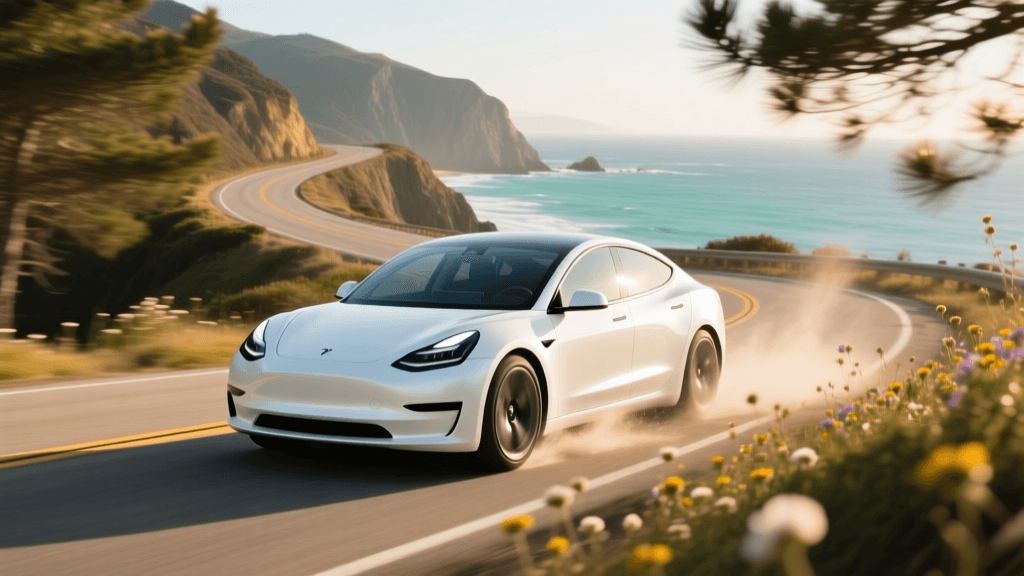
The Tesla Model 3 Long Range continues to set the benchmark for the premium midsize sedan segment. Following its recent 'Highland' refresh, the Model 3 benefits from improved aerodynamics, revised suspension tuning, and a highly optimized heat pump system. Tesla's industry-leading thermal management, often referred to as the 'Octovalve,' intelligently routes waste heat from the motors and battery to warm the cabin, drastically reducing the energy penalty of winter driving. Achieving 4.3 mi/kWh, the Model 3 Long Range proves that a dual-motor all-wheel-drive setup can still deliver exceptional efficiency, making it the most practical choice for buyers who need all-weather traction without sacrificing highway range.
3. Hyundai Ioniq 6 SE Long Range: The Aerodynamic Marvel
Hyundai took a radical approach to the Ioniq 6, prioritizing aerodynamic efficiency over traditional sedan proportions. The result is a 'streamliner' design that achieves an ultra-low drag coefficient of just 0.21 Cd. When equipped with the standard 18-inch aero wheels and the Long Range battery pack, the rear-wheel-drive Ioniq 6 SE delivers 361 miles of EPA range and 4.2 mi/kWh. Built on Hyundai's dedicated Electric-Global Modular Platform (E-GMP), the Ioniq 6 also features an 800-volt architecture, allowing it to charge from 10% to 80% in just 18 minutes on a 350 kW DC fast charger. For buyers seeking rapid charging speeds and standout design, the Ioniq 6 is a data-backed winner.
4. BMW i4 eDrive40: The Luxury Contender
Unlike the dedicated EV platforms of Lucid, Tesla, and Hyundai, the BMW i4 is built on the flexible CLAR architecture, which it shares with internal combustion vehicles. Despite this inherent packaging compromise, BMW's software engineers and battery management systems have coaxed an impressive 301 miles of range and 3.6 mi/kWh from its 81.5 kWh battery. The i4 eDrive40 utilizes a highly efficient current-excited synchronous motor that avoids the use of rare-earth magnets while delivering instant torque. While it may not top the efficiency charts, the i4 offers a traditional luxury sedan experience, superior build quality, and a highly intuitive iDrive 8 infotainment system, making it the top choice for legacy luxury buyers transitioning to electric.
5. Polestar 2 Long Range Single Motor: The Design-Forward Choice
The Polestar 2 Long Range Single Motor rounds out our top five with a respectable 320 miles of range and 3.5 mi/kWh. Polestar has focused heavily on standardizing efficiency-boosting hardware, including a standard heat pump on all recent models, which is often an expensive add-on for competitors. The Single Motor variant shifts the powertrain to the rear wheels, improving traction and efficiency over the dual-motor variants. While its fastback liftback design slightly compromises aerodynamic efficiency compared to the Ioniq 6, the Polestar 2 makes up for it with exceptional chassis dynamics, minimalist Scandinavian design, and an Android Automotive OS interface that seamlessly integrates with the Google ecosystem.
Actionable Advice: Maximizing Your Sedan's Efficiency
Purchasing a highly efficient electric sedan is only the first step. According to the Alternative Fuels Data Center, driver behavior, vehicle configuration, and environmental factors play a massive role in real-world energy consumption. To ensure you achieve the maximum possible range and efficiency from your new EV, follow these data-driven optimization strategies:
- Optimize Tire Selection: Tires account for up to 30% of an EV's rolling resistance. If you need to replace your factory tires, prioritize EV-specific touring tires like the Michelin e.Primacy or Hankook iON evo. Avoid ultra-high-performance summer tires unless you are willing to sacrifice 10% to 15% of your total range for cornering grip.
- Precondition While Plugged In: Battery chemistry is highly sensitive to temperature. Use your vehicle's scheduled departure feature to precondition the battery and cabin while the car is still connected to your home charger. This pulls energy from the grid rather than the battery, ensuring you leave with a 100% state of charge and a warm battery pack optimized for regenerative braking.
- Manage Highway Speeds: Aerodynamic drag increases with the square of your speed. Driving at 80 mph instead of 70 mph can reduce your sedan's efficiency by up to 20%. When planning long road trips, use route planners like A Better Routeplanner (ABRP) to find the optimal speed-to-charging-time ratio.
- Utilize One-Pedal Driving Wisely: While regenerative braking is excellent for city driving, coasting is actually more efficient on open highways. Anticipating stops and lifting off the accelerator early allows the vehicle to maintain momentum without the energy conversion losses inherent in heavy regenerative braking cycles.
Final Verdict
The data clearly shows that the electric sedan segment is a hotbed of innovation. If absolute maximum range and class-leading efficiency are your primary metrics, the Lucid Air Pure stands alone at the top of the mountain. However, for buyers seeking the best balance of price, efficiency, and charging infrastructure, the Hyundai Ioniq 6 SE and Tesla Model 3 Long Range offer unparalleled value. By understanding the metrics of mi/kWh and applying smart driving habits, EV sedan owners can easily conquer cross-country road trips with fewer stops and lower costs than ever before.