Can You Run a Food Truck on Electric Power in 2026?
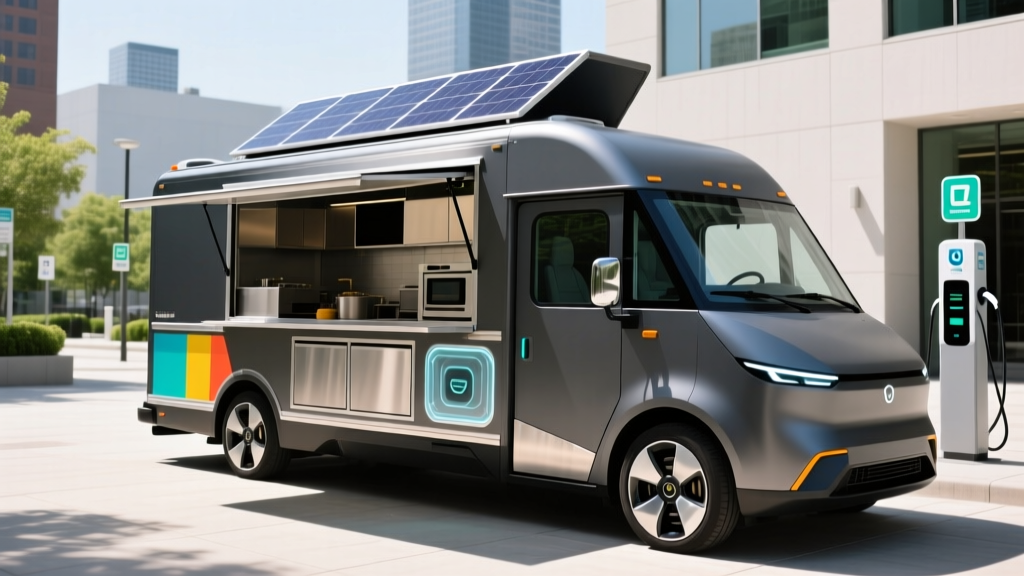
Yes — but viability depends on your daily route distance, cooking energy source, and depot charging access. Purpose-built electric food truck platforms like the BrightDrop Zevo 600, Ford E-Transit cutaway, and Lightning Electric Class 4 chassis offer 150–250 miles of EPA-estimated range with battery packs from 68 kWh to 165 kWh. Expect to pay $85,000–$160,000 before upfitting, with potential savings of $4,000–$9,000 annually on fuel and maintenance versus diesel equivalents. The critical constraint: most cooking equipment still runs on propane or requires a separate generator, as drawing high-wattage cooking loads from the traction battery significantly reduces driving range.
Why Food Truck Operators Are Looking at Electric Trucks
The mobile food industry faces tightening emissions regulations in urban cores. Cities like Los Angeles, New York, and Seattle have either implemented or announced zero-emission zones that directly affect diesel-powered food trucks. Meanwhile, commercial electricity rates remain significantly lower per mile than diesel — typically $0.12–$0.18 per kWh versus $3.80–$4.50 per gallon for diesel in 2026.
Beyond regulation, electric drivetrains offer operational advantages for the food truck workflow: silent operation at event venues and residential areas, zero tailpipe emissions near food prep areas, and regenerative braking that reduces brake wear in stop-and-go urban routes. The instant torque of electric motors also makes frequent starts from parked positions smoother and less mechanically stressful than diesel equivalents.
Top Electric Truck Platforms for Food Truck Builds
Most electric food trucks in 2026 are not sold as turnkey units. Instead, operators purchase an electric chassis or step-van platform, then work with an upfitter to install kitchen equipment, serving windows, and auxiliary power systems. Here are the leading platforms:
| Platform | Battery (kWh) | EPA Range (mi) | Real-World Range* | Payload (lbs) | DC Fast Charge (kW) | 10–80% Time | Base Chassis MSRP |
|---|---|---|---|---|---|---|---|
| Ford E-Transit (Cutaway 150") | 68 kWh (NMC) | 126 | 95–110 | 3,800 | 115 kW peak | ~41 min | $52,000–$58,000 |
| BrightDrop Zevo 600 | 165 kWh (NMC) | 250 | 180–220 | 5,200 | 120 kW peak | ~55 min | $95,000–$110,000 |
| Lightning Electric Class 4 | 118 kWh (NMC) | 150 | 115–140 | 8,500 | 80 kW peak | ~65 min | $120,000–$140,000 |
| Workhorse E-Gen (Step Van) | 78 kWh (NMC) | 130 | 95–120 | 4,100 | 90 kW peak | ~50 min | $85,000–$95,000 |
*Real-world range accounts for urban stop-and-go driving, moderate payload, and auxiliary loads. Cold-weather operation (below 32°F) can reduce range an additional 20–35%.
Range Reality Check for Food Truck Routes
A typical urban food truck route covers 30–60 miles per day including travel between locations, repositioning during service, and return to a commissary. Even the shortest-range platform (Ford E-Transit at ~95 real-world miles) covers this with buffer — provided you charge overnight at your depot. The problem arises for event-based operators who drive 100+ miles to festivals or farmers markets in areas without DC fast charging infrastructure.
Electric vs. Diesel Food Truck: Total Cost Breakdown
The upfront cost of an electric food truck chassis is 40–80% higher than a comparable diesel platform. But the total cost of ownership (TCO) equation shifts when you factor in fuel, maintenance, and incentive savings over a 7-year ownership cycle.
| Cost Category | Electric Food Truck | Diesel Food Truck | Annual Difference |
|---|---|---|---|
| Chassis Purchase (before incentives) | $95,000 (avg) | $52,000 (avg) | — |
| Federal §45W Commercial Clean Vehicle Credit | Up to $40,000 | $0 | Reduces EV gap |
| Kitchen Upfit (both) | $40,000–$80,000 | $40,000–$80,000 | $0 |
| Annual Fuel/Energy (12,000 mi/yr) | $1,800–$2,600 | $6,200–$8,400 | EV saves $4,000–$5,800 |
| Annual Maintenance | $800–$1,200 | $2,800–$4,000 | EV saves $1,800–$2,800 |
| Insurance (annual avg) | $3,200–$4,500 | $2,600–$3,800 | EV costs $400–$700 more |
| Depot Charger Install (Level 2, 19.2 kW) | $3,500–$8,000 (one-time) | $0 | — |
| 7-Year Total Cost | $110,000–$145,000 | $135,000–$175,000 | EV saves $15,000–$30,000 |
Key incentive note: The IRS §45W Commercial Clean Vehicle Credit provides up to $40,000 for qualifying commercial EVs over 14,000 lbs GVWR (or $7,500 for lighter vehicles). Unlike the consumer §30D credit, §45W has no MSRP cap and no buyer income limit — but the vehicle must be used primarily in the United States and meet battery sourcing requirements. Consult a tax professional for eligibility specifics.
The Cooking Power Problem: Traction Battery vs. Auxiliary Systems
Here is the misconception that trips up most first-time electric food truck buyers: you cannot practically run commercial cooking equipment off the truck's traction battery.
A typical food truck kitchen draws 15–30 kW of continuous power during service — flat-top griddles alone pull 8–12 kW, commercial fryers 5–8 kW, and ventilation hoods 2–4 kW. Running that load for a 4-hour service window would consume 60–120 kWh — which is the entire battery capacity of most electric truck platforms.
The practical solutions in 2026:
- Propane for cooking, electric for driving: The most common setup. The truck's battery handles propulsion and climate control; a standard propane system powers cooking appliances. This preserves full driving range.
- Dedicated auxiliary battery pack: Some upfitters install a separate 20–40 kWh LFP battery bank specifically for kitchen loads, charged independently from the traction battery. Adds $12,000–$25,000 and 800–1,500 lbs.
- Shore power at fixed locations: Operators who serve from the same location daily (office parks, brewery lots) can plug into 240V/50A shore power for cooking, eliminating onboard energy concerns entirely.
- All-electric with oversized battery: Platforms like the BrightDrop Zevo 600 with 165 kWh can theoretically support limited electric cooking, but this cuts driving range by 40–60% during service days. Not recommended without careful load planning.
Charging Infrastructure for Food Truck Operations
Food truck charging needs differ fundamentally from passenger EV ownership. You are charging a heavy commercial vehicle, often on a tight turnaround schedule between dinner service and the next morning's breakfast run.
| Charging Level | Power (kW) | Miles Added/Hour | Typical Use Case | Install Cost |
|---|---|---|---|---|
| Level 1 (120V) | 1.4 kW | 3–5 mi/hr | Not viable for commercial trucks | $0 (outlet) |
| Level 2 (240V, 48A) | 11.5 kW | 28–35 mi/hr | Overnight depot charging (most common) | $3,500–$8,000 |
| Level 2 (240V, 80A) | 19.2 kW | 45–55 mi/hr | Faster overnight, partial midday top-up | $6,000–$14,000 |
| DC Fast (50–150 kW) | 50–150 kW | 150–400 mi/hr | Midday top-up at public stations | N/A (pay per use) |
Depot charging is non-negotiable. Relying on public DC fast charging for a food truck is impractical: commercial vehicles may not fit standard charging stalls, you lose 45–65 minutes of potential service time, and DC fast charging costs $0.35–$0.55/kWh at public stations — erasing much of the fuel-cost advantage. Budget $3,500–$8,000 for a dedicated Level 2 installation at your commissary or storage location. This requires a 240V/60A or higher circuit; older commercial buildings may need a panel upgrade adding $2,000–$5,000.
For operators without a dedicated depot, some municipalities and food truck pod operators are installing commercial-grade Level 2 chargers at commissary kitchens. Check with your local food truck association for shared-charging options.
Real-World Ownership: What First-Time EV Food Truck Buyers Must Know
| Myth | Fact |
|---|---|
| "Electric trucks can't handle food truck weight" | Modern Class 3–4 EV platforms carry 3,800–8,500 lbs payload — sufficient for most kitchen upfits. Verify your upfit weight with the chassis manufacturer's payload calculator. |
| "The battery will die in 5 years" | Commercial EV batteries carry 8-year/100,000-mile warranties minimum, with most manufacturers warranting 70% capacity retention. NMC batteries in commercial use show ~2–3% annual degradation in fleet data. |
| "I can run my grill off the truck battery" | Cooking loads would drain the traction battery in 2–4 hours. Use propane for cooking or install a dedicated auxiliary battery system. |
| "Electric food trucks get the $7,500 tax credit" | Commercial vehicles over 14,000 lbs GVWR qualify under §45W (up to $40,000), not the consumer §30D credit. Rules differ significantly — consult IRS guidelines and a tax professional. |
| "Charging takes too long for a business" | Overnight Level 2 charging (8–10 hours) fully replenishes any food truck route. DC fast charging is for emergencies, not daily use. |
Cold-Weather Reality
If you operate in climates where temperatures regularly drop below freezing, plan for 20–35% range loss in winter. A BrightDrop Zevo 600 rated at 250 miles EPA may deliver only 165–200 miles in January in Chicago. Battery preconditioning (available on most platforms) mitigates this when charging is scheduled, but route planning must account for seasonal variation. Diesel food trucks also lose efficiency in cold weather, but the effect is less dramatic (~10–15%).
Decision Framework: Should Your Food Truck Go Electric?
Choose an Electric Food Truck If:
- Your daily route is under 80 miles round-trip (covers most urban food truck operations)
- You have access to overnight depot charging at your commissary or storage facility
- You operate in a city with zero-emission zone requirements or upcoming clean-air mandates
- You serve at noise-sensitive venues (residential areas, outdoor concerts, corporate campuses)
- Your business plan spans 5+ years, allowing TCO savings to offset higher upfront cost
- You qualify for the §45W commercial credit or state/local fleet electrification incentives
Stick With Diesel or Consider a Hybrid If:
- You regularly drive 120+ miles to events, festivals, or rural markets
- You lack reliable overnight charging access and cannot install a depot charger
- Your operation is seasonal (3–4 months/year) — the upfront premium is harder to recoup
- You need maximum payload capacity for heavy kitchen equipment (some EV platforms lose 1,000–2,000 lbs to battery weight)
- You operate primarily in extreme cold climates without access to climate-controlled storage
Frequently Asked Questions
How much does a fully built electric food truck cost in 2026?
A complete electric food truck — chassis plus kitchen upfit — typically costs $130,000–$220,000 depending on platform and equipment. After the §45W commercial credit (up to $40,000 for vehicles over 14,000 lbs), effective cost drops to $90,000–$180,000. Compare this to $85,000–$140,000 for a diesel equivalent with no comparable credit.
Can I charge an electric food truck at a regular public charging station?
Physically, yes — most platforms use CCS1 connectors compatible with Electrify America, EVgo, and ChargePoint DC fast chargers. Practically, commercial vehicles often exceed standard parking stall dimensions, and public DC fast charging at $0.35–$0.55/kWh eliminates most fuel cost savings. Depot Level 2 charging at $0.10–$0.18/kWh is the economically sound approach.
What's the battery replacement cost for a commercial electric truck?
Out-of-warranty battery replacement for platforms in this class runs $25,000–$55,000 depending on capacity. However, fleet data from NREL studies shows commercial NMC batteries retaining 75–85% capacity after 8 years of typical use. Most operators will sell or repurpose the vehicle before needing a full replacement.
Do electric food trucks need propane?
Most do. Unless you install a dedicated auxiliary battery system or operate exclusively from shore power, propane remains the practical choice for cooking appliances. The electric drivetrain handles propulsion; propane handles the kitchen. This hybrid-energy approach preserves full driving range.
What permits and inspections are required for an electric food truck?
You need the same health department permits, fire marshal inspections, and business licenses as any food truck. Additionally, your depot charger installation requires an electrical permit and inspection from your local building authority. Some jurisdictions require a licensed electrician to certify the charging circuit — factor this into your installation budget.
How does the §45W commercial clean vehicle credit work?
The §45W credit provides 15% of the vehicle's basis (or 30% if you don't use bonus depreciation) for qualifying commercial clean vehicles, capped at $7,500 for vehicles under 14,000 lbs GVWR and $40,000 for heavier vehicles. The vehicle must be depreciable, used primarily in the US, and meet battery component and critical mineral sourcing requirements. Unlike the consumer §30D credit, there is no MSRP cap or buyer income limit. Rules are subject to change — verify current requirements with a tax professional before purchasing.