Quick Answer: The best electric city cars in 2026 — the Chevrolet Equinox EV, Hyundai Kona Electric, Nissan Leaf, and Fiat 500e — deliver 200–319 miles of EPA range, start between $28,000–$37,000 before incentives, and cost roughly $0.04–$0.06 per mile to charge at home. Urban drivers covering under 40 miles daily will charge once or twice a week on a standard 120V outlet alone, making Level 2 home installation optional rather than mandatory. The break-even point vs. a comparable gas subcompact arrives around year 3–4 of ownership when factoring fuel savings, reduced maintenance, and the federal §30D tax credit (up to $7,500, subject to income, MSRP caps, and battery-sourcing rules).
Why Electric City Cars Make Sense for Urban Drivers
City driving is where electric vehicles shine brightest. Stop-and-go traffic, which torments a gas engine's fuel economy, actually benefits an EV through regenerative braking — every deceleration recovers kinetic energy and feeds it back into the battery. The EPA's city-cycle MPGe ratings for electric city cars routinely exceed their highway figures, the opposite of what you see with internal combustion.
Consider the math: a typical urban commuter driving 30 miles round-trip, five days a week, covers roughly 7,800 miles annually. An electric city car averaging 3.5 miles per kWh consumes about 2,230 kWh per year. At the national residential average of $0.17/kWh (U.S. EIA, 2025 data), that's $379 annually in electricity. A gas subcompact getting 30 MPG combined at $3.40/gallon burns $884 on the same mileage — a $505 annual gap before maintenance differences even enter the equation.
Urban drivers also rarely stress range. A 250-mile EPA-rated EV has a comfortable 5–6x buffer over a typical daily commute. And because most city dwellers return to the same location nightly, consistent home charging — even at Level 1 speeds — eliminates the "charging desert" anxiety that plagues apartment dwellers without dedicated parking.
Top Electric City Cars Compared: 2026 Specs
| Model | EPA Range | Battery (kWh) | Chemistry | DC Fast Charge (Peak kW) | 10–80% Time | 0–60 mph | Base MSRP |
|---|---|---|---|---|---|---|---|
| Chevrolet Equinox EV 2LT | 319 mi | 85 kWh (usable) | NMC | 150 kW | ~30 min | 8.1 sec | $33,600 |
| Hyundai Kona Electric SEL | 261 mi | 64.8 kWh | NMC | 100 kW | ~43 min | 7.8 sec | $32,975 |
| Nissan Leaf SV Plus | 212 mi | 60 kWh | NMC | 100 kW (CCS adapter needed on newer trims) | ~45 min | 7.9 sec | $28,140 |
| Fiat 500e | 149 mi | 42 kWh | NMC | 85 kW | ~35 min | 9.0 sec | $32,500 |
| Volvo EX30 Single Motor | 265 mi | 69 kWh | LFP | 153 kW | ~26 min | 6.5 sec | $36,550 |
Sources: fueleconomy.gov, manufacturer press sites. All MSRP figures are base trim before destination charges and incentives. Real-world highway range at 70+ mph typically drops 10–15% below EPA; cold-weather (below 30°F) can reduce range by 20–35% depending on heat pump availability.
Real-World Range Reality Check: The Chevrolet Equinox EV's 319-mile EPA figure assumes mixed driving at moderate temperatures. On a 75-mph highway trip in 40°F weather without a heat pump running, expect closer to 230–250 miles. For pure city driving in temperate conditions, you'll likely match or exceed the EPA number thanks to regen-heavy stop-and-go patterns. The Volvo EX30's LFP battery handles frequent 100% charges without accelerated degradation — an advantage for city drivers who top off nightly.
Cost Breakdown: Electric City Car vs. Gas Subcompact
The upfront sticker price of an electric city car often exceeds a comparable gas subcompact by $5,000–$10,000, but total cost of ownership tells a different story over 5 years. Here's a head-to-head comparison using the Hyundai Kona Electric ($32,975) against the gasoline Hyundai Kona ($24,950 SE trim) over 5 years and 60,000 miles.
| Cost Category | Hyundai Kona Electric | Hyundai Kona Gas (SE) |
|---|---|---|
| Purchase Price (MSRP) | $32,975 | $24,950 |
| Federal Tax Credit (§30D) | –$3,750 to $7,500* | $0 |
| Fuel/Energy (60,000 mi) | $2,916 (home charging at $0.17/kWh) | $6,800 (30 MPG at $3.40/gal) |
| Maintenance (60,000 mi) | $1,200 (tire rotation, cabin filter, wiper fluid) | $3,600 (oil changes, brake pads, filters, spark plugs) |
| Insurance (5-year avg.) | $9,500 | $7,800 |
| Estimated Depreciation | $14,500 | $12,200 |
| 5-Year Total | $28,341 – $31,591 | $55,350 |
*The §30D federal tax credit amount depends on battery critical-mineral and component sourcing requirements that phase in annually. The Kona Electric's credit eligibility varies by model year and manufacturing batch. Check the latest rules at IRS.gov. Income caps apply: $150K single / $300K joint. MSRP must not exceed $55,000 for cars.
The electric Kona breaks even between years 3 and 4, even before accounting for potential state rebates, HOV lane access, or employer-subsidized workplace charging. Insurance runs 15–25% higher on EVs due to elevated repair costs and parts pricing — a real ownership cost that many buyers overlook.
Charging at Home: What Urban EV Owners Actually Need
The single biggest ownership advantage for electric city cars is waking up to a full "tank" every morning. But home charging access varies enormously for urban dwellers.
| Level | Power (kW) | Miles Added per Hour | Typical Setup | Install Cost |
|---|---|---|---|---|
| Level 1 (120V) | 1.0–1.4 kW | 3–5 mi/hr | Standard household outlet | $0 (included cord) |
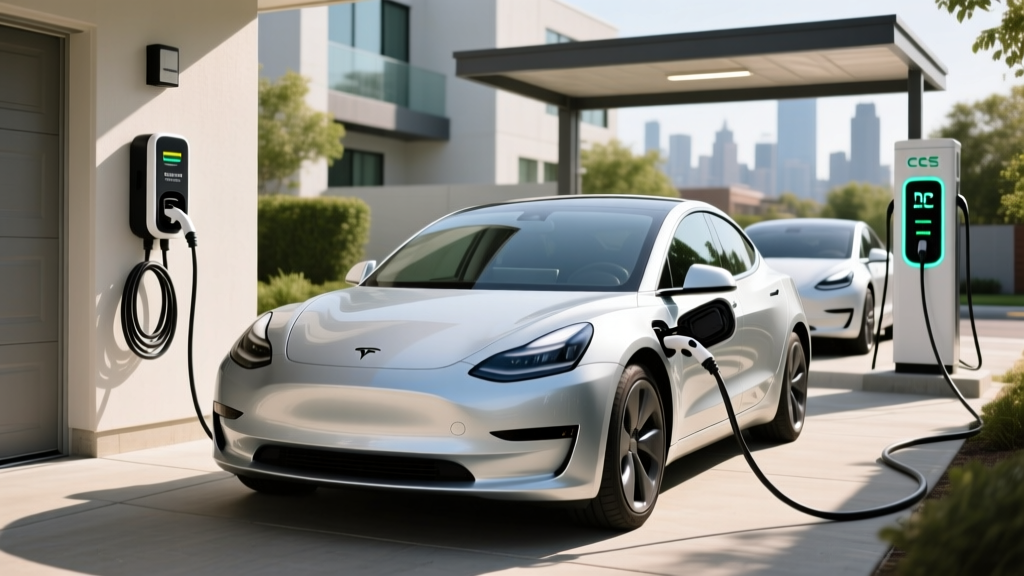
| Level 2 (240V) | 7.2–11.5 kW | 25–40 mi/hr | Dedicated 240V circuit, wall-mounted unit | $800–$2,500 (electrician + permit + equipment) |
| DC Fast Charge | 50–150 kW | 150–400 mi/hr | Public stations (Electrify America, EVgo, etc.) | $0.30–$0.55/kWh public pricing |
For city drivers covering under 40 miles daily, Level 1 is often sufficient. Plug in when you get home at 6 PM, unplug at 7 AM — that's 13 hours × 4 miles/hour = 52 miles recovered, more than enough to replenish a day's driving. This is the hidden advantage of electric city cars that EV skeptics miss: you don't always need a $2,000 Level 2 installation.
However, Level 2 becomes essential if you:
- Drive more than 60 miles daily
- Want preconditioning flexibility (warming the battery and cabin on grid power before departure)
- Make regular weekend highway trips exceeding 150 miles
- Live in a cold climate where winter range loss demands faster replenishment
Urban apartment dwellers without dedicated parking face a genuine challenge. Solutions include workplace charging, curbside Level 2 programs (expanding in cities like NYC, LA, and Chicago), and relying on DC fast-charging networks for weekly top-ups. If you can't charge at home at all, a plug-in hybrid may be a more practical electrified choice until infrastructure catches up.
Common Misconceptions About Electric City Cars
| Myth | Fact |
|---|---|
| "The battery will need replacement within a few years" | Federal law mandates EV battery warranties of 8 years/100,000 miles. Most NMC batteries retain 85–90% capacity at 100K miles (NHTSA compliance data). LFP batteries, like the Volvo EX30's, degrade even more slowly and tolerate daily 100% charges. |
| "I need a 300-mile range EV for city driving" | Average US daily driving is 37 miles (FHWA data). A 150-mile EV like the Fiat 500e offers a 4x buffer. Range matters for road trips, not commutes. |
| "EVs don't work in cold weather" | Range drops 20–35% in sub-30°F weather, but preconditioning while plugged in mitigates this. A 250-mile EV with 30% winter loss still has 175 miles — far more than any daily city commute requires. |
| "Charging takes too long" | At home, charging happens while you sleep — zero active time. On road trips, 10–80% DC fast charging takes 26–45 minutes for these models, roughly one rest stop. |
| "The electric grid can't support EVs" | Most EV charging happens overnight during off-peak hours when grid capacity is underutilized. A single electric city car draws less sustained power than a clothes dryer. |
Decision Framework: Is an Electric City Car Right for You?
Choose an electric city car if:
- You have access to any form of home or workplace charging (even a 120V outlet)
- Your daily driving is under 60 miles round-trip
- You want the lowest per-mile operating cost available
- You qualify for the §30D federal tax credit (income under $150K single / $300K joint, vehicle MSRP under $55K)
- You value instant torque and one-pedal driving in stop-and-go traffic
Consider a plug-in hybrid instead if:
- You have zero access to home or workplace charging
- You regularly drive 200+ miles on weekends without reliable fast-charging corridors
- Your apartment building has no EV infrastructure plans
- You need a single vehicle for both city commuting and long rural road trips
Wait or choose gas if:
- Your annual mileage is under 5,000 miles (fuel savings won't offset the EV price premium within a reasonable timeframe)
- You live in an extreme cold climate (below 0°F for extended periods) without a garage for preconditioning
- Your budget is strictly under $25,000 and you cannot access used-EV credits
What First-Time EV Buyers Must Know
Understand kW vs. kWh immediately. Kilowatts (kW) measure power — how fast energy flows, like water pressure. Kilowatt-hours (kWh) measure energy capacity — how much the battery holds, like tank size. A 65 kWh battery charged at 10 kW takes about 6.5 hours from empty to full. Confusing these two is the most common beginner mistake.
Charging curves are not flat. A vehicle rated for "150 kW DC fast charging" only hits that peak between roughly 10–40% state of charge. Above 60%, the rate tapers significantly to protect battery health. This is why manufacturers quote 10–80% times rather than 0–100% — the final 20% can take as long as the first 70%.
The §30D tax credit can now transfer at point of sale. Rather than waiting until tax filing, you can apply the credit as a down-payment reduction at the dealer. This requires the dealer to be registered with the IRS Energy Credits Online system. Confirm eligibility before signing — the credit depends on your income, the vehicle's MSRP category, and the battery's critical-mineral and component sourcing, which varies by production batch.
Regenerative braking changes your driving habits. Most electric city cars offer adjustable regen levels. Set to maximum, you can drive almost entirely with the accelerator pedal — lifting off slows the car aggressively while recovering energy. In city traffic, this reduces brake wear to near zero and makes stop-and-go less fatiguing.
Tires wear faster on EVs. The instant torque and heavier curb weight (batteries add 500–1,000 lbs vs. a gas equivalent) accelerate tire wear by roughly 20%. Budget for tire replacement at 30,000–40,000 miles rather than the 50,000+ you might expect from a gas car. EV-specific tire compounds (like Michelin e·Primacy or Hankook iON) last longer and reduce rolling noise.
Frequently Asked Questions
What is the cheapest electric city car available in 2026?
The Nissan Leaf S starts at $28,140 with 149 miles of EPA range on its 40 kWh battery. The SV Plus trim at $31,640 bumps range to 212 miles with a 60 kWh pack. Both qualify for varying levels of the §30D credit depending on sourcing compliance. The Leaf uses CHAdeMO for DC fast charging, which has fewer public stations than CCS or NACS — a real limitation for road trips outside the Pacific Northwest, where CHAdeMO infrastructure remains strongest.
Do electric city cars qualify for the full $7,500 federal tax credit?
It depends. The §30D credit has two components — $3,750 for critical-mineral sourcing and $3,750 for battery-component sourcing — and the vehicle must meet both for the full $7,500. Sourcing requirements tighten annually. Additionally, buyer income must not exceed $150,000 (single) or $300,000 (joint), and vehicle MSRP must stay under $55,000 for passenger cars. Check the IRS's qualified vehicles list for current eligibility by model and VIN.
Can I use a regular household outlet to charge my electric city car?
Yes. Level 1 charging on a standard 120V/15A outlet delivers roughly 1.2 kW, adding 3–5 miles of range per hour. For a city driver covering 30 miles daily, a 10-hour overnight session recovers 30–50 miles — sufficient for most urban commutes. The trade-off is slow recovery if you deplete the battery significantly or need quick turnaround between multiple trips in one day.
How long do EV batteries last in city driving?
City driving is actually gentler on batteries than highway use. Moderate speeds, frequent regen (which avoids full friction-brake heat), and smaller daily depth-of-discharge cycles all reduce stress. Data from fleet operators shows NMC batteries retaining 85–92% capacity at 100,000 miles under mixed use. LFP batteries, like those in the Volvo EX30, demonstrate even slower degradation curves and tolerate regular 100% charging without meaningful longevity penalty. All new EVs carry a minimum 8-year/100,000-mile battery warranty against defects and excessive capacity loss (typically below 70% state of health).
Are electric city cars safe in crashes?
EVs undergo the same NHTSA and IIHS crash testing as gas vehicles. The battery pack's low floor placement gives EVs a lower center of gravity, reducing rollover risk. The main safety consideration is post-crash fire risk from damaged battery cells — statistically rare but harder to extinguish than gasoline fires. Check individual model ratings at IIHS.org and NHTSA.gov/ratings before purchasing.