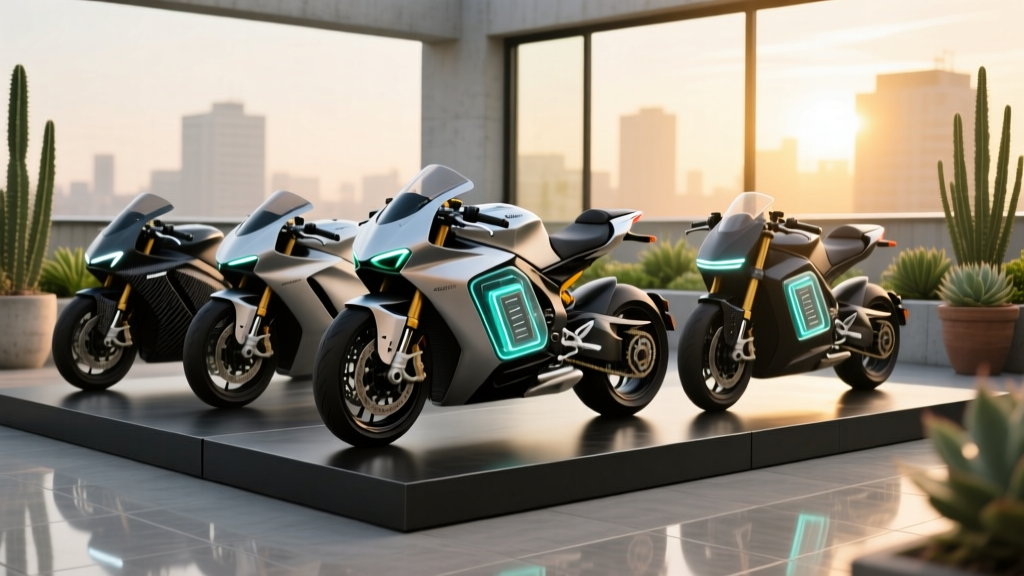
Looking for an electric cafe racer? You're eyeing one of the most exciting — and misunderstood — segments in electrified two-wheelers. Here's the direct answer: the best electric cafe racers in 2026 deliver 90–140 miles of real-world range, 100+ mph top speeds, and the classic stripped-down, forward-leaning aesthetic of the 1960s London cafe racer scene — all with zero tailpipe emissions and a fraction of the maintenance of a gas motorcycle. But they come with real trade-offs: limited highway range, sparse fast-charging infrastructure for bikes, and base prices starting around $15,000 before any incentives.
This guide covers the top electric cafe racer models available or announced for 2026, how they compare to gas-powered equivalents, what ownership actually costs, and a decision framework to help you pick the right one — or decide a different EV platform suits you better.
Quick Verdict: Is an Electric Cafe Racer Right for You?
Yes, if: You commute 30–80 miles round-trip, have home charging access, value low maintenance, and want classic cafe racer styling with instant electric torque.
No, if: You regularly ride 150+ miles between stops, rely on public fast-charging networks (bike-specific DC chargers are nearly nonexistent), or need passenger capability and touring range.
What Is an Electric Cafe Racer?
A cafe racer is a style of motorcycle rooted in 1960s British rock-and-roll culture — lightweight, stripped of unnecessary bodywork, with clip-on or low handlebars, rearset footpegs, and a solo seat cowl. The riding position is aggressive and forward-leaning. Traditionally built on platforms like the Triumph Bonneville, Honda CB, or BMW R-series, the cafe racer look has been adapted to electric powertrains by several manufacturers.
An electric cafe racer pairs that retro aesthetic with a battery-electric drivetrain: a mid-mounted or hub motor, a lithium-ion battery pack (typically NMC chemistry for energy density), and regenerative braking. Unlike electric scooters or commuter bikes, electric cafe racers prioritize performance and style over cargo capacity or upright comfort.
Key specs to evaluate across any electric cafe racer:
- Battery capacity (kWh): Total usable energy — determines range.
- Motor output (kW/HP): Peak and continuous power — determines acceleration and top speed.
- Range (miles): Manufacturer claimed vs. real-world at highway speeds (55–70 mph range drops 25–40% vs. city riding).
- Charge time: Level 1 (120V household) and Level 2 (240V) times in hours; DC fast charge availability (rare on motorcycles).
- Weight (lbs): Electric bikes tend to be heavier than gas equivalents due to battery mass.
Top Electric Cafe Racer Models for 2026
Here are the standout electric cafe racers currently available or announced for the 2026 model year, with verified specifications from manufacturer sources. Note: the electric motorcycle market is smaller than four-wheeled EVs, and several prominent brands (notably Zero Motorcycles and Energica) offer models that can be spec'd or customized into cafe racer configurations even if not marketed exclusively as such.
| Model | Battery (kWh) | Motor (HP) | Claimed Range | Real-World Range (est.) | 0–60 mph | Top Speed | Base MSRP |
|---|---|---|---|---|---|---|---|
| Maeving RM1S | 2.4 (dual battery option: 4.8) | 15 HP (peak) | 80 mi (dual battery) | 55–65 mi (mixed) | N/A (45 mph top) | 45 mph | ~$7,500 (single) / ~$9,800 (dual) |
| Zero S (cafe fairing equipped) | 14.4 (usable: ~12.4) | 46 HP (continuous) / 78 HP (peak) | 156 mi (city) / 82 mi (hwy) | 70–90 mi (hwy) | ~4.0 sec | 98 mph | ~$18,495 |
| Energica Eva Ribelle (cafe variant) | 21.5 (NMC) | 107 HP (peak) | 143 mi (city) / 89 mi (hwy) | 75–95 mi (hwy) | ~3.0 sec | 125 mph | ~$24,500 |
| Ryvid AN-1 (announced) | 4.3 (removable) | 15 HP (peak) | 60 mi | 40–50 mi (mixed) | N/A | 55 mph | ~$7,900 (announced) |
| Super73-RX (electric cafe-styled) | 0.96 (dual: 1.92) | 2 HP (continuous) / peak higher | 75 mi (pedal-assist) | 30–40 mi (throttle only) | N/A | 28 mph (Class 2) | ~$3,999 |
Real-World Range Reality Check
Electric motorcycle range claims — like EV car EPA estimates — are best-case scenarios. At sustained highway speeds (65–75 mph), aerodynamic drag on a motorcycle is substantial, and expect 25–40% range reduction from city/combined claims. Cold weather (below 40°F) further reduces range by 15–25% due to battery chemistry limitations and rider heating demands. If a bike claims 100 miles of range, plan for 60–75 miles of usable highway range in moderate conditions.
Electric Cafe Racer vs. Gas Cafe Racer: By the Numbers
The classic comparison: a gas-powered cafe racer like the Triumph Thruxton RS or Royal Enfield Continental GT 650 versus their electric counterparts. Here's how the economics and performance stack up.
| Metric | Electric (Zero S, 14.4 kWh) | Gas (Triumph Thruxton RS) |
|---|---|---|
| Base MSRP | $18,495 | $15,795 |
| Fuel/Energy Cost per Mile | ~$0.015–$0.03 (home charging at $0.14/kWh) | ~$0.08–$0.12 (at 45 MPG, $3.80/gal) |
| Annual Fuel/Energy (5,000 mi/yr) | $75–$150 | $400–$600 |
| Annual Maintenance | $100–$200 (tires, brake fluid, chain) | $400–$800 (oil, filters, valve adjustments, chain, plugs) |
| 5-Year Total Operating Cost | $875–$1,750 | $4,000–$7,000 |
| 0–60 mph | ~4.0 sec | ~5.2 sec |
| Highway Range (real-world) | 70–90 mi | 160–180 mi |
| Refuel/Recharge Time | 2–4 hrs (Level 2); 10+ hrs (Level 1) | 3–5 min (gas station) |
| Weight | ~498 lbs | ~443 lbs |
The math is clear: electric cafe racers cost more upfront but save $500–$1,000 annually on fuel and maintenance. Over five years, that's $2,500–$5,000 in savings — narrowing the purchase price gap substantially. But the range and refueling trade-offs are significant, especially for riders who tour or lack home charging.
Real Ownership Costs: The Full Breakdown
Beyond sticker price, here's what owning an electric cafe racer actually costs in 2026.
| Cost Category | Electric Cafe Racer (Zero S example) | Gas Cafe Racer (Thruxton RS) |
|---|---|---|
| Purchase Price | $18,495 | $15,795 |
| Federal Tax Credit (§30D) | Potential up to $7,500* (see eligibility) | $0 |
| State Rebates | Varies — some states offer $500–$1,500 for electric motorcycles | $0 |
| Home Charging Setup (Level 2) | $500–$1,500 (240V outlet + portable charger) | $0 |
| Insurance (annual) | $600–$1,200 (varies by state, rider history) | $500–$1,000 |
| Annual Energy/Fuel | $75–$150 | $400–$600 |
| Annual Maintenance | $100–$200 | $400–$800 |
| 5-Year Total Cost of Ownership | ~$22,745–$31,195 (before incentives) | ~$23,295–$28,795 |
| 5-Year TCO (after max incentives) | ~$15,245–$23,695 | $23,295–$28,795 |
*Federal §30D tax credit eligibility for electric motorcycles depends on battery component sourcing, critical mineral requirements, MSRP caps (motorcycles: $80,000 cap under current IRS rules), and buyer income limits. The credit can be applied at point of sale if the dealer is registered. Consult IRS guidelines and a tax professional for your specific situation.
Insurance Considerations
Electric motorcycles often carry slightly higher insurance premiums than comparable gas bikes — typically 10–20% more — due to higher replacement costs for battery packs and limited repair-network familiarity. However, some insurers offer green-vehicle discounts. Get quotes from Progressive, GEICO, and specialty motorcycle insurers before purchasing.
Charging an Electric Cafe Racer: What You Need to Know
Charging is the single biggest practical consideration for electric motorcycle ownership. Unlike four-wheeled EVs with standardized NACS or CCS connectors, electric motorcycles use a patchwork of charging solutions.
| Charging Level | Power | Miles Added per Hour | Typical Full Charge Time | Availability |
|---|---|---|---|---|
| Level 1 (120V household) | 0.5–1 kW | 5–10 mi/hr | 10–20 hours | Any standard outlet |
| Level 2 (240V) | 1.3–3.3 kW (bike-limited) | 15–30 mi/hr | 3–6 hours | Home install or some public stations |
| DC Fast Charge (CHAdeMO/CCS) | Up to 20+ kW (limited models) | 50–100+ mi in 30 min | 30–60 min (to 80%) | Very rare for motorcycles; Zero/Energica offer optional adapters |
Key distinction — kW vs. kWh: kW (kilowatts) measures charging power — how fast energy flows into the battery. kWh (kilowatt-hours) measures battery capacity — how much total energy the battery stores. A 14.4 kWh battery charged at 3.3 kW takes roughly 4.4 hours from empty. A 1 kW Level 1 trickle takes 14+ hours.
Home charging reality: Most electric cafe racer owners charge overnight on Level 1 or Level 2. If you ride 50 miles daily and charge at home nightly, you'll rarely think about range. If you live in an apartment without charging access, electric motorcycle ownership becomes significantly harder — public motorcycle-compatible chargers are scarce.
Charge curve taper: Like all lithium-ion batteries, electric motorcycle batteries charge fastest between 10–80% state of charge (SoC). Above 80%, charging slows dramatically to protect battery longevity. Plan charging stops around the 80% mark for efficiency.
Common Misconceptions About Electric Cafe Racers
| Myth | Fact |
|---|---|
| "Electric bikes have no power" | Electric motors deliver instant torque from 0 RPM. The Zero S hits 60 mph in ~4 seconds — faster than most gas cafe racers. Peak HP figures (78 HP on the Zero S, 107 HP on the Energica Eva Ribelle) are competitive with mid-weight gas bikes. |
| "The battery will need replacing in 2–3 years" | Modern NMC motorcycle batteries are rated for 1,000+ charge cycles before dropping below 80% capacity. At 100 miles per charge, that's 100,000+ miles. Zero Motorcycles offers a 5-year/unlimited-mile battery warranty. |
| "You can't ride in the rain" | Electric motorcycles are IP-rated for water resistance and can be ridden in rain, washed with a hose, and ridden through puddles. They are not submersible — avoid deep water crossings. |
| "There are no electric cafe racers available" | Multiple options exist in 2026, from the budget-friendly Maeving RM1S to the premium Energica Eva Ribelle. Custom builders also convert gas cafe racers to electric using kits from vendors like Electroflight and Lightning Motorcycles. |
| "Electric bikes are silent and boring" | Electric motorcycles produce a distinctive turbine-like whine under acceleration. Many riders find it more engaging than expected. Aftermarket sound generators are available for those who want engine-note feedback. |
Decision Framework: Should You Buy an Electric Cafe Racer?
Choose an Electric Cafe Racer If:
- Your daily round-trip commute is under 80 miles and you can charge at home overnight.
- You ride mostly in urban and suburban environments where regenerative braking maximizes range.
- You want minimal maintenance — no oil changes, valve adjustments, spark plugs, or air filters.
- You qualify for federal or state EV incentives that reduce the effective purchase price.
- You value instant torque and quiet operation in traffic.
- You're willing to accept 70–100 miles of real-world range and plan rides accordingly.
Stick With a Gas Cafe Racer If:
- You regularly ride 150+ miles between stops or take multi-day touring trips.
- You lack access to home or workplace charging (apartment, street parking only).
- You live in a region with extreme cold (below 20°F for extended periods) where range loss exceeds 30%.
- You need 5-minute refueling flexibility for spontaneous long rides.
- Your budget is under $10,000 and you want a proven, widely-serviced platform.
Consider a Plug-in Hybrid or Gas Bike With Future EV Conversion If:
- You want cafe racer styling now but plan to transition to electric when charging infrastructure and range improve in the next 3–5 years.
- You want to buy a classic gas cafe racer (Triumph, Honda CB) and later convert it with an electric drivetrain kit.
What First-Time Electric Motorcycle Buyers Should Know
If this is your first electric motorcycle — or your first motorcycle period — here are practical considerations that spec sheets don't always reveal:
- Test ride before buying. The instant torque delivery of an electric motorcycle is fundamentally different from a gas bike's progressive powerband. There's no clutch, no gear shifting, and power comes on immediately. This is easier for beginners but can surprise experienced gas riders.
- Understand your local registration requirements. Electric motorcycles are titled and registered like gas motorcycles in most states, but some states have specific EV registration fees ($50–$200/year) that offset lost gas tax revenue. Check your state DMV.
- Budget for a Level 2 home charger. While Level 1 charging works, a 240V outlet (like a dryer outlet — NEMA 14-50) dramatically improves daily usability. Installation by a licensed electrician typically costs $500–$1,500 depending on panel capacity and run length.
- Check dealer and service network proximity. Electric motorcycle service requires specialized training. Zero Motorcycles has the widest US dealer network; Energica and smaller brands may require shipping the bike for warranty service.
- Factor in battery degradation. Expect 10–20% capacity loss over 5–8 years depending on climate, charging habits, and chemistry. Store the bike at 50–60% SoC if not riding for extended periods, and avoid frequent 100% charges unless needed for a long ride.
- Explore the used market. 2022–2024 Zero S and SR models are appearing on the used market at $8,000–$12,000 with low miles — a strong value if the battery health checks out.
Frequently Asked Questions
Are electric cafe racers street-legal?
Yes. All major production electric motorcycles (Zero, Energica, Maeving) are DOT-compliant and street-legal in all 50 states when properly titled, registered, and insured. They meet FMVSS safety standards including lighting, mirrors, and braking requirements. Check NHTSA standards for details.
How long do electric motorcycle batteries last?
Modern NMC lithium-ion motorcycle batteries are engineered for 1,000–2,000 full charge cycles before degrading to 80% of original capacity. For a bike with 100 miles of range per charge, that's 100,000–200,000 miles — far beyond what most riders will accumulate. Zero Motorcycles warranties its batteries for 5 years with unlimited mileage. Replacement battery packs cost $3,000–$6,000 depending on capacity.
Can I charge an electric motorcycle at a Tesla Supercharger?
No. Tesla Superchargers use the NACS connector designed for four-wheeled vehicles. Electric motorcycles typically charge via standard J1772 (Level 2) or proprietary connectors, and some support CHAdeMO DC fast charging with an optional adapter. Public motorcycle charging remains limited — plan to charge primarily at home.
Do electric cafe racers qualify for the federal tax credit?
Potentially. Under IRS §30D, new clean vehicles including motorcycles may qualify for up to $7,500 in federal tax credits, subject to MSRP caps ($80,000 for motorcycles under current rules), buyer income limits ($150K single / $300K joint), and battery sourcing requirements. The credit can be transferred to the dealer at point of sale. Always verify current eligibility on irs.gov and consult a tax professional before relying on the credit in your purchase decision.
What's the fastest electric cafe racer available?
The Energica Eva Ribelle leads the segment with 107 peak HP, a ~3.0-second 0–60 mph time, and a 125 mph top speed. The Zero S is close behind at 78 peak HP and ~4.0 seconds to 60 mph. Both outpace most gas cafe racers in straight-line acceleration thanks to instant electric torque.
Is an electric cafe racer practical as a daily commuter?
For commutes under 50 miles round-trip with home charging, absolutely. You'll save $300–$500/year on fuel vs. a gas bike, eliminate oil changes, and enjoy silent, vibration-free riding. For commutes over 80 miles or in extreme cold, range limitations make a gas bike or four-wheeled EV more practical.