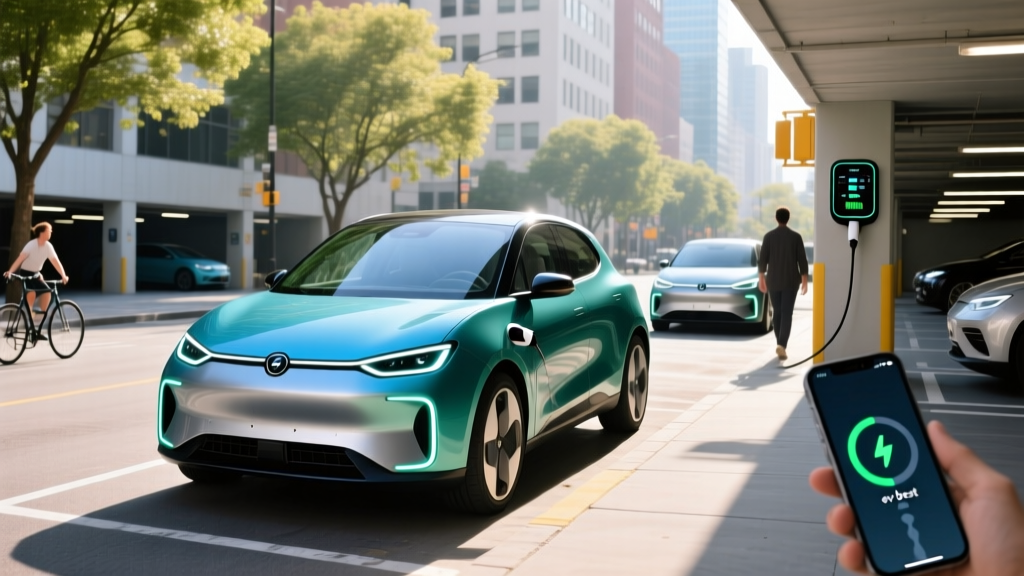
Quick Answer: An electric mini car in 2026 typically delivers 100–260 miles of EPA range, costs $29,000–$43,000 before incentives, and charges for roughly $0.04–$0.06 per mile at home — compared to $0.12–$0.16 per mile for a gas subcompact. The best candidates right now include the MINI Cooper SE (2026, ~163 mi range, ~$32,000), the Fiat 500e (~149 mi, ~$34,000), and the Hyundai Kona Electric (~261 mi, ~$34,000). If you can charge at home and mostly drive under 80 miles per day, a subcompact EV will cost less to own over five years than a comparable gas car.
Why Electric Mini Cars Are Gaining Ground in 2026
Subcompact electric vehicles occupy a specific niche: urban commuters who need affordable, easy-to-park transportation with low running costs. Unlike midsize sedans or SUVs, electric mini cars prioritize efficiency and maneuverability over cargo volume and long-distance road-trip capability. That trade-off makes sense for a growing segment of buyers.
The economics have shifted meaningfully. Battery pack prices have fallen below $120/kWh at the cell level, allowing automakers to offer smaller, lighter EVs that don't require massive 80+ kWh batteries. A 40–65 kWh battery pack in a lightweight subcompact can deliver 130–260 miles of range — more than enough for daily commuting, errands, and occasional highway trips.
For context, the average American drives roughly 37 miles per day according to FHWA data. Even the shortest-range electric mini car on the market in 2026 handles that with substantial buffer remaining.
The Best Electric Mini Cars You Can Buy Right Now
Here's a spec-by-spec breakdown of the most relevant subcompact EVs available for the 2026 model year, with EPA data and manufacturer pricing.
| Model | EPA Range | Battery (kWh usable) | Chemistry | Peak DC Charge (kW) | 10–80% Time | 0–60 mph | HP | Base MSRP |
|---|---|---|---|---|---|---|---|---|
| MINI Cooper SE (2026) | 163 mi | 54.2 kWh | NMC | 95 kW | ~28 min | 6.7 sec | 215 hp | $31,900 |
| Fiat 500e | 149 mi | 42.0 kWh | NMC | 85 kW | ~30 min | 8.5 sec | 117 hp | $33,895 |
| Hyundai Kona Electric | 261 mi | 64.8 kWh | NMC | 150 kW | ~18 min | 7.6 sec | 201 hp | $34,250 |
| Nissan LEAF (S trim) | 149 mi | 40.0 kWh | NMC | 50 kW | ~40 min | 7.9 sec | 147 hp | $29,135 |
Sources: fueleconomy.gov, manufacturer press sites. MSRP reflects base trim before destination charges and incentives. Specs may vary by trim.
Real-World Range Reality: The EPA numbers above assume mixed driving. Expect highway-only range at 70+ mph to drop 10–15% below the sticker. In cold weather (below 30°F), plan for a 20–30% reduction due to cabin heating and battery chemistry limitations. The Kona Electric's 261-mile EPA rating might yield ~210–220 miles on a winter highway drive. The LEAF's 149-mile rating could drop to ~110 miles in freezing conditions — tight for anyone without home charging.
Electric Mini Car vs. Gas Subcompact: The Real Cost Breakdown
The purchase price of a small EV is often $3,000–$6,000 higher than a comparable gas subcompact like a Honda Fit (discontinued but representative of the segment), Toyota Corolla Hatchback, or Hyundai Venue. But ownership costs tell a different story over five years.
| Cost Factor | Electric Mini Car (e.g., Kona Electric) | Gas Subcompact (e.g., Hyundai Venue, 31 MPG combined) |
|---|---|---|
| Purchase Price (base MSRP) | $34,250 | $21,900 |
| Federal Tax Credit (§30D) | Up to $7,500 (eligibility varies) | $0 |
| Effective Purchase Price | ~$26,750 | $21,900 |
| Fuel/Energy Cost (5 yrs, 60,000 mi) | $2,400–$3,600 (home charging at $0.13–$0.16/kWh) | $7,740 (at $3.50/gal, 31 MPG) |
| Maintenance (5 yrs) | $1,200–$1,800 (no oil changes, fewer brake replacements) | $3,000–$4,200 |
| Insurance (5 yrs, avg) | $7,500–$9,500 | $6,000–$7,500 |
| Total 5-Year Cost | ~$37,850–$41,650 | ~$38,640–$41,340 |
The gap narrows or reverses when you factor in energy and maintenance savings. The electric mini car pulls ahead further if you qualify for the full §30D credit, have access to cheap home electricity, or live in a state with additional rebates.
Important §30D caveat: Federal EV tax credit eligibility in 2026 depends on MSRP caps ($55,000 for sedans/hatchbacks), buyer income limits ($150,000 single / $300,000 joint AGI), and critical-mineral and battery-component sourcing requirements. Not every EV qualifies for the full $7,500. The credit can now be transferred to the dealer as a point-of-sale discount. Check current eligibility on irs.gov before relying on the credit in your budget.
Charging an Electric Mini Car: What First-Time Buyers Must Know
Charging is the single biggest adjustment for new EV owners. Here's what the three levels actually mean for a subcompact EV:
| Level | Power (kW) | Typical Miles Added per Hour | Use Case |
|---|---|---|---|
| Level 1 (120V household outlet) | 1.2–1.4 kW | 3–5 mi/hr | Overnight top-up; adds ~35–50 mi in 10 hours |
| Level 2 (240V home charger) | 7.2–11.5 kW | 20–35 mi/hr | Daily home charging; full charge in 5–8 hours |
| DC Fast Charging | 50–150 kW (model dependent) | 150–400 mi/hr (peak) | Road trips; 10–80% in 18–40 minutes |
kW vs. kWh — the critical distinction: kW (kilowatts) measures power — how fast energy flows into the car. kWh (kilowatt-hours) measures energy capacity — how much the battery holds. A 64.8 kWh battery charging at 150 kW doesn't fill in 26 minutes because the charge rate tapers significantly above 80% State of Charge to protect the cells. That 10–80% time of ~18 minutes for the Kona Electric is a more useful metric than peak kW alone.
Home Charging Installation Costs
| Item | Cost Range | Notes |
|---|---|---|
| Level 2 charger hardware (40A, hardwired) | $400–$700 | ChargePoint Home Flex, Emporia, Wallbox |
| Electrician labor (240V/50A circuit run) | $600–$2,000 | Depends on panel proximity and conduit run |
| Electrical panel upgrade (if needed) | $1,500–$3,500 | Required if existing panel is 100A or maxed out |
| Permit and inspection | $50–$300 | Varies by jurisdiction |
| Total (no panel upgrade) | $1,050–$3,000 | |
| Total (with panel upgrade) | $2,550–$6,500 |
For a subcompact EV with a smaller battery, a 32A Level 2 charger (7.7 kW) is usually sufficient — you'll fully recharge overnight without needing a 48A unit. This can reduce installation costs if your panel has limited headroom. Always get a licensed electrician to assess your panel capacity before purchasing equipment.
Common Misconceptions About Electric Mini Cars
| Myth | Fact |
|---|---|
| "Small EVs can't handle highway driving" | The Kona Electric and MINI Cooper SE both sustain 80+ mph with adequate passing power. Their 201–215 hp motors merge confidently. The limitation is range at speed, not capability. |
| "Battery replacement will cost more than the car is worth" | All EVs sold in the US carry a mandatory 8-year/100,000-mile battery warranty (10 years in CARB states) covering capacity below 70%. Modern NMC packs are lasting 200,000+ miles with 10–15% degradation. A replacement pack in 2026 costs $6,000–$10,000 for a subcompact — significant, but rarely needed within typical ownership. |
| "You can't take a small EV on road trips" | The Kona Electric's 261-mile range and 150 kW DC charging handles road trips with 20-minute stops every ~180 miles. Shorter-range models like the LEAF (50 kW DC charging) are genuinely limiting on long trips — that's a real trade-off, not a myth. |
| "EVs are worse in cold weather" | EVs do lose 20–30% of range in freezing temperatures. But they start instantly (no cold cranking), the cabin heats quickly using a heat pump (on equipped models), and you "refuel" at home every night. Cold-weather inconvenience is real but manageable with preconditioning and range planning. |
| "Small EV batteries degrade quickly" | Smaller batteries do cycle more frequently, but modern thermal management systems and charge-buffer software limit degradation. Expect 85–90% State of Health after 100,000 miles for well-cooled packs. |
Ownership Considerations: Is an Electric Mini Car Right for Your Situation?
Beyond the spec sheet, daily life with a subcompact EV depends on several practical factors that spec sheets don't capture.
Home Charging Access
If you own a home with a garage or driveway, Level 2 home charging makes an electric mini car exceptionally convenient — you wake up every morning with a full "tank." If you live in an apartment without charging access, relying on public DC fast charging and slower Level 2 public stations adds real friction. Public charging also costs 2–4× more per kWh than home electricity, eroding the fuel-cost advantage.
Climate and Geography
In mild climates (Southern California, Texas, Florida), real-world range closely matches EPA estimates year-round. In cold-winter regions (Minnesota, Michigan, New England), plan for 20–30% winter range loss. A 149-mile LEAF becomes a ~110-mile car in January. That's still workable for most commutes, but it eliminates spontaneity.
Driving Patterns
Urban and suburban stop-and-go driving is where small EVs shine — regenerative braking recovers energy at every stop, and the instant torque makes merging from side streets effortless. If your commute is mostly 75-mph highway, expect higher energy consumption (3.5–4.0 miles/kWh vs. 4.0–4.5 in city driving) and plan your range accordingly.
Insurance Costs
EV insurance premiums run 15–25% higher than equivalent gas cars, driven by higher repair costs for battery-adjacent damage and specialized technician requirements. Get quotes before purchasing — the difference can be $200–$400/year, which partially offsets fuel savings.
Decision Framework: Which Electric Mini Car (or Alternative) Fits You?
Choose a subcompact EV (like the Kona Electric or MINI Cooper SE) if:
- You can install a Level 2 charger at home
- Your daily driving is under 80 miles round-trip
- You rarely take road trips over 200 miles without a planned charging stop
- You want the lowest possible cost-per-mile for commuting
- You qualify for some or all of the §30D federal tax credit
Choose a plug-in hybrid (PHEV) like the Toyota Prius Prime instead if:
- You lack reliable home or workplace charging
- You frequently drive 200+ miles without wanting to plan DC charging stops
- You live in an extreme-cold climate where EV range loss is a daily concern
- Your budget is tighter and you want a lower purchase price (~$33,000 for the Prius Prime with 44 mi of electric-only range)
Choose a longer-range compact EV (like the Tesla Model 3 RWD or Chevrolet Equinox EV) if:
- You need 300+ miles of range for frequent road trips
- You want access to the Tesla Supercharger network (NACS connector, 17,000+ US stations)
- You need more cargo space and rear-seat room than a subcompact offers
- Your budget accommodates $38,000–$45,000
Avoid a short-range EV (LEAF, Fiat 500e) if:
- You cannot charge at home and must rely on public infrastructure
- Your commute exceeds 70 miles one-way
- You live in a region with harsh winters and no garage parking
Frequently Asked Questions
Can I charge an electric mini car on a regular household outlet?
Yes — Level 1 charging on a standard 120V outlet delivers roughly 3–5 miles of range per hour. For a car with a 40–65 kWh battery, a full charge from empty takes 30–50 hours. This works if you drive under 30 miles per day and can plug in overnight, but a Level 2 (240V) installation is strongly recommended for daily usability.
Do electric mini cars qualify for the $7,500 federal tax credit?
Some do, but eligibility is not guaranteed. Under current IRS §30D rules, the vehicle must meet MSRP caps ($55,000 for cars), your AGI must be under $150,000 (single) or $300,000 (joint), and the battery must meet critical-mineral and component-sourcing thresholds that change annually. Many subcompact EVs fall under the MSRP cap, but battery sourcing requirements disqualify some models from the full credit. Verify on the IRS website or with your tax professional before purchasing.
How long do electric mini car batteries last?
Federal law mandates an 8-year/100,000-mile battery warranty (10 years/150,000 miles in CARB states) covering capacity loss below 70%. In practice, modern NMC lithium-ion packs with active thermal management are retaining 85–90% capacity at 100,000 miles. Complete battery failure before 150,000 miles is uncommon. Replacement cost for a subcompact EV battery in 2026 runs $6,000–$10,000 if needed out of warranty.
Are electric mini cars safe in a crash?
Subcompact EVs are subject to the same NHTSA and IIHS crash-testing standards as larger vehicles. Battery packs are mounted low in the chassis, improving rollover resistance. Check specific model ratings on iihs.org and nhtsa.gov — ratings vary by model, and not all subcompacts have earned top scores.
What's the cheapest electric mini car available in 2026?
The Nissan LEAF S starts at approximately $29,135 before incentives, making it one of the least expensive new EVs available. However, its 149-mile range, passive battery cooling, CHAdeMO connector (a declining standard), and 50 kW DC charge rate are meaningful compromises. The Hyundai Kona Electric at $34,250 offers substantially more range (261 mi), faster charging (150 kW), and a CCS connector — a better value proposition for most buyers despite the higher sticker price.
Is a used electric mini car a better deal?
Used EVs can be excellent value — a 2–3 year old subcompact EV often sells for $15,000–$22,000. The used-EV tax credit (§25E) offers up to $4,000 or 30% of the sale price on vehicles under $25,000, subject to income limits. The main risk is battery State of Health: request a battery diagnostic report before purchasing and verify remaining warranty coverage.