BYD has quietly become the world's largest producer of plug-in electric vehicles, and its pricing strategy has sent shockwaves through the global auto industry. If you've searched for BYD cheapest cars, you've likely seen headlines about a $10,000 electric hatchback or a sub-$15,000 crossover. But here's the critical context most coverage misses: those prices apply to specific international markets, and as of 2026, BYD does not sell passenger vehicles in the United States.
This guide breaks down BYD's most affordable EVs available globally right now, explains exactly what you'd pay in markets where they're sold, and gives US-based shoppers practical alternatives that deliver similar value — with full access to charging infrastructure, service networks, and federal tax credits.
How We Ranked BYD's Cheapest Cars
Our selection criteria for this roundup:
- Base MSRP in primary export markets (Australia, Europe, Southeast Asia, Latin America) converted to USD at early-2026 exchange rates
- EPA-equivalent range (WLTP figures noted and converted where EPA data is unavailable, with a ~15% reduction applied for real-world highway equivalence)
- Battery chemistry and capacity — BYD's Blade LFP cells are a core differentiator worth evaluating
- DC fast-charge capability (peak kW and estimated 10–80% time)
- US availability status — clearly labeled, since none are currently sold stateside
- Comparable US-market alternatives at each price tier for readers who need a buyable option today
Why BYD's Pricing Matters — Even If You Can't Buy One in the US
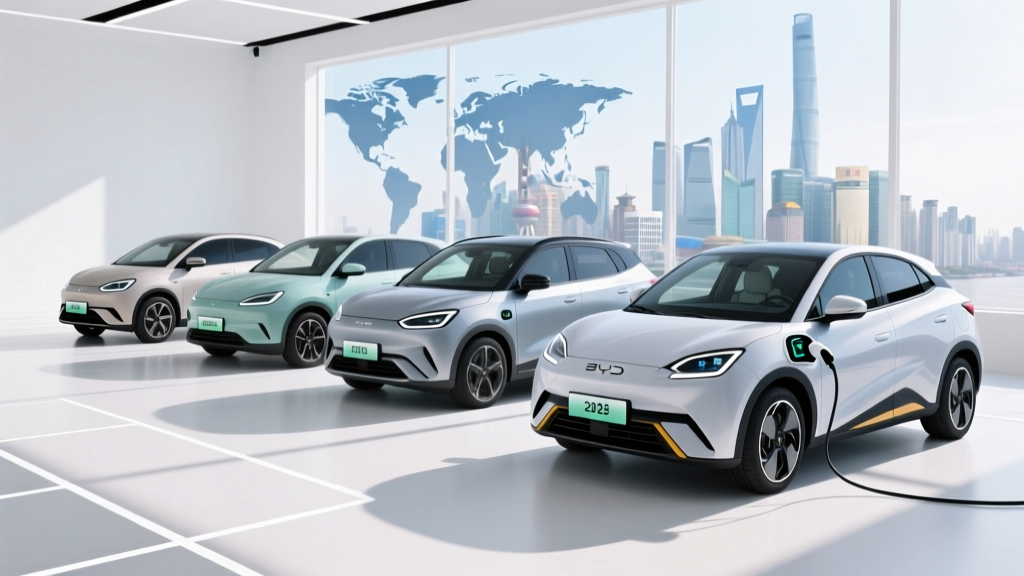
BYD's vertical integration is the engine behind its pricing. The company manufactures its own batteries (the lithium iron phosphate Blade cell), semiconductors, electric motors, and even owns shipping vessels for export logistics. This control lets BYD undercut legacy automakers on price while maintaining margins that Western competitors struggle to match.
For US shoppers, BYD's global pricing sets a benchmark. When you see a BYD Dolphin selling for the equivalent of $22,000 in Thailand or a BYD Seagull starting under $10,000 in China, it reframes what "affordable EV" means — and puts pressure on every automaker selling in North America to justify their price premiums with tangible spec advantages.
There's also the tariff reality. The US currently imposes a 100% tariff on Chinese-made EVs, which effectively doubles any BYD import price and makes US sales economically unviable for the company. Until that policy changes, BYD's cheapest cars remain a global story, not an American one.
BYD's 7 Cheapest EVs Ranked by Global Price
Below are BYD's most affordable battery-electric vehicles available in export markets as of early 2026, ranked from lowest to highest base price. All prices are converted to USD and reflect the base trim in the lowest-cost available market.
#1 — BYD Seagull (Dolphin Mini)
Base Price: ~$9,700 (China) / ~$14,500 (Latin America export)
Range: 190 mi WLTP (~160 mi real-world equivalent) | Battery: 38.9 kWh LFP Blade
Peak DC Charge: 40 kW (10–80% in ~45 min) | Motor: 75 hp / 135 Nm
Why it made the list: The Seagull is the cheapest production EV from a major manufacturer anywhere in the world. It's a subcompact hatchback with seating for four, a usable 160-mile real-world range, and BYD's Blade LFP battery — which offers superior thermal stability and a longer cycle life than typical NMC cells. For urban commuters in markets where it's sold, it eliminates the need for a gas car at a price below most used vehicles.
Best for: City-only commuters in Latin America, Southeast Asia, or China who need a zero-emission daily driver on an ultra-tight budget.
US availability: Not available. No announced plans. The closest US equivalent is the Chevrolet Equinox EV at ~$33,000 before credits.
#2 — BYD Dolphin
Base Price: ~$21,500 (Australia) / ~$26,000 (Europe)
Range: 265 mi WLTP (~225 mi real-world equivalent) | Battery: 60.4 kWh LFP Blade
Peak DC Charge: 88 kW (10–80% in ~29 min) | Motor: 201 hp / 310 Nm
Why it made the list: The Dolphin is BYD's global volume hatchback — think of it as the electric equivalent of a Honda Fit in size and versatility, but with 201 hp and a usable 225-mile range. Its 88 kW DC fast-charging is modest by 2026 standards but adequate for the price point. The LFP Blade pack carries an 8-year/100,000-mile warranty in most markets.
Best for: Budget-conscious buyers in Australia, Europe, and Southeast Asia who want a practical hatchback with legitimate highway range.
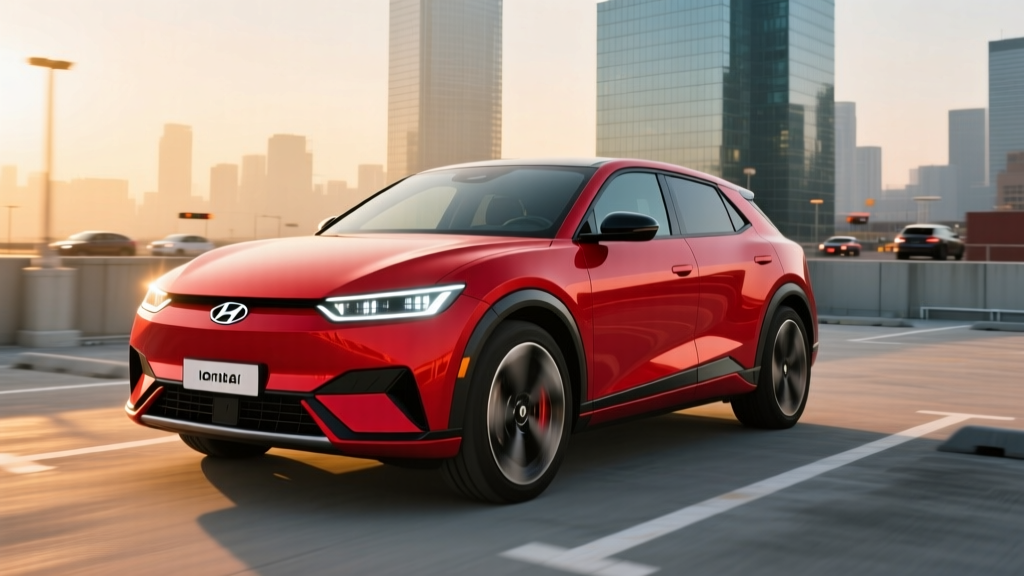
US availability: Not available. US alternative: Hyundai Kona Electric (~$32,975 MSRP, 261 mi EPA range).
#3 — BYD Atto 3 (Yuan Plus)
Base Price: ~$27,000 (Australia) / ~$33,000 (Europe)
Range: 260 mi WLTP (~220 mi real-world equivalent) | Battery: 58.56 kWh LFP Blade
Peak DC Charge: 88 kW (10–80% in ~29 min) | Motor: 201 hp / 310 Nm
Why it made the list: The Atto 3 is BYD's compact crossover — the segment most buyers actually want. It offers more cargo space than the Dolphin (roughly 15.5 cu ft behind the rear seats), a slightly more powerful variant of the same powertrain, and a more mature interior. In Australia, it has been one of the top-selling EVs since its launch, competing directly with the MG ZS EV on price.
Best for: Small families and couples in export markets wanting crossover utility at the lowest possible EV price.
US availability: Not available. US alternative: Kia Niro EV (~$39,600 MSRP, 239 mi EPA range).
#4 — BYD Dolphin Surf (Dolphin Plus / Extended Range)
Base Price: ~$28,500 (Southeast Asia) / ~$31,000 (Europe)
Range: 310 mi WLTP (~265 mi real-world equivalent) | Battery: 72 kWh LFP Blade
Peak DC Charge: 100 kW (10–80% in ~32 min) | Motor: 201 hp / 310 Nm
Why it made the list: The extended-range Dolphin variant addresses the single biggest criticism of the standard model: range. With a 72 kWh pack pushing WLTP range past 310 miles, this version is viable for intercity driving, not just urban commuting. The 100 kW charge rate is still below the class-leading 200+ kW rates of Hyundai/Kia's E-GMP platform, but at this price, it's competitive.
Best for: Buyers who want hatchback pricing but need 250+ real-world miles for occasional road trips.
US availability: Not available.
#5 — BYD Seal U (Song Plus EV)
Base Price: ~$35,500 (Europe) / ~$30,000 (Australia)
Range: 310 mi WLTP (~265 mi real-world equivalent) | Battery: 71.8 kWh LFP Blade
Peak DC Charge: 115 kW (10–80% in ~30 min) | Motor: 215 hp / 330 Nm
Why it made the list: The Seal U is BYD's mid-size SUV for global markets — positioned against the Tesla Model Y and Hyundai Ioniq 5 in size, but at a significant price discount in Europe and Australia. It offers three-across rear seating, a flat load floor with ~20 cu ft of cargo volume, and a heat pump as standard equipment (critical for cold-climate efficiency).
Best for: Families in export markets who need SUV space and want to undercut Tesla Model Y pricing by $10,000+.
US availability: Not available. US alternative: Tesla Model Y (~$44,990 MSRP, 320 mi EPA range, eligible for $7,500 point-of-sale credit under IRS §30D rules if sourcing requirements are met).
#6 — BYD Seal (Sedan)
Base Price: ~$37,000 (Australia) / ~$42,000 (Europe)
Range: 355 mi WLTP (~300 mi real-world equivalent) | Battery: 82.5 kWh LFP Blade
Peak DC Charge: 150 kW (10–80% in ~26 min) | Motor: 312 hp (RWD) / 523 hp (AWD)
Why it made the list: The BYD Seal is the company's Tesla Model 3 fighter — a sport sedan with cell-to-body battery integration that lowers the center of gravity and increases structural rigidity. The 150 kW charge rate is BYD's fastest on an LFP pack, and the AWD Performance variant hits 0–60 mph in 3.8 seconds. This is the most expensive car on this "cheapest" list, but it's included because it undercuts the Model 3 in most markets while matching or exceeding its specs.
Best for: Driving enthusiasts in export markets who want sports-sedan performance at a value price.
US availability: Not available. US alternative: Tesla Model 3 (~$38,990 MSRP, 341 mi EPA range).
#7 — BYD Atto 4 / Seal U DM-i (PHEV variant)
Base Price: ~$28,000 (Thailand) / ~$34,000 (Europe)
Electric Range: 55 mi WLTP (~45 mi real-world) | Battery: 18.3 kWh LFP Blade
Combined MPG (hybrid mode): ~55 MPG (estimated, WLTP cycle) | Motor: 194 hp combined
Why it made the list: BYD's DM-i plug-in hybrid powertrain is a serious alternative for markets with unreliable charging infrastructure. With 45 real-world electric miles covering most daily commutes and a gasoline engine for longer trips, it eliminates range anxiety entirely. The LFP battery in a PHEV application is unusual and speaks to BYD's commitment to the chemistry across its lineup.
Best for: Buyers without reliable home charging who still want electric-first daily driving.
US availability: Not available. US alternative: Toyota RAV4 Prime (~$43,690 MSRP, 42 mi electric range, 94 MPGe).
Side-by-Side Spec Comparison
| Model | Base Price (USD) | Range (WLTP / Real) | Battery (kWh) | DC Charge (kW) | 10–80% Time | HP |
|---|---|---|---|---|---|---|
| Seagull | $9,700–$14,500 | 190 / ~160 mi | 38.9 LFP | 40 kW | ~45 min | 75 |
| Dolphin | $21,500–$26,000 | 265 / ~225 mi | 60.4 LFP | 88 kW | ~29 min | 201 |
| Atto 3 | $27,000–$33,000 | 260 / ~220 mi | 58.6 LFP | 88 kW | ~29 min | 201 |
| Dolphin Surf | $28,500–$31,000 | 310 / ~265 mi | 72.0 LFP | 100 kW | ~32 min | 201 |
| Seal U | $30,000–$35,500 | 310 / ~265 mi | 71.8 LFP | 115 kW | ~30 min | 215 |
| Seal | $37,000–$42,000 | 355 / ~300 mi | 82.5 LFP | 150 kW | ~26 min | 312–523 |
| Atto 4 DM-i | $28,000–$34,000 | 55 EV / ~45 mi | 18.3 LFP | N/A (PHEV) | N/A | 194 |
Budget Tiers: What BYD's Pricing Reveals About Global EV Affordability
| Tier | Price Range | BYD Model | US Equivalent | US Price After §30D Credit |
|---|---|---|---|---|
| Ultra-Budget | Under $15K | Seagull | None (no US EV under $25K) | N/A |
| Entry-Level | $20K–$27K | Dolphin / Atto 3 | Nissan Leaf / Kona EV | ~$25,500–$32,000* |
| Mid-Range | $28K–$36K | Dolphin Surf / Seal U | Equinox EV / Ioniq 5 | ~$26,000–$38,000* |
| Premium Value | $37K–$42K | Seal | Model 3 / BMW i4 | ~$31,500–$42,000* |
*US after-credit prices assume full $7,500 §30D eligibility. Actual credit depends on battery sourcing, critical mineral requirements, buyer income caps ($150K single / $300K joint), and MSRP caps ($55K cars / $80K SUVs). Verify eligibility at IRS.gov or through the point-of-sale transfer at a participating dealer.
Top Pick and Runner-Ups
🏆 Top Global Value Pick: BYD Dolphin
The Dolphin hits the sweet spot of BYD's lineup: a sub-$25,000 price in most export markets, 225 real-world miles of range, 201 hp (more than adequate for highway merging), and an 88 kW charge rate that adds roughly 120 miles in a 30-minute stop. It's not the cheapest BYD — the Seagull holds that title — but the Dolphin is the cheapest BYD that doesn't feel like a compromise. The interior materials, NVH levels, and infotainment are competitive with vehicles costing 40% more in Europe.
Runner-Up (for families): BYD Seal U — if you need SUV cargo space and three-across seating, the Seal U at ~$30,000 in Australia is extraordinary value. A Tesla Model Y starts at nearly $45,000 in the US before any credits.
Runner-Up (for enthusiasts): BYD Seal — the 312 hp RWD sedan with 300 real-world miles at ~$37,000 in Australia undercuts the Tesla Model 3 RWD on price while matching its 0–60 time of roughly 5.9 seconds.
US Buyers: What to Do When BYD Isn't an Option
If you're reading this from the United States, the practical question isn't which BYD to buy — it's which available EV gives you the closest experience to BYD's global value proposition. Here's our framework:
Decision Framework for US Shoppers
Choose the Chevrolet Equinox EV if you want the lowest-priced long-range EV available in the US. At ~$33,000 base with 315 miles of EPA range, it's the closest American-market equivalent to the value BYD offers globally. With the full $7,500 §30D credit (verify your eligibility), the effective price drops to ~$25,500 — right in Dolphin territory.
Choose the Hyundai Kona Electric if you want a compact crossover with proven reliability, a robust dealer network, and 261 miles of EPA range at ~$32,975. It competes directly with the Atto 3 on size and utility.
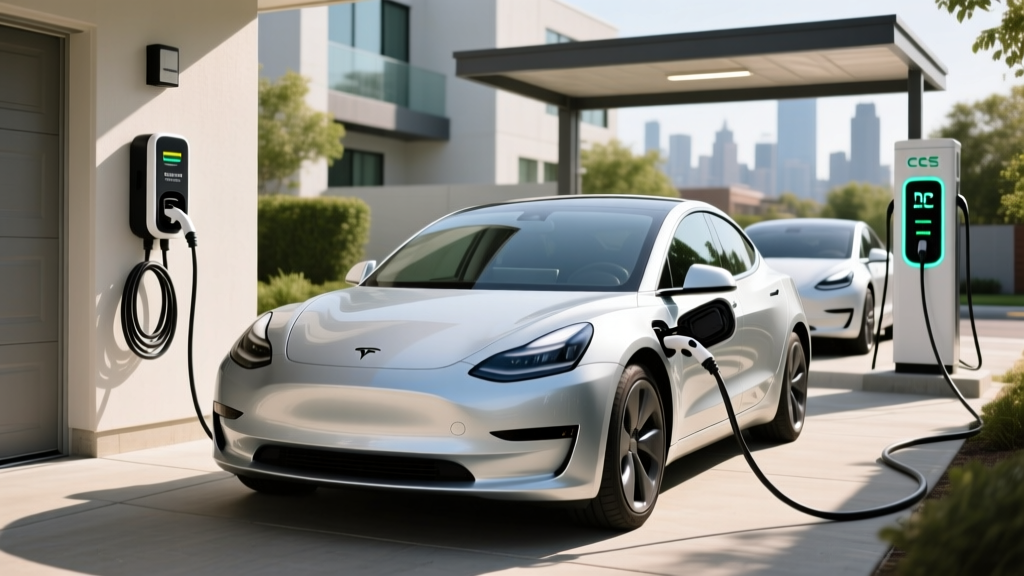
Choose the Tesla Model 3 if you want the best charging infrastructure access. Tesla's Supercharger network remains the most reliable DC fast-charging option in the US, and the Model 3 at ~$38,990 with 341 EPA miles is competitive with the BYD Seal on specs — with the advantage of NACS native charging and over-the-air updates.
Choose a PHEV like the Toyota RAV4 Prime if you lack reliable home charging. BYD's DM-i lineup shows the company takes plug-in hybrids seriously, and the RAV4 Prime offers 42 miles of electric range with the backup of Toyota's hybrid system for longer trips.
BYD's Blade Battery: The LFP Advantage Explained
Every vehicle on this list uses BYD's proprietary Blade battery, which is based on lithium iron phosphate (LFP) chemistry. This is a deliberate choice with real ownership implications:
| Attribute | LFP (BYD Blade) | NMC (Typical Western EV) |
|---|---|---|
| Energy Density | Lower (~150 Wh/kg cell-level) | Higher (~250 Wh/kg cell-level) |
| Cycle Life | 3,000–5,000 cycles | 1,000–2,000 cycles |
| Thermal Stability | Excellent (resists thermal runaway) | Good (requires active management) |
| Cold-Weather Performance | More range loss (~30–40% at 20°F) | Less range loss (~20–30% at 20°F) |
| Recommended Charge Habit | Can charge to 100% daily | Best kept 20–80% daily |
| Cost per kWh | ~$80–$100 | ~$120–$150 |
The trade-off is clear: LFP gives you longer battery life, better safety margins, and lower cost, but at the expense of energy density (meaning heavier packs for the same range) and worse cold-weather performance. For BYD's target markets — many of which are in warm climates — LFP is the optimal choice. For buyers in northern US states or Canada, the cold-weather penalty is worth considering.
BYD's Blade form factor is also significant. The long, thin cells are packed directly into the battery tray without modules, increasing pack-level volume utilization by roughly 50% compared to traditional cylindrical-cell packs. This is how BYD fits a 60.4 kWh pack into the relatively compact Dolphin.
Frequently Asked Questions
Can I buy a BYD in the United States in 2026?
No. BYD does not sell passenger vehicles in the US market. The US imposes a 100% tariff on Chinese-manufactured electric vehicles, making imports economically unviable. BYD has not announced any plans for US market entry. The company does sell electric buses and commercial vehicles in the US, but its consumer car lineup is limited to other global markets.
Is the BYD Seagull really under $10,000?
The starting price in China is approximately $9,700 USD at early-2026 exchange rates, but that's for the most basic trim with the smallest battery. Export versions in Latin America and Southeast Asia start closer to $14,000–$15,000 due to shipping, tariffs, and dealer margins. No version is available in the US or Canada.
How does BYD's LFP Blade battery compare to Tesla's batteries?
Tesla uses both LFP (in standard-range Model 3/Y built in Shanghai) and NMC/NCA (in long-range and performance variants). BYD's Blade LFP is comparable to Tesla's Shanghai-built LFP packs in chemistry but differs in form factor — the Blade cell is a long, flat prism that eliminates the module layer, increasing pack density. Both support daily 100% charging, unlike NMC packs which benefit from staying in the 20–80% range for longevity. According to data from fueleconomy.gov, Tesla's EPA-rated efficiency tends to be higher due to superior drivetrain and thermal management optimization.
What's the cheapest EV I can actually buy in the US?
As of early 2026, the Nissan Leaf S starts at approximately $28,140 with a 149-mile EPA range, making it the lowest-MSRP new EV in the US market. However, it uses the aging CHAdeMO DC charging standard and lacks active battery thermal management, limiting its practicality. The Chevrolet Equinox EV at ~$33,000 with 315 EPA miles is widely considered the best value entry, especially after the $7,500 federal tax credit (if eligible), which can bring the effective price to ~$25,500 via point-of-sale transfer.
Will BYD ever sell cars in the US?
There are no confirmed plans. BYD has focused its expansion on Europe, Southeast Asia, Latin America, Australia, and the Middle East. The 100% US tariff on Chinese EVs, combined with geopolitical tensions and BYD's success in other markets, means US entry is unlikely in the near term. If tariff policy changes or BYD establishes manufacturing outside China (they have plants in Thailand, Brazil, Hungary, and Uzbekistan), the calculus could shift — but not before the late 2020s at the earliest.
Do BYD vehicles qualify for the US federal EV tax credit?
No. Even if BYD sold vehicles in the US, the IRS §30D credit requires that the vehicle's battery components and critical minerals meet specific North American or free-trade-agreement sourcing requirements. Chinese-manufactured battery components are explicitly excluded under current rules. This means BYD vehicles would not qualify for the $7,500 credit regardless of price.
Sources: Pricing data compiled from BYD's official regional sites and automotive press in Australia, Europe, and Southeast Asia. Range figures are WLTP; real-world estimates apply a ~15% reduction based on highway and mixed-driving testing patterns. US tax credit information sourced from IRS.gov. US vehicle pricing and EPA range from fueleconomy.gov.