The Rideshare EV Revolution: Opportunity Meets Misconception
The transition to electric vehicles in the rideshare industry is no longer a distant goal; it is a present-day financial reality. Platforms like Uber and Lyft are aggressively pushing for zero-emission fleets, offering lucrative incentives for drivers who make the switch. However, many drivers diving into the EV space for rideshare are falling victim to costly misconceptions. Buying the wrong electric vehicle or misunderstanding charging logistics can turn a potentially profitable venture into a depreciating nightmare.
At AutoEdgeView, we specialize in separating fact from fiction. In this guide, we are busting the most common myths rideshare drivers believe about EVs, and then ranking the absolute best electric vehicles for Uber drivers based on real-world metrics: charging speed, rear-seat passenger comfort, total cost of ownership (TCO), and eligibility for premium Uber tiers.
Myth Busting: 3 Costly Mistakes Rideshare Drivers Make
Myth 1: 'I Need 400 Miles of Range to Survive'
The most pervasive myth in the EV world is that maximum range equals maximum utility. According to the EPA's official guide on electric vehicle myths, range anxiety often overshadows practical daily usage. For a rideshare driver putting in 150 to 200 miles a day, a 400-mile range is largely unnecessary if you have reliable home charging. What actually matters is charging speed. An EV with 250 miles of range that can charge from 10% to 80% in 18 minutes will keep you on the road earning fares, while a 350-mile EV that takes 45 minutes to achieve the same charge will cost you peak-hour surge pricing. Stop chasing battery size; start chasing charging architecture.
Myth 2: 'Public DC Fast Charging is a Sustainable Daily Strategy'
Many new EV rideshare drivers assume they can rely exclusively on public DC Fast Chargers (DCFC) between trips. This is a massive financial mistake. Public charging networks often charge between $0.35 and $0.55 per kWh. At those rates, your per-mile 'fuel' cost approaches that of a highly efficient hybrid gas vehicle. The Alternative Fuels Data Center highlights that the true economic benefit of EVs is realized through low-cost residential electricity rates. If you cannot install a Level 2 home charger, an EV might not be the right financial move for your rideshare business.
Myth 3: 'One-Pedal Driving is Always Better'
While aggressive regenerative braking (one-pedal driving) is great for maximizing range in stop-and-go city traffic, it is a frequent source of passenger complaints. The constant, aggressive deceleration when you lift off the accelerator causes motion sickness for rear-seat passengers. To maintain your 5-star Uber rating, you must learn to modulate your regenerative braking settings or use 'creep' modes when passengers are in the back, prioritizing a smooth, limousine-like glide over marginal efficiency gains.
Ranked: The Best EVs for Uber and Rideshare Drivers
1. Hyundai Ioniq 5 (Best Overall for Fast Turnarounds)
The Hyundai Ioniq 5 is the undisputed champion for full-time rideshare drivers who lack home charging or need mid-day top-ups. Thanks to its 800-voltage architecture, the Ioniq 5 can charge from 10% to 80% in just 18 minutes on a 350 kW charger. This means you can plug in during a lunch break, grab a sandwich, and return to a nearly full battery. Furthermore, its crossover SUV footprint yields massive rear-seat legroom, ensuring passenger comfort and protecting your ratings. It easily qualifies for Uber Comfort in most markets.
2. Tesla Model Y (Best for Uber Comfort & Supercharging)
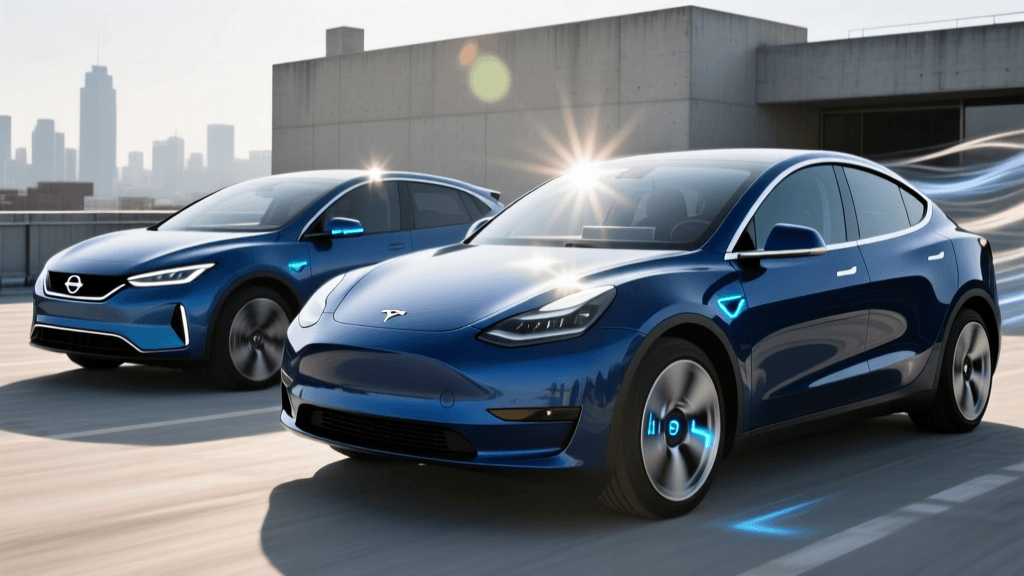
The Tesla Model Y remains a staple in the rideshare community for one primary reason: the Supercharger network. While other networks struggle with uptime and payment fragmentation, Tesla's ecosystem is seamless. The Model Y also boasts class-leading cargo space, making it exceptional for airport runs with heavy luggage. Its minimalist interior is easy to clean, and its eligibility for Uber Comfort and Uber XL (in some regions due to seating configurations) allows drivers to access higher-paying tiers. The main drawback is the stiffer suspension, which can be felt on poorly maintained city roads.
3. Chevrolet Bolt EUV (Best Budget & Entry-Level)
If you are looking to enter the rideshare EV space without taking on massive monthly payments, a used Chevrolet Bolt EUV is a masterstroke in value. It offers a highly usable 247 miles of range and a comfortable, elevated seating position. However, it comes with a major caveat: its DC fast-charging speed is capped at around 55 kW, meaning a 10-80% charge takes nearly an hour. Therefore, the Bolt EUV is strictly recommended for drivers who can charge at home overnight and use mid-day fast charging only in absolute emergencies.
4. Kia Niro EV (Best for City Stop-and-Go)
The Kia Niro EV is the ultimate pragmatic choice. It is highly efficient, easy to maneuver in tight urban environments, and features a traditional, intuitive interior layout that older passengers appreciate. While it doesn't have the blistering charge speeds of the Ioniq 5 or the Supercharger access of the Model Y, its low acquisition cost and excellent real-world efficiency make it a reliable profit generator for city-based drivers who focus on short, high-frequency trips.
Rideshare EV Comparison Chart
| Model | Est. Range | 10-80% DCFC Time | Rear Legroom | Uber Tier Eligibility |
|---|---|---|---|---|
| Hyundai Ioniq 5 | 260-303 mi | ~18 mins (800V) | 39.4 inches | X, Comfort |
| Tesla Model Y | 279-330 mi | ~25 mins (V3 SC) | 41.6 inches | X, Comfort |
| Chevy Bolt EUV | 247 mi | ~55 mins (55kW) | 39.1 inches | X (Standard) |
| Kia Niro EV | 247 mi | ~43 mins (72kW) | 38.6 inches | X (Standard) |
Maximizing Your Rideshare EV ROI
To truly make an EV work for rideshare, you must leverage every available incentive. According to the Uber EV Hub, drivers in many eligible cities earn an extra $1 per trip (capped at a specific annual maximum) simply for driving a zero-emission vehicle. Over 1,000 trips, this is pure profit added directly to your bottom line.
Additionally, factor in the reduced maintenance costs. Without oil changes, spark plugs, or transmission fluid replacements, and with regenerative braking extending the life of your brake pads, your monthly overhead drops significantly. Combine this with federal or state EV tax credits, and the TCO of a vehicle like the Ioniq 5 or Model Y quickly undercuts traditional gas-powered midsize sedans. Choose your vehicle based on your charging access, prioritize passenger comfort, and watch your rideshare margins grow.