The Luxury EV Trap: Why Marketing Misleads Buyers
The transition to electric vehicles has completely disrupted the traditional luxury automotive hierarchy. Legacy automakers and well-funded startups are locked in an arms race, pushing six-figure price tags, massive digital displays, and complex suspension systems. However, when buyers spend upwards of $100,000 on a luxury electric vehicle, they frequently fall victim to clever marketing narratives that do not translate to real-world comfort or technological superiority.
At AutoEdgeView, we believe that true luxury is defined by execution, not just specifications. A massive screen is useless if it suffers from glare, and an air suspension system is a liability if it crashes over potholes due to poorly tuned dampers. In this comprehensive ranking and myth-busting guide, we dismantle the three most common mistakes luxury EV buyers make, and then rank the actual best luxury EVs for comfort and technology based on rigorous real-world evaluation.
Myth 1: Bigger Screens Equal Better Technology
The most pervasive myth in modern automotive tech is that screen real estate equals technological superiority. Automakers often boast about the total diagonal inches of their dashboard displays, leading consumers to believe that a larger screen inherently provides a better user experience (UX).
The Reality: Integration, Processing, and Glare Matter More
Consider the Mercedes-Benz EQS with its optional 56-inch MBUX Hyperscreen. While visually stunning in a dimly lit showroom, the sheer expanse of glass can create significant glare in direct sunlight, and the complex menu structures often require drivers to take their eyes off the road to adjust simple climate settings. Contrast this with the Lucid Air’s 34-inch curved Glass Canopy. The Lucid display floats above the dashboard, eliminating the need to look down, and utilizes advanced Snapdragon processing chips that offer smartphone-level responsiveness.
Furthermore, because electric motors are significantly more compact than internal combustion engines, the Alternative Fuels Data Center notes that EV packaging allows for unprecedented cabin space and frunk storage, fundamentally altering luxury proportions. True technology in a luxury EV should enhance this spatial awareness, not distract from it with laggy, oversized tablets glued to the dash.
Myth 2: Air Suspension Guarantees a Cloud-Like Ride
Many buyers assume that checking the "Air Suspension" box on the build sheet automatically guarantees a magic-carpet ride. This is a costly mistake that leads to severe buyer's remorse when their new luxury EV feels jittery and harsh over broken city pavement.
The Reality: Wheel Size and Damper Tuning Dictate Comfort
Air springs only replace the traditional steel coil; they do not magically erase the laws of physics. The unsprung weight of massive wheels and the stiffness of the adaptive dampers play a much larger role in ride quality. The BMW i7 xDrive60 offers a masterclass in this reality. When equipped with the standard 20-inch wheels and BMW’s adaptive 2-axle air suspension, the i7 isolates the cabin from road imperfections beautifully. However, if a buyer opts for the available 22-inch aerodynamic wheels for aesthetic reasons, the low-profile tires transmit harsh impacts directly into the chassis, ruining the cloud-like illusion.
Pro Tip: Never prioritize wheel aesthetics over sidewall height in a heavy luxury EV. Downgrading to the smallest wheel option available almost always yields a vastly superior ride comfort experience.
Myth 3: The Heaviest Flagship is the Most Comfortable
There is a longstanding belief in the automotive world that mass equals isolation. The logic suggests that a heavier vehicle will simply plow through bumps and wind without being disturbed. In the EV era, where battery packs routinely push vehicle weights past 6,000 pounds, this myth is actively dangerous to dynamic comfort.
The Reality: Mass Kills Dynamic Comfort
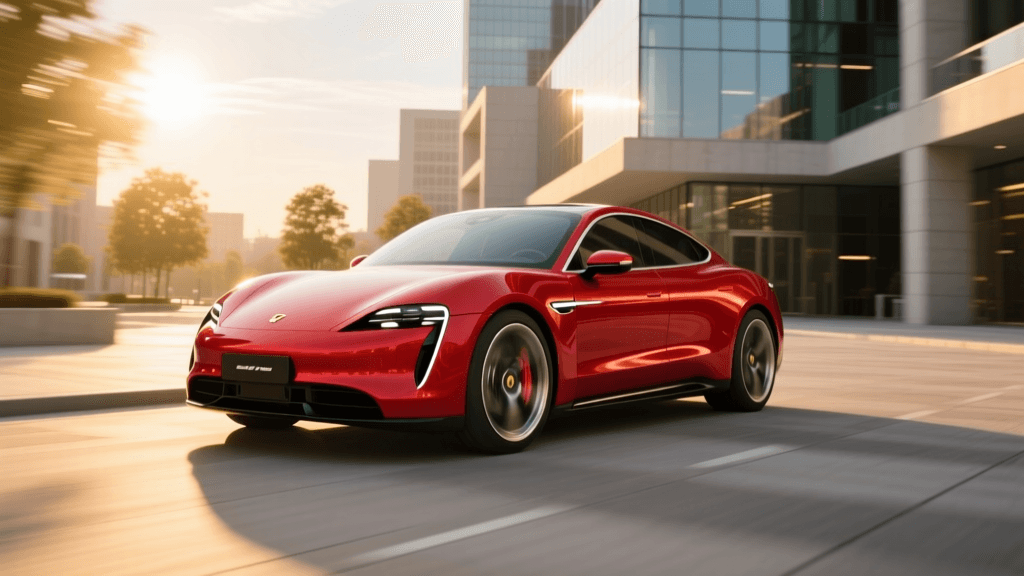
Heavy vehicles possess immense inertia. When a 6,500-pound luxury EV hits a dip in the highway, the suspension must work exponentially harder to control the rebound. If the dampers are not perfectly tuned, the vehicle will exhibit a nauseating "float" or secondary bounce. The Porsche Taycan, despite being a performance-oriented sedan, manages its weight through brilliant 48-volt active anti-roll bars (PDCC) and rear-axle steering. It provides exceptional dynamic comfort, keeping the cabin flat and composed during cornering and evasive maneuvers, proving that active weight management is far superior to passive mass.
The True Rankings: Best Luxury EVs for Comfort and Tech
Based on our myth-busting criteria—valuing UX over screen size, suspension tuning over mere air springs, and dynamic composure over sheer weight—here is our definitive ranking of the best luxury EVs for comfort and technology.
| Rank | Vehicle Model | Tech UX Score (1-10) | Ride Comfort Score (1-10) | Starting Price (MSRP) |
|---|---|---|---|---|
| 1 | BMW i7 xDrive60 | 9.2 | 9.8 | $124,200 |
| 2 | Lucid Air Grand Touring | 9.5 | 8.9 | $125,600 |
| 3 | Mercedes-Benz EQS 450+ | 7.8 | 8.5 | $104,400 |
| 4 | Porsche Taycan 4S | 7.5 | 8.8 | $103,800 |
1. BMW i7 xDrive60: The Pinnacle of Execution
The BMW i7 takes the top spot because it perfectly balances traditional luxury with modern EV tech. Its iDrive 8.5 operating system is intuitive, featuring a brilliant curved display that avoids the glare issues of its competitors. The available 31-inch 8K Theater Screen in the rear transforms the cabin into a mobile lounge, while the executive rear seating with integrated footrests sets a new benchmark for passenger comfort.
2. Lucid Air Grand Touring: The Tech and Space Champion
Lucid wins on pure technological efficiency and interior volume. The Glass Canopy display is the best in the business, and the vehicle's miniaturized powertrain components allow for a limousine-like rear seat in a footprint smaller than a standard midsize sedan. The ride is exceptionally quiet, though slightly firmer than the i7.
3. Mercedes-Benz EQS 450+: The Isolation King
The EQS offers unparalleled acoustic isolation. With the right tire setup, it is one of the quietest cabins on the market. However, it drops to third place due to the frustrating UX of the Hyperscreen and the somewhat artificial feel of its regenerative braking system, which can induce motion sickness in passengers if not configured correctly.
4. Porsche Taycan 4S: The Driver’s Luxury Choice
While it lacks the sheer interior volume and massive screens of its peers, the Taycan makes the list for its unmatched dynamic comfort. It is the only EV that drives like a traditional, high-end sports sedan, shielding the driver from the fatiguing effects of heavy EV inertia.
ADAS, Climate Control, and the Comfort Ecosystem
Comfort in a luxury EV extends beyond the physical seats and suspension; it encompasses the digital and thermal environment of the cabin. When relying on automated features to reduce driver fatigue on long highway cruises, it is vital to consult the National Highway Traffic Safety Administration (NHTSA) guidelines on ADAS limitations, as no system currently offers full autonomy. Systems like BMW's Highway Assistant and Ford's BlueCruise (available on the Mustang Mach-E, though not a traditional luxury flagship) excel at reducing mental fatigue, which is a core component of long-distance comfort.
Furthermore, battery thermal management systems—which directly impact how quickly the cabin heats up in winter without draining the main battery pack—are a critical, often overlooked component of EV comfort, as detailed by the U.S. Department of Energy. Luxury EVs with advanced heat pumps, like the Hyundai Ioniq 5 (a premium mainstream option) and the Porsche Taycan, maintain cabin comfort in freezing weather far better than older EV architectures that rely solely on resistive heating.
Actionable Advice: How to Test Drive a Luxury EV
To ensure you do not fall victim to the myths outlined above, follow this strict protocol during your next dealership test drive:
- The Pothole Test: Do not just drive on the smooth highways surrounding the dealership. Intentionally take the vehicle over broken pavement, speed bumps, and railway crossings. Listen for chassis shudder and feel for secondary suspension bounce.
- The Sunlight UI Test: Test the infotainment system at noon on a sunny day. Angle the car so the sun hits the dashboard. If you cannot read the climate controls or the navigation map due to glare, the technology has failed its primary purpose.
- The Regenerative Braking Calibration: Spend the first 10 minutes adjusting the regenerative braking settings. A poorly calibrated one-pedal driving mode will cause the car to pitch forward and backward, instantly inducing motion sickness in your passengers. True luxury allows for seamless, customizable coasting.
- The Glovebox Check: Verify the physical storage and frunk space. Many luxury EVs sacrifice practical storage for sleek exterior rooflines. Ensure the vehicle actually fits your lifestyle requirements.
Conclusion
The luxury EV market is maturing, and the marketing hype is finally giving way to real-world execution. By ignoring the trap of massive screens, understanding the physics of air suspension and wheel sizes, and respecting the challenges of vehicle mass, buyers can make informed decisions. The BMW i7 and Lucid Air currently stand as the benchmark for combining cutting-edge technology with genuine, uncompromised physical comfort. Choose your luxury EV based on how it operates in the real world, not how it looks on a showroom brochure.