The Problem With Sticker Price in the EV Market
When shopping for a new electric vehicle, it is incredibly easy to fall into the trap of comparing base MSRPs. However, the sticker price of an EV rarely tells the full financial story. Between shifting federal tax credits, state-level rebates, drastically different electricity costs, and varying maintenance schedules, the cheapest EV on the showroom floor might actually cost you more over five years than a slightly more expensive competitor. To truly find the best bargain, you need to rank affordable EVs by their true value for money.
In this comprehensive guide, we will teach you exactly how to calculate the real-world value of an electric car. Then, we will apply our proprietary methodology to rank the most affordable EVs on the market today, helping you maximize every dollar of your automotive budget.
How to Calculate True EV Value: A Step-by-Step Guide
Before we reveal our rankings, it is crucial to understand the math behind our value-for-money scoring system. Follow these three steps to evaluate any EV you are considering.
Step 1: Determine Federal and State Tax Credit Eligibility
The most significant factor in EV affordability is the federal Clean Vehicle Credit. Under current IRS guidelines for the Clean Vehicle Credit, eligible buyers can deduct up to $7,500 from their tax liability for a new EV, or up to $4,000 for a used EV. However, strict battery sourcing and MSRP caps apply. Always calculate the 'Effective Price' by subtracting your guaranteed tax credit from the MSRP before comparing models.
Step 2: Calculate the 'Range Per Dollar' Metric
Affordability is not just about the total price; it is about what you get for that price. We use a metric called 'Cost Per Mile of Range.' Simply take the Effective Price of the vehicle and divide it by its EPA-estimated range. A lower number indicates a better value, meaning you are paying less for every mile of electric driving capability.
Step 3: Factor in the Total Cost of Ownership (TCO)
According to the Department of Energy's Alternative Fuels Data Center, EVs generally cost significantly less to fuel and maintain than internal combustion engine vehicles. You must factor in home charging rates versus public DC fast charging costs, as well as the elimination of oil changes and the extended lifespan of brake pads due to regenerative braking. The EPA's Fuel Economy Total Cost of Ownership tool is an excellent resource for projecting these five-year savings.
The 2024 Ranking: Most Affordable EVs by Value for Money
Using the methodology above, we have ranked the top five most affordable electric cars based on their true value for money. Note that tax credit eligibility can change based on your personal tax liability and the vehicle's current manufacturing location.
| Model | Base MSRP | Est. Federal Credit | Effective Price | EPA Range | Cost Per Mile of Range |
|---|---|---|---|---|---|
| Chevy Equinox EV 2LT | $33,000 | $7,500 | $25,500 | 319 mi | $80 |
| Tesla Model 3 RWD | $38,990 | $7,500 | $31,490 | 272 mi | $115 |
| Hyundai Kona Electric | $32,675 | $0 | $32,675 | 261 mi | $125 |
| Nissan LEAF S | $28,140 | $3,750 | $24,390 | 149 mi | $163 |
| Volvo EX30 Single Motor | $34,900 | $0 | $34,900 | 265 mi | $131 |
1. Chevrolet Equinox EV (Best Overall Value)
The 2024 Chevrolet Equinox EV 2LT starts at an MSRP of roughly $33,000 before destination charges. Because it is built on GM's Ultium platform in North America and meets battery component sourcing requirements, it qualifies for the full $7,500 federal tax credit. This drops the effective purchase price to an astonishing $25,500. For that price, you receive an EPA-estimated 319 miles of range on the larger battery pack. Furthermore, it supports up to 150 kW of DC fast charging, meaning you can add roughly 70 miles of range in just 10 minutes. When you divide the effective price by the range, you are paying approximately $80 per mile of range, making it the undisputed king of budget-friendly road trips.
2. Tesla Model 3 RWD (Best Tech and Efficiency Value)
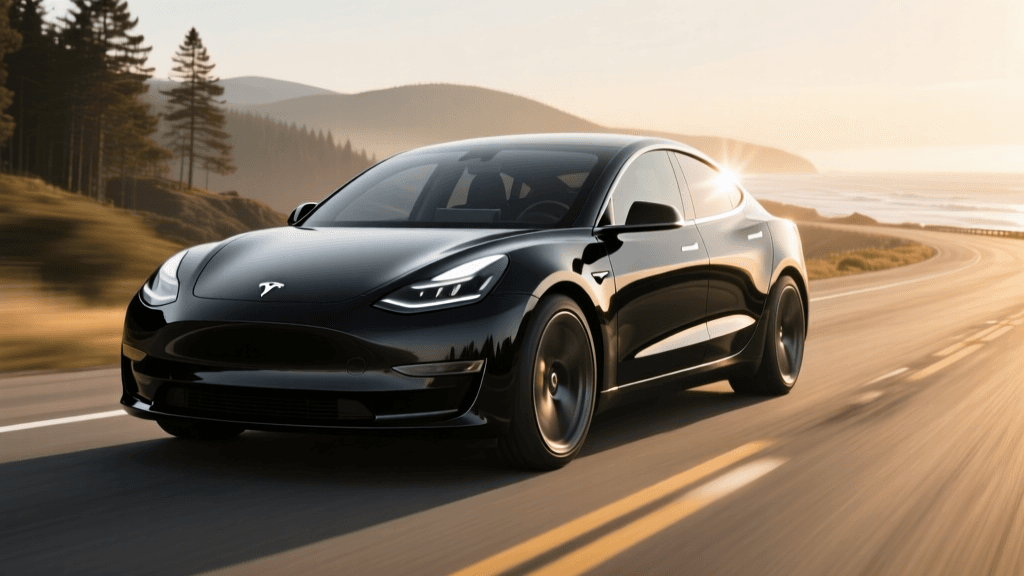
Following its 'Highland' refresh, the rear-wheel-drive Tesla Model 3 remains a masterclass in EV efficiency. With a starting price of $38,990 and eligibility for the $7,500 federal tax credit, the effective price lands around $31,490. While its 272-mile EPA range is lower than the Equinox, the Model 3 makes up for it with access to the expansive Supercharger network, industry-leading software, and exceptional aerodynamic efficiency that lowers your daily charging costs. At $115 per mile of range, it offers incredible value for buyers who prioritize technology and reliable road-trip infrastructure.
3. Hyundai Kona Electric (Best Crossover Utility Value)
The fully redesigned Hyundai Kona Electric is a practical, spacious subcompact crossover. Starting at $32,675, it currently faces hurdles in securing the federal tax credit due to battery sourcing, leaving the effective price at its sticker price. However, its value proposition lies in its 261 miles of range, Vehicle-to-Load (V2L) capabilities that allow you to power external devices, and a highly competitive 10-year/100,000-mile powertrain warranty. At $125 per mile of range, it is an excellent choice for small families needing cargo space without breaking the bank.
4. Volvo EX30 (Best Premium Budget Option)
The Volvo EX30 is a fascinating entry into the affordable EV space. Priced aggressively at $34,900, it brings premium Scandinavian design, blistering 3.6-second 0-60 mph times (in the dual-motor variant), and a high-quality interior to the budget segment. While it does not currently qualify for the federal tax credit at launch, its 265-mile estimated range and ultra-fast 153 kW charging capability make it a phenomenal value for urban professionals who want a luxury badge without the luxury price tag.
5. Nissan LEAF S (Best Ultra-Budget Commuter)
The Nissan LEAF is a veteran of the EV space and remains one of the cheapest ways to get into a new electric car. Starting at just $28,140 and qualifying for a $3,750 tax credit, the effective price is a mere $24,390. The catch? The base S model only offers 149 miles of range and relies on the aging CHAdeMO fast-charging standard. However, if you are strictly looking for a reliable, ultra-cheap daily commuter for city driving and can charge at home, the LEAF's low entry cost and $163 per mile of range metric still make it a highly rational budget choice.
How to Maximize Your EV Savings Post-Purchase
Ranking an EV by its purchase price is only half the battle. To truly maximize your value for money, follow these actionable tips after taking delivery:
- Install a Level 2 Home Charger: Relying on public DC fast chargers can cost three to four times more per kWh than home charging. Investing $500 to $800 in a Level 2 home charger (and potentially utilizing local utility rebates) will pay for itself within the first year of ownership.
- Leverage Time-of-Use (TOU) Rates: Contact your local utility provider to switch to an EV-specific TOU plan. By scheduling your car to charge between midnight and 5 AM, you can often cut your electricity costs by more than 50%.
- Utilize Preconditioning: Always precondition your EV's battery and cabin while it is still plugged into your home charger. This uses grid power rather than battery power to reach optimal temperatures, preserving your maximum range for your actual commute.
Final Thoughts on EV Value
The landscape of affordable electric vehicles has shifted dramatically. You no longer have to sacrifice range, charging speed, or interior quality to stay within a tight budget. By looking past the sticker price and calculating the effective cost after tax credits, alongside the cost per mile of range, you can confidently identify the EVs that offer the most bang for your buck. Whether you choose the road-trip-ready Chevy Equinox EV or the tech-heavy Tesla Model 3, applying this value-for-money framework ensures your transition to electric driving is as financially sound as it is environmentally responsible.