The State of EV Charging in US National Parks
As electric vehicle adoption accelerates across the United States, the intersection of sustainable travel and outdoor recreation has become a critical focal point for both automakers and federal land managers. For EV owners, the allure of zero-emission exploration through America's most pristine landscapes is undeniable. However, the reality of charging infrastructure within the boundaries of the National Park System presents a unique set of logistical challenges. Unlike urban centers or interstate highways where DC Fast Charging (DCFC) corridors are rapidly expanding, national parks operate under strict environmental preservation mandates, aging electrical grids, and seasonal demand spikes.
To understand the current landscape, we must look beyond anecdotal evidence and examine the hard data. According to the U.S. Department of Energy's Alternative Fuels Data Center, the distribution of Electric Vehicle Supply Equipment (EVSE) on federal lands is heavily skewed toward Level 2 (L2) charging rather than high-speed DCFC. This data-driven analysis breaks down the infrastructure status across the most visited national parks, evaluates network reliability, and provides actionable strategies for planning a seamless EV road trip into the American wilderness.
Data Comparison: Top 5 National Parks by EV Infrastructure
When analyzing the top five most visited national parks, a distinct pattern emerges: in-park charging is almost exclusively Level 2, designed for destination charging rather than rapid turnaround. High-speed charging is largely relegated to 'gateway communities' just outside park borders.
| National Park | In-Park L2 Ports (Est.) | In-Park DCFC Ports | Primary Networks | Nearest DCFC Gateway Hub |
|---|---|---|---|---|
| Great Smoky Mountains | 14 | 0 | Blink, ChargePoint | Gatlinburg / Pigeon Forge, TN |
| Grand Canyon (South Rim) | 18 | 0 | Blink, Tesla Destination | Tusayan, AZ / Williams, AZ |
| Zion | 12 | 0 | ChargePoint, Rivian | Springdale, UT |
| Yosemite | 35+ | 4 (Curry Village) | ChargePoint, Tesla | Mariposa, CA / Oakhurst, CA |
| Yellowstone | 22 | 0 | ChargePoint, Blink | West Yellowstone, MT |
Note: Data reflects approximate public and lodge-accessible ports as of recent infrastructure audits. DCFC counts inside strict park boundaries are exceptionally rare due to grid limitations.
The Gateway Community Phenomenon
The data clearly illustrates the 'Gateway Community Phenomenon.' Because national parks are often located in remote areas with limited three-phase power access, installing 150kW to 350kW DC Fast Chargers inside park boundaries requires massive, ecologically disruptive grid upgrades. Consequently, the National Park Service Sustainability Hub and its partners have focused on deploying L2 chargers at visitor centers, lodges, and campgrounds where dwell times naturally exceed 2 to 4 hours. For rapid charging, EV drivers must rely on the privatized infrastructure of gateway towns, which have seen a massive influx of Electrify America, EVgo, and Tesla Supercharger stations to capture tourist traffic.
Network Providers and Reliability Metrics
When charging inside a national park, you are predominantly interacting with three major networks: ChargePoint, Blink, and Tesla's Destination/Workplace chargers. Understanding the reliability and activation methods of these networks is crucial when you are miles away from a reliable cellular signal.
- ChargePoint: The dominant player in national park L2 infrastructure. ChargePoint stations generally boast an uptime reliability of over 90%. However, they require the ChargePoint app or an RFID card for activation. In deep park canyons where cellular service drops to zero, the RFID card is a mandatory backup.
- Blink Network: Frequently found at older visitor centers and municipal lots near park entrances. Blink's hardware is notoriously inconsistent, with industry data often placing its uptime closer to 75-80%. Always have a backup plan if a Blink station is your only option in a remote lot.
- Tesla Destination / NACS: Many park lodges (such as those operated by Xanterra or Aramark) have installed Tesla Wall Connectors. While excellent for Tesla owners, the transition to the North American Charging Standard (NACS) means non-Tesla EVs equipped with NACS ports or adapters will increasingly be able to utilize these previously walled-garden assets, provided the lodge enables open access.
Level 2 vs. DC Fast Charging: The National Park Reality
A common mistake EV road-trippers make is applying highway charging logic to national park exploration. On the interstate, you want a 350kW DCFC to get in and out in 20 minutes. In a national park, your goal should be 'opportunity charging' via Level 2 infrastructure.
Most in-park L2 chargers operate at 208V or 240V, delivering between 6.6kW and 19.2kW. At 7.2kW, an EV with an 80 kWh battery will recover roughly 25-30 miles of range per hour. If you are parked at the Grand Canyon South Rim visitor center for a 3-hour ranger talk and canyon viewing, you will add nearly 90 miles of range—more than enough to cover the park's internal scenic drives and the trip back to your gateway hotel. The Department of Energy's EV Charging Infrastructure guidelines emphasize that destination charging aligns perfectly with L2 capabilities, reducing the strain on local utility transformers while matching the behavioral patterns of park visitors.
Actionable Advice for EV Road Trips to National Parks
Successfully navigating the national park system in an EV requires meticulous preparation. Based on infrastructure data and the realities of remote travel, here is your actionable checklist for gear, software, and strategy.
Essential Gear and Adapters
Do not rely solely on public EVSE networks. The most reliable 'charging station' in a national park is often a standard electrical outlet at your campsite or a nearby RV park.
- NEMA 14-50 Extension Cord: Invest in a heavy-duty, 50-amp, 14-50 RV extension cord (minimum 4-gauge wire, 25 feet). Many campgrounds inside parks like Zion and Yosemite offer 50-amp RV hookups. With the proper mobile connector adapter, you can pull up to 11.5kW directly from your campsite pedestal overnight.
- J1772 to NACS / CCS Adapters: If you drive a Tesla, the J1772 adapter is non-negotiable, as 95% of non-Tesla public L2 stations in parks use the J1772 connector. If you drive a non-Tesla EV with a CCS port, carry a portable NACS-to-CCS adapter to access Tesla Destination chargers at park lodges that have opened their networks.
- Network RFID Cards: Cellular dead zones are common in valleys and canyons. Pre-order physical RFID cards for ChargePoint, EVgo, and Blink. Keep them in your center console to initiate charging sessions without a smartphone signal.
Strategic Charging Etiquette and Timing
Because L2 ports inside national parks are scarce (often limited to 2 or 4 ports per visitor center), charging etiquette is paramount to the EV community's reputation.
- The 'Unplug' Protocol: Never leave your vehicle plugged in at a public L2 station if you are done charging and are simply hiking or sightseeing for another four hours. If your vehicle allows it, set a charge limit to 80% so the station can free up for another EV driver if you are away from the car.
- Off-Peak Gateway Charging: When relying on DCFCs in gateway towns (e.g., Springdale near Zion or West Yellowstone), avoid charging between 4:00 PM and 7:00 PM. This is when all park visitors exit the gates simultaneously, leading to long queues at the local Superchargers and Electrify America stations. Charge your vehicle to 90% in the morning before entering the park, or wait until after dinner to top off.
- Leave a Note: If you must leave your EV plugged in at a remote lodge while on a long hike, leave a polite note on the dashboard with your cell number and a message stating: 'If you need a charge and I am not back, please unplug my vehicle (J1772 release button located on the connector).'
Future Projections and NPS Sustainability Goals
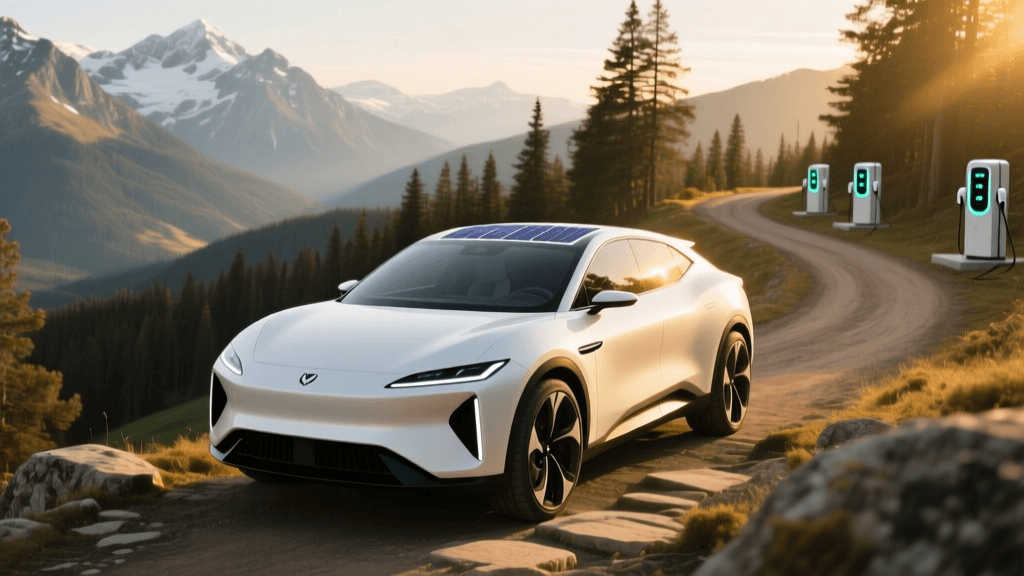
The infrastructure gap is not permanent. The National Park Service, in collaboration with the Department of the Interior and the Department of Energy, is actively pursuing grants to upgrade electrical substations near major park hubs. As the National Electric Vehicle Infrastructure (NEVI) formula program continues to disburse funds, we expect to see a new generation of solar-canopied, battery-buffered DC Fast Chargers deployed in gateway communities. These battery-buffered systems bypass the need for immediate, expensive grid upgrades by trickle-charging an on-site battery bank that can then deliver high-speed DC charges to EVs during peak tourist hours.
Until that infrastructure matures, the data is clear: EV travel in US National Parks is highly viable, but it rewards the prepared. By shifting your mindset from 'highway fast-charging' to 'destination opportunity-charging,' leveraging RV campground power, and utilizing gateway towns strategically, you can experience America's greatest natural wonders with zero tailpipe emissions and zero range anxiety.