The Rural EV Charging Conundrum: Separating Fact from Fiction
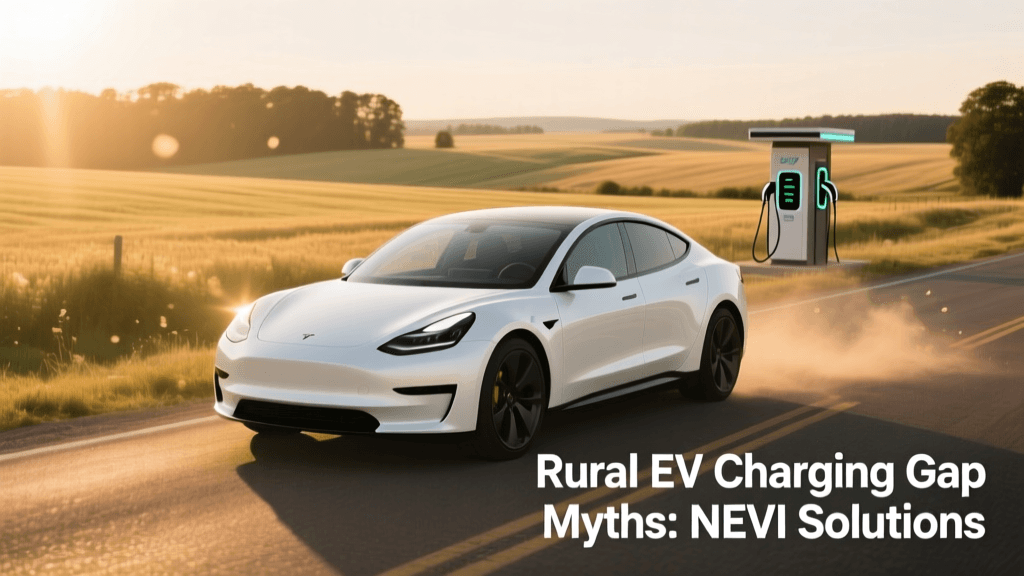
The transition to electric vehicles (EVs) is accelerating at an unprecedented pace, but a persistent narrative suggests that rural America is being left in the dust. The so-called 'rural charging gap' is a frequent topic of debate among policymakers, automotive journalists, and drivers alike. However, much of the public discourse is clouded by misconceptions, outdated data, and a fundamental misunderstanding of rural driving habits. As a senior analyst for AutoEdgeView, I have spent years tracking charging infrastructure deployment. Today, we are diving deep into a comprehensive rural EV charging gap analysis, busting the most pervasive myths, highlighting common mistakes rural EV drivers make, and outlining actionable solutions that are actively bridging the divide.
Myth 1: 'Rural Drivers Only Need Home Charging'
One of the most common arguments against building robust rural public charging networks is the assumption that rural residents live in single-family homes with ample driveway space, making Level 2 (L2) home charging sufficient. While it is true that rural homeowners have an easier time installing L2 chargers than urban apartment dwellers, this myth ignores the reality of rural mobility.
Rural drivers consistently log higher daily vehicle miles traveled (VMT) than their urban counterparts. According to the USDA, rural residents often face long commutes to reach employment centers, healthcare facilities, and large grocery stores. Furthermore, rural economies rely heavily on agriculture, forestry, and local tourism—sectors that require frequent, long-distance travel throughout the day. Relying solely on overnight home charging leaves rural drivers stranded when their daily mileage exceeds their vehicle's range. The gap analysis reveals a critical need for public Direct Current Fast Charging (DCFC) hubs strategically placed near rural employment centers, agricultural cooperatives, and regional transit corridors to support the unique, high-mileage lifestyle of rural America.
Myth 2: 'Weak Rural Power Grids Make DC Fast Charging Impossible'
Critics often point to the aging and limited capacity of rural electrical distribution grids as an insurmountable barrier to deploying 150kW or 350kW fast chargers. It is true that pulling a massive, instantaneous load from a rural feeder line can cause voltage drops and require millions of dollars in utility upgrades. However, the idea that this makes rural fast charging 'impossible' is entirely false.
The solution lies in decentralized power generation and Battery Energy Storage Systems (BESS). Modern rural charging stations are increasingly being built as microgrids. By pairing solar canopies with on-site battery storage, charging sites can slowly trickle-charge the batteries from the weak grid (or from the sun) and then discharge that stored energy into an EV at high speeds without stressing the local utility infrastructure. Furthermore, the National Electric Vehicle Infrastructure (NEVI) Formula Program, managed by the Joint Office of Energy and Transportation, explicitly allows states to use federal funding to cover the costs of on-site power generation, storage, and necessary grid upgrades. This federal backing has effectively neutralized the 'weak grid' argument, paving the way for rapid rural deployment.
Myth 3: 'You Cannot Road Trip Through Rural America in an EV'
The fear of being stranded in a remote area with a depleted battery—commonly known as range anxiety—is magnified when planning cross-country road trips through rural corridors. While it is true that the density of chargers in the Midwest or Mountain West is lower than on the coasts, the narrative that rural road trips are impossible is a myth.
Strategic corridor charging is solving this issue. Research from the National Renewable Energy Laboratory (NREL) emphasizes that in low-density areas, strategic placement of chargers along Alternative Fuel Corridors is far more critical than sheer volume. Networks are adapting to this reality. For example, the Rivian Adventure Network specifically targets rural, outdoor, and destination-heavy locations that traditional highway-focused networks ignore. By placing chargers near national parks, rural trailheads, and remote lodges, networks are proving that rural EV tourism is not only possible but thriving.
Common Mistakes Rural EV Drivers Make
Even with expanding infrastructure, navigating rural charging networks requires a different skill set than urban charging. Here are the most common mistakes drivers make when venturing off the beaten path:
1. Ignoring Topography and Weather Impacts on Range
Urban drivers are used to flat, stop-and-go traffic where regenerative braking helps preserve range. Rural driving often involves mountain passes, steep grades, and high-speed highway cruising. Climbing a 5,000-foot elevation pass can drain a battery 30% faster than the EPA estimated range. Furthermore, rural areas often experience more extreme temperature fluctuations. Failing to account for cold-weather battery degradation or the energy required to climb steep grades is a recipe for a stranded vehicle.
2. Skipping Battery Pre-Conditioning
When navigating to a rural DCFC station, many drivers forget to use their vehicle's navigation system to pre-condition the battery. In cooler rural climates, arriving at a fast charger with a cold battery will result in drastically reduced charging speeds (sometimes dropping from 150kW to under 40kW). Always route through the car's native software to ensure the battery thermal management system prepares the cells for rapid charging.
3. Over-Reliance on a Single Charging Network
Rural areas are often served by a patchwork of smaller, regional networks or independent operators rather than massive national monopolies. Mistakenly assuming that a Tesla Supercharger or Electrify America app will cover every rural route is a critical error. Drivers must download regional apps (like EVgo, Blink, or local utility apps) and carry physical RFID cards as a backup to cellular dead zones.
Actionable Solutions: Bridging the Rural Gap
So, how are we actually solving the rural charging gap? Below is a comparison of the primary infrastructure solutions currently being deployed to ensure rural communities are not left behind.
| Solution Type | Ideal Rural Use Case | Typical Power Output | Infrastructure Requirement |
|---|---|---|---|
| NEVI Corridor DCFC | Interstates and major US Highways connecting rural counties | 4 ports @ 150kW+ (CCS/NACS) | Heavy utility upgrades or large-scale BESS; 50-mile spacing mandate |
| Destination L2 Charging | Rural hotels, state parks, agricultural centers, and local businesses | 19.2kW to 80kW (Level 2) | Standard commercial 240V/480V panels; low grid impact |
| Solar+Storage Microgrids | Remote off-grid locations, rural tourism hubs, and weak-grid areas | 50kW to 150kW DCFC | Solar canopies, large BESS, independent of local utility constraints |
| Mobile/Event Chargers | Rural county fairs, harvest seasons, and temporary outdoor events | Variable (usually 50kW - 100kW) | Towable trailer with integrated generator or battery bank |
The Role of the NEVI Program
The NEVI program is the backbone of rural corridor charging. By mandating that chargers be placed no more than 50 miles apart along designated Alternative Fuel Corridors, the federal government is ensuring that even the most remote stretches of highway have reliable, high-speed charging. The requirement for a minimum of four 150kW ports ensures that rural travelers won't face the urban problem of waiting in long lines at a single-stall charger.
The Rise of Destination and Adventure Networks
While NEVI handles the highways, destination charging handles the rural economy. Programs that incentivize rural small businesses to install Level 2 chargers are booming. A rural diner, a boutique vineyard, or a remote fishing lodge can install an 80kW Level 2 ChargePoint or Blink charger for a fraction of the cost of a DCFC. This allows EV drivers to top up their batteries while spending money in the local rural economy, creating a symbiotic relationship between EV tourism and rural small businesses.
Conclusion: The Gap is Closing
The rural EV charging gap is real, but it is not the insurmountable chasm that critics claim. By busting the myths surrounding home charging sufficiency, grid limitations, and road trip viability, we can see the clear path forward. Through innovative microgrid technology, targeted federal funding via the NEVI program, and the expansion of destination-focused networks like Rivian's, rural America is rapidly catching up. For the rural EV driver, success comes down to preparation: understanding your vehicle's range dynamics, utilizing battery pre-conditioning, and leveraging the diverse patchwork of charging networks that are quietly transforming the rural landscape.