The EVgo Network Footprint: Where Can You Charge?
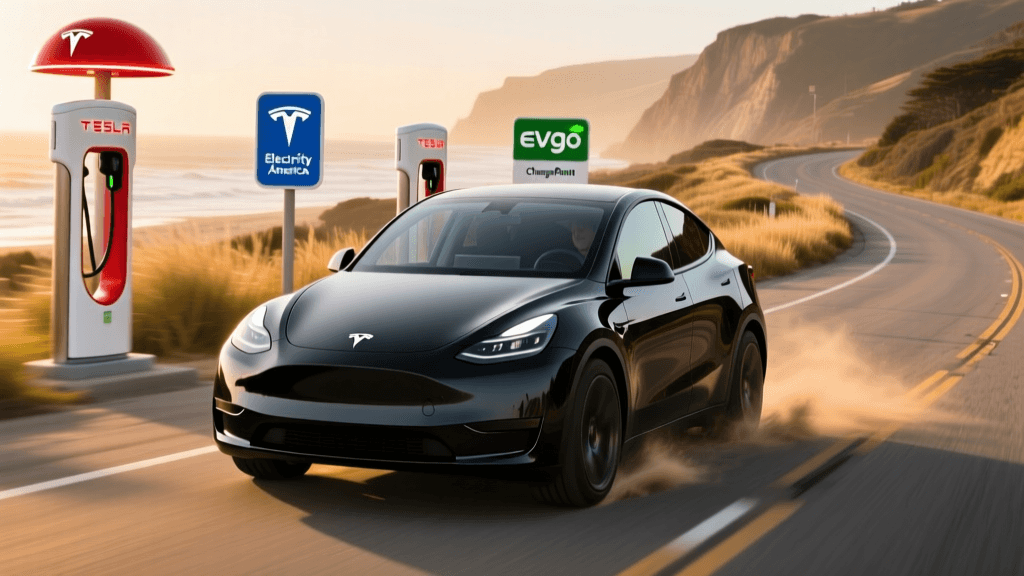
As the electric vehicle market matures, the 'Big Three' public DC fast-charging networks—Tesla Supercharger, Electrify America, and EVgo—have become the backbone of American road trips and daily commuting. For EV owners without access to home charging, or those who frequently travel across state lines, understanding the nuances of these networks is critical. Today, we are putting EVgo under the microscope, analyzing its national coverage, hardware capabilities, and, most importantly, its pricing structure to determine the true cost and value of plugging in.
According to data tracked by the Alternative Fuels Data Center, EVgo operates one of the largest public fast-charging networks in the United States. The network boasts over 1,100 public fast-charging stations and more than 2,800 individual DC fast chargers across 40 states. Historically, EVgo focused heavily on urban centers, shopping malls, and grocery store parking lots, making it a favorite for 'top-up' charging during errands rather than purely highway-corridor travel. However, their recent infrastructure push has expanded their footprint along major interstate corridors.
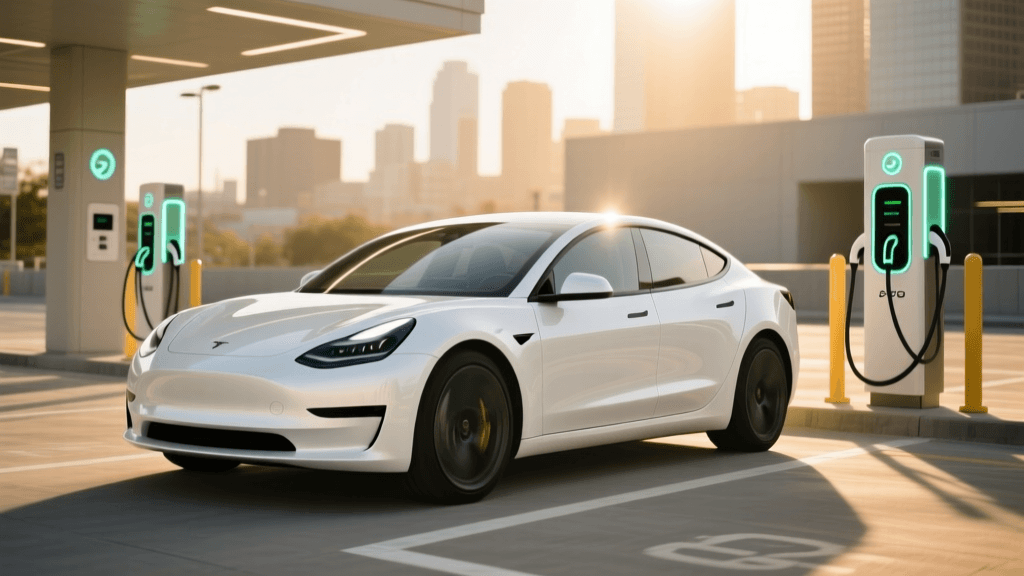
A major value-add for modern EV drivers is EVgo's 'Reborn' station initiative. These upgraded locations feature next-generation 350 kW capable chargers, pull-through stalls for vehicles towing trailers, and native North American Charging Standard (NACS) cables. This means Tesla owners and newer EVs equipped with NACS ports can charge without relying on bulky CCS-to-NACS adapters, significantly improving the user experience and charging speeds.
Deconstructing EVgo Pricing: Pay-As-You-Go vs. EVgo Plus
When evaluating the cost of public charging, the per-kilowatt-hour (kWh) rate is only half the equation. EVgo utilizes a tiered pricing model designed to cater to both infrequent travelers and daily commuters. Unlike some networks that offer a single flat rate, EVgo incentivizes loyalty through its subscription tiers. According to EVgo's official pricing structure, drivers can choose between a Guest (pay-as-you-go) rate or one of three EVgo Plus subscription plans.
The Guest rate is the default for drivers who download the app and charge without a subscription. Depending on the state, local utility demand charges, and the specific station's real estate costs, Guest rates typically fluctuate between $0.30 and $0.43 per kWh. In high-cost markets like California or Massachusetts, you can expect to pay at the upper end of that spectrum, while stations in the Midwest or Texas may hover closer to the $0.28 to $0.32 range.
For drivers who charge more than once a month, the EVgo Plus plans offer a mathematical advantage. By paying a flat monthly fee, users unlock a percentage discount on the per-kWh rate at all EVgo-owned stations. Below is a breakdown of the current subscription tiers:
| Plan Name | Monthly Fee | Discount Level | Estimated Effective Rate | Best Suited For |
|---|---|---|---|---|
| Guest (Pay-As-You-Go) | $0.00 | None | $0.30 - $0.43 / kWh | Road trippers, occasional users |
| EVgo Plus1 | $4.99 | ~10% off Guest | $0.27 - $0.38 / kWh | Weekend warriors, monthly commuters |
| EVgo Plus2 | $9.99 | ~20% off Guest | $0.24 - $0.34 / kWh | Frequent commuters, apartment dwellers |
| EVgo Plus3 | $14.99 | ~30% off Guest | $0.21 - $0.30 / kWh | Rideshare drivers, high-mileage users |
Note: Exact discounts and effective rates vary by local utility regulations and state-specific pricing mandates. Some states require time-of-use pricing, meaning charging during peak evening hours will cost more than charging mid-day, regardless of your subscription tier.
The Hidden Costs: Idle Fees and Parking Rates
A comprehensive cost breakdown must account for the penalties and peripheral costs of public charging. EVgo, like its competitors, enforces strict idle fees to prevent chargers from being monopolized by fully charged vehicles. Once your vehicle reaches its charge limit or the session ends, EVgo grants a 10-minute grace period to unplug and move your vehicle. After this window, an idle fee of $0.50 per minute is applied, capping out at $25.00 per incident. For drivers who leave their cars to sit down at a restaurant or watch a movie, this can quickly erase any savings gained from a Plus subscription.
Additionally, because EVgo heavily utilizes retail and grocery store parking lots, drivers must be mindful of third-party parking fees. While many locations offer free charging parking for the duration of the session, some urban garages or premium shopping centers require validation or charge standard hourly parking rates. Always check the station details in the EVgo app before navigating to a location to ensure a hidden parking fee won't inflate your total cost of charging.
EVgo vs. Competitors: A Cost & Value Comparison
How does EVgo stack up against Electrify America (EA) and the Tesla Supercharger network in terms of pure value? Tesla remains the gold standard for pricing consistency and reliability, often charging between $0.25 and $0.35 per kWh, with a seamlessly integrated billing system. However, Tesla's network can suffer from congestion at popular corridor stops.
Electrify America offers a 'Pass+' subscription for $7.00 a month, which provides a 25% discount on their standard Guest rates. EA's standard rates are often slightly higher than EVgo's, sometimes pushing past $0.48 per kWh in premium markets. Therefore, an EVgo Plus2 subscription ($9.99/mo for 20% off) often results in a lower final per-kWh cost than EA's equivalent, especially in states where EVgo has capped utility rates.
In terms of network reliability and customer satisfaction, the J.D. Power U.S. Electric Vehicle Charging Index consistently ranks Tesla at the top, with EVgo and Electrify America trading blows in the second and third positions. EVgo scores particularly well in urban accessibility and app ease-of-use, though it occasionally loses points for older 50kW chargers that are still present in legacy locations. The ongoing rollout of 350kW 'Reborn' stations is actively addressing these hardware complaints, bridging the gap in charging speed value.
Actionable Strategies to Maximize Your EVgo Value
If you plan to utilize the EVgo network, here are several practical strategies to ensure you get the best return on your investment:
- Leverage Automaker Partnerships: EVgo frequently partners with automakers to offer free charging credits. For example, purchasers of the Chevrolet Silverado EV, certain Nissan Ariya trims, and BMW iX models often receive $500 to $1,500 in EVgo credits. Always check your vehicle's incentive package before paying out of pocket.
- Match Your Plan to Your Mileage: Do the math before subscribing. If your local Guest rate is $0.35/kWh, and the Plus2 plan ($9.99/mo) drops it to $0.28/kWh, you save $0.07 per kWh. You would need to charge roughly 142 kWh per month (about 400 miles of range in an average EV) just to break even on the subscription cost. If you charge less than that, stick to the Guest or Plus1 plan.
- Utilize Autocharge Technology: EVgo supports 'Autocharge' for many CCS-equipped vehicles. By linking your vehicle's VIN to your EVgo account, the charger will automatically recognize your car the moment you plug in, bypassing the need to open the app, swipe a credit card, or use an RFID card. This saves time and ensures your subscription discount is applied instantly.
- Combine Errands with Charging: Because EVgo excels in retail locations, the best value is achieved when you combine charging with necessary tasks. Grocery shopping at a Whole Foods or Wegmans equipped with EVgo 350kW chargers turns a 25-minute charging stop into a productive errand, effectively reducing the 'time cost' of public charging.
Final Verdict: Who is EVgo Best For?
EVgo represents a highly competitive option in the public charging landscape, particularly for urban and suburban EV owners who rely on retail-centric charging hubs. The EVgo Plus subscription model offers genuine, mathematical value for high-mileage commuters and rideshare drivers who can easily surpass the break-even threshold of the monthly fee. While legacy 50kW stations still linger in older markets, the aggressive expansion of 350kW Reborn stations with native NACS cabling proves that EVgo is committed to future-proofing its network. By understanding the tiered pricing, avoiding idle fees, and leveraging automaker credits, drivers can transform EVgo from a mere backup option into a primary, cost-effective charging solution.