Introduction to the EVgo Ecosystem
As the electric vehicle (EV) market matures, public charging infrastructure has shifted from a niche novelty to a critical pillar of automotive ownership. Among the major players in the United States, EVgo stands out as a pioneer in public fast-charging networks. For EV owners, understanding the nuances of public charging is no longer just about finding a plug; it is about optimizing cost, time, and reliability. In this comprehensive cost and value breakdown, we dissect the EVgo network, analyzing its coverage footprint, infrastructure capabilities, and complex pricing structure to help you determine if it offers the best value for your specific driving habits.
Whether you are an urban apartment dweller relying entirely on public charging, a daily commuter topping off your battery, or a road-tripper navigating cross-country routes, the financial implications of your chosen network can add up to hundreds of dollars annually. Let us dive deep into what EVgo brings to the table.
Network Coverage and Infrastructure Expansion
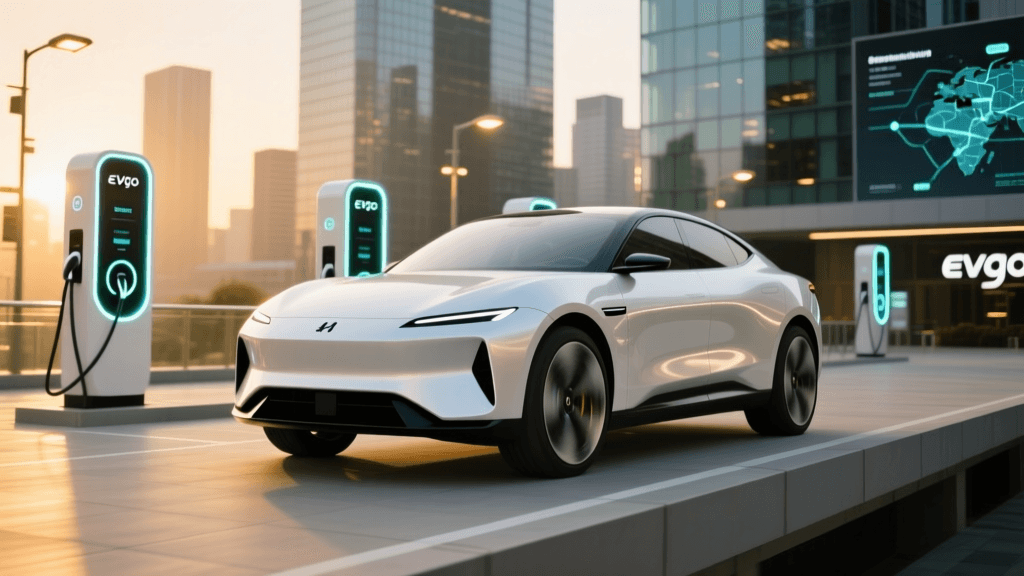
EVgo operates one of the largest public DC fast-charging networks in the United States. According to the U.S. Department of Energy's Alternative Fuels Data Center, the national charging landscape is expanding rapidly, and EVgo remains a dominant force within this growth. Currently, EVgo boasts over 1,000 public fast-charging stations and more than 2,500 individual DC fast chargers across 40 states.
Historically, EVgo focused heavily on urban and suburban retail locations, partnering with shopping centers, grocery stores, and parking garages. This made it a favorite for local top-ups but a point of frustration for highway road-trippers. However, the network's strategy has evolved significantly. Recognizing the need for highway corridor charging, EVgo has aggressively expanded its footprint along major interstates.
A massive catalyst for this expansion is the automaker partnership model. A major expansion backed by a $500 million partnership with General Motors, as reported by Reuters, aims to add thousands of new 350kW chargers across the country. These new 'Reef' stations are designed to feature pull-through charging stalls (accommodating EVs towing trailers), canopy covers for weather protection, and high-speed 350kW architecture capable of adding up to 100 miles of range in just five minutes for compatible vehicles like the Cadillac Lyriq or GMC Hummer EV.
The EVgo Pricing Structure Explained
The true value of any charging network lies in its pricing transparency and flexibility. EVgo utilizes a tiered membership model that caters to different types of EV drivers. Unlike home charging, where electricity rates are relatively static and low (averaging $0.16 per kWh nationally), public DC fast charging commands a premium for the convenience and speed. EVgo's pricing is generally divided into two models depending on state regulations: per-kilowatt-hour (kWh) billing, which is the most accurate and fair, and per-minute billing, which is still mandated in a few states where only regulated utilities are legally permitted to sell electricity by the kWh.
According to EVgo's official membership and pricing page, the network offers three primary tiers: Guest (Pay-As-You-Go), EVgo Plus, and EVgo Plus+. The fundamental trade-off is monthly subscription fees versus discounted per-unit energy rates.
Pricing Tier Comparison Breakdown
| Membership Tier | Monthly Fee | Energy Rate (Per-kWh) | Idle Fees | Best Suited For |
|---|---|---|---|---|
| Guest (Pay-As-You-Go) | $0.00 | Highest Tier (Standard Retail) | Standard Grace Period | Infrequent travelers, emergency top-ups, road-trippers passing through once. |
| EVgo Plus™ | $4.99 | Discounted (Approx. 10% - 15% off) | Standard Grace Period | Weekly commuters, apartment dwellers who charge 1-2 times a week. |
| EVgo Plus+™ | $9.99 | Deepest Discount (Approx. 20% - 25% off) | Extended Grace Period (Select locations) | High-mileage drivers, rideshare drivers, those relying 100% on public charging. |
Note: Exact per-kWh rates vary wildly by location, time of day, and local utility demand charges. A charger in downtown San Francisco will inherently cost more than one in suburban Ohio due to commercial real estate and utility rate differences.
Cost & Value Analysis: Real-World Scenarios
To truly understand the value proposition, let us run a real-world cost analysis. Assume you drive a Chevrolet Equinox EV or a Tesla Model 3 Standard Range with a usable battery capacity of roughly 60 kWh. You arrive at an EVgo station with a 10% state-of-charge (SoC) and need to charge to 80%, requiring approximately 42 kWh of energy.
- The Guest Scenario: At a standard retail rate of $0.48 per kWh, charging 42 kWh will cost you $20.16. Over a year of weekly charging (52 weeks), your total annual spend would be $1,048.32.
- The EVgo Plus+ Scenario: By paying the $9.99 monthly fee ($119.88 annually), you unlock the deepest discount tier. If your local rate drops to $0.36 per kWh, that same 42 kWh charge costs $15.12. Over 52 weeks, your energy spend is $786.24. Adding the $119.88 annual subscription fee, your total annual spend is $906.12.
The Verdict: By upgrading to the Plus+ plan, you save approximately $142.20 per year in this specific scenario. If you charge more frequently, or if your local Guest rates are higher (some urban stations exceed $0.55/kWh), the return on investment for the $9.99 monthly fee becomes undeniable. Conversely, if you only use EVgo once a month on road trips, the Guest tier is mathematically superior.
Hidden Fees and How to Avoid Them
When evaluating the cost of public charging, the per-kWh rate is only half the battle. Network penalties and third-party parking fees can silently destroy your charging budget.
Idle Fees
EVgo enforces idle fees to prevent chargers from being blocked by fully charged vehicles. Once your charging session completes, you typically have a grace period (often 20 minutes) to unplug and move your vehicle. If you fail to do so, EVgo will assess an idle fee, which can be as high as $0.50 per minute. Actionable Advice: Always use the EVgo app to set push notifications for when your vehicle reaches your target SoC. Never leave your vehicle unattended for a long shopping trip if it is actively fast-charging.
Third-Party Parking Fees
Because EVgo frequently places its chargers in premium retail locations, shopping malls, and urban parking garages, you are still subject to the property owner's parking rules. A $15 discount on your charging session is entirely negated if you have to pay $20 for garage parking. Actionable Advice: Use the EVgo app's location details tab to read user-submitted tips regarding parking validation, free parking hours, and specific garage entrances.
Actionable Tips to Maximize EVgo Value
Beyond selecting the right membership tier, savvy EV owners utilize several strategies to extract maximum value from the EVgo network:
- Activate Autocharge+ or Plug&Charge: EVgo supports Autocharge+ for many non-Tesla vehicles and the newer Plug&Charge standard (ISO 15118) for compatible vehicles. This eliminates the need to fumble with credit cards or app screens. You simply plug in, and the charger automatically identifies your vehicle and bills your account. This saves time and ensures your discounted membership rate is applied instantly without manual intervention.
- Leverage Automaker Credits: Many automakers include complimentary charging credits on their networks. For example, Nissan has historically offered Nissan Energy Perks via EVgo for Leaf and Ariya buyers. General Motors, Hyundai, and Kia frequently bundle $100 to $500 in EVgo credits with the purchase or lease of a new EV. Always check your automaker's specific EV benefits portal to link these credits directly to your EVgo account.
- Target Off-Peak Hours: In select markets where utility demand charges dictate pricing, EVgo may offer lower rates during off-peak hours (typically late at night or early morning). If your schedule allows, shifting your charging sessions to these windows can yield significant savings.
- Utilize the 'Preconditioning' Feature: If your EV supports battery preconditioning (routing to the charger via the car's native navigation), use it. A warm battery accepts a DC fast charge much faster. While EVgo bills by the kWh in most states, charging faster reduces the time your battery spends at the station, minimizing the risk of battery degradation and getting you back on the road quicker.
Final Verdict: Who is EVgo Best For?
EVgo's network coverage and pricing structure make it a highly competitive option, but it is not a one-size-fits-all solution. The network is best suited for urban and suburban EV owners who lack access to home Level 2 charging and need reliable, fast top-ups during their weekly grocery runs or gym sessions. The heavy integration into retail centers makes it a convenient lifestyle charger rather than just a utilitarian highway pit stop.
For high-mileage drivers and rideshare operators, the EVgo Plus+ plan is an absolute necessity, as the 20-25% discount on per-kWh rates easily eclipses the $9.99 monthly fee. However, if your primary need is cross-country highway touring, you may still find networks with more dedicated highway pull-through plazas slightly more convenient, though EVgo's ongoing partnership expansions are rapidly closing this gap. By understanding the pricing tiers, avoiding idle fees, and leveraging automaker credits, you can transform EVgo from a costly necessity into a highly efficient component of your EV ownership experience.