The modern electric vehicle (EV) ecosystem relies on a fragile but increasingly intelligent web of high-voltage infrastructure. For early EV adopters, encountering an 'Out of Order' screen at a public charging plaza was a frustrating rite of passage. Today, however, the narrative is shifting from anecdotal complaints to data-driven reliability. This evolution is powered by advanced EV charging downtime trackers, Internet of Things (IoT) telemetry, and sophisticated predictive maintenance algorithms. In this technology deep dive, we explore the backend architecture that keeps electrons flowing, how networks track downtime in real-time, and how consumers can leverage these systems for seamless cross-country travel.
The Nervous System: OCPP and Charging Station Management
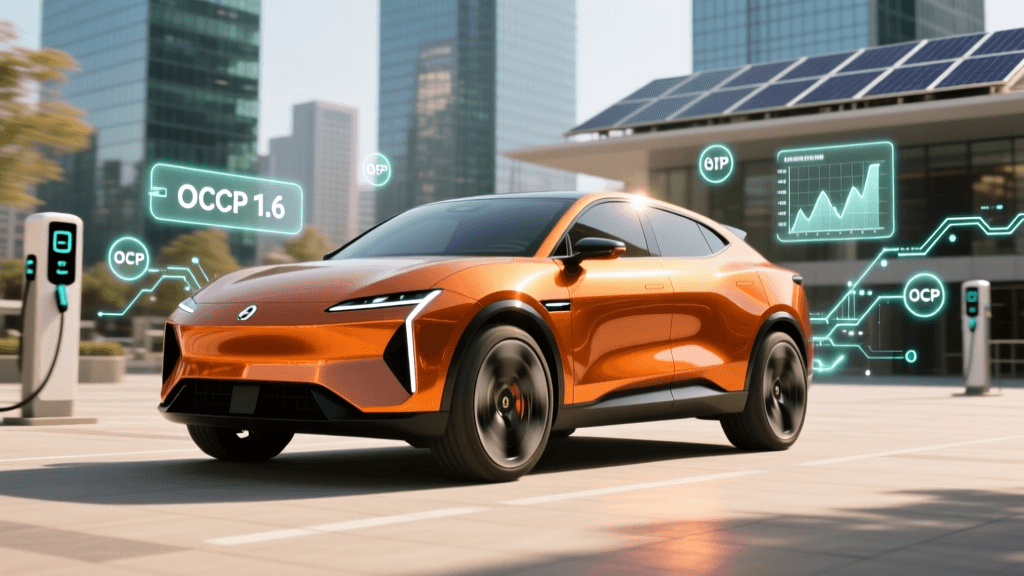
To understand how downtime is tracked, we must first look at the communication protocols that govern public charging. The backbone of modern network interoperability is the Open Charge Point Protocol (OCPP). According to the Open Charge Alliance's OCPP 2.0.1 documentation, this protocol acts as the central nervous system between the physical charging hardware (the Electric Vehicle Supply Equipment, or EVSE) and the backend Charging Station Management System (CSMS).
When a charging pile experiences a fault, it does not simply go dark. Instead, it generates a 'StatusNotification' message via OCPP, detailing the exact nature of the error. Is it a ground fault? A liquid cooling pump failure? A payment terminal disconnect? OCPP 2.0.1 introduces advanced security features and real-time telemetry that allow the CSMS to categorize the downtime immediately. This data is then pushed to network operations centers and, crucially, to consumer-facing EV charging downtime tracker apps via API integrations.
IoT Sensors and Predictive Maintenance
Historically, charging network maintenance was reactive: a driver would report a broken charger on PlugShare, a ticket would be generated, and a technician would be dispatched days later. Modern networks like Electrify America, Tesla, and ChargePoint have pivoted to predictive maintenance using edge computing and IoT sensors.
Thermal and Flow Telemetry
High-power 350kW chargers rely on liquid-cooled cables to prevent overheating. Inside these pedestals, IoT flow meters and delta-T (temperature differential) sensors constantly monitor the coolant loop. If the system detects a 5% drop in flow rate or an anomalous spike in return-line temperature, the CSMS flags the unit for maintenance before the cable overheats and throttles charging speeds. This proactive flagging is registered in the network's downtime tracker as 'Scheduled Maintenance' rather than 'Unexpected Outage,' preserving the network's public reliability score.
Contactor Lifecycle Tracking
High-voltage DC contactors (the heavy-duty relays that connect the grid to your vehicle) have a finite number of mechanical actuation cycles. Advanced CSMS platforms track the exact number of times a contactor engages and disengages. By applying machine learning algorithms to this telemetry, networks can predict contactor failure within a margin of 50 cycles, dispatching a technician to replace the part during off-peak hours.
The 'Ghost Charger' Phenomenon: API vs. Physical Uptime
One of the most critical challenges in EV charging downtime tracking is the discrepancy between API-reported status and physical reality. This is commonly known in the EV community as the 'Ghost Charger.' A Ghost Charger occurs when the network's API broadcasts an 'Available' status to routing apps like A Better Routeplanner (ABRP) or the vehicle's native navigation, but the physical unit is inoperable due to a localized issue that the CSMS cannot detect.
- Vandalism and Screen Damage: If a touchscreen is shattered, the internal charging modules may still be fully functional and reporting 'Healthy' to the CSMS, but the user cannot initiate a session.
- Cable Management Failures: A retractor spring failure might leave a heavy liquid-cooled cable resting in a puddle. The electrical components are fine, but safety protocols prevent the user from handling it.
- Payment Gateway Localization: The charger has power and network connectivity, but the localized 4G/LTE modem has dropped packets, preventing credit card authorization.
To combat this, advanced downtime trackers now cross-reference API data with crowdsourced user check-ins and computer vision from plaza security cameras to identify and quarantine Ghost Chargers from routing algorithms.
The 97% Uptime Mandate: NEVI Standards
The push for rigorous downtime tracking is not just about customer satisfaction; it is now a matter of federal compliance. The National Electric Vehicle Infrastructure (NEVI) Formula Program, overseen by the Joint Office of Energy and Transportation, mandates that federally funded charging stations must maintain a strict 97% uptime requirement.
Calculating this 97% metric requires granular, second-by-second downtime tracking. Networks must log the exact timestamp a fault occurs and the timestamp it is resolved. Crucially, the NEVI guidelines stipulate that downtime caused by utility grid failures or scheduled maintenance must be logged differently than hardware failures. To meet federal standards and secure funding, Charge Point Operators (CPOs) are investing millions in localized edge servers that cache fault logs even if the station loses its primary internet connection, ensuring zero gaps in uptime reporting.
Network Maintenance Technology Comparison
Different networks employ varying levels of telemetry and tracker transparency. Below is a comparison of how major networks handle maintenance tracking and consumer-facing data.
| Network | Telemetry Depth | Predictive Maintenance | Consumer Tracker Transparency | Average Reported Uptime |
|---|---|---|---|---|
| Tesla Supercharger | Proprietary (Full Stack) | High (Vehicle-to-Charger handshake data) | High (In-car navigation & app) | 98% - 99% |
| Electrify America | High (OCPP 2.0.1 + IoT) | Medium-High (Liquid cooling focus) | Medium (App API, occasional Ghost Chargers) | 90% - 95% |
| ChargePoint | Medium (OCPP 1.6/2.0) | Medium (Relies heavily on host site reporting) | High (Detailed app status & user reports) | 92% - 96% |
| EVgo | High (Autocharge integration) | High (Fleet management analytics) | Medium (Partnered with automaker apps) | 93% - 97% |
Actionable Strategies for EV Road Trippers
Understanding the technology behind EV charging downtime trackers allows you to outsmart the system and avoid stranded scenarios during cross-country road trips. According to infrastructure data compiled by the U.S. Department of Energy's Alternative Fuels Data Center, the density of fast chargers is growing, but redundancy remains your best defense.
1. Triangulate API Data with Crowdsourcing
Never rely solely on your vehicle's native navigation or a single network app. Before arriving at a plaza, cross-reference the network's API status with PlugShare's recent user check-ins. If the API says 'Available' but the last three PlugShare users noted 'Screen Unresponsive' in the past 48 hours, you are likely dealing with a Ghost Charger. Route to a backup plaza instead.
2. Prioritize 'Hub' Stations Over Corridor Singles
Predictive maintenance algorithms prioritize high-traffic 'Hub' stations (e.g., Tesla Megastations or EA flagship plazas with 8+ stalls) because the revenue loss from downtime is highest there. Furthermore, if one stall at a 12-stall hub is undergoing IoT-flagged maintenance, your charging session is not interrupted. Always route through hubs rather than single-stall corridor chargers, which have a higher impact on your trip if they experience an unexpected OCPP fault.
3. Leverage Autocharge for Handshake Diagnostics
Networks utilizing 'Plug & Charge' (ISO 15118) technology perform a deep digital handshake between the vehicle's Battery Management System (BMS) and the charger. If a Plug & Charge session initiates successfully, it verifies that the payment gateway, the OCPP backend, and the high-voltage contactors are all fully operational. If you have the option, prioritize networks where your vehicle supports Plug & Charge to bypass the most common point of failure: the localized payment terminal.
Conclusion
The era of the 'Wild West' in EV charging is slowly being tamed by rigorous data analytics, IoT telemetry, and strict federal uptime mandates. While the physical hardware of a 350kW DC fast charger is subjected to extreme environmental and electrical stress, the invisible architecture of OCPP protocols and predictive maintenance algorithms is working tirelessly behind the scenes. By understanding how EV charging downtime trackers operate—and knowing where the blind spots like Ghost Chargers still exist—EV drivers can navigate the public charging network with confidence, turning potential road trip nightmares into seamless, data-optimized journeys.