The Evolution of Home EV Charging: Smart vs. Dumb
As the electric vehicle (EV) market accelerates toward mass adoption, the infrastructure supporting it is undergoing a radical transformation. For early EV adopters, a Level 2 home charger was essentially a heavy-duty extension cord—a simple, non-connected device designed to push electrons from the grid to the battery as fast as safely possible. Today, the landscape has bifurcated into two distinct categories: non-connected (often called 'dumb') chargers and WiFi-enabled (smart) chargers. While both will charge your vehicle, the future of energy management, utility rebates, and grid stability heavily favors the latter. In this comprehensive outlook, we compare WiFi-enabled and non-connected EV chargers, exploring why the smart grid is rendering basic models obsolete and what you need to know before investing in your home charging setup for the next decade.
The Case for Non-Connected Chargers: Simplicity and Reliability
Non-connected EV chargers, such as the Grizzl-E Core or the Lectron V-Box, operate without any network connectivity. They are essentially high-amperage relays wrapped in weatherproof enclosures. When you plug your car in, the charger communicates via basic proximity pilot signals to the vehicle's onboard charger, closes the contactor, and delivers power (typically 32A to 48A continuous on a 240V circuit).
Advantages of 'Dumb' Chargers
- Zero Reliance on Network Stability: If your home WiFi drops, or the manufacturer's cloud servers experience an outage, a non-connected charger continues to function flawlessly. This is highly advantageous for rural installations or underground parking garages where WiFi signals struggle to penetrate concrete.
- Lower Upfront Costs: Without the need for internal WiFi modules, cellular chips, or complex logic boards, non-connected chargers are generally cheaper. The Grizzl-E Core, for example, retails for around $399, offering a rugged, IP67-rated aluminum build that can withstand extreme weather.
- Privacy and Security: For users wary of data harvesting or potential cybersecurity vulnerabilities associated with IoT devices, a non-connected charger offers complete peace of mind. It cannot be hacked remotely because it is not on a network.
The Limitations
However, the simplicity of non-connected chargers is also their greatest liability in a modernizing energy landscape. They cannot schedule charging to take advantage of off-peak electricity rates, they cannot report energy usage for tax or utility rebate purposes, and they cannot participate in grid-balancing programs. As Time-of-Use (TOU) rates become the standard across North America, the inability to schedule charging via an app or API means you could be paying peak-tier prices for your daily commute.
The Case for WiFi-Enabled Chargers: Data and Control
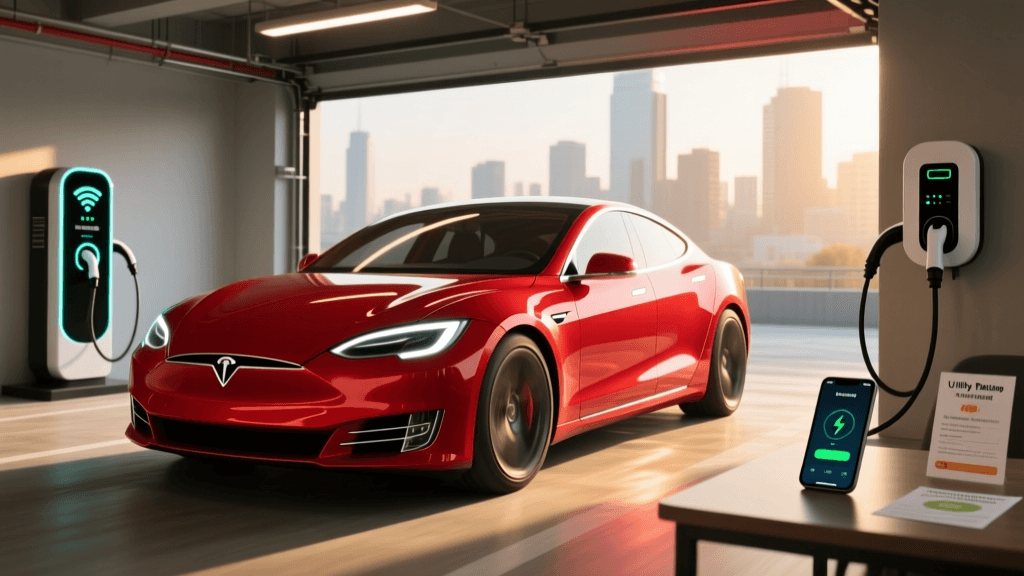
WiFi-enabled chargers, such as the ChargePoint Home Flex, Emporia Vue, and Wallbox Pulsar Plus, integrate network connectivity to transform the charging experience from a passive utility into an active energy management tool. These devices connect to your home network, communicating with both your smartphone and the manufacturer's cloud servers.
Advantages of Smart Chargers
- Dynamic Load Balancing: If you have two EVs but only one 60-amp circuit, smart chargers like the Wallbox Pulsar Plus can utilize 'Power Sharing' to dynamically split the available amperage between two units, preventing your main electrical panel from tripping a breaker.
- Over-the-Air (OTA) Updates: Just like your EV, smart chargers receive firmware updates that can introduce new features, improve charging algorithms, or patch security vulnerabilities without requiring a hardware swap.
- Granular Energy Tracking: WiFi chargers track exactly how many kilowatt-hours (kWh) are dispensed per session. This is critical for EV owners who use their vehicles for business, or those who need to submit precise charging logs to claim local utility rebates or tax incentives.
Future Trends: Why the Grid Demands Smart Chargers
The most compelling argument for WiFi-enabled chargers lies in the future of grid infrastructure. As millions of EVs plug in simultaneously, the strain on local transformers and distribution networks is immense. To combat this, utilities and governments are turning to Virtual Power Plants (VPPs) and Demand Response programs.
Through a VPP, your utility company can send a signal to your smart charger during peak demand hours (e.g., a hot summer evening when air conditioning usage is maxed out) to temporarily pause or slow down your EV charging. In exchange, you receive significant financial credits on your monthly bill. Non-connected chargers are physically incapable of participating in these programs. The shift toward smart charging is not just a market preference; it is becoming a regulatory mandate. For instance, the UK government has already enforced regulations requiring all new home EV chargers to have smart functionality and default to off-peak charging hours to protect the national grid (The Electric Vehicles (Smart Charge Points) Regulations 2021). Industry experts anticipate similar regulatory frameworks will eventually emerge in high-density US states like California and New York.
Feature Comparison: WiFi vs. Non-Connected Chargers
To understand the practical differences, let's compare four popular models across critical metrics for a standard residential installation (assuming a NEMA 14-50 outlet or hardwired 60A circuit).
| Feature | Grizzl-E Core (Non-Connected) | Grizzl-E Smart (WiFi) | ChargePoint Home Flex (WiFi) | Emporia Vue (WiFi) |
|---|---|---|---|---|
| Max Amperage | 40A | 40A | 50A (Hardwired) | 48A (Hardwired) |
| Connectivity | None | WiFi / Bluetooth | WiFi | WiFi (Requires Vue Monitor) |
| App Scheduling | No (Relies on Vehicle) | Yes | Yes | Yes |
| OTA Updates | No | Yes | Yes | Yes |
| Load Balancing | No | No | Yes (via Power Management) | Yes (via Energy Monitor) |
| Approx. Cost | $399 | $449 | $699 | $399 (plus monitor cost) |
Note: Installation costs for a 240V circuit typically range from $500 to $1,500 depending on the distance from your electrical panel and local permitting fees, regardless of the charger type.
The Road to Bidirectional Charging (V2G and V2H)
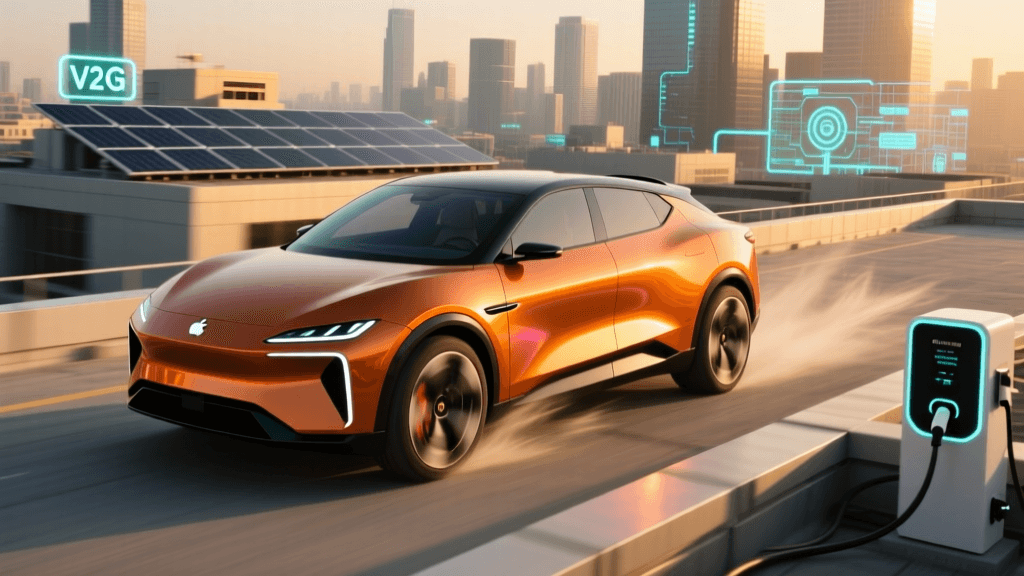
Looking further ahead, the ultimate convergence of EVs and the smart grid is Bidirectional Charging. Vehicle-to-Home (V2H) allows your EV to power your house during a blackout, while Vehicle-to-Grid (V2G) allows you to sell stored battery energy back to the utility during peak pricing windows. Bidirectional charging requires the ISO 15118 communication standard, a complex digital handshake between the vehicle, the charger, and the grid operator (ISO 15118-2:2014).
Non-connected chargers lack the processing power and network connectivity to facilitate the cryptographic security and real-time data exchange required by ISO 15118. Therefore, if you plan to future-proof your home for bidirectional energy flows—turning your EV into a rolling 80-kWh backup generator—a smart, networked charger (and eventually, a bidirectional-capable unit) is an absolute necessity. The US Department of Energy is actively funding and researching smart grid integrations to support these advanced V2G topologies, signaling a massive shift in how residential power will be managed (DOE Smart Grid Portal).
Verdict: Which Should You Install for the Next Decade?
If you are installing a charger today, the price premium for a WiFi-enabled model (usually $50 to $150 more than its non-connected counterpart) is a negligible investment when weighed against the future of energy management.
- Choose a Non-Connected Charger (e.g., Grizzl-E Core) ONLY if: You live in a rural area with zero cellular or WiFi reception, you are on a flat-rate electricity plan with no Time-of-Use pricing, or you are installing a charger at a remote cabin or rental property where network security and maintenance are primary concerns.
- Choose a WiFi-Enabled Charger (e.g., ChargePoint Home Flex, Emporia Vue) if: You want to optimize your charging costs via TOU scheduling, you need to track energy usage for tax purposes, you want to participate in utility Demand Response programs, or you want to future-proof your garage for the inevitable rollout of VPPs and bidirectional charging standards.
The 'dumb' EV charger had a good run, serving as the reliable bridge for early adopters. But as the electrical grid evolves into a dynamic, two-way digital network, the WiFi-enabled smart charger is no longer just a luxury—it is the fundamental gateway to the future of home energy.