The Evolution of Home EV Charging: Beyond the Plug
The electric vehicle revolution is no longer just about replacing the internal combustion engine; it is about fundamentally rewiring how we interact with the energy grid. As EV adoption accelerates, the humble home Level 2 charger is transforming from a simple power delivery device into a critical node in a decentralized energy network. For consumers and installers alike, this shift has ignited a crucial debate: should you invest in a WiFi-enabled (smart) charger or stick with a non-connected (often dubbed 'dumb') unit?
While non-connected chargers like the Grizzl-E Classic or the Lectron V-BOX Pro offer rugged simplicity and immediate plug-and-play functionality, WiFi-enabled models like the Emporia V2, ChargePoint Home Flex, and Wallbox Pulsar Plus are positioning themselves as the gateway to the future of home energy management. Understanding the future trends driving this industry is essential for making a future-proof purchasing decision today.
Defining the Contenders: Smart vs. Non-Connected Chargers
At a hardware level, both smart and non-connected Level 2 chargers perform the same basic function: they convert 240V AC power from your home's electrical panel into a safe, regulated flow of electricity for your vehicle's onboard charger. They both utilize the J1772 control pilot signal to communicate basic amperage limits and safety handshakes with the car.
However, the divergence lies in data and connectivity. A non-connected charger operates entirely offline. It relies on physical DIP switches or internal hardwiring to set amperage and has no ability to report energy usage, receive over-the-air (OTA) firmware updates, or interact with external networks. Conversely, a WiFi-enabled charger features an internal network module, allowing it to connect to your home router, communicate with cloud servers via the Open Charge Point Protocol (OCPP), and interface with smartphone applications and home energy management systems (HEMS).
Future Trend 1: Virtual Power Plants and Utility Demand Response
The most immediate industry trend favoring WiFi-enabled chargers is the rise of Virtual Power Plants (VPPs) and automated utility demand response programs. As millions of EVs plug in simultaneously during evening peak hours, local grids face immense strain. To prevent blackouts without building expensive new power plants, utilities are turning to software.
According to the U.S. Environmental Protection Agency (EPA), smart grid integration is vital for maximizing the environmental and economic benefits of EVs. Utilities are increasingly launching programs that allow them to temporarily pause or throttle your EV charging during peak demand events in exchange for significant bill credits or cash rebates.
If you own a non-connected charger, you are entirely locked out of these VPP ecosystems. You can still manually schedule charging via your vehicle's infotainment system to take advantage of Time-of-Use (TOU) rates, but you cannot participate in automated, grid-level demand response events. As utility rebates increasingly mandate WiFi connectivity and OCPP compliance to qualify for installation incentives, the 'dumb' charger is rapidly becoming a financial liability for cost-conscious consumers.
Future Trend 2: The Bidirectional Revolution (V2H and V2G)
Looking further down the horizon, the industry is aggressively pivoting toward bidirectional charging—specifically Vehicle-to-Home (V2H) and Vehicle-to-Grid (V2G). Vehicles like the Ford F-150 Lightning, Hyundai Ioniq 5, and Chevrolet Silverado EV are already equipped with bidirectional hardware, but the vehicle is only half the equation. The home charger must also be capable of inverting DC power back to AC and synchronizing it with the home's electrical panel or the utility grid.
The International Energy Agency (IEA) notes in its Global EV Outlook that bidirectional charging will be a cornerstone of future grid flexibility, turning parked EVs into massive, decentralized battery reserves. Bidirectional charging requires complex, continuous data handshakes governed by the ISO 15118 standard. This protocol relies heavily on the charger's WiFi connection to communicate with the utility's servers, the home's solar inverters, and the vehicle's battery management system. A non-connected charger simply lacks the architecture to facilitate V2H or V2G. If you plan to use your EV as a backup generator during grid outages in the coming decade, a WiFi-enabled, bidirectional-ready smart charger is an absolute prerequisite.
Future Trend 3: Solar Integration and Dynamic Load Balancing
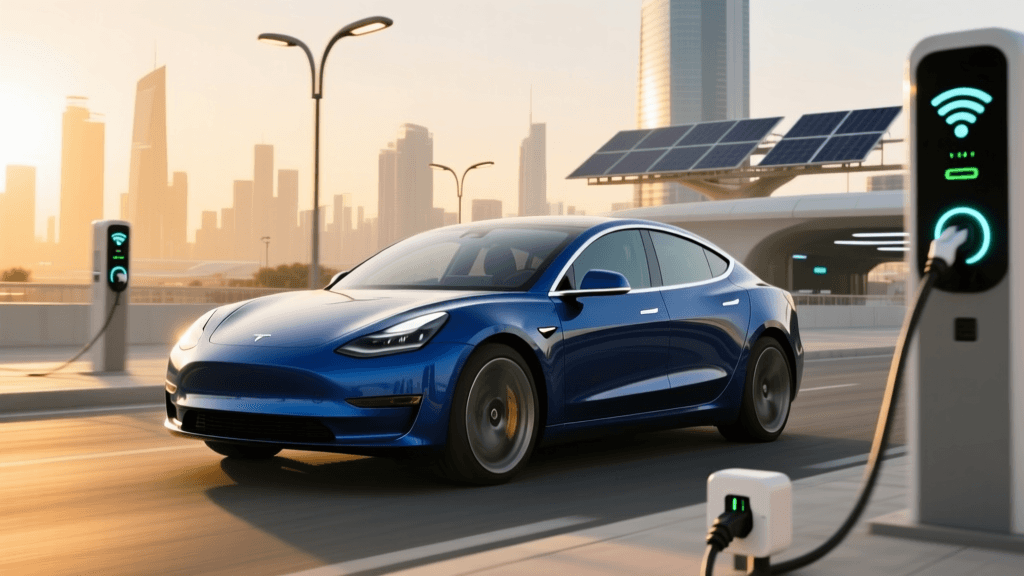
For homeowners with rooftop solar arrays, the future of charging is 'solar matching'—the ability to automatically adjust the charger's amperage in real-time to consume only the excess solar energy being generated, rather than pulling from the grid. Brands like Emporia and Wallbox are pioneering this space. By linking the charger via WiFi to the home's smart electrical panel or solar inverter, the charger can dynamically scale its power draw from 6 amps up to 48 amps based on cloud cover and household appliance usage. Non-connected chargers cannot perform this dynamic load balancing without expensive, third-party external hardware add-ons.
Feature Comparison: WiFi-Enabled vs. Non-Connected Chargers
| Feature | WiFi-Enabled (Smart) | Non-Connected (Dumb) |
|---|---|---|
| Remote Monitoring & Control | Yes (via Smartphone App) | No |
| Utility VPP Integration | Yes (Eligible for Grid Credits) | No |
| Solar Matching / HEMS | Yes (Dynamic Load Balancing) | No |
| V2G / V2H Compatibility | Yes (Protocol Dependent) | No |
| Firmware & Security Updates | Over-the-Air (OTA) | Manual / None |
| Upfront Hardware Cost | $$ - $$$ | $ - $$ |
| Installation Complexity | Moderate (Network Setup Required) | Low (Plug & Play) |
The Financial Reality: Rebates and Total Cost of Ownership
At first glance, non-connected chargers appear to be the budget-friendly option, often retailing between $350 and $450, compared to the $550 to $750 price tag of premium smart chargers. However, analyzing the Total Cost of Ownership (TCO) reveals a different story.
Many municipal utilities and regional grid operators now offer aggressive rebates specifically targeting smart chargers to aid in grid management. In some territories, utility rebates can cover up to 100% of the purchase price of a WiFi-enabled charger, provided it remains connected to the utility's network for a minimum of 24 months. Furthermore, the federal 30C Alternative Fuel Infrastructure Tax Credit can offset up to 30% of the hardware and installation costs. When factoring in VPP demand response credits—which can pay out hundreds of dollars annually during summer peak seasons—the WiFi-enabled charger often pays for itself within the first two years of ownership.
Actionable Advice: Which Should You Install?
The choice between smart and non-connected chargers ultimately depends on your specific infrastructure, privacy preferences, and long-term energy goals.
When to Buy a WiFi-Enabled (Smart) Charger:
- You Have Rooftop Solar: If you want to maximize your solar ROI by charging exclusively on excess sun, a smart charger with dynamic load balancing (like the Emporia V2) is mandatory.
- You Want Utility Rebates: Check your local utility's approved charger list. If they offer a $500+ rebate for connected devices, the smart charger is the clear financial winner.
- You Are Prepping for V2H/V2G: If you plan to use your EV as a home backup battery in the next 5 years, invest in a smart charger that supports ISO 15118 and bidirectional protocols.
- You Manage Multiple EVs: If you have two EVs but only one 50-amp circuit, smart chargers with power-sharing capabilities can dynamically split the load without requiring a costly panel upgrade.
When to Buy a Non-Connected (Dumb) Charger:
- Poor Garage WiFi Coverage: If your router cannot reach the garage and you do not wish to install a mesh network or hardwire an ethernet connection, a non-connected charger eliminates the frustration of offline errors.
- Absolute Data Privacy: For privacy advocates who do not want their driving habits, charging schedules, and vehicle data transmitted to third-party cloud servers or utility companies, a dumb charger guarantees local-only operation.
- Off-Grid or Remote Cabins: If you are installing a charger at a remote property powered by a standalone generator or localized micro-grid without internet access, a rugged non-connected unit like the Grizzl-E Classic is the most reliable choice.
- Landlord / Multi-Tenant setups: If you are installing a charger in a shared apartment complex where WiFi access is restricted or tenant turnover is high, a non-connected charger with an RFID card reader provides simple access control without app onboarding.
Conclusion
The era of the EV charger as a 'dumb' appliance is drawing to a close. While non-connected chargers will always have a niche among off-grid users and privacy purists, the broader industry outlook heavily favors WiFi-enabled, grid-interactive devices. As VPPs, solar integration, and bidirectional charging become standard features of the modern home, investing in a smart Level 2 charger today is the most effective way to future-proof your garage against the energy paradigms of tomorrow.