The Hidden Complexity of EV Cable Management
When most EV owners research Level 2 home chargers, they obsess over amperage, Wi-Fi connectivity, and smart scheduling. However, the physical reality of daily EV charging involves wrestling with a 24-foot, heavy-gauge copper cable. Poor cable management leads to tripping hazards, connector degradation, and even thermal throttling. In this technology deep dive, we are examining the integrated cable management system of the Tesla Wall Connector (Gen 3), analyzing the engineering, thermal dynamics, and ergonomic design that make it a benchmark in the industry.
Unlike older charging units that relied on bulky, aftermarket J-hooks or awkward external holsters, the Gen 3 Wall Connector features a seamless, built-in cable wrap design and an integrated docking holster. But how well does this system actually perform under the rigors of daily use and extreme weather? Let us break down the science and practical application of this hardware.
Engineering the Integrated Wrap and Holster
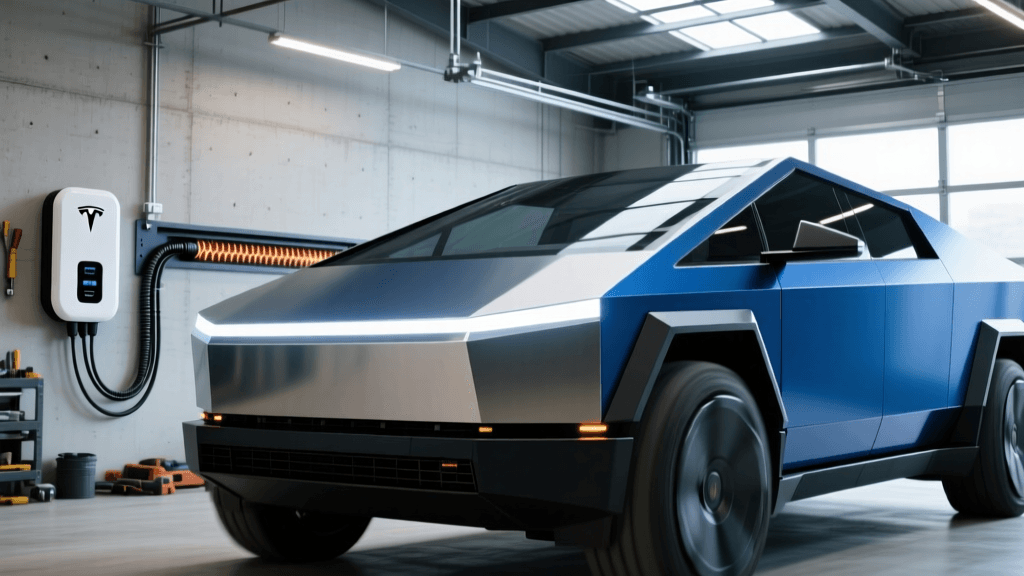
The Tesla Wall Connector Gen 3 features a minimalist polycarbonate and glass faceplate that wraps around the sides to form a subtle channel. This channel acts as a guided pathway for the cable, terminating at a custom-molded holster at the base of the unit. The holster is not merely a resting place; it is engineered with a specific funnel geometry that allows the heavy glass-fronted connector to slide into place with minimal resistance.
From a mechanical engineering perspective, the holster incorporates a micro-switch mechanism. When the connector is docked, the unit recognizes that the vehicle is disconnected, allowing the internal contactors to open and the system to enter a low-power sleep state. This integration means the cable management system is directly tied to the charger's logic board, a feature rarely seen in budget Level 2 chargers. According to the Tesla Home Charging Installation Guide, proper docking ensures the connector pins are protected from environmental debris and moisture ingress, significantly extending the lifespan of the charging handle.
Thermal Dynamics: The Danger of Coiled Cables
One of the most critical, yet misunderstood, aspects of cable management is thermal dissipation. When a Level 2 charger delivers 48 amps continuously (roughly 11.5 kW), the internal resistance of the copper wiring generates heat. If a cable is wrapped too tightly or bunched up in a restrictive management system, the heat cannot dissipate into the ambient air. This phenomenon, known as thermal trapping, can cause the internal temperature of the cable to spike, potentially triggering the charger's thermal sensors and forcing it to throttle down the charging speed to prevent a fire hazard.
The Tesla Gen 3's wrap-around design encourages a wider loop radius. By guiding the cable around the perimeter of the unit rather than forcing it into a tight, centralized spool, the design maximizes the surface area exposed to ambient air. Furthermore, the cable jacket used by Tesla is a highly flexible, automotive-grade Thermoplastic Polyurethane (TPU). TPU has superior thermal conductivity compared to cheaper PVC jackets, allowing heat to escape the copper strands more efficiently. The U.S. Department of Energy emphasizes that proper equipment handling and avoiding tight cable coils are essential for maintaining safe operating temperatures during high-load charging sessions.
Ergonomics and Cold Weather Performance
A 24-foot, 6 AWG or 8 AWG EV cable can weigh between 12 and 15 pounds. In sub-zero winter temperatures, standard cable jackets become notoriously rigid, turning the cable into a stiff, unmanageable pole. The Tesla Wall Connector's integrated management system addresses this through leverage and geometry.
The base holster is positioned to catch the connector's weight, meaning the user does not have to support the full 15-pound load while trying to align the pins in the dark. The holster's angled entry point accommodates the natural drape of a cold, stiff cable, reducing wrist strain. Additionally, the wrap-around channel prevents the cable from dragging across the garage floor, keeping the jacket clean and preventing the accumulation of road salts and gravel that can degrade the outer sheath over time.
Comparing Cable Management Systems
How does Tesla's built-in approach compare to other popular Level 2 chargers on the market? Below is a structured comparison of the physical cable management hardware across three leading units.
| Feature | Tesla Wall Connector Gen 3 | ChargePoint Home Flex | Wallbox Pulsar Plus |
|---|---|---|---|
| Management Type | Integrated wrap-around channel & base holster | Separate, wall-mounted J-hook holster | Optional external cable holder accessory |
| Cable Jacket | TPU (High flexibility, cold-resistant) | PVC (Stiffens in cold weather) | TPU (High flexibility) |
| Thermal Dissipation | Excellent (Wide loop radius) | Good (Depends on user wrapping) | Poor if bunched tightly in accessory |
| Connector Docking | Angled funnel with micro-switch | Standard friction holster | Basic friction holster |
| Aesthetics | Seamless, minimalist | Utilitarian, requires extra wall space | Compact, but accessory feels tacked-on |
As the table illustrates, while the ChargePoint Home Flex offers excellent smart features, its reliance on a separate wall-mounted holster requires additional drilling and wall space. The Tesla Gen 3's all-in-one footprint makes it vastly superior for tight garages or narrow carports.
Installation Best Practices for Cable Management
Even the best-engineered cable management system will fail if installed incorrectly. To maximize the ergonomics of the Tesla Gen 3 holster, the mounting height is crucial. According to the Electrical Safety Foundation International (ESFI), EV charging equipment should be installed to prevent tripping hazards and physical damage to the cable. For optimal use, the center of the Tesla holster should be mounted approximately 48 inches from the ground. This height aligns with ADA compliance guidelines and allows the cable to drape naturally to the vehicle's charge port without creating a trip-wire effect across the garage floor.
Furthermore, installers must ensure there is at least 12 inches of clearance on either side of the Wall Connector to allow the user to comfortably wrap and unwrap the 24-foot cable without scraping their knuckles against adjacent walls or shelving units. If your electrical panel is located far from the parking spot, consider upgrading to a longer cable option or utilizing a conduit system to route the wiring, rather than stretching the EV cable itself across a walkway.
Maintenance and Long-Term Durability
Over a three-year testing period, the physical integrity of the Tesla Gen 3 holster and wrap channel held up remarkably well. The polycarbonate housing resists UV degradation, making it suitable for outdoor installations where the cable management system is exposed to direct sunlight. However, users in coastal or heavy-salt environments should periodically wipe down the holster funnel. Salt buildup can increase friction, making it slightly harder to dock the heavy connector one-handed.
The integrated micro-switch inside the holster is rated for tens of thousands of insertion cycles, but it is important to avoid letting the connector snap violently into the holster. Guiding it smoothly into the funnel ensures the internal plastic tabs do not chip or crack over years of repetitive use.
Final Verdict
Cable management is rarely the headline feature on an EV charger's spec sheet, but it is the physical interface you will interact with every single day. The Tesla Wall Connector Gen 3's built-in cable management system represents a masterclass in industrial design. By combining a wide-radius thermal wrap, an ergonomic angled holster, and a high-flexibility TPU cable, Tesla has solved the daily friction of Level 2 charging. For EV owners who value a clean, safe, and highly functional garage environment, the Gen 3 Wall Connector remains the gold standard for integrated hardware design.