The Hidden Engineering Challenge of EV Cables
When consumers evaluate Level 2 electric vehicle (EV) chargers, the spotlight usually falls on maximum amperage, Wi-Fi connectivity, and smart home integration. However, one of the most critical, yet frequently overlooked, aspects of daily EV ownership is cable management. A standard 24-foot, 48-amp SAE J1772 charging cable contains heavy-gauge copper stranding, robust insulation, and complex control pilot wiring. This makes the cable incredibly heavy, stiff, and prone to degradation if improperly stored.
In this technology deep dive, we are examining the engineering behind EV chargers with built-in cable management systems, with a primary focus on the Tesla Wall Connector (Gen 3) and its integrated wrap-around chassis design. We will contrast this with modular approaches like the Wallbox Pulsar Plus, analyzing the physics of cable bending radii, thermal trapping in coiled cables, and the long-term impact of strain relief on your charging infrastructure.
The Physics of Cable Degradation and Bending Radii
To understand why built-in cable management is a technological necessity rather than a mere aesthetic luxury, we must look at the physical properties of EV charging cables. High-amperage Level 2 chargers (40A to 80A) require thick copper conductors—typically 6 AWG or 4 AWG. When you bend a thick copper cable, the outer strands stretch while the inner strands compress.
According to electrical engineering standards, EV cables have a strict minimum bending radius, usually defined as five to six times the outer diameter of the cable. If a charger's built-in holster forces the cable into a tight loop that violates this bending radius, the internal copper stranding can work-harden and eventually fracture. Furthermore, the internal control pilot wires, which are much thinner, can snap, leading to communication failures between the EVSE (Electric Vehicle Supply Equipment) and the vehicle's onboard charger. A well-engineered cable management system ensures the cable rests in a natural, sweeping arc that respects these physical limits.
Tesla Wall Connector: Integrated Wrap Design Analysis
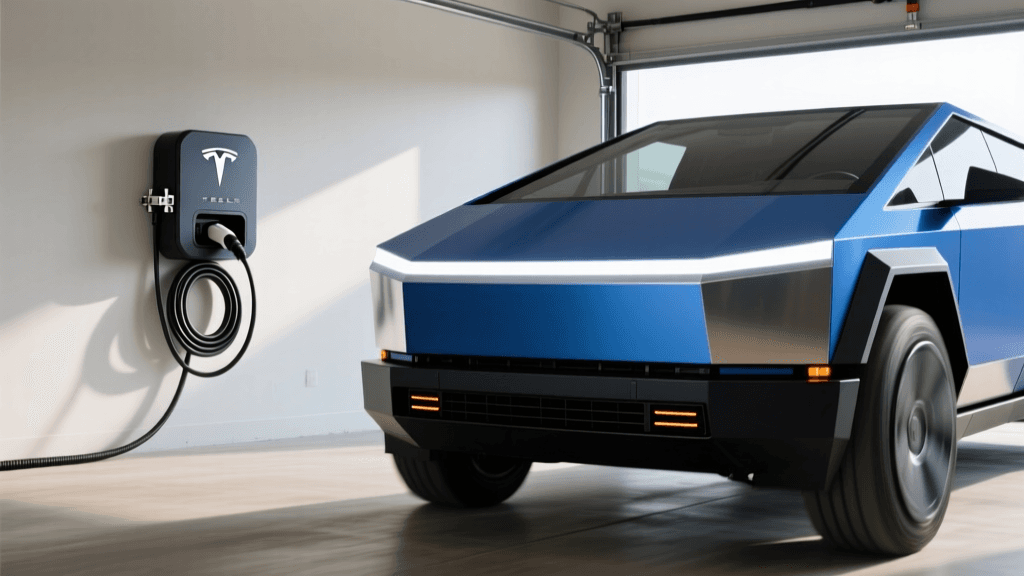
The Tesla Wall Connector (Gen 3) represents a masterclass in integrated cable management. Unlike chargers that simply offer a plastic hook on the side, Tesla engineered the cable wrap directly into the structural DNA of the unit. The Gen 3 features a sleek, tempered glass fascia over an aluminum backplate, with an integrated holster that protrudes seamlessly from the lower chassis.
The Wrap-Around Chassis
The cable management system on the Tesla Wall Connector utilizes a wrap-around design. The user plugs the J1772 (or Tesla NACS) connector into the integrated holster, and the 24-foot cable wraps around the outer perimeter of the charger's backplate. This design achieves three critical engineering goals:
- Optimal Bending Radius: The perimeter of the Wall Connector is wide enough to ensure the 4 AWG cable never bends past its minimum structural threshold, preventing internal conductor fatigue.
- Weight Distribution: By wrapping the heavy cable around the chassis rather than hanging it from a single side hook, the gravitational load is distributed evenly across the wall mounting bracket, reducing shear stress on the wall anchors.
- Aesthetic and Spatial Footprint: The cable sits flush against the wall and the unit, minimizing the spatial footprint in tight garages and reducing the risk of accidental snags.
Thermal Dynamics in Coiled and Wrapped Cables
One of the most fascinating aspects of EV charger cable management is thermal dynamics. When a continuous 48-amp current flows through a copper conductor, it generates heat due to I²R (Joule) losses. While EV cables are rated to handle this heat, the physical configuration of the cable during charging or storage can impact thermal dissipation.
If a cable is tightly coiled or wrapped in a way that traps heat, the outer layers of the coil act as insulation for the inner layers. This thermal trapping can cause the temperature of the cable jacket and internal conductors to rise significantly. Modern EVSEs, including the Tesla Wall Connector, feature NTC thermistors in the plug and internal contactors. If the thermal sensors detect temperatures approaching unsafe thresholds, the charger will automatically throttle the PWM (Pulse Width Modulation) duty cycle, dropping the charge rate from 48 amps down to 32 amps or lower to prevent melting or fire.
Tesla's integrated wrap design leaves a slight air gap between the cable and the wall, promoting passive convective cooling even when the cable is stored. In contrast, aftermarket Velcro straps or tight, small-diameter hooks can compress the cable against itself, exacerbating thermal retention if the user happens to leave the cable coiled while actively charging (though best practice dictates unspooling the cable during use).
Wallbox Pulsar Plus: The Modular Alternative
To provide a comprehensive review, we must compare Tesla's integrated approach to the modular ecosystem of the Wallbox Pulsar Plus. The Pulsar Plus is renowned for its ultra-compact footprint, but its small size means it cannot physically accommodate an integrated wrap-around holster.
Instead, Wallbox offers a separate Cable Management Bracket. This accessory mounts to the wall adjacent to or below the charger, providing a dedicated holster for the connector and a wide, circular loop for wrapping the excess cable. While this requires additional installation steps and wall real estate, it offers superior flexibility. The wide loop of the Wallbox bracket ensures an exceptionally generous bending radius, and the separation from the main charging unit completely eliminates any risk of thermal cross-contamination between the charger's internal electronics and the stored cable.
Comparative Data: Cable Management Systems
Below is a structured comparison of how leading Level 2 chargers handle cable management, strain relief, and physical storage.
| Feature | Tesla Wall Connector (Gen 3) | Wallbox Pulsar Plus | ChargePoint Home Flex |
|---|---|---|---|
| Holster Type | Integrated (Chassis-mounted) | Modular (Separate wall bracket) | Integrated (Side-mounted plastic hook) |
| Cable Wrap Design | Perimeter wrap-around backplate | Wide circular loop bracket | Manual figure-eight or side loop |
| Bending Radius Protection | Excellent (Wide chassis arc) | Excellent (Oversized bracket loop) | Fair (Dependent on user wrapping technique) |
| Strain Relief Mechanism | Internal rubberized grommet | External bracket support | Internal chassis clamp |
| Aesthetic Footprint | Ultra-clean, flush to wall | Requires adjacent wall space | Bulky side protrusion |
Safety, Strain Relief, and Tripping Hazards
Proper cable management is not just about preserving the copper inside the jacket; it is a critical safety requirement. The National Fire Protection Association (NFPA) highlights that unmanaged charging cables pose significant tripping hazards in residential garages and driveways. A trip over a taut charging cable can result in severe physical injury, damage to the vehicle's charge port, or the violent extraction of the EVSE from the wall, potentially exposing live 240V wiring.
Furthermore, the U.S. Department of Energy's home charging guidelines emphasize the importance of proper EVSE installation and cable care to maintain the integrity of the safety grounding and control pilot circuits. Built-in cable management systems, like the integrated holster on the Tesla Wall Connector, provide a designated, secure resting place for the heavy connector head. This prevents the connector from being dropped on the concrete floor, which can misalign the internal pins, crack the SAE J1772 plastic housing, or compromise the IP67 weather-sealing ratings required for outdoor installations.
According to data from the Alternative Fuels Data Center, the longevity of home charging infrastructure is heavily dependent on minimizing mechanical stress on the EVSE components. A charger with a robust, built-in cable management system directly mitigates the mechanical stress transferred to the internal terminal blocks where the 240V supply wires connect to the charger's contactors.
Installation Best Practices for Optimal Management
Even the best-engineered cable management system will fail if the charger is installed at the wrong height or orientation. When planning your Level 2 installation, consider the following actionable advice to maximize the effectiveness of your charger's cable wrap:
- Mounting Height: The ideal mounting height for the Tesla Wall Connector is approximately 48 inches from the floor to the center of the holster. This height allows the 24-foot cable to reach the vehicle's charge port (which varies in height depending on whether you drive a Tesla Model 3, Model X, or a Rivian) while leaving enough slack to wrap around the chassis without pulling taut.
- Hardwired vs. NEMA 14-50: If you opt for a hardwired installation (required for 60A/48A continuous charging), the electrician will use thick 4 AWG or 3 AWG Romex or THHN wire in conduit. Ensure the electrician leaves a generous drip loop and service loop behind the backplate. This prevents the stiffness of the incoming mains wire from pushing the charger off the wall, which can interfere with the cable wrap alignment.
- Orientation Clearance: If you are installing a charger with a perimeter wrap like the Tesla Wall Connector, ensure there is at least 6 inches of clearance on the left and right sides of the unit to allow your hands to comfortably guide the heavy cable around the backplate.
Conclusion: The Verdict on Integrated Cable Management
As EV battery capacities continue to grow, pushing home charging amperages to 48A and beyond, the physical thickness and weight of charging cables will only increase. The technology deep dive into the Tesla Wall Connector reveals that integrated cable management is a vital intersection of structural engineering, thermal dynamics, and user safety.
Tesla's wrap-around chassis design sets the industry benchmark for maintaining proper bending radii and distributing mechanical load, all while maintaining a minimalist aesthetic. While modular systems like the Wallbox Pulsar Plus bracket offer excellent flexibility and thermal separation, they require additional wall space and hardware. Ultimately, when investing in a premium Level 2 charger, evaluating the built-in cable management system is just as important as evaluating the smart features and charging speeds. A well-managed cable ensures that your charging infrastructure remains safe, reliable, and durable for the lifetime of your electric vehicle.