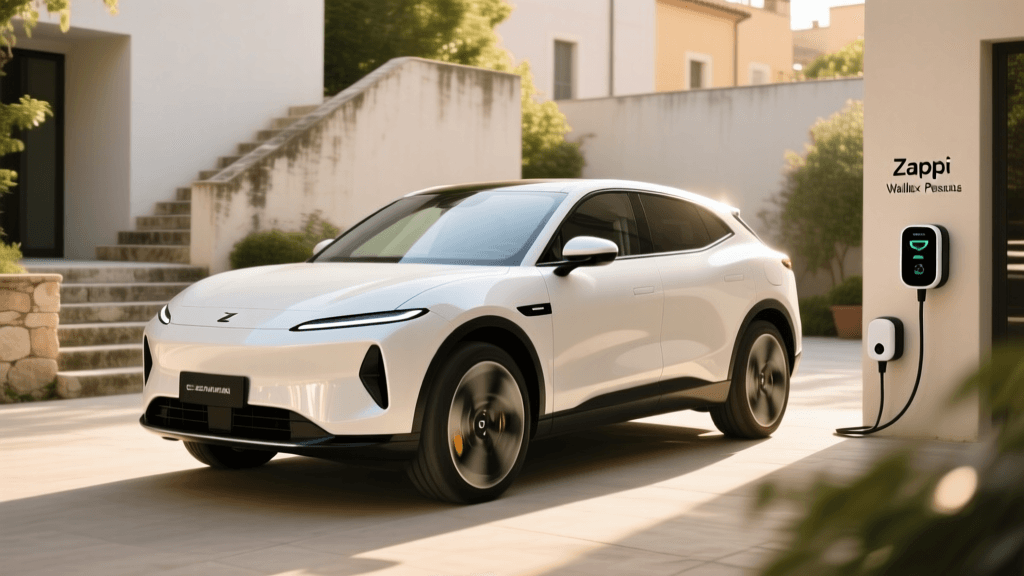
The Solar EV Charging Dream vs. Reality
Pairing a home solar array with an electric vehicle is the ultimate goal for eco-conscious drivers. The idea of fueling your daily commute purely with free sunshine is incredibly appealing. However, the marketing hype surrounding 'solar EV chargers' has created a landscape rife with confusion, misleading claims, and costly installation errors. Not all smart chargers are created equal, and assuming that any Wi-Fi-enabled box can seamlessly divert your rooftop solar energy is a fast track to disappointment.
In this comprehensive review and myth-busting guide, we are putting the industry leaders—the Myenergi Zappi V2.1 and the Wallbox Pulsar Plus (with Energy Meter)—under the microscope. We will separate fact from fiction, highlight the most common mistakes buyers make, and provide actionable advice to ensure your solar-integrated EV charging setup actually works as promised.
Myth 1: Any 'Smart' Charger Can Use Your Solar Panels
The Myth: If a charger has an app, Wi-Fi connectivity, and scheduling features, it can automatically detect and use your excess solar power.
The Reality: This is the most pervasive and expensive myth in the EV charging space. According to the U.S. Department of Energy, while Level 2 home charging is the most practical way to power an EV, true solar integration requires specialized hardware known as a Current Transformer (CT) clamp or a dedicated home energy meter. Standard 'smart' chargers only know what time it is and what the car is requesting; they are entirely blind to what your solar panels are producing or what your home is consuming.
To achieve solar diversion, the charger must read your home's real-time net export. The Myenergi Zappi achieves this using included CT clamps that physically clip onto your main electrical meter tails. The Wallbox Pulsar Plus, on the other hand, requires the separate purchase and installation of the Wallbox Energy Meter (or Power Meter), which communicates via a hardwired Modbus connection. If you buy a standard smart charger without these specific monitoring components, you will simply be pulling from the grid, even while your solar panels are generating a surplus.
Myth 2: You Need a Massive Solar Array to Charge an EV
The Myth: Unless you have a massive 15kW+ solar array, your panels will never generate enough continuous power to charge an electric vehicle.
The Reality: While it is true that an EV requires a minimum threshold to initiate charging—typically 6 Amps, which equates to roughly 1.4kW on a single-phase 240V system—you do not need a massive array to utilize solar diversion. This is where the Zappi's famous Eco and Eco+ modes shine.
In Eco+ mode, the Zappi continuously monitors your solar export. If your solar generation drops below the 1.4kW threshold (for example, when a cloud passes over), the Zappi will automatically pause the charge rather than pulling expensive grid electricity. When the sun returns, it resumes. Furthermore, if you set a minimum green level, the Zappi will trickle in the available solar power and supplement the tiny remainder from the grid just to keep the 1.4kW minimum alive, ensuring your car never stops charging while maximizing your solar yield.
Myth 3: Cloud Cover Will Drain Your Grid or Home Battery
The Myth: Solar diversion chargers are too slow to react to passing clouds, resulting in accidental grid drain or worse, draining your expensive home battery storage (like a Tesla Powerwall).
The Reality: Early-generation solar diverters were notoriously slow, often taking minutes to adjust to irradiance changes. Modern units use advanced PID (Proportional-Integral-Derivative) control algorithms. The Myenergi Zappi samples your home's energy flow multiple times per second. If a cloud obscures the sun and your solar export drops from 3kW to 0.5kW in a matter of seconds, the Zappi instantly scales back the EV charging current to match, or pauses entirely, well before your home battery or the grid is tapped.
3 Costly Mistakes Buyers Make With Solar EV Chargers
Even when you buy the right hardware, installation errors can render your solar features useless. Avoid these three common pitfalls:
Mistake 1: Incorrect CT Clamp Placement and Polarity
The CT clamp must be installed on the main incoming live wire (the meter tail) between your utility meter and your main consumer unit (breaker box). A frequent DIY or electrician error is clipping the CT clamp onto the solar inverter feed or a sub-panel. Furthermore, CT clamps are directional. If the arrow on the clamp does not point toward the home's load (or if the wires are reversed at the charger terminal), the charger will think you are importing power when you are actually exporting, and it will refuse to start solar charging.
Mistake 2: Buying the Wallbox Pulsar Plus Without the Energy Meter
Many buyers purchase the Wallbox Pulsar Plus because of its sleek design and excellent app, assuming solar features are native. They are not. To enable the 'Eco-Smart' solar charging mode in the myWallbox app, you must purchase and install the Wallbox Energy Meter. Without it, the solar toggle in the app remains greyed out and inaccessible.
Mistake 3: Ignoring Grid Limiting and Export Caps
If your utility company limits your solar export to the grid (common in areas with grid congestion), your inverter will automatically throttle solar production once the home's loads are met. If your EV charger is asleep, the inverter throttles down, and you lose potential generation. Setting up your Zappi or Wallbox to charge at the absolute minimum 6A during peak sun hours forces the inverter to keep producing, effectively using your EV as a dump load to bypass export limitations.
Head-to-Head Data Table: Myenergi Zappi vs. Wallbox Pulsar Plus
How do the two market leaders compare when specifically tasked with solar integration? Below is a structured breakdown of their capabilities, requirements, and approximate costs.
| Feature | Myenergi Zappi V2.1 | Wallbox Pulsar Plus (w/ Meter) |
|---|---|---|
| Solar Diversion Hardware | Built-in (CT clamps included in box) | Requires separate Energy Meter purchase (~$150) |
| Minimum Solar Threshold | 1.4kW (6A) - Adjustable via app | 1.4kW (6A) - Fixed in Eco-Smart mode |
| Home Battery Compatibility | Excellent (Priority settings available) | Good (Requires specific inverter integrations) |
| Installation Complexity | Moderate (Run CT wires to charger) | High (Requires Modbus wiring to breaker panel) |
| App Interface | Functional, but dated UI | Sleek, modern, and highly intuitive |
| Approx. Total Hardware Cost | $950 - $1,050 (All-inclusive) | $750 (Charger) + $150 (Meter) = $900 |
Note: Prices are approximate and subject to market fluctuations. Installation labor costs are not included and vary heavily by region and electrical panel condition.
Real-World ROI and Actionable Advice
Is the premium for a solar-integrated charger worth it? Let's look at the math. As noted by the Solar Energy Industries Association (SEIA), maximizing the self-consumption of your solar energy is the key to accelerating your return on investment, especially as utility companies reduce net-metering compensation rates.
If you drive 30 miles a day, your EV consumes roughly 10 kWh. If your local grid electricity rate is $0.20/kWh, charging from the grid costs $2.00 per day. If you successfully divert 10 kWh of excess solar (which would otherwise be exported to the grid for a meager $0.04/kWh credit), you are effectively saving the difference: $0.16 per kWh, or $1.60 per day. Over a year, that is roughly $580 in pure savings simply by routing your existing solar surplus into your car rather than the grid.
Actionable Advice: To maximize this ROI, pair your solar EV charger with a smart home energy monitor. Use the EPA's guidelines on EV efficiency to understand your vehicle's exact kWh/mile consumption, and schedule your heaviest household appliances (like dishwashers and washing machines) for the evening. This ensures your midday solar surplus is entirely dedicated to the EV charger, preventing the charger from pausing due to competing household loads.
Conclusion
Solar EV charging is not magic; it is a precise science of real-time load balancing. The myth that any smart charger can do this is false, and the assumption that you need a massive solar array ignores the brilliance of modern trickle-charging algorithms. If you want a plug-and-play solar diversion experience with minimal extra hardware, the Myenergi Zappi V2.1 remains the undisputed king of solar integration. If you prioritize a beautiful app interface, a compact footprint, and already have a compatible home energy monitoring setup, the Wallbox Pulsar Plus with Energy Meter is a phenomenal, albeit slightly more complex, alternative. Whichever you choose, ensure your electrician understands CT clamp polarity and placement, and you will be driving on sunshine in no time.