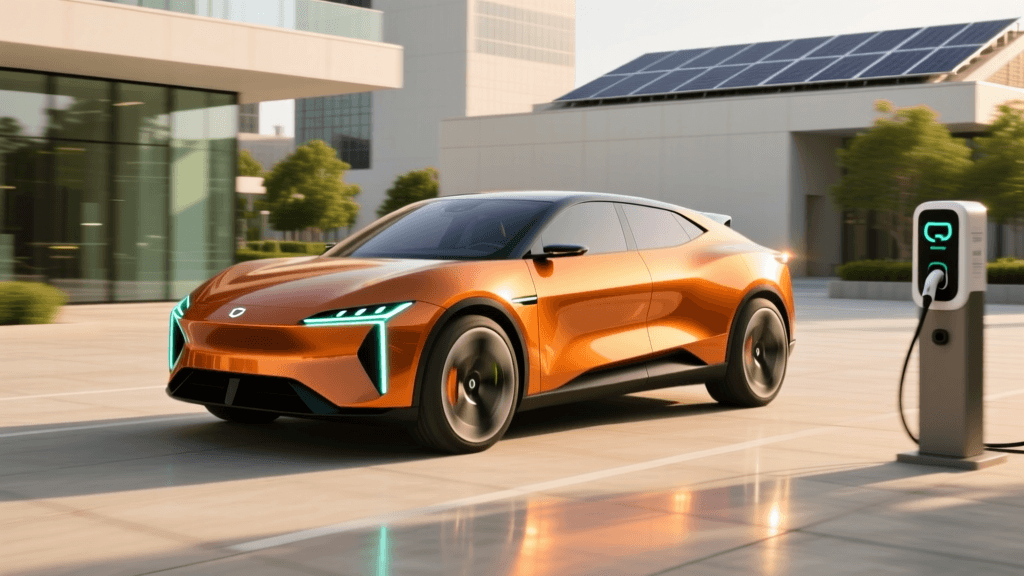
Introduction to the Emporia Vue EV Charger
When evaluating home electric vehicle supply equipment (EVSE), most buyers focus solely on charging speed and cable length. However, the true cost of owning an EV extends far beyond the initial hardware purchase. The Emporia Vue Level 2 EV Charger has carved out a unique niche in the market by prioritizing granular energy monitoring, smart home integration, and solar compatibility. Priced competitively against giants like ChargePoint and Wallbox, the Emporia ecosystem promises a compelling return on investment through energy optimization. In this comprehensive cost and value breakdown, we analyze the upfront expenses, installation variables, long-term energy savings, and the financial impact of its standout solar integration features to determine if the Emporia Level 2 charger is the most financially sound choice for your garage.
Upfront Hardware Costs: The Emporia Ecosystem
The base price of the Emporia Vue EV Charger typically hovers around $399 to $499, depending on seasonal promotions and the specific cable length you select (it is available in 18-foot and 24-foot variants). On its own, this places the Emporia unit firmly in the mid-tier pricing bracket, slightly cheaper than the $599 ChargePoint Home Flex but comparable to the Wallbox Pulsar Plus. However, evaluating Emporia's hardware cost requires understanding its broader ecosystem.
To unlock the charger's most lucrative features—specifically real-time energy tracking and solar-diversion charging—you need to pair it with the Emporia Vue 2 Smart Home Energy Monitor. The Vue 2 monitor installs directly into your electrical panel and tracks energy usage at the circuit level. While sometimes bundled in promotional packages, purchasing the Vue 2 separately adds approximately $100 to $150 to your initial hardware outlay. Therefore, your total hardware investment for the complete Emporia smart-charging ecosystem will realistically land between $500 and $650. While this is a higher initial hardware cost than a basic 'dumb' charger, the data and automation capabilities it unlocks are where the financial value begins to materialize.
Installation Expenses: NEMA 14-50 vs. Hardwired
The U.S. Department of Energy strongly recommends professional installation for all Level 2 home charging setups to ensure safety and code compliance. The Emporia charger supports both NEMA 14-50 plug-in installation and direct hardwiring. Your choice here will significantly impact your installation bill.
The NEMA 14-50 Route
If your electrical panel has sufficient spare capacity and is located near your garage, an electrician can install a 240V NEMA 14-50 receptacle. This route generally costs between $300 and $600. However, the National Electrical Code (NEC) requires that continuous loads (like EV charging) not exceed 80% of a circuit's rated capacity. Therefore, a 50-amp outlet limits the Emporia charger to a maximum output of 40 amps (9.6 kW), leaving some of its 48-amp potential on the table.
The Hardwired Advantage
To achieve the charger's maximum 48-amp (11.5 kW) output, it must be hardwired on a dedicated 60-amp circuit. Hardwiring eliminates the risk of outlet overheating and provides a more reliable connection. Installation costs for hardwiring typically range from $500 to $1,200, depending on the distance from your electrical panel, drywall repair requirements, and local permit fees. If your home requires a full electrical panel upgrade (e.g., moving from a 100-amp to a 200-amp service), costs can spike to $2,000 or more. We highly recommend hardwiring for the Emporia unit to maximize charging speed and ensure long-term safety.
The Financial Power of Energy Monitoring and TOU Rates
The core value proposition of the Emporia system is its ability to make invisible energy costs visible. According to the Alternative Fuels Data Center, Time-of-Use (TOU) electricity rates are becoming the standard for utility companies nationwide. Under TOU plans, electricity consumed during peak evening hours can cost two to three times more than electricity used during off-peak overnight hours.
Without an energy monitor, EV owners often guess their charging costs based on their monthly utility bill, which includes household appliances, HVAC systems, and lighting. The Emporia Vue app isolates the exact kilowatt-hours (kWh) consumed by your EV charger. This granular data allows you to:
- Audit Charging Efficiency: Identify 'vampire drain' or inefficiencies in your vehicle's battery management system while plugged in.
- Optimize TOU Scheduling: Precisely schedule charging sessions to align with your utility's absolute lowest rate windows (often between 12:00 AM and 5:00 AM).
- Track Real Cost-Per-Mile: Calculate your exact fuel cost per mile based on your local electricity rates, allowing for accurate comparisons against gas-powered vehicles.
For a household consuming 800 kWh per month for EV charging, shifting just 30% of that load from peak to off-peak hours using Emporia's scheduling tools can save $15 to $25 per month, effectively paying for the Vue 2 monitor in less than a year.
Solar Integration: The Ultimate ROI Feature
Where the Emporia Level 2 charger truly separates itself from the competition is its native 'Charge on Solar' feature. If your home is equipped with solar panels, the Emporia Vue system monitors your solar production and your home's real-time consumption. When your solar panels generate excess electricity that would otherwise be exported to the grid for a meager net-metering credit (often just $0.03 to $0.08 per kWh), the Emporia system automatically diverts that surplus energy to your EV.
This dynamic solar diversion means you are effectively fueling your vehicle with 'free' energy that you have already generated, rather than selling it to the utility company at a loss and later buying it back at retail prices ($0.15 to $0.30+ per kWh). For solar owners, this feature alone can yield an annual return on investment of $200 to $400, making the Emporia ecosystem the undisputed value champion for homes with rooftop photovoltaics.
Rebates, Tax Credits, and Incentives
The sticker shock of hardware and installation can be heavily mitigated by government and utility incentives. The Internal Revenue Service (IRS) offers the Alternative Fuel Vehicle Refueling Property Credit (Form 8911), which provides a tax credit of 30% of the cost of purchasing and installing a home EV charger, up to a maximum credit of $1,000. It is important to note that this credit is currently subject to census tract requirements, meaning your home must be located in a qualifying non-urban or low-income area to claim it.
Additionally, many local utility companies offer point-of-sale rebates or bill credits ranging from $250 to $500 simply for purchasing a Wi-Fi-enabled smart charger and enrolling in a TOU rate plan. When stacking a $500 utility rebate with the potential $1,000 federal tax credit, your net out-of-pocket cost for the entire Emporia hardware and installation package can be reduced by up to $1,500, resulting in an almost immediate positive ROI.
Competitor Comparison: Cost vs. Features
To contextualize the Emporia's value, we must compare its cost-to-feature ratio against the industry's most popular alternatives. Below is a breakdown of how the Emporia Vue EV Charger stacks up against the ChargePoint Home Flex and the Wallbox Pulsar Plus.
| Feature | Emporia Vue EV Charger | ChargePoint Home Flex | Wallbox Pulsar Plus |
|---|---|---|---|
| Base Hardware Price | $399 - $499 | $599 | $449 - $499 |
| Max Amperage (Hardwired) | 48 Amps (11.5 kW) | 50 Amps (12 kW) | 48 Amps (11.5 kW) |
| Whole-Home Energy Monitoring | Yes (with Vue 2 add-on) | No | No |
| Native Solar Diversion | Yes | No | Yes (requires extra hardware) |
| Cable Length Options | 18 ft or 24 ft | 18 ft or 23 ft | 13 ft or 25 ft |
| Warranty | 3 Years | 3 Years | 3 Years |
As the table illustrates, while the ChargePoint offers a marginal 2-amp advantage when hardwired, it lacks the comprehensive energy monitoring and native solar integration that Emporia provides out of the box. The Wallbox is a strong competitor with its own solar ecosystem, but it requires the purchase of an additional Power Meter accessory to enable solar diversion, which pushes its total ecosystem cost higher than Emporia's.
Long-Term Durability and Warranty Value
Value is not just about the initial purchase price; it is also about longevity. The Emporia charger features a robust, weather-resistant NEMA 4 enclosure, making it fully rated for both indoor and outdoor installations. It operates flawlessly in extreme temperatures, from freezing winters to sweltering summers. Emporia backs the unit with a standard 3-year warranty, matching the industry standard set by ChargePoint and Wallbox. The cable management system, while basic, includes a simple holster that prevents the heavy 24-foot cable from degrading on the garage floor, protecting your investment from accidental physical damage.
Final Verdict: Is the Emporia Ecosystem Worth It?
If you are simply looking for the cheapest way to plug in your EV and do not care about data, solar integration, or smart home automation, the Emporia Level 2 charger might be overkill. A basic, non-smart charger will suffice. However, if you are evaluating your purchase through the lens of long-term cost management, energy efficiency, and solar optimization, the Emporia Vue EV Charger is arguably the best value on the market today.
The upfront premium for the Vue 2 energy monitor is quickly eclipsed by the savings generated through precise TOU scheduling and solar diversion. When combined with aggressive utility rebates and federal tax incentives, the Emporia ecosystem doesn't just charge your car; it actively manages your home's energy footprint, turning a necessary utility expense into a highly optimized, data-driven asset. For the analytical EV owner or the solar-equipped homeowner, the Emporia Level 2 charger delivers an unmatched return on investment.