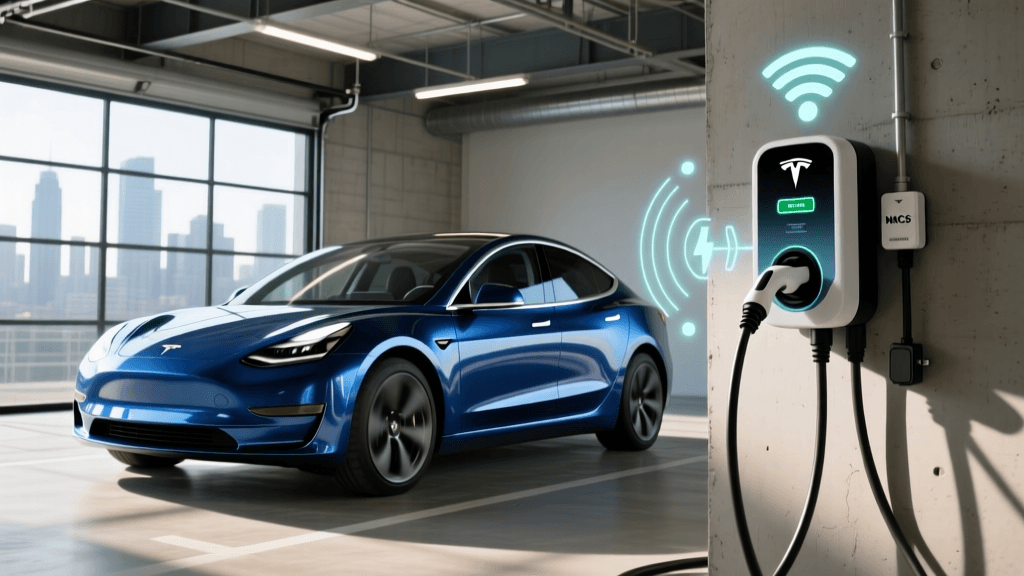
The EV Charger Dilemma: Upfront Cost vs. Long-Term Investment
As electric vehicle adoption accelerates, the market for home Level 2 EV chargers has bifurcated into two distinct camps: premium smart chargers and budget-friendly workhorses. When outfitting your garage, the immediate question is always about the hardware price tag. However, the true cost of an EV charger is measured over five to ten years of daily use, factoring in installation requirements, energy management, cable durability, and warranty support.
According to the US Department of Energy, installing a dedicated Level 2 home charging station is the most effective way to maximize EV convenience and battery longevity. But does a $700 premium unit actually provide better long-term value than a $350 budget alternative? To answer this, we are putting the industry-leading ChargePoint Home Flex head-to-head against the highly rated budget contender, the Lectron V-BOX Pro 48A.
Contender Profiles
The Premium Contender: ChargePoint Home Flex
Retailing at approximately $699, the ChargePoint Home Flex is widely considered the gold standard for residential smart charging. It offers adjustable amperage (up to 50 amps when hardwired), a robust 23-foot cable, and deep integration with the ChargePoint app, allowing for intricate scheduling, solar surplus charging, and utility API integrations. It is built with a NEMA 4-rated weatherproof enclosure, making it suitable for harsh outdoor environments.
The Budget Contender: Lectron V-BOX Pro 48A
Priced aggressively around $349, the Lectron V-BOX Pro 48A strips away the premium ecosystem in favor of raw charging power. Delivering up to 48 amps via a NEMA 14-50 plug or hardwiring, it includes a basic LCD screen, an 18-foot cable, and a companion app that relies primarily on Bluetooth connectivity. It carries a NEMA 4 weather resistance rating, aiming to provide 90% of the functionality of premium units at 50% of the cost.
Round 1: Upfront Costs & Installation Realities
The most common misconception in EV charger shopping is that a cheaper charger equals a cheaper overall installation. In reality, the electrical work required to deliver 48 to 50 amps to your garage often dwarfs the cost of the hardware itself.
- ChargePoint Home Flex: To achieve its maximum 50-amp output (delivering 12 kW of power), the Home Flex must be hardwired by a licensed electrician. Hardwiring requires a dedicated 60-amp circuit, which may necessitate a panel upgrade in older homes, pushing installation costs to $800–$1,500+.
- Lectron V-BOX Pro: While it can be hardwired for a continuous 48-amp draw (requiring a 60-amp circuit), many buyers opt to plug it into an existing or newly installed NEMA 14-50 receptacle. When plugged into a 14-50 outlet, the Lectron is software-limited to 40 amps (9.6 kW) to comply with National Electrical Code (NEC) continuous load rules. If you already have a 14-50 outlet, your installation cost is $0.
Winner: Lectron V-BOX Pro. For renters or homeowners with existing 240V infrastructure, the Lectron’s plug-and-play capability preserves its budget advantage. However, if your electrical panel requires a heavy upgrade regardless of the unit, the hardware price gap becomes less significant.
Round 2: Build Quality, Cables, and Weatherproofing
Long-term value is heavily dictated by physical degradation. EV chargers live in harsh environments—subjected to UV radiation, freezing temperatures, and physical abrasion from being dragged across concrete.
The ChargePoint Home Flex features a 23-foot cable wrapped in a highly flexible, ruggedized TPU (Thermoplastic Polyurethane) jacket. In sub-freezing temperatures, TPU remains pliable, making it significantly easier to coil and uncoil. The holster mechanism is integrated and features a magnetic latch that securely holds the J1772 or NACS connector, preventing moisture ingress.
The Lectron V-BOX Pro utilizes an 18-foot cable. While adequately thick, the outer jacket is slightly stiffer, particularly in cold weather. Furthermore, the included wall holster is functional but lacks the premium friction-fit and magnetic alignment found on the ChargePoint. Over a five-year period, the physical wear and tear on the Lectron’s cable management and holster will likely show sooner than the ChargePoint.
Winner: ChargePoint Home Flex. The superior cable flexibility and robust holster design justify the premium for outdoor installations and cold-weather climates.
Round 3: Smart Features, Apps, and Energy Management
As highlighted in Wirecutter's comprehensive EV Charger Guide, app reliability and smart home integration are where premium chargers separate themselves from budget alternatives. A smart charger is not just a convenience; it is a financial tool.
The ChargePoint Ecosystem
The ChargePoint app connects via dual-band Wi-Fi, ensuring a stable connection even in detached garages. It allows users to set precise charging schedules aligned with Time-of-Use (TOU) utility rates, potentially saving hundreds of dollars annually on electricity. Furthermore, ChargePoint supports third-party integrations like IFTTT, Alexa, and specific solar inverter APIs, allowing the charger to automatically adjust amperage based on excess solar production.
The Lectron Experience
The Lectron V-BOX Pro relies heavily on Bluetooth for its app connectivity, meaning you generally need to be within 30 feet of the unit to adjust settings or view charging logs. While it features a built-in LCD screen that displays real-time voltage, amperage, and temperature—a fantastic feature missing from many premium units—its lack of robust Wi-Fi-based TOU scheduling means you must rely on your vehicle’s internal software to manage off-peak charging.
Pro Tip: If your EV (like a Tesla or Rivian) has excellent native scheduled charging software, the lack of Wi-Fi scheduling on the Lectron is easily bypassed. If you drive an EV with rudimentary software, the ChargePoint app is essential for managing energy costs.
Winner: ChargePoint Home Flex. The ability to automate charging based on utility rates and solar surplus provides a tangible ROI that the Lectron cannot match.
Round 4: Warranty, Support, and Longevity
Both units now offer a 3-year warranty, a massive improvement over the industry-standard 1-year warranties of the past. However, the long-term value of a warranty is dictated by the company's customer support infrastructure and RMA (Return Merchandise Authorization) process.
ChargePoint operates a massive global network of commercial chargers, and their residential support team is highly structured. Firmware updates are pushed automatically over Wi-Fi, patching bugs and adding features without user intervention. Lectron, primarily a consumer electronics and accessory brand, has improved its support channels, but firmware updates often require manual intervention or lack the rapid deployment cycle of ChargePoint. In the event of a logic board failure in year two, ChargePoint’s streamlined replacement process minimizes downtime.
Winner: ChargePoint Home Flex. Enterprise-grade support and automated over-the-air (OTA) updates ensure the device remains secure and functional over its lifespan.
5-Year Cost of Ownership & Feature Matrix
To truly understand the long-term value, we must look beyond the sticker price. Below is a comparative matrix projecting the 5-year ownership experience.
| Feature / Metric | ChargePoint Home Flex | Lectron V-BOX Pro 48A |
|---|---|---|
| Hardware MSRP | $699 | $349 |
| Max Amperage (Hardwired) | 50 Amps (12 kW) | 48 Amps (11.5 kW) |
| Max Amperage (NEMA 14-50) | 40 Amps (9.6 kW) | 40 Amps (9.6 kW) |
| Cable Length & Material | 23 ft (Flexible TPU) | 18 ft (Standard PVC/Rubber) |
| Connectivity | Dual-Band Wi-Fi | Bluetooth / Basic Wi-Fi |
| Utility TOU Automation | Native App Integration | Relies on EV Native Software |
| Solar Surplus Charging | Supported via API | Not Supported |
| Warranty | 3 Years | 3 Years |
| Estimated 5-Year Energy Savings | High (via precise TOU scheduling) | Medium (dependent on EV software) |
The Final Verdict: Which Charger Wins the Long Game?
The head-to-head showdown between the ChargePoint Home Flex and the Lectron V-BOX Pro reveals that 'value' is entirely dependent on your specific electrical infrastructure and lifestyle.
Who Should Buy the Budget Lectron V-BOX Pro?
If you already have a NEMA 14-50 outlet in your garage, or if you drive a modern EV with excellent native scheduled charging (like a Tesla, Ford, or Hyundai), the Lectron V-BOX Pro is an undeniable bargain. It delivers nearly identical raw charging speeds to the ChargePoint for half the price. Over five years, the $350 savings can easily cover the cost of the electricity used to charge your vehicle. It is the ultimate pragmatic choice for budget-conscious buyers who view an EV charger simply as a specialized extension cord.
Who Should Buy the Premium ChargePoint Home Flex?
If you are installing a charger outdoors in a region with extreme temperature swings, possess a solar panel system you want to integrate with your charging, or rely on complex utility Time-of-Use rates to keep your monthly bills low, the ChargePoint Home Flex is worth the $350 premium. The superior cable management, automated energy savings, and robust Wi-Fi ecosystem transform the charger from a simple hardware accessory into an active energy management appliance. Over a 5-to-10-year horizon, the energy savings and sheer durability of the ChargePoint unit easily justify its initial investment.