The Commercial Dawn of Wireless EV Charging
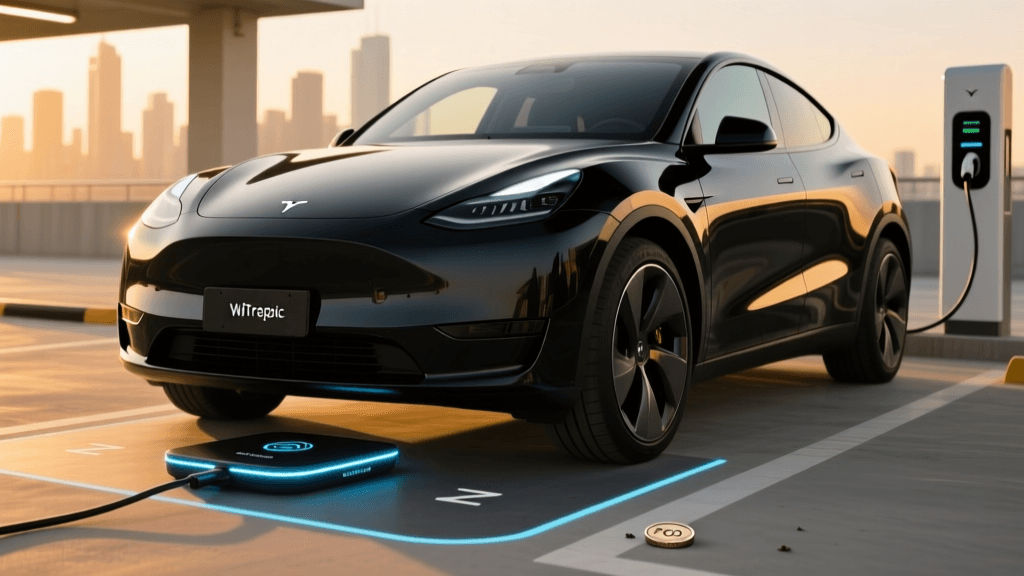
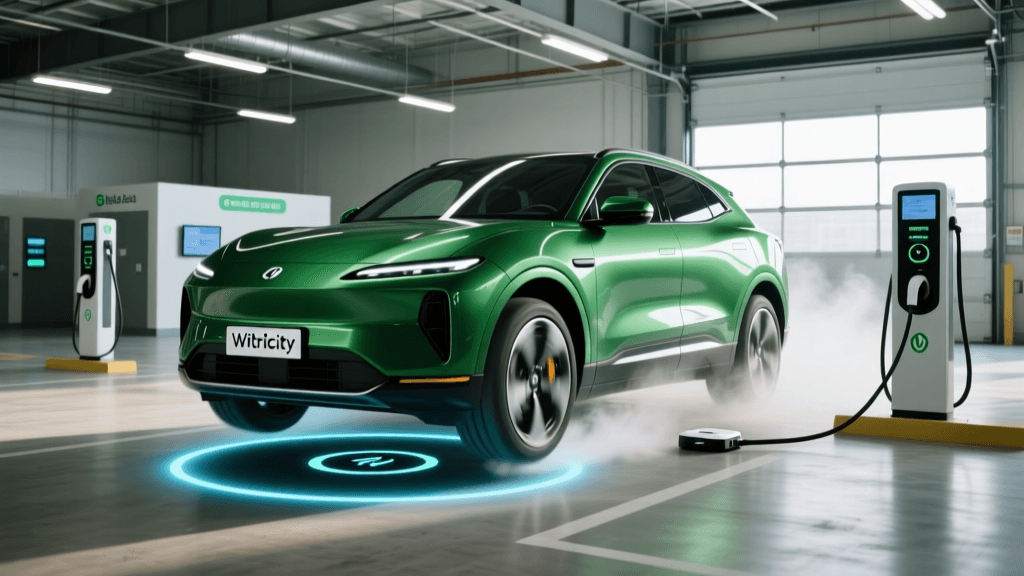
After years of rigorous research, development, and beta testing, wireless electric vehicle (EV) charging has officially crossed the threshold from experimental prototypes to commercial viability. Driven by the finalization and adoption of the SAE J2954 standard, automakers and infrastructure companies are now deploying inductive charging systems in real-world, revenue-generating scenarios. Notable commercial launches include the integration of WiTricity’s Halo magnetic resonance system into luxury vehicles like the Mercedes-Benz S-Class and EQS SUV, alongside the rollout of heavy-duty aftermarket commercial kits designed for autonomous fleet vehicles, robotic airport taxis, and last-mile delivery vans that require zero human intervention to charge.
While the promise of 'park and walk away' charging is a massive leap forward for EV convenience and autonomous fleet logistics, early adopters, fleet managers, and residential installers are encountering a unique set of teething issues. Wireless charging relies on complex magnetic resonance, precise spatial tolerances, and localized network handshakes. When a charge fails to initiate or operates at degraded efficiency, the troubleshooting process is vastly different from simply unplugging and replugging a CCS or NACS cable. Below, we break down the most common problems associated with newly launched commercial wireless EV charging systems and provide actionable, technical solutions to resolve them.
Problem 1: Magnetic Alignment and Parking Tolerances
The Issue: Unlike a physical plug that guarantees a connection, wireless charging requires the vehicle’s receiver pad (RX) to align with the ground transmitter pad (TX). While WiTricity's magnetic resonance technology is significantly more forgiving than basic inductive systems, severe misalignment will cause the system to abort the charging handshake or operate at a reduced efficiency (sometimes dropping from an optimal 92% down to 75% or lower, generating excess heat).
Troubleshooting & Solutions:
- Camera Overlay Calibration: Most commercial systems use the vehicle's 360-degree camera system to project a digital 'target' on the infotainment screen or dashboard. If drivers consistently miss the mark, recalibrate the camera overlay via the dealer diagnostic tool to ensure the digital crosshair perfectly matches the physical RX pad location on the vehicle's undercarriage.
- Physical Fleet Guides: For commercial depots relying on repetitive parking, do not rely solely on driver skill or camera overlays. Install heavy-duty rubber parking curbs or wheel chocks spaced exactly to the specific vehicle's track width. This ensures the wheels naturally guide the RX pad directly over the TX pad every time.
- Low-Speed Creep Protocol: Instruct drivers to approach the pad at under 3 MPH. High-speed approaches often lead to overshooting the optimal magnetic coupling zone, which typically allows a lateral tolerance of only +/- 75mm to 150mm depending on the specific SAE Z-class of the system.
Problem 2: Z-Gap Inconsistencies and Ground Clearance
The Issue: The 'Z-gap' is the vertical distance between the ground pad and the vehicle's underbelly receiver. The SAE J2954 standard categorizes systems into different Z-classes (e.g., Z1: 100-150mm, Z2: 140-210mm, Z3: 170-250mm). If a vehicle with air suspension drops too low after parking, or if debris builds up on the pad, the Z-gap falls outside the optimal resonance frequency, triggering a hardware fault code and halting the charge.
Troubleshooting & Solutions:
- Air Suspension Lockout: Many modern EVs automatically lower their suspension when parked to improve aerodynamics or ease of entry. Fleet managers must access the vehicle's settings and enable 'Suspension Lock' or 'Transport Mode' while parked over a wireless pad to maintain a static Z-gap.
- Debris and Snow Clearance: While commercial TX pads are rated for drive-over durability (often supporting up to 5,000 lbs of dynamic weight), a thick layer of compacted snow, ice, or mud acts as a physical spacer, artificially increasing the Z-gap. Implement a daily sweeping protocol for outdoor pads during winter months.
- Tire Pressure Monitoring: Surprisingly, under-inflated tires can lower the vehicle's ride height by 10-15mm, pushing a Z2 vehicle into a Z1 gap threshold and causing coupling errors. Maintain strict, daily tire pressure schedules for fleet vehicles utilizing wireless pads.
Problem 3: Foreign Object Detection (FOD) False Positives
The Issue: Safety is paramount in high-power wireless charging. Systems are equipped with Foreign Object Detection (FOD) and Living Object Detection (LOD) to prevent metallic objects from heating up via induction, or to ensure pets and wildlife aren't harmed by the electromagnetic field. Early commercial deployments frequently suffer from 'nuisance trips' where the system shuts down unnecessarily.
Troubleshooting & Solutions:
- Micro-Debris Sweeping: FOD sensors use radar and magnetic field anomaly detection. A simple aluminum candy wrapper, a stray metallic bottle cap, or even a highly mineralized puddle of standing water can trigger a safety shutdown. Use non-metallic leaf blowers or stiff-bristle brooms to clean the pad surface before initiating a charge cycle.
- Sensor Calibration: If a specific pad repeatedly throws FOD errors in an otherwise clean environment, the radar array embedded in the TX pad's perimeter may be miscalibrated or suffering from moisture ingress. Contact the infrastructure provider for a firmware update or a physical sensor realignment.
Problem 4: Network Communication Handshake Failures
The Issue: Before power is transferred, the TX pad and the vehicle’s RX pad must perform a digital handshake to negotiate power levels, verify safety protocols, and authenticate billing. This is often handled via Wi-Fi, Bluetooth Low Energy (BLE), or Power Line Communication (PLC). In crowded commercial depots with heavy Wi-Fi congestion, this handshake can time out, leaving the vehicle parked but uncharged.
Troubleshooting & Solutions:
- Dedicated VLANs: For fleet operators, do not run wireless charging telemetry on the same public or guest Wi-Fi network used by facility visitors. Create a dedicated, hidden VLAN specifically for EV charging handshakes to eliminate packet loss and latency.
- BLE Interference Mitigation: If the system relies on Bluetooth for the initial wake-up signal, ensure that nearby industrial equipment, forklifts, or heavy machinery isn't emitting 2.4 GHz interference. Relocating the depot's local network routers away from the charging bays can resolve handshake timeouts.
Troubleshooting Matrix: Wireless vs. Plug-In Charging
To help technicians and fleet managers transition from traditional plug-in maintenance to wireless system diagnostics, refer to the comparison table below:
| Symptom | Plug-In (CCS/NACS) Cause | Wireless (SAE J2954) Cause | Wireless Solution |
|---|---|---|---|
| Charge Fails to Initiate | Damaged pins, dirty connector, broken latch | Misalignment, Z-gap error, FOD trip | Check camera overlay, clear pad debris, verify suspension height |
| Slow Charging Speeds | Thermal throttling at the plug, battery limits | Lateral misalignment, high Z-gap, voltage sag | Re-park using physical guides, check tire pressure |
| Intermittent Disconnects | Loose cable, faulty proximity pilot pin | BLE/Wi-Fi handshake timeout, LOD (animal) trigger | Isolate charging network VLAN, inspect pad perimeter for wildlife |
Best Practices for Early Adopters and Fleet Managers
As the U.S. Department of Energy and global infrastructure bodies continue to map the future of EV charging, wireless technology is carving out a vital niche, particularly for autonomous fleets, robotic delivery vehicles, and luxury residential setups. However, the transition requires a paradigm shift in maintenance and operational awareness.
Implementing Telemetry Dashboards
Modern commercial wireless charging pads are equipped with IoT sensors that track alignment precision, Z-gap variance, and FOD trip frequency in real-time. Fleet managers should integrate this telemetry into their central depot management software. By analyzing heat maps of parking accuracy, managers can identify which drivers consistently misalign their vehicles and require retraining. Furthermore, long-term data can determine if a specific physical pad has settled unevenly into the concrete foundation over time, requiring structural re-leveling by a certified contractor.
Routine Maintenance Protocols
Fleet managers should implement daily 'pad walk-arounds' similar to how aviation ground crews inspect tarmacs for debris. Furthermore, keeping the firmware on both the ground-side transmitter and the vehicle-side receiver updated is critical. Manufacturers are actively releasing over-the-air (OTA) patches to refine FOD sensitivity, improve alignment tolerances, and patch network security vulnerabilities based on real-world commercial data gathered from early deployment sites.
While troubleshooting wireless EV charging requires a new vocabulary—Z-gaps, magnetic resonance coupling, and radar-based FOD—the underlying logic remains rooted in basic physics and network communication. By standardizing parking protocols, maintaining strict depot cleanliness, and isolating communication networks, early adopters can bypass the common pitfalls of this revolutionary technology and enjoy the true, frictionless promise of wireless power transfer.