The Great EV Charging Alliance Showdown: Network Ecosystems as Products
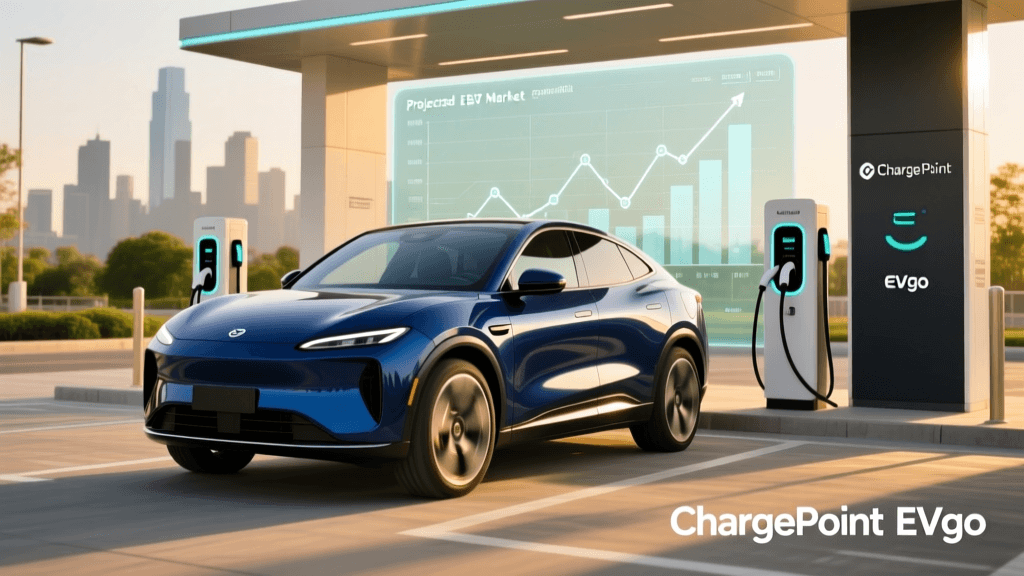
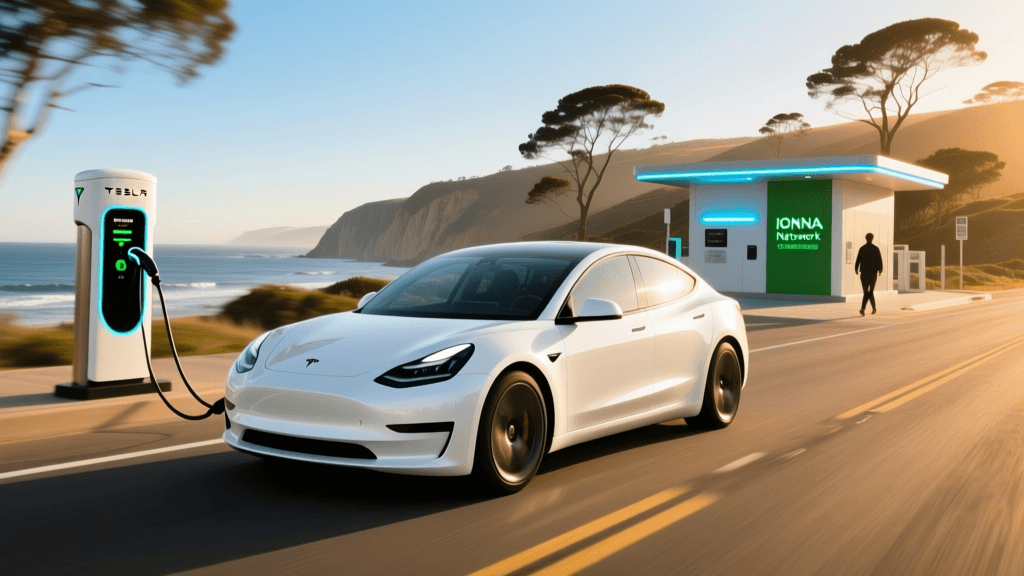
For the past decade, electric vehicle owners have navigated a fragmented, often frustrating public charging landscape. However, the industry has recently pivoted from isolated automaker efforts to massive, coalition-based charging networks. Today, we are not just reviewing physical charging cables or home wall boxes; we are conducting a head-to-head product showdown of the ultimate EV charging 'products': the automaker-backed charging alliances. Specifically, we are pitting the undisputed heavyweight champion, the Tesla Supercharger network (now the North American Charging Standard or NACS coalition), against the formidable challenger, the Ionna joint venture, with a nod to the Electrify America Plug&Charge ecosystem.
As an EV buyer in 2024 and beyond, your choice of vehicle brand now dictates your primary road-tripping ecosystem. Understanding the hardware reliability, software integration, amenity focus, and rollout timelines of these partnerships is critical. Let's break down the specs, costs, and user experiences of these competing network alliances to determine which one truly deserves your loyalty.
Contender 1: The Tesla Supercharger & NACS Adoption Coalition
The Tesla Supercharger network needs little introduction, but its transformation into an industry-wide alliance is the biggest shift in EV history. Following Ford and General Motors' landmark announcements in mid-2023, a cascade of automakers—including Rivian, Volvo, Polestar, Mercedes-Benz, Nissan, Honda, Jaguar, BMW, and Lucid—committed to adopting the NACS connector and gaining access to Tesla's sprawling network. This hardware standard is now officially recognized under the SAE International J3400 standard documentation, cementing its status as the definitive North American plug.
The Hardware & Software Experience: Tesla's V3 Superchargers deliver up to 250 kW of power, while the newer V4 cabinets support up to 350 kW (currently utilized primarily by the Tesla Semi, though passenger vehicles will eventually see speed bumps). The NACS connector itself is a marvel of minimalist engineering: it is roughly half the size and weight of the legacy CCS1 connector, features no moving latch parts on the vehicle side, and relies on a seamless software handshake via the Tesla app or native vehicle infotainment integration. For non-Tesla EVs, Tesla has deployed the 'Magic Dock'—a built-in CCS1 adapter at select stalls—allowing legacy EVs to charge without carrying a separate dongle, though this limits charging speeds to roughly 150-200 kW due to the adapter's thermal constraints.
Contender 2: The Ionna Joint Venture (The 'Revenge' Network)
If Tesla's network is the established empire, Ionna is the rebellion. Announced in late 2023 and officially launching operations in 2024, Ionna is a joint venture between seven automotive titans: BMW Group, General Motors, Honda, Hyundai, Mercedes-Benz Group, Stellantis, and Toyota. Their stated goal is aggressive: deploy at least 30,000 high-power charge points across North America by 2030.
The Hardware & Amenity Experience: Ionna is positioning itself not just as a charging provider, but as a premium hospitality brand. Recognizing that a 20-to-30-minute charge time requires a better environment than a dimly lit grocery store parking lot, Ionna stations are being designed with canopy coverage, clean restrooms, Wi-Fi, and integrated food and beverage options. The hardware will support both NACS and CCS connectors natively, with liquid-cooled cables capable of delivering 350 kW+ to compatible 800V-architecture vehicles like the Hyundai Ioniq 5 and Porsche Taycan. Ionna aims to solve the 'downtime' problem by making the charging stop a destination rather than a chore.
Contender 3: Electrify America & The Plug&Charge Alliance
While Tesla and Ionna dominate the headlines, Electrify America (EA) remains a critical player, heavily backed by Volkswagen Group and partnering with Hubject to pioneer the ISO 15118 'Plug&Charge' standard in North America. Brands like Porsche, Audi, and Ford (via legacy agreements) utilize EA's network, which boasts some of the fastest 350 kW dispensers in the country. However, EA's historical struggle with hardware uptime and screen glitches makes it a volatile third contender in this showdown, despite its massive footprint and aggressive expansion into highway travel plazas.
Head-to-Head Network Comparison Matrix
To visualize how these automaker partnerships stack up against one another, we have compiled a data table comparing the core metrics of each alliance ecosystem.
| Feature | Tesla Supercharger (NACS Coalition) | Ionna Joint Venture | Electrify America (Plug&Charge) |
|---|---|---|---|
| Founding / Core Automakers | Tesla, Ford, GM, Rivian, Volvo, BMW, Honda, Nissan, etc. | BMW, GM, Honda, Hyundai, Mercedes, Stellantis, Toyota | VW Group, Porsche, Audi, Rivian (legacy) |
| Primary Connector Standard | Native NACS (CCS via Magic Dock) | Dual Native (NACS & CCS) | Native CCS (NACS adapters required) |
| Max Power Output (Current) | 250 kW (V3) / 350 kW (V4 cabinet) | 350 kW+ (Targeting 800V arch) | Up to 350 kW |
| Target Network Size (by 2030) | 50,000+ (Projected based on current growth) | 30,000 High-Power Ports | 10,000+ Ports (Continued expansion) |
| Software Integration | Native App / VIN Handshake / Magic Dock | Native App / ISO 15118 Plug&Charge | Hubject ISO 15118 Plug&Charge |
| Amenity & Station Design | Utilitarian; mostly open-air, minimal amenities | Premium; canopies, restrooms, food, Wi-Fi | Mixed; ranging from travel centers to retail lots |
Actionable Buyer's Guide: Navigating the Transition Years
Knowing the specs is only half the battle. As a consumer, you need practical, actionable advice on how to time your purchase, manage costs, and route your trips based on these shifting alliances.
1. Timing Your EV Purchase: The Adapter Era vs. Native Ports
If you are buying a non-Tesla EV in 2024, you are entering the 'Adapter Era.' Ford and GM have begun shipping NACS adapters to existing owners, and new 2024 models are shipping with them. However, relying on an adapter adds a point of failure and requires you to carry a heavy, expensive dongle in your trunk. If your chosen automaker is part of the NACS coalition, consider waiting for the 2025 model year refresh, which will feature native NACS charge ports on the vehicle itself, eliminating the need for an adapter and ensuring optimal thermal management during high-speed charging.
2. Understanding the True Cost of Charging
Network partnerships heavily influence your wallet. Tesla's Supercharger network is renowned for its transparent, albeit sometimes peak-priced, per-kWh billing. However, buyers must be wary of Tesla's aggressive idle fees, which can rack up to $1.00 per minute if your vehicle remains plugged in after reaching its charge limit. Conversely, Electrify America offers a 'Pass+' membership for roughly $4 to $7 a month, which slashes the per-kWh rate by up to 25%. Ionna has yet to announce its public pricing structure, but industry insiders expect a loyalty-tier system that rewards owners of the seven founding brands with discounted rates, similar to how Hyundai currently offers complimentary EA charging for new Ioniq 5 buyers.
3. Route Planning and Hardware Reliability
According to data tracked by the Department of Energy's Alternative Fuels Data Center, network uptime is just as critical as station density. Tesla historically maintains an uptime rate of over 95%, a metric that legacy networks have struggled to match due to payment screen failures and liquid-cooling pump errors. When planning a cross-country trip in a GM Ultium vehicle or a Ford Mustang Mach-E, the Tesla Supercharger alliance offers the most mathematically reliable route. However, if you are driving an 800V vehicle like the Kia EV6 or Hyundai Ioniq 5, seeking out Electrify America or future Ionna 350kW stalls will drastically reduce your actual charging time, provided the stall is operational.
4. The Home vs. Public Charging Balance
While public network showdowns are exciting, the Environmental Protection Agency's EV charging guidelines remind consumers that up to 80% of all EV charging occurs at home or the workplace. Do not choose your next vehicle solely based on public road-trip networks if you lack access to a Level 2 home charger. Ensure your home electrical panel can support a 60-amp circuit for a 48-amp Level 2 wall connector before prioritizing public network alliances over vehicle range and battery chemistry.
Final Verdict: Which Network Alliance Wins?
In this head-to-head showdown of automaker charging partnerships, the Tesla Supercharger NACS Coalition takes the current crown for sheer reliability, software seamlessness, and immediate nationwide coverage. For buyers prioritizing stress-free road trips today, aligning with the NACS standard is the undisputed best move.
However, the Ionna Joint Venture is the clear long-term winner for user experience and amenity design. If you are a buyer who despises charging in the rain, values premium travel plaza integration, and drives an 800V-architecture vehicle from Hyundai, BMW, or Mercedes, Ionna's 2025+ rollout promises to fix the hospitality gaps that Tesla ignores. Ultimately, the 'best' network depends entirely on your vehicle's native port, your tolerance for adapters, and whether you prioritize utilitarian reliability or premium travel comfort.