The Current State of EV Charging Equity
As the global transition to electric vehicles (EVs) accelerates, a critical disparity has emerged: the 'charging desert.' While affluent suburban neighborhoods and major highway corridors are rapidly saturating with Level 2 and DC Fast Charging (DCFC) stations, underserved urban communities, rural towns, and low-income multi-family housing (MFH) districts are being left behind. This infrastructure gap threatens to stall widespread EV adoption and disproportionately excludes marginalized populations from the economic and environmental benefits of electrification.
For residents in underserved communities, the barrier is rarely just the upfront cost of an EV. It is the fundamental lack of accessible, reliable, and affordable charging. Over 60% of low-income households do not have access to off-street parking or a dedicated garage, making home charging virtually impossible. To solve this, the EV charging industry is pivoting toward community-centric deployment models, driven by new federal mandates and innovative hardware solutions designed specifically for complex urban and rural environments.
Federal Catalysts: NEVI and the Justice40 Initiative
The future of equitable charging infrastructure is heavily intertwined with federal policy. The National Electric Vehicle Infrastructure (NEVI) Formula Program, backed by $5 billion in federal funding, was initially designed to build out highway corridors. However, recent policy shifts and state-level implementation plans are increasingly prioritizing community charging in disadvantaged areas once corridor milestones are met.
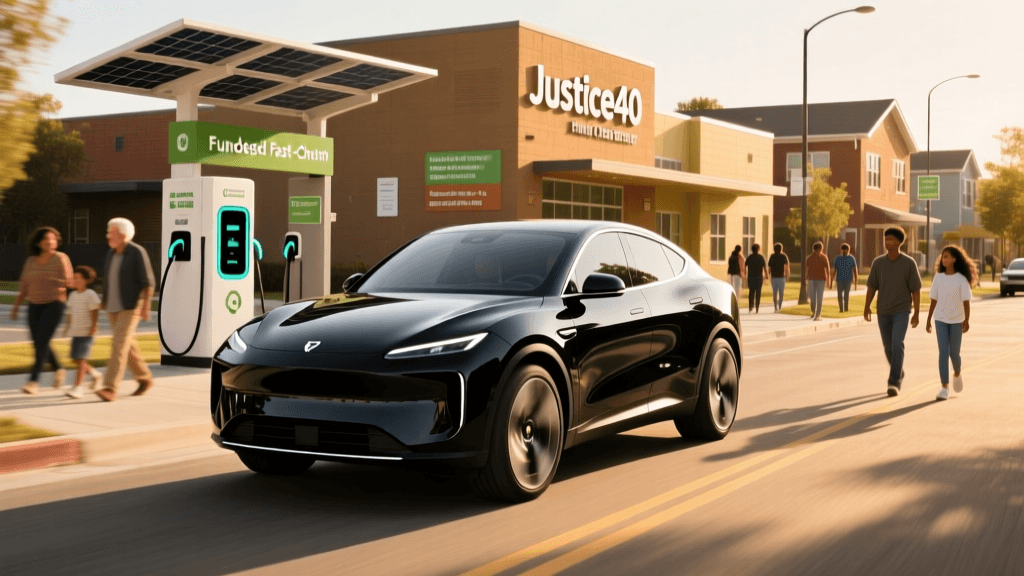
More importantly, the Justice40 Initiative mandates that 40% of the overall benefits of certain federal investments—including climate and clean energy infrastructure—must flow to disadvantaged communities that have been historically marginalized by underinvestment. This mandate is forcing charge point operators (CPOs), utilities, and municipalities to rethink site selection. Instead of solely chasing high-traffic retail locations, developers are now mapping community needs, utilizing tools from the Joint Office of Energy and Transportation to identify census tracts with high multi-family housing density and low existing charger-to-EV ratios.
Future Trends in Underserved Community Charging
To meet the demands of Justice40 and overcome the physical limitations of underserved neighborhoods, the industry is deploying three primary technological trends.
1. Curbside and Streetlight Charging
For dense urban neighborhoods where residents park on the street, curbside charging is the most viable Level 2 solution. Companies like Ubitricity and Char.gy are retrofitting existing streetlight poles with integrated EV charging sockets. By utilizing the existing municipal lighting grid, these installations bypass the need for expensive new trenching and transformer upgrades. A typical streetlight charger delivers 3 kW to 5 kW of AC power—enough to add 100 to 150 miles of range overnight. The hardware cost is relatively low, typically ranging from $3,000 to $5,000 per unit, and installation can be completed in a single day.
2. Battery-Integrated and Off-Grid DC Fast Hubs
Deploying traditional 150 kW or 350 kW DCFC stations in underserved urban or rural areas often triggers massive utility grid upgrade requirements, sometimes costing hundreds of thousands of dollars and taking over a year to complete. The future of equitable fast charging lies in battery-buffered chargers, such as the FreeWire Boost Charger. These systems connect to a low-capacity grid line (e.g., a standard 10 kW or 20 kW commercial connection) and slowly trickle-charge an internal battery bank. When an EV plugs in, the system delivers up to 120 kW of DC fast charging directly from the battery. This eliminates the need for expensive utility transformer upgrades, allowing community hubs to be deployed in months rather than years.
3. Multi-Family Housing (MFH) Load Management
Equity also means ensuring renters have access to charging. Installing dozens of Level 2 chargers in an older apartment complex will easily overload the building's existing electrical panel. The industry standard is shifting toward Automated Load Management Systems (ALMS) provided by companies like ChargePoint and EvoCharge. ALMS dynamically distributes available electrical capacity across multiple charging ports based on real-time demand and vehicle state-of-charge. This allows property managers to install 20 to 40 charging ports on a panel that might only have the physical capacity to support 10 simultaneous unmanaged chargers, drastically reducing the capital expenditure required to electrify affordable housing complexes.
Comparative Analysis: Community Charging Deployment Models
Municipalities and fleet operators must choose the right deployment model based on local grid constraints and community needs. Below is a comparison of the leading equitable charging solutions.
| Deployment Model | Ideal Use Case | Est. Hardware Cost | Installation Timeline | Grid Upgrade Needs |
|---|---|---|---|---|
| Curbside (Streetlight) | Dense urban, on-street parking | $3,000 - $5,000 | 1 - 3 Months | Minimal / None |
| Battery-Buffered DCFC | Community hubs, rural towns | $60,000 - $90,000 | 3 - 6 Months | None (Uses existing low-capacity lines) |
| MFH with ALMS | Affordable housing, apartment complexes | $4,000 - $7,000 per port | 2 - 5 Months | Low (Software manages existing capacity) |
| Traditional DCFC Hub | Highway corridors, large retail centers | $40,000 - $100,000+ | 12 - 24 Months | High (Requires new transformers/trenching) |
Actionable Strategies for Municipalities and Developers
For local governments, community organizations, and private developers looking to capitalize on equity-focused funding, a strategic approach is required to ensure long-term sustainability.
Step 1: Leverage Utility Make-Ready Programs
Before purchasing hardware, engage with local investor-owned utilities (IOUs). Many utilities now offer 'make-ready' programs that cover 100% of the infrastructure costs (trenching, conduit, and panel upgrades) on the utility side of the meter for projects located in designated disadvantaged communities. This can reduce total project costs by 40% to 60%.
Step 2: Stack Federal and State Grants
Do not rely on a single funding source. Stack NEVI formula funds with the $2.5 billion Charging and Fueling Infrastructure (CFI) Discretionary Grant Program, which explicitly prioritizes community charging in underserved areas. Additionally, look for state-level vouchers, such as California's CALeVIP or New York's Charge Ready NY, which offer supplemental rebates for installations in low-income census tracts.
Step 3: Implement Equitable Pricing Structures
Deploying chargers in underserved communities is only half the battle; the electricity must be affordable. Developers should negotiate with utilities to secure specialized EV time-of-use (TOU) rates. Furthermore, CPOs should avoid imposing high idle fees or mandatory subscription models in low-income areas. Offering a flat, transparent per-kWh rate that undercuts local gasoline prices on a miles-per-dollar basis is essential for driving community adoption.
The Road Ahead: Industry Outlook for 2025 and Beyond
The EV charging industry is undergoing a profound maturation. The 'gold rush' phase of deploying chargers solely in high-income, high-traffic areas is giving way to a more deliberate, equity-driven expansion. By 2025, we expect to see a massive surge in battery-buffered DCFC deployments in rural and urban food deserts, transforming vacant lots into resilient community energy hubs. Furthermore, as vehicle-to-grid (V2G) technology becomes standardized, community chargers will evolve from passive loads into active grid assets, capable of providing emergency backup power to critical community centers during extreme weather events.
Ultimately, achieving true EV charging equity requires more than just hardware; it demands a fundamental redesign of how we finance, permit, and operate energy infrastructure. By aligning federal mandates like Justice40 with innovative technologies like curbside and battery-buffered charging, the industry is finally building a bridge over the charging desert, ensuring that the clean transportation revolution leaves no community behind.