The Dawn of Megawatt Charging: Beyond CCS and NACS
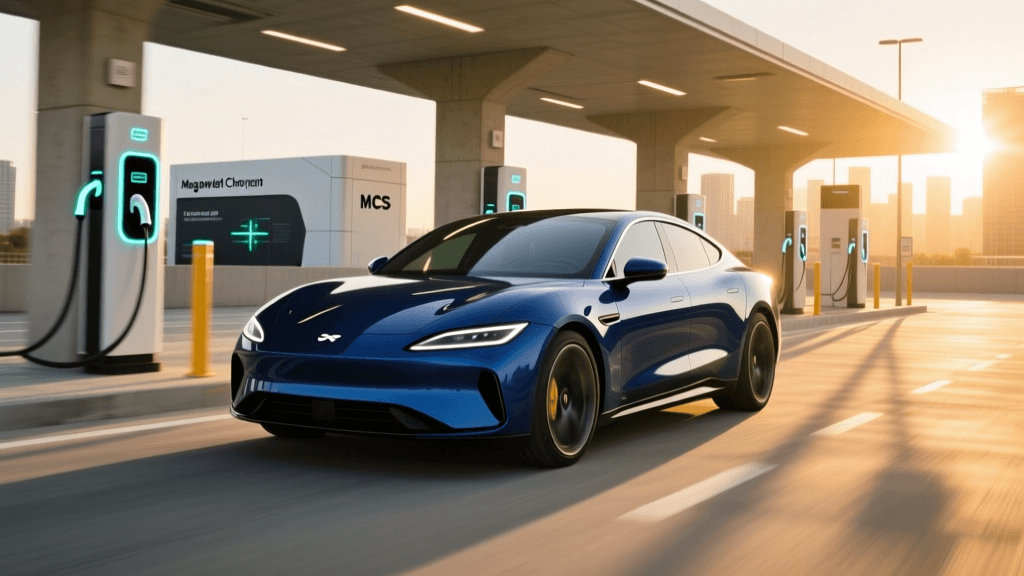
The electric vehicle revolution is rapidly expanding beyond passenger sedans and light-duty trucks into the realm of Class 8 commercial trucks, maritime vessels, and electric aviation. To support these massive battery packs, the industry is pivoting toward the Megawatt Charging System (MCS). As automakers and energy companies race to dominate this high-power frontier, a surge in patent filings is revealing the exact technological breakthroughs that will define the next decade of EV infrastructure. For fleet managers, depot operators, and commercial real estate developers, understanding these patent trends is no longer just an academic exercise—it is a critical requirement for future-proofing multi-million-dollar infrastructure investments.
According to testing and research frameworks outlined by the National Renewable Energy Laboratory (NREL), MCS is designed to deliver up to 3.75 megawatts of power (1250V DC at 3000A). This is nearly ten times the power of the fastest consumer CCS chargers available today. However, pushing this much electricity through a physical connector generates immense heat and requires unprecedented safety mechanisms. By analyzing recent patent filings from major automotive and electrical engineering firms, we can extract actionable, expert-level best practices to prepare your commercial sites for the MCS era.
Recent Patent Breakthroughs in High-Power Charging
A review of recent intellectual property filings reveals three major technological vectors that are shaping the future of ultra-fast charging hardware. Understanding these patents helps infrastructure planners anticipate the physical and electrical requirements of tomorrow's charging islands.
1. Advanced Dielectric Fluid Circulation Systems
Traditional liquid-cooled cables use a water-glycol mix that circulates around the copper conductors. However, recent patent filings detail a shift toward direct-to-pin dielectric fluid cooling. In these designs, non-conductive engineered fluids are pumped directly through the hollow charging pins and into the vehicle's inlet. This eliminates the thermal bottleneck at the connection point, which is historically the hottest part of the circuit. For infrastructure planners, this means future MCS dispensers may require secondary fluid reservoirs, specialized filtration systems, and spill-containment grading around the charging pads to handle potential dielectric fluid leaks.
2. Automated Robotic Connection Arms
An MCS cable capable of carrying 3000 amps is extraordinarily thick, heavy, and stiff. Manual plugging by a fleet driver is not only ergonomically hazardous but highly inefficient for automated depot charging. A wave of patents from robotics and automotive firms focuses on machine-vision-guided robotic arms that automatically locate the vehicle's MCS inlet and insert the connector. These patents emphasize LiDAR-assisted alignment and magnetic locking mechanisms. Depot designers must now consider the physical footprint, safety cages, and sensor-sightlines required to accommodate robotic charging arms in their lane layouts.
3. Dynamic Thermal Throttling Algorithms
Hardware is only half the battle. Software patents related to MCS focus on predictive thermal throttling. These algorithms communicate with the vehicle's Battery Management System (BMS) and the site's local weather station to pre-condition the battery and dynamically adjust the charger's internal coolant flow rate before the vehicle even arrives. This requires charging stations to have robust, low-latency fiber-optic connections to the depot's central management server, rather than relying on standard cellular modems.
Expert Tips: How to Future-Proof Your Fleet Infrastructure
The Charging Interface Initiative (CharIN) has been instrumental in standardizing the MCS connector, but the physical infrastructure supporting it takes years to permit and build. If you are breaking ground on a new fleet depot or expanding an existing one, apply these expert best practices to ensure your site is MCS-ready.
Implement the 'Dig Once' Conduit Policy
When trenching for current 350kW CCS chargers, do not size your conduit for today's needs. MCS requires significantly thicker copper cabling or aluminum equivalents, alongside dedicated fiber-optic lines for high-speed BMS communication and robotic arm telemetry. Best Practice: Install empty, capped 6-inch Schedule 80 PVC conduit runs from your main switchgear to every future charging island. Pulling new wire through existing conduit is exponentially cheaper than cutting new asphalt and re-trenching in three years.
Oversize Your Transformer Pads and Switchgear
A single MCS charging island can draw over 1 MW of continuous power. A depot with ten stalls will require utility-scale power delivery. Best Practice: Pour concrete transformer pads large enough to accommodate a 5 MVA (Megavolt-Ampere) pad-mounted transformer, even if your initial utility interconnection agreement only calls for a 1.5 MVA unit today. Furthermore, specify modular switchgear with a 3000A main bus, leaving empty breaker slots for future 1000A MCS feeder breakers. This prevents the need to replace your entire main distribution board when you add high-power stalls.
Plan for Advanced Spill Containment
As mentioned in the dielectric fluid patents, next-generation cooling systems may utilize specialized synthetic oils or engineered fluids. Best Practice: Design your charging islands with a slight 2% grade sloping toward a centralized, oil-water separator drainage system. This ensures compliance with environmental regulations and protects the structural integrity of your concrete pads from chemical degradation.
Infrastructure Upgrade Comparison: Current vs. MCS-Ready
To visualize the massive leap in infrastructure requirements, review the comparison table below. This highlights why early planning based on patent trends is vital for commercial operators.
| Infrastructure Feature | Current CCS (Level 3 Fast Charging) | Future MCS (Megawatt Charging System) |
|---|---|---|
| Maximum Voltage | 1000V DC | 1250V DC (up to 3000V in patent concepts) |
| Maximum Current | 500A | 3000A |
| Cable Cooling Method | Water-Glycol Jacket | Direct-to-Pin Dielectric Fluid / Advanced Vapor Chambers |
| Conduit Requirement | 2 to 3-inch PVC | 4 to 6-inch Schedule 80 PVC |
| Switchgear Bus Rating | 800A - 1200A | 2000A - 3000A+ |
| Connection Method | Manual Plug | Manual (Assisted) or Robotic Automated Arm |
Wireless and Inductive Charging Patents: The Next Frontier
While MCS dominates the wired heavy-duty space, patent filings in the inductive (wireless) charging sector are accelerating, particularly for automated fleet vehicles and port logistics. Recent intellectual property from major EV manufacturers details high-efficiency magnetic resonance coupling systems capable of transferring over 500 kW wirelessly across a 10-inch air gap.
For depot managers, these patents signal a need to rethink floor construction. Inductive charging requires embedding primary coils into the concrete. Expert Tip: If you are pouring new depot floors, consider using non-magnetic rebar (such as fiberglass or basalt fiber) in the specific zones designated for future wireless charging lanes. Traditional steel rebar can interfere with magnetic fields, causing eddy current heating and severe efficiency losses. Preparing these 'void zones' or using specialized epoxy overlays now will save millions in concrete demolition costs later.
Strategic Takeaways for Fleet Operators
The transition to megawatt-class charging is not a distant theory; it is being engineered and patented right now. As highlighted in the International Energy Agency Global EV Outlook, the electrification of heavy-duty commercial fleets is a primary pillar of global decarbonization strategies, meaning utility companies and governments will heavily incentivize MCS deployments.
To stay ahead, fleet operators must shift their mindset from purchasing 'chargers' to investing in 'energy hubs.' Coordinate with your local utility provider early in the design phase to discuss substation upgrades and high-voltage transmission lines. By aligning your depot's physical footprint, trenching, and electrical architecture with the realities of today's patent filings, you ensure that your facility will seamlessly support the ultra-fast, automated, and high-power EV fleets of tomorrow without requiring catastrophic capital expenditures to retrofit.