The Shift from Incremental Updates to Paradigm-Shifting Patents
The electric vehicle charging landscape is no longer defined solely by the gradual rollout of Level 2 AC chargers or 50kW DC fast chargers. Over the past eighteen months, patent filings and standardization bodies have signaled a massive pivot toward Megawatt Charging Systems (MCS), high-efficiency inductive wireless charging, and 1000V+ Extreme Fast Charging (XFC) architectures. For commercial fleet operators, depot managers, and forward-thinking real estate developers, ignoring these underlying patent trends means risking millions in stranded assets and premature infrastructure obsolescence.
As an industry expert, I frequently advise fleet managers and site planners on how to translate abstract patent filings and emerging standards into concrete, actionable site-preparation strategies. Future-proofing your EV infrastructure is not about buying hardware that does not yet exist; it is about preparing the physical and electrical foundation so that when next-generation vehicles arrive, your site can support them with minimal disruption. Below, we break down the most critical charging technology breakthroughs and provide expert best practices for preparing your infrastructure.
Breakthrough 1: Megawatt Charging System (MCS) and Heavy-Duty Applications
The transition to electric heavy-duty trucks, maritime vessels, and even electric aircraft requires power levels that dwarf current passenger vehicle standards. The CharIN Megawatt Charging System initiative is leading the charge, developing a standard capable of delivering up to 3.75 MW of power (1250 amps at 3000 volts). Recent patent filings from major connector manufacturers focus heavily on advanced liquid-cooling channels within the connector pins and automated cable-management systems, as a 1250A cable is far too heavy for manual human operation.
Expert Tip: Trenching, Conduit, and Transformer Pad Prep
If you are currently developing a heavy-duty fleet depot or a highway truck stop, you must plan for MCS even if your current fleet only utilizes 350kW CCS chargers. The most expensive component of charging infrastructure is not the charger itself; it is the civil work, trenching, and concrete restoration.
- Parallel Conduit Strategy: When trenching for your initial 350kW DC fast chargers, lay parallel, empty, capped conduits (minimum 4-inch diameter) sized for future MCS liquid-cooled cables. This reduces future civil engineering costs by up to 80%.
- Transformer Pad Sizing: A standard 350kW charger requires roughly a 500 kVA transformer. An MCS deployment will require 2.5 MVA to 5 MVA substations. Pour a larger concrete transformer pad on Day 1 with the necessary rebar and grounding grid to support a much heavier, higher-capacity utility transformer in the future.
- Switchgear Clearance: Ensure your main switchgear room or outdoor pad has the physical footprint to accommodate 3000V DC switchgear, which requires significantly wider arc-flash clearance zones than standard 1000V systems.
Breakthrough 2: High-Fidelity Inductive Wireless Charging
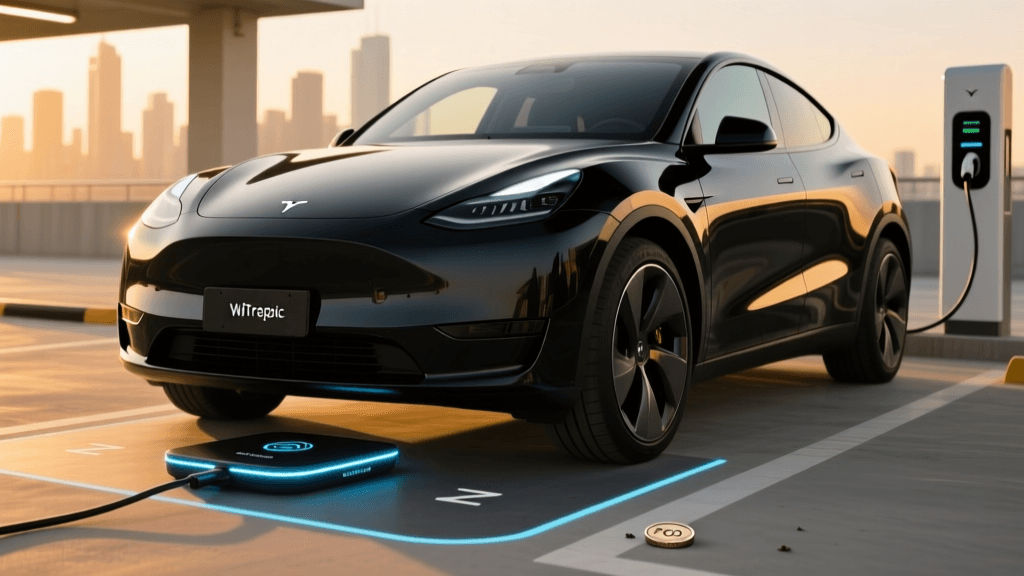
Wireless EV charging has moved from science fiction to commercial viability, heavily driven by advancements in magnetic resonance coupling. The SAE J2954 Wireless Charging Standard outlines the baseline for light-duty vehicles, but recent patent filings from companies like WiTricity and various automotive OEMs are pushing the boundaries into high-power commercial applications (11kW to 500kW+ for transit buses). These patents focus on advanced Foreign Object Detection (FOD), Living Object Protection (LOP), and automated magnetic alignment tolerances that allow vehicles to park imperfectly while still achieving >90% grid-to-battery efficiency.
Expert Tip: Concrete and Rebar Specifications for Wireless Pads
Installing wireless Ground Assemblies (GA) requires highly specific civil engineering considerations that standard charging pads do not. The magnetic fields operating at the standard 85 kHz frequency can induce eddy currents in standard metallic structures, leading to severe efficiency losses and dangerous heat buildup.
Critical Best Practice: When pouring concrete for depot parking zones designated for future wireless charging, specify non-magnetic aggregate and strictly control your rebar grid. Use fiberglass rebar (GFRP) in the immediate vicinity of the charging pad, or ensure standard steel rebar is spaced at least 12 to 18 inches apart and located deeper than 6 inches below the surface to prevent magnetic interference and thermal degradation.
Furthermore, ensure that underground utility lines (water, gas, communication) are routed at least three feet away from the designated center-line of the wireless charging pad to prevent induced interference.
Breakthrough 3: Extreme Fast Charging (XFC) and 1000V+ Architectures
While 800V architectures (like the Hyundai E-GMP or Porsche Taycan) are becoming mainstream, patent filings from Lucid, StoreDot, and various battery consortiums indicate a rapid push toward 1000V and even 1200V DC architectures. By increasing the voltage, manufacturers can drastically reduce the amperage required to achieve 350kW+ charging speeds. This reduces the weight and copper requirements of the vehicle's internal wiring and enables 10% to 80% charging in under 10 minutes.
Expert Tip: Liquid-Cooled Dispensers and Dielectric Fluids
To support these emerging XFC batteries, charging hardware must evolve. The National Renewable Energy Laboratory (NREL) has extensively researched the thermal management required for extreme fast charging. As an infrastructure planner, you should mandate the following hardware specifications for any new DC fast-charging site:
- 1000V+ Rated Dispensers: Do not install 500V or 800V maximum dispensers. Specify hardware rated for at least 1000V DC continuous operation to ensure compatibility with next-generation passenger and light-commercial vehicles.
- Advanced Liquid Cooling: Require chargers that utilize advanced dielectric cooling fluids rather than standard glycol-water mixes. This allows for thinner, more flexible charging cables that can handle 600A+ without exceeding the 11 lbs weight limit mandated by accessibility standards.
Cost Analysis: Future-Proofing vs. Reactive Retrofitting
One of the most common objections to implementing these expert tips is the perceived upfront cost. However, when we analyze the total cost of ownership (TCO) and the capital expenditure (CapEx) of retrofitting a live site versus preparing it on Day 1, the financial argument for future-proofing becomes undeniable.
| Infrastructure Component | Day-1 Future-Proofing Cost (Est.) | Year-5 Reactive Retrofit Cost (Est.) | Recommended Expert Action |
|---|---|---|---|
| Trenching & Conduit (per 100ft) | $4,500 (Add empty parallel conduits) | $18,000 (Cut concrete, re-trench, repave) | Always lay 2-3 extra capped conduits during initial civil work. |
| Transformer Concrete Pad | $3,200 (Oversized pad with heavy rebar) | $14,500 (Demolish, pour new pad, cure time) | Pour a pad rated for 5 MVA transformers, even if using 500 kVA today. |
| Wireless Pad Zone Prep | $1,800 (Fiberglass rebar, specific aggregate) | $9,500 (Core drilling, structural reinforcement) | Designate specific stalls with non-magnetic sub-surface materials. |
| Main Switchgear Room Footprint | $5,000 (Extra square footage in building plan) | $45,000+ (Expanding building footprint, permits) | Allocate 30% extra floor space for future 3000V DC switchgear. |
The Expert's 5-Step Infrastructure Preparation Checklist
To ensure your commercial or fleet EV charging site is prepared for the technological breakthroughs outlined in recent patent filings, run your site plan through this five-point checklist before breaking ground:
- Utility Capacity Audit: Have you secured utility letters confirming the availability of at least 2 MW to 5 MW of power at the site boundary within the next 3 to 5 years? If not, initiate the utility upgrade request immediately, as grid upgrades can take 24 to 36 months.
- Civil Engineering Conduit Map: Does your site plan include a dedicated 'ghost conduit' map showing empty, capped pathways from the main switchgear to every single charging pedestal for future MCS or XFC liquid-cooled cables?
- Rebar and Magnetic Interference Review: Have you reviewed the structural engineering plans to ensure that designated wireless charging zones are free of dense steel rebar networks that would block 85 kHz magnetic resonance?
- Hardware Voltage Specifications: Do your procurement contracts explicitly state that all DC fast-charging dispensers must be rated for a minimum of 1000V DC continuous output, regardless of your current fleet's 400V/800V limitations?
- Cable Management Weight Limits: Have you specified overhead pulley systems or automated cable-management towers to support the heavier, thicker liquid-cooled cables required for 600A+ continuous charging?
Conclusion
The EV charging industry is moving at a breakneck pace, and the patents filed today will become the deployment standards of tomorrow. By understanding the trajectory of MCS, wireless inductive charging, and 1000V+ XFC architectures, site planners and fleet managers can make informed, cost-effective decisions. Future-proofing is not about predicting the exact brand or model of the next charger; it is about ensuring the dirt, concrete, and copper beneath your site are ready to handle whatever the future demands. Implement these expert tips today, and you will save your organization from the massive capital drain of reactive retrofitting tomorrow.