If you have spent any time on EV Twitter (now X) lately, you may have stumbled across a peculiar keyword collision: "zwitterions charger twitter." The term zwitterions — molecules carrying both positive and negative charges — belongs in a battery-chemistry lab, not a charging-station debate. Yet social media algorithms routinely mash together advanced electrochemistry research, consumer EV charger reviews, and viral misinformation into a single, bewildering feed. This guide cuts through the noise with hard data on what actually matters for EV owners in 2026: real charging speeds, honest home installation costs, connector compatibility, and true cost-per-mile figures.
Charging Levels Explained: Real Speeds in kW and Miles Per Hour
The single most important distinction in EV charging is between kW (kilowatts — the rate of power delivery) and kWh (kilowatt-hours — the amount of energy stored in your battery). Confusing these two is the most common EV literacy mistake on social media. Think of kW as the width of a hose and kWh as the size of the bucket. A wider hose fills the bucket faster, but the bucket's capacity doesn't change.
Here is exactly what each charging level delivers in real-world conditions:
| Level | Voltage | Power (kW) | Miles of Range Added Per Hour | Best Use Case |
|---|---|---|---|---|
| Level 1 | 120V AC | 1.2–1.9 kW | 3–5 mi/hr | Overnight top-ups for PHEVs or low-mileage drivers |
| Level 2 | 240V AC | 7.2–19.2 kW | 20–60 mi/hr | Daily home and workplace charging |
| DC Fast Charge | 400–800V DC | 50–350 kW (peak) | 150–300+ mi/hr (first 10–20 min) | Road trips and quick top-ups |
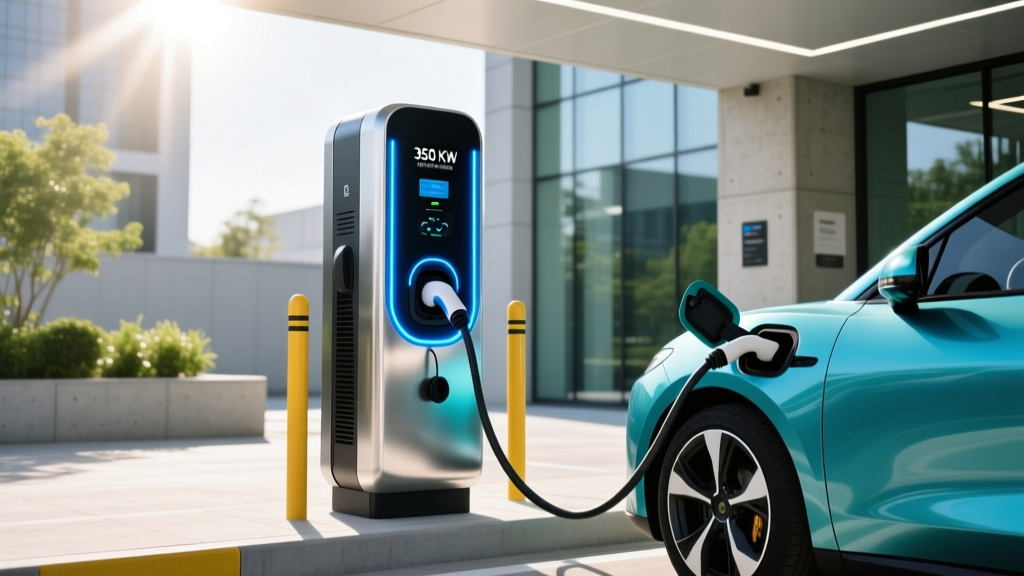
A critical reality that viral posts routinely omit: DC fast charging speeds are not sustained. A charger rated at 350 kW may deliver that peak for only a narrow window between roughly 10% and 30% State of Charge (SoC). Above 80% SoC, the charge curve tapers dramatically to protect battery health — sometimes dropping below 50 kW. This is why manufacturers quote 10–80% times rather than 0–100% times.
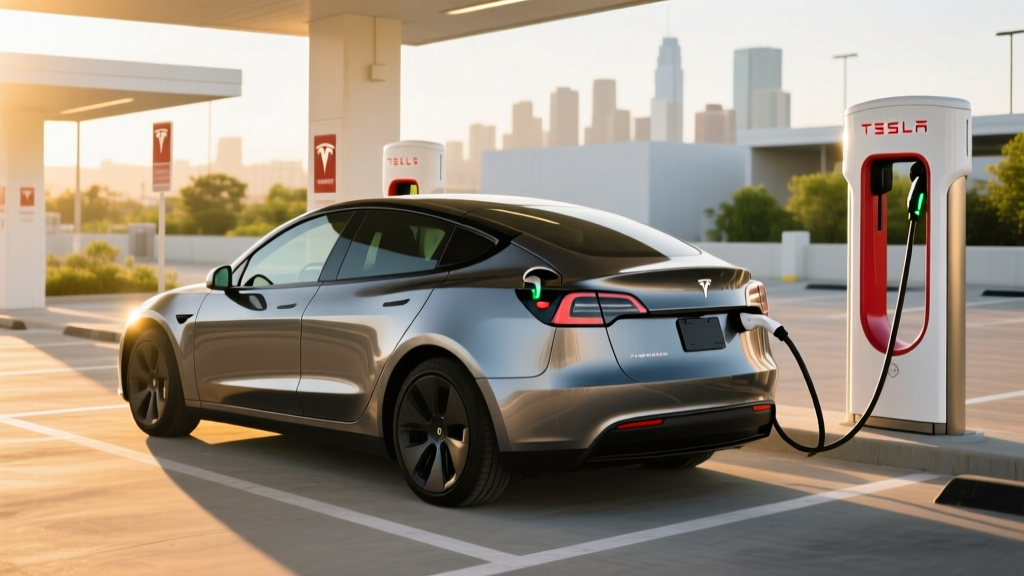
- Tesla Model Y (75 kWh battery, NMC): ~15–18 min at a 250 kW Supercharger; ~35 min at a 150 kW CCS station (with NACS adapter)
- Hyundai Ioniq 5 (77.4 kWh battery, NMC, 800V architecture): ~18 min at a 350 kW Electrify America station
- Ford F-150 Lightning Extended Range (131 kWh battery, NMC): ~35–41 min at a 150 kW DCFC; ~25 min at a 350 kW station
- Chevrolet Equinox EV (85 kWh battery, NMC): ~20–24 min at a 150 kW DCFC
Home Charger Installation: What It Actually Costs in 2026
The most viral EV-charging myth on social media is that installing a home Level 2 charger is either trivially cheap or prohibitively expensive. The truth, as usual, depends on your home's electrical panel.
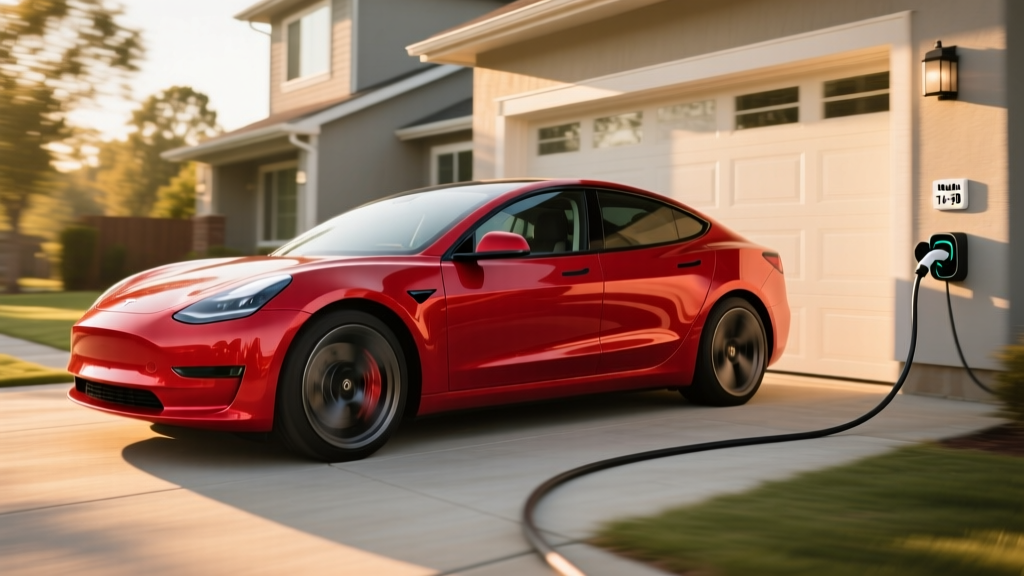
Most homes built after 1990 have a 200-amp electrical panel. A Level 2 charger drawing 40 amps (9.6 kW at 240V) requires a dedicated 50-amp circuit (electrical code requires the breaker to be rated 125% above the continuous load). If your panel has spare capacity — typically two adjacent breaker slots and at least 40–50 amps of unused capacity — the installation is straightforward. If your panel is near capacity, you will need a panel upgrade, which is the single biggest cost variable.
| Component | Simple Install (Panel Has Capacity) | Complex Install (Panel Upgrade Needed) |
|---|---|---|
| Level 2 Charger Equipment | $350–$700 | $350–$700 |
| Electrician Labor (2–4 hrs simple / 8–16 hrs complex) | $300–$800 | $1,200–$2,500 |
| Electrical Permit | $50–$200 | $100–$300 |
| Panel Upgrade (200A→200A replacement or 200A→400A) | $0 | $1,500–$4,000 |
| Conduit/Wiring (long runs from panel to garage) | $100–$400 | $200–$600 |
| Total Estimated Cost | $800–$2,100 | $3,350–$8,100 |
The IRS §30D tax credit does not cover charger installation for most taxpayers in 2026 — the alternative fuel vehicle refueling property credit (§30C) expired for residential installations after 2025, though some state-level incentives remain. Always check your state's energy office and consult a tax professional for current eligibility.
Electrical Upgrades You Might Need Before Installing a Charger
Social media posts about "easy $500 charger installs" routinely ignore these common upgrade scenarios:
- Panel capacity shortfall: If your 200A panel is already running 160A+ of calculated load (electric oven, dryer, HVAC, water heater), adding a 40A continuous EV load exceeds the panel's safe capacity. An electrician will perform a load calculation per NEC Article 220 to determine this.
- Service upgrade from 100A to 200A: Common in homes built before 1980. This requires utility coordination, a new meter base, and potentially a new service drop. Cost: $2,500–$5,000.
- Smart panel or load-management device: Devices like the Span smart panel or Emporia load manager can dynamically share capacity between your EV charger and other appliances, avoiding a full panel upgrade. Cost: $500–$2,000 installed.
- No garage or outdoor parking: If you park on the street or in a detached carport, you will need outdoor-rated (NEMA 4) equipment, trenching for conduit, and possibly HOA approval. This can add $500–$2,000.
Connector Compatibility: NACS, CCS1, and CHAdeMO in 2026
The connector landscape has shifted dramatically. After Ford, GM, Rivian, Volvo, and most major automakers adopted the North American Charging Standard (NACS) — originally Tesla's proprietary connector — NACS is now the dominant plug for new EVs sold in the US. The SAE J3400 standard formalized NACS, and by the 2026 model year, nearly all new light-duty EVs ship with a NACS charge port.
| Connector | Brands Using It (New Vehicles) | Adapter Needed For |
|---|---|---|
| NACS (Tesla standard, SAE J3400) | Tesla (all), Ford, GM, Rivian, Volvo, Polestar, Mercedes, BMW (2025+), Hyundai/Kia (2025+), Nissan (Ariana) | CCS1 public chargers (adapter included by most OEMs) |
| CCS1 (Combo) | Legacy 2023–2024 models from most brands; some commercial EVs | NACS chargers / Tesla Superchargers (OEM or aftermarket adapter, ~$150–$250) |
| CHAdeMO | Nissan Leaf (legacy only — discontinued after 2025) | Effectively orphaned; no adapter to NACS for DC fast charging |
If you own a 2023–2024 EV with a CCS1 port, you can access Tesla's Supercharger network using an OEM-provided or aftermarket NACS adapter. Ford and Rivian began shipping these adapters in 2024; other brands followed. Verify your adapter is rated for the full amperage of the Supercharger stalls you plan to use (some early adapters are limited to 400A/500V, capping DCFC at ~200 kW).
Cost to Charge: Per-Mile Economics vs. Gas
Here is where data replaces the "EVs are more expensive to fuel" myth that circulates endlessly on social media. The cost to charge depends entirely on where and when you charge.
| Scenario | Rate ($/kWh) | Efficiency (kWh/100 mi) | Cost Per Mile |
|---|---|---|---|
| Home, off-peak utility rate | $0.08–$0.14 | 30 kWh/100 mi | $0.024–$0.042 |
| Home, standard residential rate | $0.15–$0.22 | 30 kWh/100 mi | $0.045–$0.066 |
| Public Level 2 (workplace, retail) | $0.20–$0.40 | 30 kWh/100 mi | $0.060–$0.120 |
| DC Fast Charging (Electrify America, EVgo, Tesla) | $0.35–$0.65 | 30 kWh/100 mi | $0.105–$0.195 |
| Gasoline vehicle (27 MPG combined, $3.40/gal) | — | 3.7 gal/100 mi | $0.126 |
The takeaway: if you charge at home on an off-peak or standard residential rate, your fuel cost is roughly one-third to one-half that of a 27 MPG gas car. If you rely exclusively on DC fast charging, your per-mile cost can approach or slightly exceed gas — which is why home charging access remains the single most important factor in EV ownership economics.
According to fueleconomy.gov, the average 2026 EV achieves 100–130 MPGe combined, translating to roughly 25–33 kWh per 100 miles. Larger vehicles like the F-150 Lightning consume 43–48 kWh/100 mi, raising per-mile costs proportionally.
Equipment Recommendations: Top Home Level 2 Chargers for 2026
Not all Level 2 chargers are equal. Below are units we recommend based on reliability, smart features, cable length, and value. All are UL-listed (or ETL-listed to UL standards) — a non-negotiable safety requirement.
ChargePoint Home Flex (NACS)
- Power: Up to 12 kW (50A) on a 60A circuit; configurable down to 16A
- Connector: NACS (2025+ model); CCS1 version also available
- Cable: 23 feet
- Smart features: Wi-Fi, scheduling, Alexa integration, energy dashboard
- Price: ~$599
- Best for: Most homeowners wanting flexible amperage and robust app
Tesla Wall Connector (NACS)
- Power: Up to 11.5 kW (48A) on a 60A circuit
- Connector: NACS (native)
- Cable: 24 feet
- Smart features: Wi-Fi, OTA updates, power-sharing with second unit, access control
- Price: ~$475
- Best for: Tesla owners and NACS-native EVs; best value per kW
Emporia Level 2 EV Charger
- Power: Up to 11.5 kW (48A) on a 60A circuit
- Connector: NACS or J1772 (select at purchase)
- Cable: 24 feet
- Smart features: Solar integration, real-time energy tracking, load management with Emporia Vue panel monitor
- Price: ~$399
- Best for: Homes with solar panels or those wanting granular energy monitoring
Grizzl-E Smart (United Chargers)
- Power: Up to 10 kW (40A) on a 50A circuit
- Connector: NACS or J1772 (select at purchase)
- Cable: 24 feet
- Smart features: OCPP-compatible, works with multiple apps, adjustable amperage via DIP switches
- Price: ~$449
- Best for: Outdoor installations (NEMA 4 rated), extreme cold climates (-40°C rated)
Safety, Code, and Permit Requirements
Every Level 2 home charger installation in the US must comply with the National Electrical Code (NEC) Article 625 and your local jurisdiction's amendments. Key requirements:
- Dedicated circuit: Your EV charger must be on its own breaker — not shared with other outlets or appliances.
- Breaker sizing: The breaker must be rated at 125% of the charger's continuous draw. A 40A charger requires a 50A breaker; a 48A charger requires a 60A breaker.
- GFCI protection: NEC 2020 and later requires GFCI protection for outdoor receptacles used for EV charging. Hardwired installations (no plug) often exempt from this requirement, and hardwiring is generally preferred for reliability.
- Outdoor rating: If installed outside, the unit must be rated NEMA 3R minimum (rain-resistant) or NEMA 4 (watertight). All recommended units above meet this standard.
- Permit and inspection: Virtually all jurisdictions require an electrical permit and a post-installation inspection. Skipping this voids homeowner's insurance coverage for any electrical fire originating from the circuit.
Never plug a Level 2 charger into an extension cord or use a plug adapter to convert a dryer outlet (NEMA 14-30 or 14-50) without a dedicated circuit rated for continuous EV load. Dryer outlets are not designed for the sustained 4–10 hour draw that EV charging requires, and overheating at the receptacle is a documented fire risk.
Why "Zwitterions" Keep Appearing in Your EV Feed
For the chemistry-curious: zwitterions — molecules with both positive and negative formal charges — are being researched as additives for lithium-ion battery electrolytes. A National Renewable Energy Laboratory (NREL) study and several university papers have explored zwitterionic compounds to improve solid-electrolyte interphase (SEI) stability, potentially reducing degradation and improving low-temperature performance. This is early-stage lab research, not a product you can buy or a charger feature.
When social media surfaces "zwitterions charger twitter" as a trending cluster, it is algorithmic conflation: battery-research posts, charger-review threads, and EV-skeptic commentary share overlapping hashtags. None of the charger brands on the market use zwitterion technology, and no consumer product is labeled as such. Treat it as a signal that the algorithm is mixing academic battery research with consumer purchasing content — and rely on spec sheets, not feeds, for buying decisions.
Frequently Asked Questions
How much does it cost to install a home EV charger?
A straightforward Level 2 installation on an existing 200A panel with spare capacity typically costs $800–$2,100 including equipment, electrician labor, and permit. If your panel needs an upgrade (common in pre-1990 homes), expect $3,350–$8,100. Get at least two quotes from licensed electricians who have specific EV charger installation experience.
How fast will each charging level add range?
Level 1 (120V) adds 3–5 miles per hour — adequate only for PHEVs with small batteries or drivers covering under 30 miles daily. Level 2 (240V, 40–50A) adds 20–40 miles per hour, replenishing most EVs overnight. DC fast charging adds 150–300+ miles per hour at peak, but only for the first 10–20 minutes of a session before the charge curve tapers.
Which connector/charger is compatible with my EV?
If you bought a new EV in 2025 or 2026, it almost certainly has a NACS charge port. If you have a 2023–2024 model, it likely has CCS1 and may need a NACS adapter for Tesla Supercharger access. Check your owner's manual or the charge port door for the connector type. CHAdeMO is effectively discontinued for new vehicles.
How much does charging cost per mile vs. gas?
Home charging at average US residential rates ($0.15–$0.22/kWh) costs roughly $0.045–$0.066 per mile for a typical EV — about half the $0.126/mile cost of a 27 MPG gas car at $3.40/gallon. Off-peak utility rates can drop home charging below $0.03/mile. Exclusive reliance on DC fast charging ($0.35–$0.65/kWh) raises costs to $0.105–$0.195/mile.
What electrical upgrades might I need?
The most common upgrade is a panel replacement if your existing 100A or 200A panel lacks spare capacity for a 40–50A continuous EV load. Other potential upgrades include a new conduit run (if the panel is far from the parking spot), a smart load-management device (to avoid a panel upgrade), or a utility service upgrade (for older homes with 100A service). A licensed electrician's load calculation will determine this before any work begins.