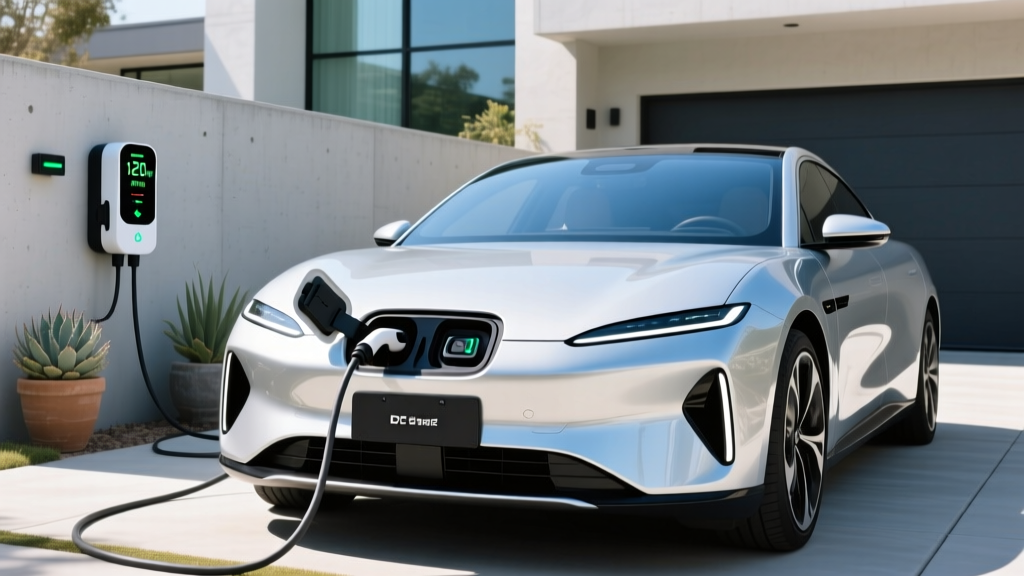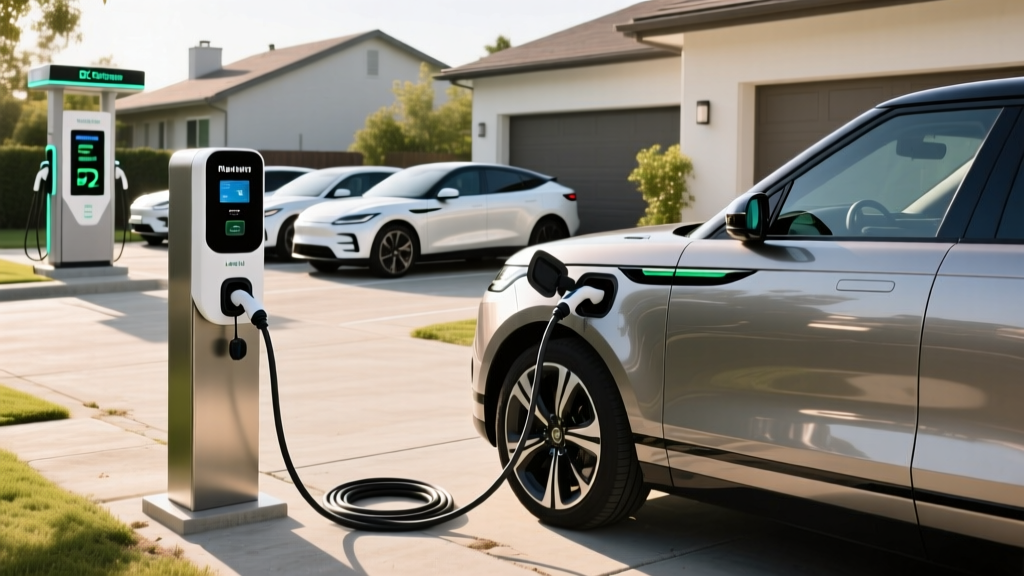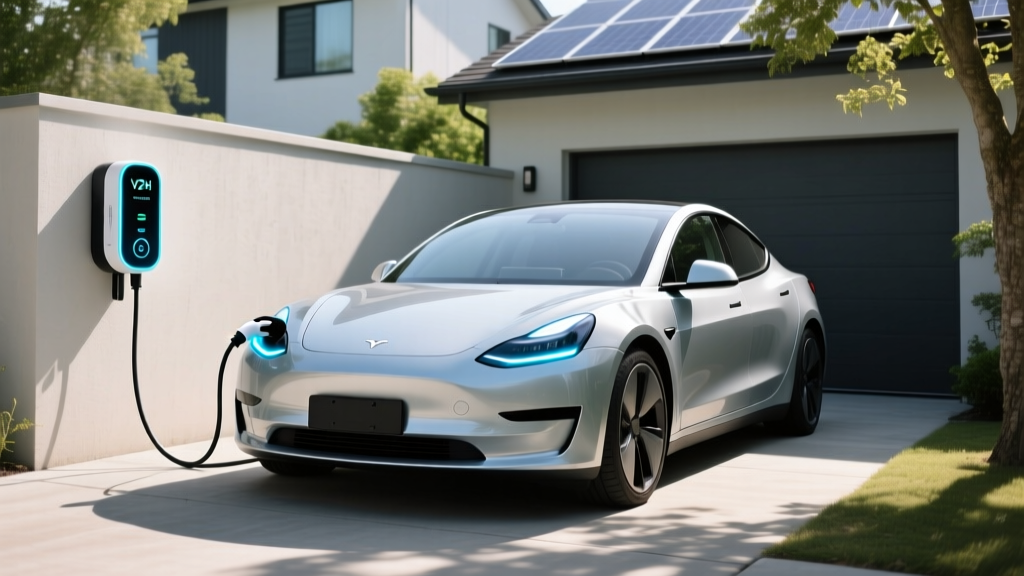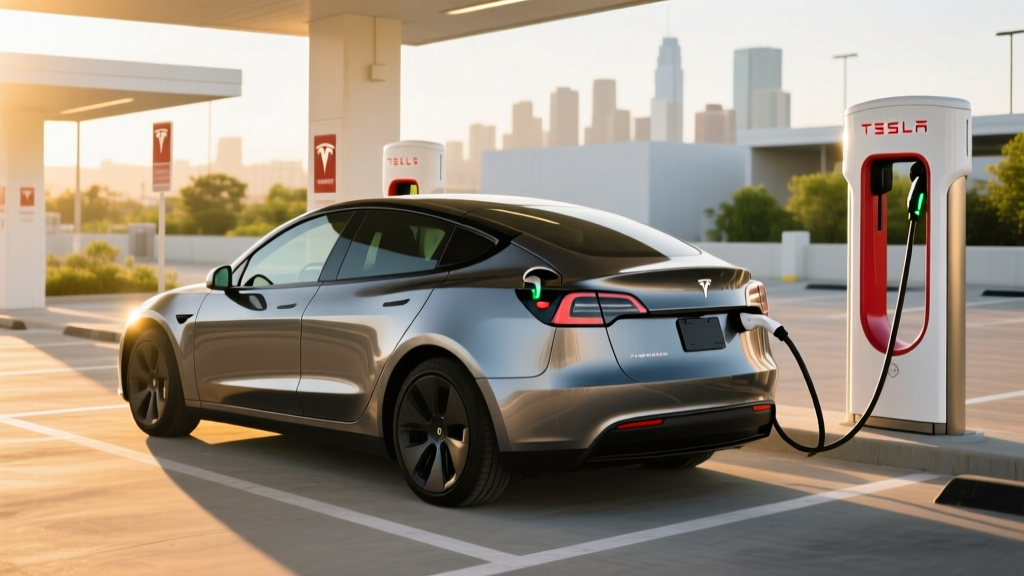
If you've spent any time browsing EV forums or watching Tesla owners plug in at Superchargers, you've probably wondered: are Tesla charging stations free? The short answer is no — with a handful of legacy exceptions. Tesla phased out its unlimited free Supercharging program years ago, and today's Supercharger network operates on a pay-per-kWh model that varies by location, time of day, and vehicle. But the full picture of what it costs to charge an EV goes well beyond the Supercharger stall.
This guide breaks down every charging scenario Tesla and non-Tesla EV owners face in 2026: home Level 1 and Level 2 charging, DC fast charging on Tesla's Supercharger network and third-party networks like Electrify America and EVgo, plus the real cost to install a home charger. We'll also clarify the single most common EV confusion — the difference between kW (power, or how fast energy flows) and kWh (energy, or how much your battery holds). Think of it like a garden hose: kW is the water pressure; kWh is the bucket size.
Are Tesla Charging Stations Free? The Short Answer
For the vast majority of Tesla owners driving today, Tesla Superchargers are not free. Current pricing in 2026 averages between $0.25 and $0.50 per kWh at Supercharger stations, depending on the state, time of day, and whether the station offers peak/off-peak pricing tiers. A few Tesla owners who purchased vehicles between 2012 and 2017 retain transferable or non-transferable free Supercharging credits, but these are increasingly rare and typically do not transfer to subsequent owners.
Tesla also offers Destination Chargers at hotels, restaurants, and shopping centers. These Level 2 chargers (typically 11.5 kW to 22 kW) are sometimes complimentary for patrons, but policies vary by property — always check before assuming free access.
For non-Tesla EVs using Tesla's now-open Supercharger network via the NACS (North American Charging Standard) connector or a Magic Dock adapter, pricing is generally comparable to or slightly higher than Tesla-member rates, often ranging from $0.30 to $0.55 per kWh.
Charging Levels Explained: Speeds in kW and Miles Per Hour
Every EV owner needs to understand the three charging levels. The speed at which your battery refills depends on the charger's power output (measured in kW) and your vehicle's onboard charger or battery acceptance rate.
| Level | Voltage | Power (kW) | Miles of Range Per Hour | Typical Use |
|---|---|---|---|---|
| Level 1 | 120V AC | 1.0–1.4 kW | 3–5 mi/hr | Overnight trickle; emergency top-ups |
| Level 2 | 240V AC | 3.3–19.2 kW | 12–75 mi/hr | Home daily charging; workplace; destinations |
| DC Fast | 400–800V DC | 50–350 kW | 150–1,000+ mi/hr (peak) | Road trips; rapid public charging |
A critical reality check: peak kW rates are never sustained for the entire session. DC fast chargers follow a charge curve — power ramps up quickly from 10% to roughly 50% State of Charge (SoC), then tapers significantly above 80% to protect battery chemistry. A charger rated at 250 kW might deliver that peak for only 5–8 minutes before stepping down to 150 kW, then 100 kW, then 50 kW as the battery fills. This is why manufacturers quote 10–80% charge times rather than 0–100%.
How Fast Will Each Charging Level Add Range? Real-World Times
Let's put numbers to common battery sizes. The following examples assume a mid-size EV with a 75 kWh usable battery (similar to a Tesla Model Y Long Range or Hyundai Ioniq 5) averaging roughly 3.5 miles per kWh.
Real-World Charging Time Examples (75 kWh Battery, 10–80% = ~52.5 kWh needed)
- Level 1 (1.4 kW): ~37.5 hours — impractical for full recharge; adds ~50 miles overnight
- Level 2, 40A circuit (9.6 kW): ~5.5 hours — ideal overnight home charge
- Level 2, 48A circuit (11.5 kW): ~4.5 hours — faster home or workplace charge
- DC Fast, 150 kW peak: ~28–35 minutes (10–80%) — typical road-trip stop
- DC Fast, 250 kW peak: ~18–25 minutes (10–80%) — Tesla V3/V4 Supercharger
- DC Fast, 350 kW peak: ~15–20 minutes (10–80%) — requires 800V architecture (e.g., Ioniq 5, Porsche Taycan)
If your EV has a smaller battery (say, 60 kWh like a base Chevy Equinox EV), subtract roughly 20% from these times. Larger packs (100+ kWh, like a Ford F-150 Lightning Extended Range) will take proportionally longer.
Cost to Charge: Home vs. Supercharger vs. Public DC Fast
The economics of EV ownership hinge on where you charge. Here's how the per-kWh and per-mile costs compare across common scenarios in 2026:
| Scenario | Avg $/kWh | Cost for 75 kWh Fill | Cost Per Mile (at 3.5 mi/kWh) |
|---|---|---|---|
| Home, off-peak utility rate | $0.08–$0.14 | $6.00–$10.50 | $0.023–$0.040 |
| Home, standard residential rate | $0.14–$0.20 | $10.50–$15.00 | $0.040–$0.057 |
| Tesla Supercharger (avg) | $0.25–$0.50 | $18.75–$37.50 | $0.071–$0.143 |
| Electrify America / EVgo DC Fast | $0.30–$0.55 | $22.50–$41.25 | $0.086–$0.157 |
| Gasoline equivalent (27 MPG, $3.30/gal) | — | — | $0.122 |
The takeaway is clear: home charging is dramatically cheaper than any public option, and it's the primary reason EV ownership saves money over time. An EV owner who charges 80%+ of their miles at home on off-peak rates pays roughly 2–4 cents per mile — about one-quarter to one-third the cost of gasoline at 27 MPG. Even Supercharger-exclusive charging at $0.35/kWh averages around 10 cents per mile, still competitive with gas but erasing much of the EV cost advantage.
According to the U.S. Department of Energy's fueleconomy.gov, the national average electricity rate for EV charging hovers around $0.16/kWh for residential, though states like California and Massachusetts often exceed $0.25/kWh while Louisiana and Washington can dip below $0.10/kWh.
How Much Does It Cost to Install a Home EV Charger?
Installing a Level 2 home charger is the single highest-impact upgrade an EV owner can make. Costs vary enormously based on your home's electrical panel capacity, the distance from the panel to the charger location, and local permitting requirements.
Electrical Requirements for a Level 2 Home Charger
A standard Level 2 home charger requires a 240-volt dedicated circuit, similar to what powers an electric dryer or oven. The most common configurations are:
- 40-amp circuit (delivers 32A continuous / 7.7 kW) — minimum recommended for most EVs
- 50-amp circuit (delivers 40A continuous / 9.6 kW) — sweet spot for most homes
- 60-amp circuit (delivers 48A continuous / 11.5 kW) — optimal for larger batteries or faster overnight charging
The National Electrical Code (NEC) requires that continuous loads not exceed 80% of a circuit's rated capacity. So a 50A breaker supports 40A of continuous charging — this is not optional, it's code.
Installation Cost Breakdown
| Component | Low End | High End | Notes |
|---|---|---|---|
| Level 2 Charger (hardware) | $300 | $750 | Smart WiFi chargers: $400–$700 |
| Electrician labor | $400 | $1,800 | Depends on run distance, wall type |
| Electrical permit | $50 | $250 | Varies by municipality |
| Panel upgrade (if needed) | $1,500 | $4,000 | 100A → 200A service upgrade |
| Conduit, wiring, misc materials | $100 | $500 | Longer runs cost more |
| Total (no panel upgrade) | $850 | $3,300 | Typical install for most homes |
| Total (with panel upgrade) | $2,350 | $7,300 | Older homes with 100A service |
Panel Upgrade Reality Check: Homes built before 1990 often have 100-amp electrical service. Adding a 50A EV circuit to an already-loaded 100A panel may require a full service upgrade to 200A — this is the single biggest cost variable in home charger installation. A licensed electrician can perform a load calculation to determine if your panel has headroom. Some utilities offer rebates of $200–$500 toward panel upgrades when paired with EV charger installation.
Federal Tax Credit for Home Charging Equipment
The IRS §30C Alternative Fuel Vehicle Refueling Property Credit covers 30% of home charging equipment and installation costs, up to $1,000. This is separate from the §30D new EV purchase credit. Eligibility depends on the installer and equipment meeting certain domestic-content and census-tract requirements. Consult a tax professional — rules are subject to change.
Connector Compatibility: NACS, CCS1, CHAdeMO, and Adapters
The connector landscape has consolidated significantly since 2024, when Ford, GM, Rivian, and most major automakers committed to adopting Tesla's NACS connector. As of 2026, here's where things stand:
| Connector | Brands Using It (Native) | Charger Availability | Adapter Needed? |
|---|---|---|---|
| NACS (Tesla) | Tesla, Ford, GM, Rivian, Volvo, Polestar, Mercedes, Nissan (new) | Tesla Superchargers + growing third-party NACS stations | Non-Tesla EVs may need OEM NACS adapter for older CCS vehicles |
| CCS1 | Hyundai, Kia, VW, BMW, Stellantis (some), legacy models | Electrify America, EVgo, ChargePoint DC stations | NACS-to-CCS adapters available ($150–$300) |
| CHAdeMO | Nissan Leaf (legacy), Mitsubishi Outlander PHEV | Declining; few new installations | No widely available adapter to NACS/CCS |
If you're buying a new EV in 2026, NACS is the connector to get. The CCS1 network remains functional and will for years, but new public charger deployments overwhelmingly feature NACS. Owners of CCS1-equipped vehicles (like a 2024 Hyundai Ioniq 5 or VW ID.4) can access Tesla Superchargers using a NACS-to-CCS adapter — Tesla sells one for roughly $250, and third-party options from Lectron and A2Z are available for $150–$200.
For Level 2 home charging, all EVs use the J1772 connector (or NACS, which also supports Level 2 AC). Tesla includes a J1772 adapter with every vehicle, and most non-Tesla EVs can plug into a Tesla Wall Connector using a simple adapter.
Recommended Home EV Chargers for 2026
Not all Level 2 chargers are created equal. Here are four proven units that cover different budgets and feature sets:
Tesla Wall Connector (Gen 4)
- Power: 11.5 kW (48A)
- Connector: NACS (J1772 adapter included)
- Cable: 24 ft
- Smart features: WiFi, OTA updates, load sharing, power-sharing between units
- Price: ~$475
- Best for: Tesla owners; best value at 48A
ChargePoint Home Flex
- Power: Up to 12 kW (50A, configurable)
- Connector: J1772 (NACS adapter available)
- Cable: 23 ft
- Smart features: WiFi, app scheduling, Alexa, energy tracking
- Price: ~$550–$700
- Best for: Non-Tesla EVs; flexible amperage
Emporia Level 2 EV Charger
- Power: 11.5 kW (48A)
- Connector: J1772
- Cable: 24 ft
- Smart features: WiFi, solar integration, energy monitoring, load management
- Price: ~$400
- Best for: Budget-conscious; solar homes
Grizzl-E Smart
- Power: 10 kW (40A)
- Connector: J1772
- Cable: 24 ft
- Smart features: OCPP-compatible, adjustable amperage, extreme cold rated (-40°F)
- Price: ~$450
- Best for: Cold climates; rugged outdoor installs
Safety, Code, and Installation Considerations
Home EV charger installation is not a DIY project. The NEC and local building codes impose specific requirements that protect your home and your warranty:
- Dedicated circuit: Your EV charger must be on its own dedicated breaker — no sharing with other appliances.
- GFCI protection: The 2020 NEC update (and subsequent editions) requires GFCI protection for all EV charging outlets. Many smart chargers have built-in GFCI; hardwired units may need a GFCI breaker.
- Outdoor rating: If installing outdoors, the charger must carry a NEMA 4 or IP65 rating for weather resistance. All chargers listed above meet this standard.
- Hardwired vs. plug: Hardwired installations (no plug) allow higher amperage (48A+) and are generally preferred for 60A circuits. Plug-in units (NEMA 14-50 outlet) max out at 40A continuous but offer portability.
- Permit and inspection: Most jurisdictions require an electrical permit and post-installation inspection. Skipping this can void your homeowner's insurance coverage in the event of a fire.
Always hire a licensed electrician familiar with EV charger installations. Ask for a load calculation before committing to a circuit size — this determines whether your panel can handle the new load or needs an upgrade.
Frequently Asked Questions
Are Tesla charging stations free for any current Tesla models?
No current-production Tesla model (Model 3, Model Y, Model S, Model X, Cybertruck) comes with free Supercharging as standard in 2026. Tesla occasionally offers limited-time promotional free Supercharging miles (e.g., 1,000 free miles with a referral or end-of-quarter delivery incentive), but these are temporary promotions, not permanent features. The last Teslas with transferable unlimited free Supercharging were sold in 2017.
How much does charging cost per mile compared to gas?
At a national average residential rate of ~$0.16/kWh and an EV efficiency of 3.5 miles per kWh, home charging costs roughly $0.046 per mile. A comparable gas car at 27 MPG with fuel at $3.30/gallon costs $0.122 per mile. That's a 62% savings per mile when charging at home. Public DC fast charging at $0.40/kWh brings the cost to roughly $0.114 per mile — nearly on par with gas, which is why home charging is essential for EV economics.
What electrical upgrades might I need for a home charger?
The most common upgrade is a panel service increase from 100A to 200A, which costs $1,500–$4,000 depending on your utility and local electrician rates. Other potential needs include: a new sub-panel if your main panel is full, trenching for detached garages (adding $500–$2,000), or a smart load-management device (like the Emporia VUE or Tesla Powerwall gateway) that dynamically limits charger draw when other appliances are running, avoiding a panel upgrade entirely.
Can I use a regular household outlet to charge my EV?
Yes — that's Level 1 charging on a standard 120V/15A outlet, delivering about 1.2 kW or roughly 3–5 miles of range per hour. It's sufficient for PHEVs with small batteries (10–18 kWh) or for BEV owners who drive under 30 miles daily and can charge for 10+ hours overnight. For anyone driving more or with a larger battery, Level 1 is painfully slow and Level 2 is strongly recommended.
Is it cheaper to charge my Tesla at home or at a Supercharger?
Home charging is significantly cheaper. A full 75 kWh charge at home on a $0.14/kWh rate costs $10.50. That same charge at a Supercharger averaging $0.35/kWh costs $26.25 — 2.5 times more. Over 12,000 miles of annual driving, the difference adds up to roughly $500–$800 per year in savings by charging at home.