Wireless Charging for Electric Vehicles: Hype vs. Reality in 2026
If you've seen headlines about wireless charging for electric vehicles, you're not alone in wondering whether it's time to ditch the cable. The promise is compelling: pull into your garage, park over a pad, and let magnetic resonance transfer energy into your battery without ever touching a plug. But as someone who has installed Level 2 chargers in three different homes and tested public DC fast-charging networks across the country, I need to give you the unvarnished 2026 picture.
Wireless EV charging exists, but it remains a niche, premium-tier technology available on a handful of vehicles through aftermarket or OEM pilot programs. For the vast majority of EV buyers today, a wired Level 2 home charger delivers faster speeds, lower cost, and broader compatibility. This guide breaks down exactly where wireless charging stands, what your real alternatives cost, and how to spec a home charging system that actually works.
Where Wireless EV Charging Stands Today
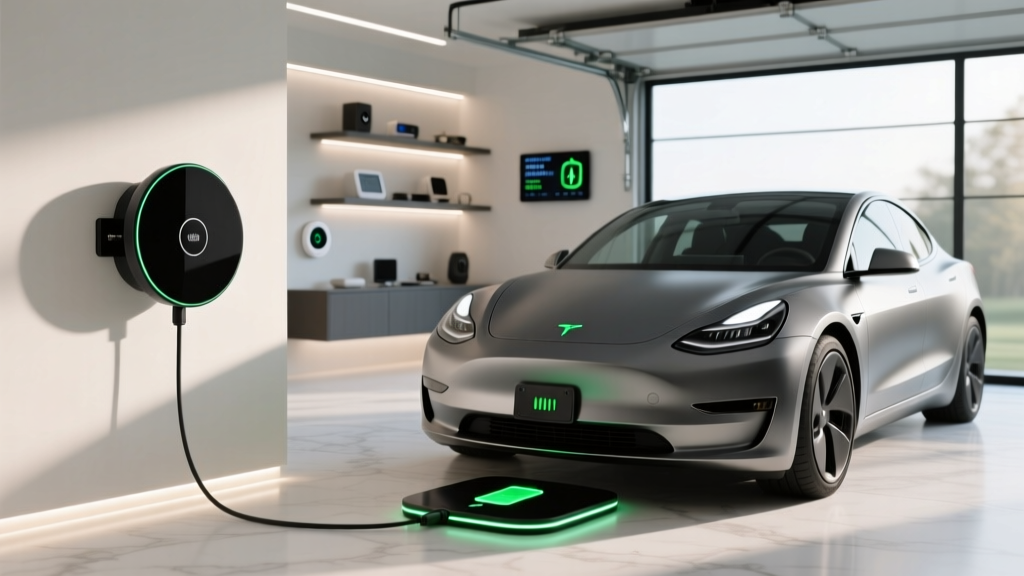
Wireless charging for electric vehicles uses inductive or resonant magnetic coupling — a ground-based transmitter pad communicates with a receiver pad mounted under the car. Companies like WiTricity, Plugless Power (Evatran), and Qualcomm Halo have demonstrated systems, and BMW offered a limited inductive charging option for the 530e PHEV in select markets. Genesis demonstrated a wireless charging pad concept with the GV60, and some aftermarket kits exist for specific models.
However, the 2026 reality involves real trade-offs:
- Power output: Most wireless systems deliver 3.6 kW to 11 kW — comparable to Level 2 wired charging but at the lower end of the spectrum.
- Efficiency: Wireless transfer loses 7–12% of energy as heat compared to wired Level 2, which operates at 95–98% efficiency.
- Cost: A wireless pad system runs $3,000–$6,000+ for equipment alone, versus $400–$800 for a quality wired Level 2 station.
- Compatibility: Your EV must have a factory-installed or aftermarket receiver pad. Most 2026 models — Tesla, Hyundai, Ford, Rivian, BMW — do not include one.
- SAE J2954 standard: The wireless charging standard has been finalized, but widespread OEM adoption remains slow.
For the 95% of EV owners reading this, a wired Level 2 charger is the practical path. Let's build that system right.
The Three Charging Levels: Speeds, Power, and Range Added
Understanding EV charging requires keeping kW (kilowatts) and kWh (kilowatt-hours) strictly separate. kW measures power — the rate at which energy flows into your battery, like water pressure from a hose. kWh measures energy — the total amount stored, like gallons in a tank. A 72 kWh battery charged at 11.5 kW takes roughly 6.3 hours from empty to full (72 ÷ 11.5).
| Level | Voltage | Power (kW) | Miles of Range per Hour | Typical Use Case |
|---|---|---|---|---|
| Level 1 | 120V AC | 1.2–1.9 kW | 3–5 mi/hr | Overnight trickle, PHEVs, low-mileage drivers |
| Level 2 (Home/Public) | 240V AC | 3.3–19.2 kW | 12–60+ mi/hr | Daily home charging, workplace, destination |
| DC Fast Charging | 400–800V DC | 50–350 kW | 150–1,000+ mi/hr (peak) | Road trips, highway corridors |
| Wireless (Inductive) | 240V AC (to pad) | 3.6–11 kW | 12–35 mi/hr | Premium/convenience niche, limited models |
A critical nuance: DC fast charging speeds are peak rates, not sustained. A vehicle advertising 250 kW peak charging may only hold that rate between 10–30% State of Charge (SoC), then taper to 150 kW, then 80 kW above 60%, and trickle below 20 kW above 90%. This charge-curve taper is why 10–80% time is the meaningful metric — not peak kW.
Real Charging Time Examples (10–80% SoC)
- Tesla Model Y (75 kWh battery, 250 kW peak DCFC): ~18–22 minutes at a V3 Supercharger
- Hyundai Ioniq 5 (77.4 kWh, 350 kW peak on 800V architecture): ~16–18 minutes
- Ford F-150 Lightning Extended Range (131 kWh, 150 kW peak): ~41–45 minutes
- Level 2 home at 11.5 kW (48A circuit): 75 kWh battery, 10–80% = ~4.5 hours
- Level 1 at 1.4 kW (120V/12A): 75 kWh battery, 10–80% = ~37 hours
Home Charger Installation: Electrical Requirements and Real Costs
This is where most first-time EV owners get surprised. The charger unit itself is only part of the expense. The electrical work — circuit, conduit, panel capacity — often costs more than the hardware.
Electrical Requirements for a Level 2 Home Charger
A typical Level 2 home charger operates at 240V on a dedicated circuit. The amperage determines your power output:
- 40-amp circuit → 32A continuous (80% rule) → 7.7 kW — adequate for most sedans and smaller SUVs
- 50-amp circuit → 40A continuous → 9.6 kW — the sweet spot for most homes
- 60-amp circuit → 48A continuous → 11.5 kW — optimal for large-battery vehicles (F-150 Lightning, Rivian R1T, Hummer EV)
The National Electrical Code (NEC) requires that continuous loads (like EV charging) not exceed 80% of the circuit breaker rating. A 48A charger needs a 60A breaker — not a 50A breaker.
Do You Need a Panel Upgrade?
If your home has a 100-amp electrical panel and you're already running electric heat, an electric dryer, and an electric range, adding a 50–60A EV circuit may push you over capacity. A licensed electrician will perform a load calculation per NEC Article 220. If you're over, options include:
- Panel upgrade to 200A: $1,500–$4,000 depending on your utility and local labor
- Smart load management device: (e.g., Emporia Smart Load Center, Span panel) — $500–$1,500 — dynamically reduces charger amperage when other loads spike
- Lower-amperage charger: A 32A (7.7 kW) charger on a 40A circuit may be sufficient if you drive under 40 miles daily
Installation Cost Breakdown
| Component | Low Range | High Range | Notes |
|---|---|---|---|
| Level 2 charger unit (hardwired or NEMA 14-50 plug) | $350 | $750 | 40–48A smart charger (ChargePoint, Emporia, Wallbox) |
| Electrical permit | $50 | $250 | Varies by municipality; required for new circuits |
| Electrician labor (circuit run, breaker, outlet/hardwire) | $400 | $1,500 | Short run near panel: $400–$700. Long run through walls/attic: $1,000–$1,500+ |
| Panel upgrade (if needed) | $1,500 | $4,000 | 100A → 200A; not needed for most modern homes |
| Total (no panel upgrade) | $800 | $2,500 | Most homeowners fall in the $1,200–$1,800 range |
| Total (with panel upgrade) | $2,300 | $6,500 | Older homes with 100A service |
The IRS Residential Clean Energy Credit (§25D) covers 30% of home EV charger equipment and installation costs, up to $1,000, for equipment placed in service through 2032. This applies to the charger hardware and the electrical work — not the panel upgrade itself. Check with a tax professional for eligibility.
Connector Compatibility: NACS, CCS, and CHAdeMO Explained
For home Level 2 charging, nearly every EV sold in North America uses the J1772 connector (or Tesla's proprietary connector, which includes a J1772 adapter in-box). The bigger connector question applies to DC fast charging on the road, and 2026 has brought a decisive shift.
| Connector | Level 2 (Home) | DC Fast Charging | Brands Using It |
|---|---|---|---|
| NACS (North American Charging Standard / Tesla) | Native on Tesla; adapters for others | Tesla Superchargers (now open to non-Tesla via adapter), growing network | Tesla, Ford, GM, Rivian, Volvo, Polestar, Hyundai (2025+), most new models |
| CCS1 (Combined Charging System) | J1772 for Level 2; CCS for DCFC | Electrify America, EVgo, ChargePoint DCFC | Legacy models: VW ID.4 (pre-2025), older BMW, Mercedes EQS, Hyundai Ioniq 5 (pre-NACS) |
| CHAdeMO | J1772 for Level 2 | Largely deprecated in US | Nissan Leaf (discontinued); Mitsubishi Outlander PHEV |
If you're buying a new EV in 2026, NACS is the dominant standard going forward. Ford, GM, Rivian, and most major automakers have adopted NACS for DC fast charging. If your EV has a CCS1 port, a CCS-to-NACS adapter (from Tesla, Lectron, or A2Z) costs $150–$250 and unlocks access to Tesla Superchargers — the most reliable DCFC network in the country.
For home Level 2, the connector is a non-issue: buy a J1772 charger (the overwhelming majority), and if you own a Tesla, use the included J1772 adapter or buy a Tesla Wall Connector with the NACS plug directly.
Level 2 Home Charger Recommendations (2026)
After testing over a dozen units across multiple homes, here are the chargers I recommend based on real-world reliability, smart features, and value:
Emporia Vue Level 2 EV Charger — Best Value
- Power: 48A (11.5 kW) on a 60A circuit
- Connector: J1772 (NACS version available)
- Cable length: 24 feet
- Smart features: Wi-Fi, energy monitoring, solar integration, scheduling via app
- Price: ~$399
- Best for: Budget-conscious buyers who want full smart features and 48A output
ChargePoint Home Flex — Most Flexible
- Power: Configurable 16–50A (3.8–12 kW) — set amperage to match your circuit
- Connector: J1772 (NACS adapter available)
- Cable length: 23 feet
- Smart features: Wi-Fi, Alexa integration, detailed app, load sharing for dual units
- Price: ~$649
- Best for: Homes with variable panel capacity; future-proof flexibility
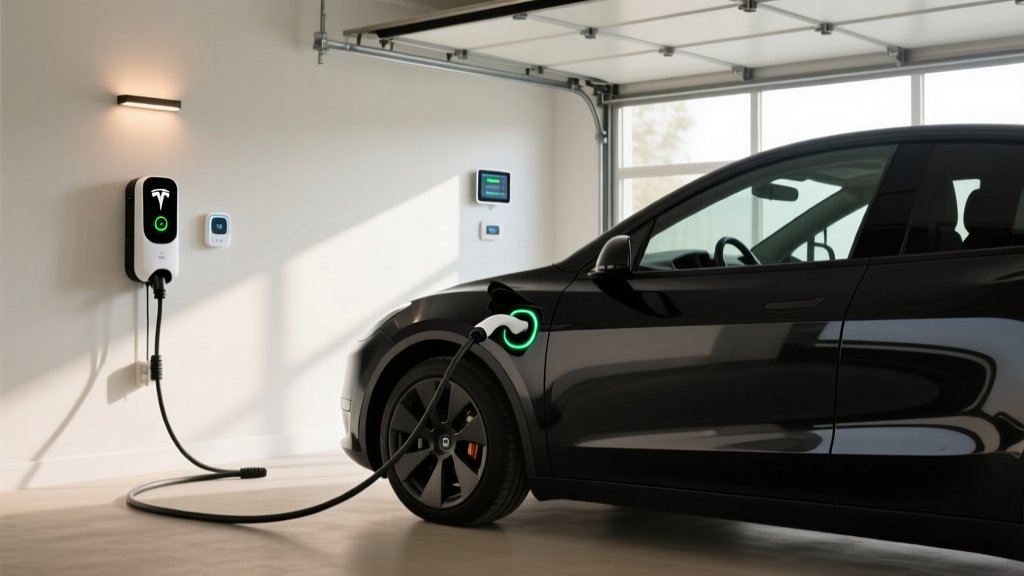
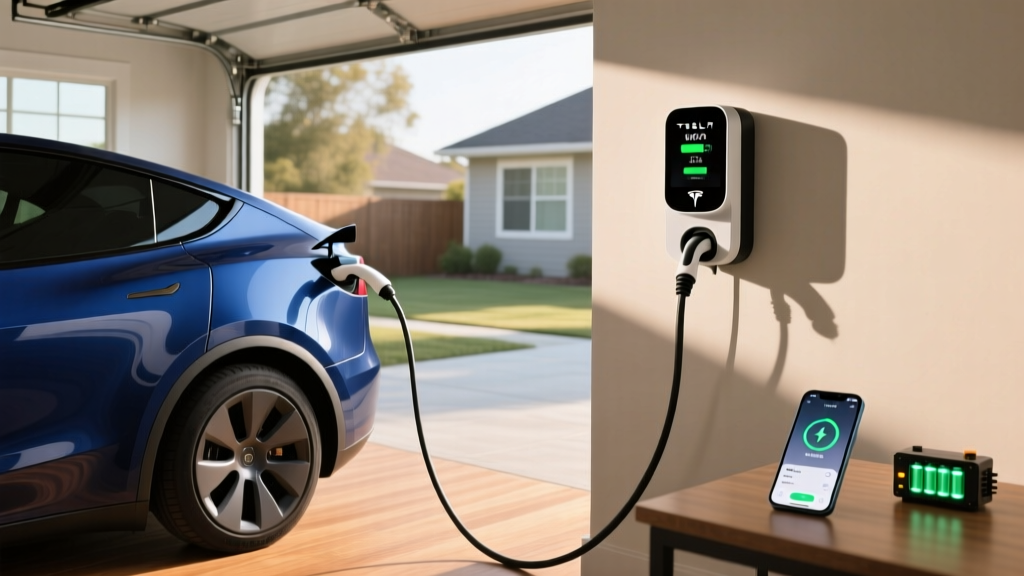
Tesla Wall Connector — Best for Tesla Owners
- Power: 48A (11.5 kW) on a 60A circuit
- Connector: NACS native (no adapter needed for Tesla vehicles)
- Cable length: 24 feet
- Smart features: Wi-Fi, power sharing between multiple units, OTA updates
- Price: ~$475
- Best for: Tesla-only households; cleanest installation with native plug
Wallbox Pulsar Plus — Compact and Powerful
- Power: 40A (9.6 kW) on a 50A circuit; 48A version available
- Connector: J1772 (NACS version available)
- Cable length: 25 feet
- Smart features: Wi-Fi + Bluetooth, Power Boost load management, compact form factor
- Price: ~$599
- Best for: Tight garage spaces; homes needing dynamic load management
Charging Cost: Home vs. Public vs. Gas
One of the strongest arguments for home charging — wired or wireless — is cost. Electricity prices vary by region, but the math consistently favors home Level 2 over public DCFC and gasoline.
| Scenario | Cost per kWh | Cost per Mile (3.5 mi/kWh vehicle) | Annual Fuel Cost (12,000 mi) |
|---|---|---|---|
| Home Level 2 — Off-peak utility rate | $0.08–$0.14 | $0.023–$0.04 | $275–$480 |
| Home Level 2 — Standard rate | $0.14–$0.20 | $0.04–$0.057 | $480–$685 |
| Public Level 2 (ChargePoint, workplace) | $0.20–$0.35 | $0.057–$0.10 | $685–$1,200 |
| DC Fast Charging (Electrify America, EVgo) | $0.35–$0.55 | $0.10–$0.157 | $1,200–$1,885 |
| Gasoline (25 MPG combined, $3.50/gal) | — | $0.14 | $1,680 |
The takeaway: home off-peak charging costs roughly $0.03–$0.04 per mile, while gasoline at 25 MPG costs $0.14/mile. That's a 70–75% per-mile savings. But if you rely exclusively on DC fast charging at $0.45/kWh, your cost per mile nearly matches gasoline — negating the fuel-cost advantage.
This is why home charging infrastructure matters more than almost any vehicle spec. According to fueleconomy.gov, a vehicle like the Tesla Model Y achieves 122 MPGe combined, but that efficiency only translates to real savings when you're charging at home rates.
Safety, Code, and Installation Best Practices
EV charging is a high-draw, continuous electrical load — it runs at near-maximum capacity for hours at a time. This isn't like plugging in a lamp. Proper installation isn't optional; it's a safety requirement.
Non-Negotiable Code Requirements
- Dedicated circuit: Your EV charger must have its own dedicated breaker — no sharing with outlets, lights, or appliances.
- GFCI protection: NEC 2020 and later require GFCI (Ground Fault Circuit Interrupter) protection for all 125V–250V receptacles in garages. Hardwired chargers may not require a GFCI breaker in all jurisdictions — confirm with your inspector. Note: some chargers (like the Tesla Wall Connector) have built-in ground fault detection.
- Outdoor rating: If your charger is installed outside (carport, driveway), the unit must carry a NEMA 4 or NEMA 4X rating for weather resistance. All major chargers listed above meet this standard.
- Conductor gauge: 6 AWG copper wire for 48A circuits; 8 AWG for 40A. Your electrician will size this correctly per NEC Table 310.16.
- Permit and inspection: Every jurisdiction requires a permit for a new 240V circuit. The inspection verifies wire gauge, breaker sizing, grounding, and GFCI compliance. Do not skip this — unpermitted work can void homeowner's insurance claims.
Hardwired vs. Plug-In (NEMA 14-50)
A hardwired charger (directly connected to the circuit, no plug) allows up to 48A continuous draw and avoids the NEC requirement for GFCI on the breaker in many jurisdictions. A NEMA 14-50 receptacle limits you to 40A continuous (80% of 50A) and offers the advantage of portability — you can unplug and take the charger when you move.
My recommendation: if you plan to stay in your home for 5+ years, hardwire a 48A charger on a 60A circuit for maximum speed and code simplicity. If you may move or want flexibility, use a NEMA 14-50 outlet with a 40A charger.
Is Wireless Charging Worth Waiting For?
Wireless charging for electric vehicles will eventually become mainstream — the SAE J2954 standard supports up to 11 kW, and future iterations may reach 20+ kW. But in 2026, the ecosystem isn't there yet:
- Fewer than a dozen vehicle models offer compatible receiver pads
- Equipment costs are 5–10x higher than wired Level 2
- Efficiency losses add $50–$120/year in wasted electricity versus wired charging
- Installation still requires a 240V circuit and professional electrician — the same infrastructure as a wired charger
The convenience argument — no cable to handle, automatic alignment — is real, particularly for mobility-impaired drivers and for fleet/robotaxi applications where autonomous vehicles need to charge without human intervention. Companies like WiTricity are targeting commercial fleet deployments first, where the per-pad cost is amortized across many vehicles.
For individual homeowners in 2026, the pragmatic path is clear: install a quality wired Level 2 charger now, and revisit wireless when your next EV includes a factory receiver pad and aftermarket pads reach price parity. The electrical infrastructure you install today — a 240V/60A circuit — will serve either technology.
Frequently Asked Questions
How much does it cost to install a home EV charger?
For a Level 2 charger (40–48A) without a panel upgrade, expect $800–$2,500 total, including the charger unit ($350–$750), electrician labor ($400–$1,500), and permit ($50–$250). If your home needs a 100A-to-200A panel upgrade, add $1,500–$4,000. The IRS §25D Residential Clean Energy Credit covers 30% of charger and installation costs up to $1,000.
How fast will each charging level add range?
Level 1 (120V) adds 3–5 miles of range per hour. Level 2 (240V, 48A) adds 30–40 miles per hour depending on vehicle efficiency. DC fast charging adds 150–1,000+ miles per hour at peak, but only for a portion of the session due to charge-curve taper. Wireless charging adds 12–35 miles per hour depending on the system's kW output.
Which connector/charger is compatible with my EV?
For home Level 2, virtually all EVs use J1772 (or Tesla's NACS with an included J1772 adapter). For DC fast charging, NACS is now the dominant standard for 2025–2026 models from Tesla, Ford, GM, Rivian, Hyundai, and Volvo. Older CCS1 vehicles can use a CCS-to-NACS adapter ($150–$250) to access Tesla Superchargers. CHAdeMO is effectively deprecated for new vehicles.
How much does charging cost per mile vs. gas?
Home Level 2 charging at off-peak rates ($0.10/kWh) costs roughly $0.03 per mile for an efficient EV (3.5 mi/kWh). Gasoline at $3.50/gallon and 25 MPG costs $0.14 per mile. That's a 78% savings per mile. However, DC fast charging at $0.45/kWh brings the cost to $0.13/mile — nearly equivalent to gas. Home charging access is the key variable.
What electrical upgrades might I need?
If your home has a 200A panel with available capacity, you likely need only a new dedicated 50–60A circuit — no panel upgrade required. Homes with 100A service, or 200A panels already near capacity (electric heat, dryer, range, AC), may need a panel upgrade ($1,500–$4,000) or a smart load management device ($500–$1,500) that dynamically reduces charger amperage when other loads are high. A licensed electrician performs a load calculation per NEC Article 220 to determine your specific needs.
Can I charge a Tesla with a non-Tesla Level 2 charger?
Yes. Every Tesla vehicle ships with a J1772-to-NACS adapter. Plug any standard J1772 Level 2 charger (ChargePoint, Emporia, Wallbox) into the adapter, and it works seamlessly. The only advantage of the Tesla Wall Connector is the native NACS plug — no adapter needed.
Does wireless charging work in rain or snow?
Yes. SAE J2954-compliant wireless pads are sealed to NEMA 4X standards and operate in rain, snow, and standing water. The magnetic coupling gap (typically 4–10 inches between pad and vehicle receiver) is unaffected by weather. However, thick ice buildup on the ground pad can reduce alignment precision and marginally decrease efficiency.