Does a Wireless Charger for Tesla Actually Exist?
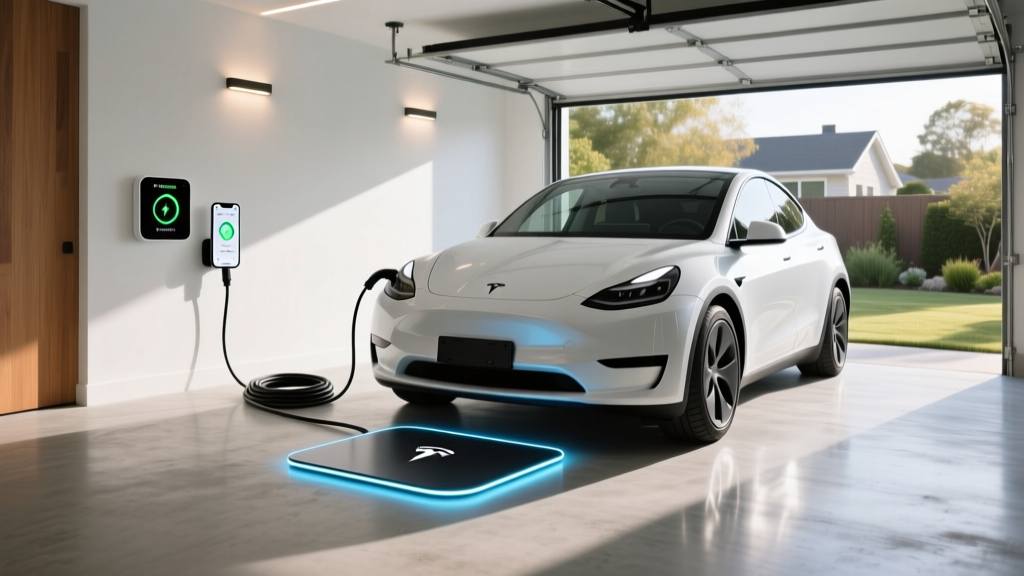
If you've been searching for a wireless charger Tesla owners can buy, the honest answer in 2026 is: not for consumer use. While companies like WiTricity and Plugless Power demonstrated inductive charging pads years ago, no aftermarket wireless EV charger is currently certified, widely available, or compatible with Tesla's North American Charging Standard (NACS) port. Tesla's own wireless charger (the $300 Qi pad sold on their shop) charges phones, not vehicles.
Inductive vehicle charging — where a ground pad transfers energy to a receiver mounted under the car — faces real physics and infrastructure hurdles:
- Efficiency loss: Wireless EV pads typically achieve 85-90% transfer efficiency vs. 95-98% for a wired Level 2 connection, meaning more wasted electricity and heat.
- Power ceiling: Most consumer wireless systems max out at 6.6-11 kW, offering no speed advantage over a standard wired Level 2 wall connector.
- Ground clearance alignment: Tesla vehicles sit low (especially Model S at ~4.7 inches), and pad alignment must be precise within roughly an inch for optimal transfer.
- No factory receiver: Tesla does not install inductive receiver coils in any production vehicle, so an aftermarket undercarriage retrofit would be required — voiding warranty and adding weight.
Charging Levels Explained: How Fast Will Each Add Range?
Before buying equipment, understand the three charging tiers available to Tesla owners. Power is measured in kW (kilowatts) — the rate of energy delivery — while your battery stores energy measured in kWh (kilowatt-hours). Think of kW as the flow rate of a hose and kWh as the size of the bucket.
| Level | Voltage / Amps | Power (kW) | Miles of Range Per Hour | Typical Use Case |
|---|---|---|---|---|
| Level 1 | 120V / 12A | ~1.4 kW | 3-5 mi/hr | Emergency / overnight trickle (adds ~30-40 mi in 10 hrs) |
| Level 2 (Home) | 240V / 32-60A | 7.7-14.4 kW | 25-56 mi/hr | Daily home charging (full charge overnight) |
| DC Fast Charging | 400-800V DC | 50-250+ kW | 150-1,000+ mi/hr (peak) | Road trips, Tesla Superchargers, public networks |
Real-world Tesla charging time examples (10-80% SoC):
- Model Y Long Range (75 kWh usable, NMC): ~8.5 hours on a 7.7 kW (32A) Level 2; ~5.5 hours on an 11.5 kW (48A) Level 2; ~25-28 minutes on a V3 Supercharger (250 kW peak).
- Model 3 Long Range (79 kWh usable): ~9 hours at 7.7 kW; ~6 hours at 11.5 kW; ~27-30 minutes on V3 Supercharger.
- Cybertruck (123 kWh usable): ~14 hours at 7.7 kW; ~9.5 hours at 11.5 kW; ~35-40 minutes on V4 Supercharger (note: large battery means even DC fast charging takes longer).
Important caveat: DC fast charging follows a charge curve — peak kW only applies at low state of charge (10-30%). Above 80%, the battery management system tapers power dramatically to protect cell health. That's why 10-80% is the standard measurement; 80-100% can take as long as the first 70%.
Home Charger Installation: Electrical Requirements and Costs
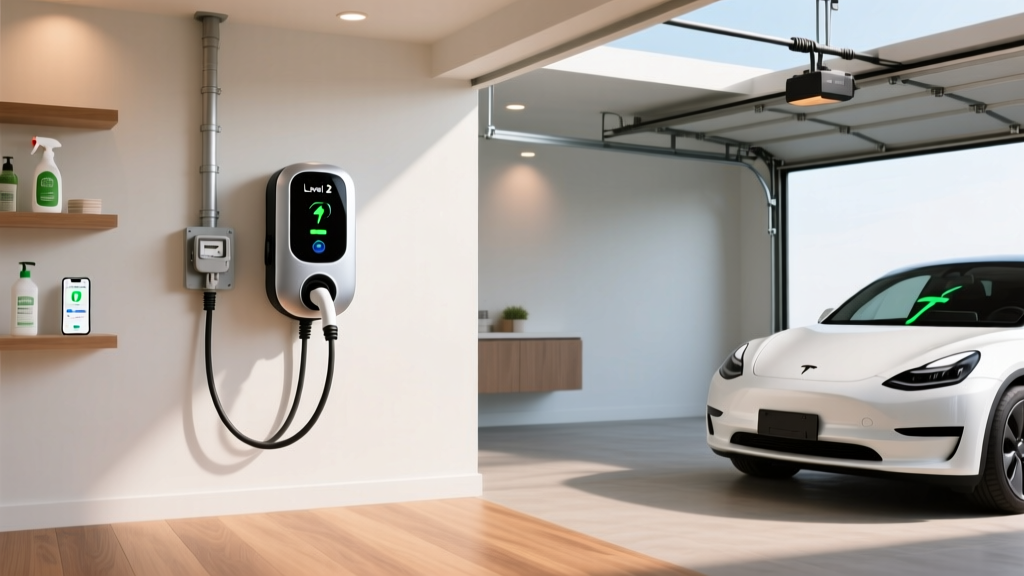
A Level 2 home charger requires a dedicated 240-volt circuit — the same type of outlet your electric dryer or oven uses. Here's what's involved:
- Voltage: 240V (split-phase residential)
- Amperage: 40A breaker for a 32A continuous charger, or 60A breaker for a 48A continuous charger (NEC requires breakers rated 125% above continuous load)
- Wire gauge: 6 AWG copper for 48A circuits; 8 AWG for 32A
- Hardwired vs. plug: Hardwired connections allow full 48A; NEMA 14-50 outlets are limited to 40A breaker (32A continuous) in many jurisdictions, though some permit 50A breakers with 14-50 receptacles
Will You Need a Panel Upgrade?
This is the variable that can double or triple your installation cost. A licensed electrician will perform a load calculation on your existing electrical panel. If your home has a 100A or 150A main panel that's already near capacity (common in older homes with electric heating, A/C, and appliances), adding a 60A EV circuit may require upgrading to a 200A panel.
Panel upgrade signs: Your panel is 100A or less; you have few open breaker slots; your electrician flags existing loads near the panel's rated capacity; your home was built before 1990.
| Component | Simple Install (Near Panel) | Complex Install (Far Run / Upgrade) |
|---|---|---|
| Level 2 Charger Equipment | $400-$650 | $400-$650 |
| Electrician Labor (2-6 hrs @ $80-$150/hr) | $200-$500 | $600-$1,500 |
| Materials (Wire, Conduit, Breaker) | $100-$300 | $300-$800 |
| Permit & Inspection | $50-$200 | $100-$300 |
| Panel Upgrade (if needed) | $0 | $1,500-$3,500 |
| Total Estimated Cost | $750-$1,650 | $2,900-$6,750 |
Connector Compatibility: NACS, CCS1, and Adapters
All Tesla vehicles sold in North America use the NACS (North American Charging Standard) connector — Tesla's proprietary plug, now adopted as the industry standard. Here's where compatibility stands in 2026:
| Connector | Native Vehicles | Tesla Compatibility | Adapter Needed? |
|---|---|---|---|
| NACS (Tesla) | All Tesla models; Ford F-150 Lightning (2025+); GM Ultium vehicles (2025+); Rivian (2025+); many others | Native — no adapter | No |
| CCS1 | Hyundai, Kia, BMW, VW, older Ford/GM models | Tesla Superchargers with Magic Dock; CCS-to-NACS adapters for non-Tesla DCFC | Yes — CCS-to-NACS adapter (~$200-$250) |
| CHAdeMO | Nissan Leaf (legacy) | Not supported on Tesla; network is largely deprecated | No viable adapter |
For home Level 2 charging: Tesla's Wall Connector ships with a native NACS plug. If you also own or plan to own a non-Tesla EV with CCS1, consider a universal charger with a J1772 connector (Tesla provides a J1772-to-NACS adapter with every vehicle) or install a second dedicated circuit.
Best Level 2 Home Chargers for Tesla Owners (2026 Picks)
These are wired chargers — because wireless charging for Tesla vehicles is not a viable option. Each recommendation below includes exact specs:
Tesla Wall Connector (Gen 4)
- Power: 11.5 kW (48A) max
- Connector: NACS (native Tesla)
- Cable length: 24 ft
- Smart features: Wi-Fi, OTA updates, power sharing between units, Tesla app integration
- Price: ~$475
- Best for: Tesla-only households wanting seamless integration
ChargePoint Home Flex
- Power: Up to 12 kW (50A) configurable
- Connector: J1772 (use Tesla adapter) or NACS version available
- Cable length: 23 ft
- Smart features: Wi-Fi, ChargePoint app, Alexa, scheduling, energy tracking
- Price: ~$550-$650
- Best for: Multi-EV households (Tesla + non-Tesla)
Emporia Vue Level 2 Charger
- Power: 11.5 kW (48A)
- Connector: J1772 (Tesla adapter included) or NACS
- Cable length: 24 ft
- Smart features: Wi-Fi, solar integration with Emporia VUE monitor, load management
- Price: ~$400
- Best for: Budget-conscious buyers and solar-equipped homes
Charging Cost Per Mile: EV vs. Gas
One of the strongest ownership arguments for electric vehicles is the per-mile fuel cost. Here's a realistic comparison using a Tesla Model Y Long Range (averaging ~3.5 miles/kWh or ~28 kWh/100 mi, per fueleconomy.gov) versus a comparable gas SUV averaging 28 MPG combined:
| Charging/Fueling Scenario | Cost per kWh or Gallon | Cost Per Mile (Tesla) | Cost Per Mile (Gas) |
|---|---|---|---|
| Home Level 2 (off-peak utility rate) | $0.12/kWh | $0.034 | $0.125 (at $3.50/gal) |
| Home Level 2 (average US rate) | $0.17/kWh | $0.048 | $0.125 |
| Public Level 2 (network pricing) | $0.30/kWh | $0.086 | $0.125 |
| Tesla Supercharger V3/V4 | $0.32/kWh (avg) | $0.091 | $0.125 |
| Electrify America / third-party DCFC | $0.48/kWh | $0.137 | $0.125 |
The bottom line: Home charging saves Tesla owners roughly $0.08-$0.09 per mile compared to gas — adding up to $900-$1,350 annually for a driver covering 12,000-15,000 miles per year. Even public DC fast charging is competitive with gas in most markets, though the most expensive third-party networks can exceed gas costs. The savings case depends heavily on your home electricity rate and how much you rely on public charging.
Safety, Code, and Installation Best Practices
EV charging draws sustained high current for hours — making proper installation critical. Here's what your electrician should address:
- Dedicated circuit: Your Level 2 charger must have its own breaker — never share a circuit with other appliances. NEC Article 625 governs EV charging equipment.
- GFCI protection: Outdoor installations require GFCI (Ground Fault Circuit Interrupter) protection. Many modern Level 2 chargers include built-in GFCI, but your electrician will verify code compliance in your jurisdiction.
- Outdoor rating: If installing outside, the charger must be NEMA 4 rated (weatherproof). Tesla's Wall Connector and ChargePoint Home Flex both carry NEMA 4 ratings.
- Permit required: Nearly all jurisdictions require an electrical permit for a new 240V circuit. Your electrician should pull this — avoid anyone who suggests skipping it. The inspection ensures safe wire gauge, breaker sizing, and grounding.
- Cable management: Use a wall-mounted holster or cable organizer to prevent tripping hazards and cord damage. Never run charging cables across driveways where vehicles can drive over them.
Frequently Asked Questions
Will Tesla ever offer wireless vehicle charging?
Tesla has not announced any inductive vehicle charging system. In 2023, Tesla released a $300 wireless charging pad for phones and laptops — not for vehicles. While SAE International published the J2954 standard for wireless EV charging (up to 11 kW), no automaker has deployed it in production vehicles as of 2026. The technology may arrive eventually, but wired charging is faster, cheaper, and more efficient for now.
Can I use a Tesla Supercharger to charge a non-Tesla EV?
Yes, selectively. Tesla has opened portions of its Supercharger network to non-Tesla vehicles via the built-in Magic Dock CCS adapter at select stations, and through the Tesla app. However, not all Supercharger locations support non-Tesla vehicles. Check availability in the Tesla app before planning a trip.
How much does it cost to install a home EV charger?
A straightforward installation (panel nearby, no upgrade needed) typically runs $750-$1,650 including equipment, labor, and permits. Complex installations requiring long wire runs, conduit, or a panel upgrade can reach $2,900-$6,750. Always get 2-3 quotes from licensed electricians who have EV charger installation experience.
Is a hardwired charger better than a plug-in NEMA 14-50?
Hardwired installations allow higher amperage (48A continuous on a 60A breaker), delivering faster charging. NEMA 14-50 outlets are convenient if you want portability, but many jurisdictions limit them to a 40A breaker (32A continuous), capping you at 7.7 kW. Hardwired also eliminates a potential failure point (outlet wear/melting) and is generally considered safer for sustained high-current use.
What electrical upgrades might I need?
The most significant potential upgrade is a panel upgrade from 100A or 150A to 200A if your existing panel can't handle the additional 40-60A load. This costs $1,500-$3,500 depending on your utility and local requirements. Other possible upgrades include adding a sub-panel (if your garage is far from the main panel), upgrading your utility service drop, or installing a smart load management system (like the Emporia VUE or Span panel) that dynamically adjusts charger amperage based on your home's real-time electrical demand — avoiding a full panel upgrade.
How fast will each charging level add range to my Tesla?
Level 1 (120V) adds roughly 3-5 miles per hour — suitable only for plug-in hybrids or emergency trickle charging. Level 2 (240V, 48A) adds 35-44 miles per hour to a Model Y, fully replenishing a depleted battery in 6-8 hours. DC fast charging at a Tesla V3 Supercharger (250 kW peak) can add up to 200 miles in 15 minutes, though the charge curve tapers significantly above 80% SoC.