What Is a Widebody Charger and Why Does It Matter?
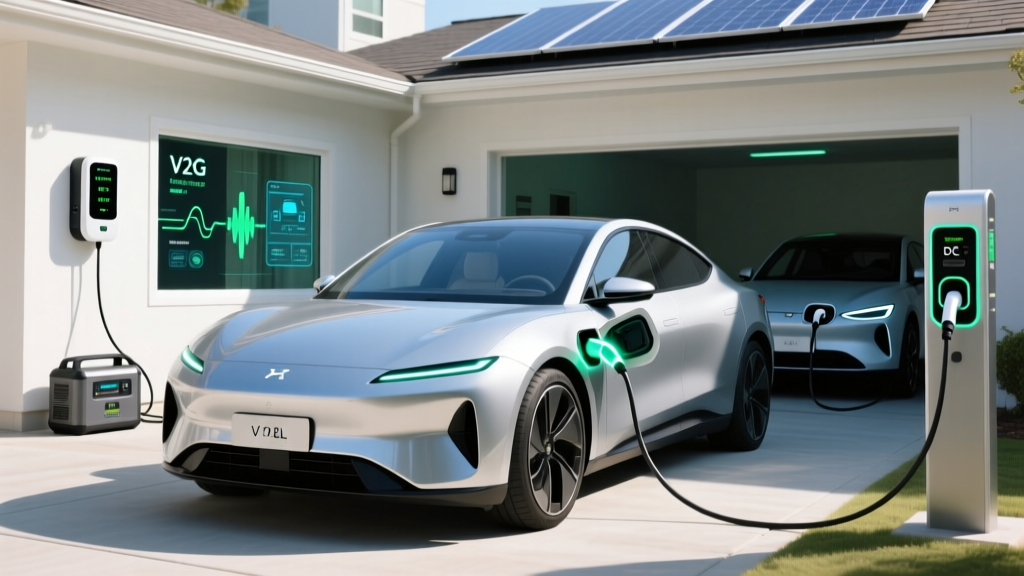
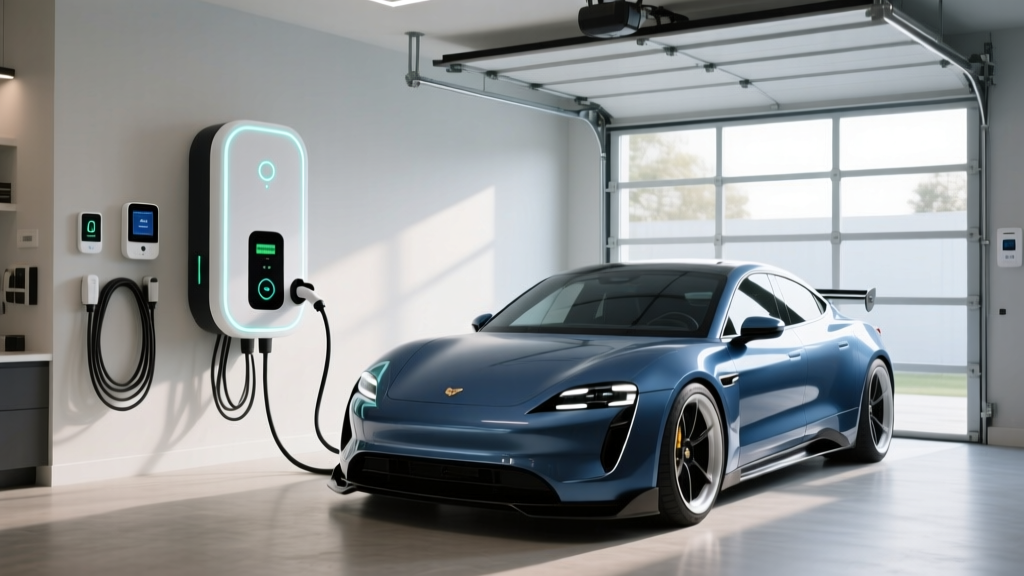
If you've been browsing EV charging forums or scrolling through garage-build threads, you've likely encountered the term widebody charger. In EV charging parlance, a widebody charger refers to a Level 2 home charging unit with a physically larger enclosure — typically 10 inches or more in width — that houses higher-amperage electrical components, enhanced thermal management, and often a larger integrated cable management system. These units are designed for EV owners who want maximum Level 2 charging throughput (48A to 80A continuous) and a robust, garage-wall-mounted charging station built for daily use over a decade or more.
The "widebody" designation isn't an official industry standard like NACS or CCS1 — it's an enthusiast and installer term that distinguishes heavy-duty residential chargers from compact, portable Level 2 units (like the Tesla Mobile Connector or Lectron V-BOX). Widebody chargers trade portability for raw charging power, cable length, and durability. If you drive a large-battery EV like the Ford F-150 Lightning (131 kWh extended range), Rivian R1S (149 kWh), or GMC Hummer EV (240+ kWh), a widebody charger's higher amperage can meaningfully cut your overnight charging time.
Before we get to specific models, let's ground the discussion in the fundamentals: what each charging level delivers, what your home's electrical panel can support, and how much this actually costs.
Charging Levels Explained: Speeds, Power, and Real-World Range
Every EV owner needs to understand the three charging tiers. The single most important distinction: kW (kilowatts) measures power — how fast energy flows into your car. kWh (kilowatt-hours) measures energy — the total capacity of your battery. A 48A Level 2 charger delivering 11.5 kW will add energy at that rate; a 131 kWh battery needs roughly 11.4 hours from 0–100% at that sustained rate (real-world charging is never perfectly linear).
| Level | Voltage | Max Power (kW) | Typical Miles of Range Added Per Hour | Best For |
|---|---|---|---|---|
| Level 1 | 120V AC | 1.4–1.9 kW | 3–5 miles | PHEVs, overnight top-offs, emergencies |
| Level 2 | 240V AC | 7.2–19.2 kW | 20–60+ miles | Daily home charging, all BEVs |
| DC Fast Charge | 400–800V DC | 50–350+ kW | 150–1,000+ miles (equivalent rate) | Road trips, rapid top-ups |
A widebody charger lives at the top end of Level 2. Units rated at 48 amps deliver up to 11.5 kW on a 240V circuit; 80-amp models push 19.2 kW — enough to fully recharge a Tesla Model Y Long Range (75 kWh usable) in under 4.5 hours, or add roughly 250 miles of range overnight to an F-150 Lightning.
- Tesla Model Y (75 kWh usable) on 11.5 kW (48A): ~5.5 hours
- Ford F-150 Lightning ER (131 kWh usable) on 11.5 kW: ~9.5 hours
- Hyundai Ioniq 5 (77.4 kWh usable) on 19.2 kW (80A): ~3.5 hours
- Chevrolet Equinox EV (85 kWh usable) on 11.5 kW: ~6.2 hours
Note: Charging slows above 80% SoC to protect battery health. The 10–80% window is where Level 2 chargers operate near peak output.
Home Installation: Electrical Requirements, Panel Upgrades, and Costs
A widebody charger's high amperage demands serious electrical infrastructure. Here's what you need to know before calling an electrician.
Circuit and Amperage Requirements
The National Electrical Code (NEC) requires that continuous loads (anything running 3+ hours, which includes EV charging) use only 80% of a circuit's rated capacity. This means:
- 48A charger → requires a 60-amp dedicated circuit (48 ÷ 0.80 = 60A)
- 64A charger → requires an 80-amp dedicated circuit
- 80A charger → requires a 100-amp dedicated circuit
Wire gauge matters too: 60A circuits typically need 6 AWG copper wire; 100A circuits need 3 AWG or larger. Your electrician will specify based on run length and local code.
Panel Upgrade Reality Check
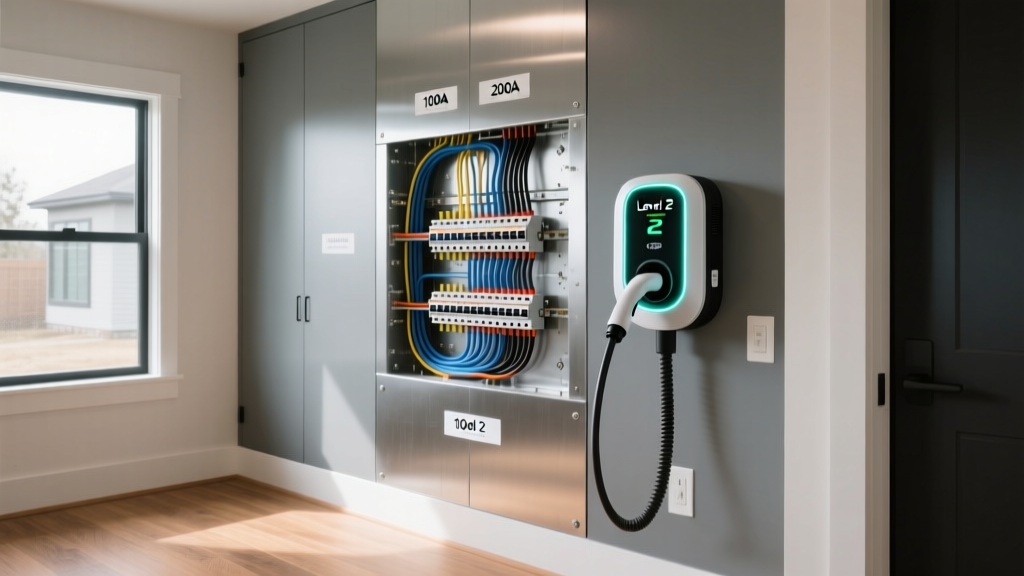
Most homes built before 2010 have 100-amp or 150-amp main electrical panels. Adding a 60A or larger dedicated circuit may exceed available capacity — especially if you're already running electric dryers, ranges, HVAC, and water heaters. A 200-amp panel upgrade is common for widebody charger installations and is the single biggest variable in total project cost.
| Component | Low End | High End | Notes |
|---|---|---|---|
| Level 2 Charger Equipment (widebody, 48–80A) | $500 | $1,200 | Hardwired units; smart/Wi-Fi-enabled models cost more |
| Electrician Labor (circuit + mount) | $400 | $1,200 | Depends on panel proximity, wall material, conduit run |
| Electrical Permit | $50 | $250 | Varies by municipality; required in most jurisdictions |
| Panel Upgrade (if needed) | $1,500 | $4,000 | 200A service upgrade; may require utility coordination |
| Wire and Conduit Materials | $100 | $500 | Longer runs from panel to garage increase cost |
| Total (without panel upgrade) | $1,050 | $3,150 | Most common scenario for modern homes with 200A panels |
| Total (with panel upgrade) | $2,550 | $7,150 | Older homes, high-amperage chargers |
Connector Compatibility: NACS, CCS1, and Adapters in 2026
The connector landscape has consolidated significantly since Tesla opened its Supercharger network and the North American Charging Standard (NACS) was adopted by nearly every major automaker. Here's where things stand for 2026 model-year vehicles:
| Connector Type | Brands Using It (Native) | Adapter Needed for Widebody Charger? |
|---|---|---|
| NACS (Tesla plug) | Tesla, Ford, GM, Rivian, Volvo, Polestar, Nissan (2026+), Hyundai/Kia (2026+) | No — buy a NACS-equipped charger |
| CCS1 | BMW, VW, some Stellantis models, legacy 2024 and older EVs | No — buy a CCS1-equipped charger, or use NACS-to-CCS adapter |
| CHAdeMO | Nissan Leaf (legacy), Mitsubishi Outlander PHEV | Rare on new home chargers; adapter availability limited |
For a widebody charger purchase in 2026, NACS is the default choice for most buyers. If you own a CCS1-equipped EV, either select a charger with a CCS1 tethered cable or invest in a NACS-to-CCS adapter (approximately $150–$250). According to fueleconomy.gov, over 70% of new EVs sold in the U.S. for the 2026 model year ship with native NACS ports.
Charging Cost: Home vs. Public vs. Gas Per Mile
The economics of home charging remain one of the strongest arguments for EV ownership. Here's a realistic comparison using 2026 national averages:
| Scenario | Rate | Vehicle Efficiency | Cost Per Mile |
|---|---|---|---|
| Home Level 2 (off-peak utility rate) | $0.09/kWh | 3.0 mi/kWh (typical sedan) | $0.030 |
| Home Level 2 (national avg. rate) | $0.16/kWh | 3.0 mi/kWh | $0.053 |
| Public Level 2 (network pricing) | $0.30/kWh | 3.0 mi/kWh | $0.100 |
| DC Fast Charge (Electrify America, EVgo) | $0.48/kWh | 3.0 mi/kWh | $0.160 |
| Gasoline vehicle (28 MPG combined) | $3.40/gallon | 28 MPG | $0.121 |
| Gasoline truck (19 MPG combined) | $3.40/gallon | 19 MPG | $0.179 |
At off-peak home rates, a widebody Level 2 charger delivers fuel costs roughly 75% lower than gasoline per mile. Even at public DC fast charging rates, most EVs undercut gasoline on a per-mile basis. The widebody charger's value proposition is clear: charge at home at maximum speed, avoid public charging markups, and wake up to a full battery every morning.
Top Widebody Charger Picks for 2026
These units fit the widebody profile — robust enclosures, high amperage, hardwired installation, and features that justify their garage-wall real estate.
ChargePoint Home Flex (NACS, 48A)
- Power: Up to 11.5 kW (48A @ 240V)
- Connector: NACS (CCS1 version available)
- Cable Length: 23 feet
- Smart Features: Wi-Fi, scheduling, Alexa, energy tracking via app
- Price: ~$649
- Best For: Most EV owners; excellent app ecosystem
WallConnector Gen 4 (NACS, 48A)
- Power: Up to 11.5 kW (48A @ 240V)
- Connector: Native NACS
- Cable Length: 24 feet
- Smart Features: Wi-Fi, OTA updates, Tesla app integration, Power Sharing for multi-unit installs
- Price: ~$450
- Best For: Tesla owners; best value in NACS chargers
FLO Home X8 (NACS, 64A)
- Power: Up to 15.4 kW (64A @ 240V)
- Connector: NACS
- Cable Length: 25 feet
- Smart Features: Load sharing, FLO app, rugged aluminum enclosure
- Price: ~$899
- Best For: Large-battery EVs (Lightning, Hummer EV, R1T)
Emporia Vue Smart Charger (NACS, 48A)
- Power: Up to 11.5 kW (48A @ 240V)
- Connector: NACS
- Cable Length: 24 feet
- Smart Features: Solar integration, real-time energy monitoring, scheduled charging
- Price: ~$549
- Best For: Solar-panel owners; energy-conscious users
For owners who need maximum throughput, the FLO Home X8 at 64A/15.4 kW stands out — it shaves meaningful time off large-battery recharges and its aluminum widebody enclosure is built for unheated garages in cold climates. If budget matters more, the Tesla WallConnector Gen 4 at $450 is hard to beat for NACS-native vehicles.
Safety, Code, and Installation Best Practices
Widebody chargers draw serious current. Cutting corners on installation is dangerous and may void your homeowner's insurance coverage. Here's what proper installation looks like:
- Dedicated circuit: Your charger must have its own breaker — never share a circuit with other appliances.
- GFCI protection: NEC 2023 and later require GFCI (Ground Fault Circuit Interrupter) protection for all EV charging outlets. Hardwired units with built-in ground-fault monitoring satisfy this requirement.
- Outdoor rating: If mounting outside, ensure the unit carries a NEMA 4 or IP65 rating for weather resistance. Most widebody chargers are rated for indoor/outdoor use, but verify before purchase.
- Permitting: Nearly all U.S. jurisdictions require an electrical permit for a new 240V circuit. Your electrician should pull this — unpermitted work can cause insurance claim denials.
- Cable management: Widebody chargers come with longer, heavier cables. Use integrated cable organizers or wall hooks to prevent tripping hazards and cable damage.
For detailed safety standards, reference the National Fire Protection Association's NEC guidelines and always hire a licensed electrician familiar with EV charging installations.
Frequently Asked Questions
How much does it cost to install a home EV charger?
For a widebody Level 2 charger (48–80A), expect $1,050–$3,150 total if your home already has a 200-amp panel. This includes the charger unit ($500–$1,200), electrician labor ($400–$1,200), permit ($50–$250), and materials ($100–$500). If your home needs a panel upgrade from 100A or 150A to 200A, add $1,500–$4,000, bringing the total to $2,550–$7,150.
How fast will each charging level add range?
Level 1 (120V) adds 3–5 miles per hour. Level 2 at 48A (11.5 kW) adds roughly 35–45 miles per hour for a typical EV sedan, or 25–30 miles per hour for a large truck/SUV. Level 2 at 80A (19.2 kW) adds 50–60+ miles per hour. DC fast charging adds 150+ miles in 15–30 minutes depending on the vehicle's peak charge rate.
Which connector/charger is compatible with my EV?
For 2026 model-year vehicles, most new EVs (Tesla, Ford, GM, Rivian, Hyundai, Kia, Nissan, Volvo) use the NACS connector natively. BMW and some Stellantis models still use CCS1. Check your vehicle's charge port — if it's a smaller, Tesla-style plug, you need a NACS charger. If it's the larger CCS1 plug with two DC pins below, you need a CCS1 charger or a NACS-to-CCS adapter. CHAdeMO is limited to legacy Nissan Leaf and Mitsubishi models.
How much does charging cost per mile vs gas?
At the national average residential electricity rate of $0.16/kWh and a typical EV efficiency of 3.0 miles/kWh, home Level 2 charging costs about $0.053 per mile. A comparable gasoline vehicle at 28 MPG and $3.40/gallon costs $0.121 per mile — more than double. Off-peak utility rates can drop home charging to $0.03/mile.
What electrical upgrades might I need?
The most common upgrade is a panel capacity increase. If your main panel is 100A or 150A and you're adding a 60A+ dedicated circuit, you'll likely need a 200A upgrade ($1,500–$4,000). Other potential needs: replacing aluminum wiring with copper, upgrading the meter socket, or adding a sub-panel if the main panel has no available breaker slots. An electrician's load calculation will determine exactly what's required.