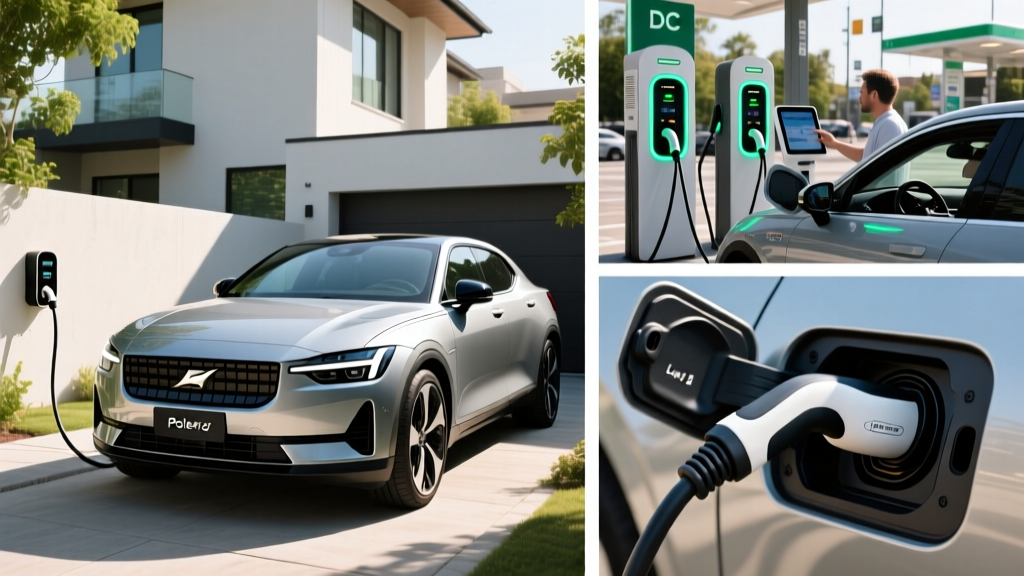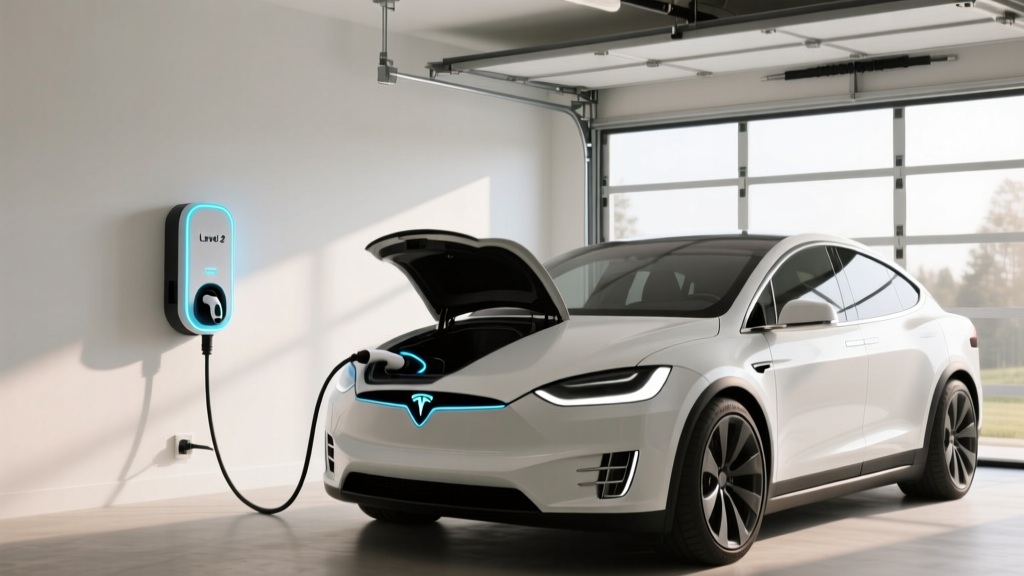
If you drive a full-size electric pickup, a three-row SUV, or any EV pushing past 100 kWh of battery capacity, a standard 32-amp Level 2 charger is going to test your patience. A wide body charger — our term for a high-amperage, heavy-duty Level 2 home charging station built to replenish large EV battery packs efficiently — bridges the gap between a sluggish overnight trickle and the expense of daily DC fast-charging visits.
This guide covers exactly what qualifies as a wide body home charger, the electrical infrastructure required to support one, real-world cost-per-mile math, and the specific hardware we recommend for 2026's crop of large-battery EVs.
What Defines a Wide Body Charger?
A wide body charger is a Level 2 (240V) home EV charging station rated at 48 amps or higher, delivering 11.5 kW to 19.2 kW of continuous power. The term borrows from automotive "wide body" design — these units are physically larger, use heavier-gauge cabling, and are engineered to sustain high output for the long charging sessions that large-battery EVs demand.
Why does this matter? Consider the math: a Ford F-150 Lightning Extended Range with its 131 kWh usable battery pack needs roughly 92 kWh to go from 10% to 80% state of charge. On a 32A/7.7 kW charger, that's a 12-hour session. On a 48A/11.5 kW unit, it drops to 8 hours. On an 80A/19.2 kW wide body charger, you're looking at roughly 4.8 hours — a dramatic difference for anyone who drives their electric truck hard during the day and needs a full battery by morning.
Charging Levels Explained: Speeds and Range Added Per Hour
Before selecting a wide body charger, understand where Level 2 fits in the broader charging ecosystem. Here's what each level actually delivers:
| Level | Voltage / Amperage | Power Output | Miles of Range Added Per Hour | Best For |
|---|---|---|---|---|
| Level 1 | 120V / 12A | 1.4 kW | 3–5 mi/hr | PHEVs, overnight top-ups |
| Level 2 (Standard) | 240V / 32A | 7.7 kW | 20–30 mi/hr | Sedans, small SUVs |
| Level 2 (Wide Body) | 240V / 48–80A | 11.5–19.2 kW | 30–55 mi/hr | Trucks, large SUVs, 100+ kWh packs |
| DC Fast Charge | 400–800V DC | 50–350 kW | 150–1,000+ mi/hr | Road trips, rapid top-ups |
Most wide body chargers in the 48A–80A range will add 30 to 55 miles of range per hour depending on your vehicle's efficiency. A Rivian R1S Dual-Motor (roughly 2.0 mi/kWh) on a 48A/11.5 kW charger gains about 23 miles per hour; a more efficient sedan like the Hyundai IONIQ 6 (4.0 mi/kWh) on the same charger gains roughly 46 miles per hour.
Home Installation: Electrical Requirements and Real Costs
A wide body charger is only as capable as the circuit feeding it. Here's what your electrician will evaluate:
Circuit and Amperage Requirements
Under the National Electrical Code (NEC), a continuous load like an EV charger can only use 80% of the circuit's rated capacity. That means:
- A 48A charger requires a 60-amp dedicated circuit (48 ÷ 0.80 = 60A)
- A 64A charger requires an 80-amp dedicated circuit
- An 80A charger requires a 100-amp dedicated circuit
Your electrical panel must have sufficient spare capacity. Most modern homes have 200-amp service panels. If your panel is already near capacity — common in older homes with electric heating, a hot tub, or an added ADU — you may need a panel upgrade to 300A or 400A, or a smart panel-level load management device like the Emporia Smart Load Center.
Installation Cost Breakdown
Here's what to budget. Costs vary widely by region, panel condition, and run length from panel to garage.
| Component | Budget Scenario (Short Run, Adequate Panel) | Complex Scenario (Long Run, Panel Upgrade) |
|---|---|---|
| Level 2 charger hardware (48–80A) | $500–$750 | $600–$1,000 |
| Electrician labor (2–8 hrs @ $85–$150/hr) | $300–$600 | $800–$2,500 |
| Electrical permit | $50–$150 | $100–$300 |
| Conduit, wiring (6/3 or 4/2 AWG), breaker | $100–$250 | $300–$800 |
| Panel upgrade (if needed: 200A → 300A/400A) | N/A | $2,000–$5,000 |
| Total Estimated Cost | $950–$1,750 | $3,800–$9,600 |
The single biggest variable is whether your panel can handle the added load. Get a load calculation from a licensed electrician before purchasing hardware. Some utilities offer free or subsidized panel upgrades for EV adopters — check with your local provider.
For a detailed look at the federal Alternative Fuel Vehicle Refueling Property Credit (IRS Form 8911), which can cover up to 30% of home charger installation costs (capped at $1,000) for eligible taxpayers in qualifying census tracts, consult a tax professional.
Connector Compatibility: NACS, CCS1, and CHAdeMO
The connector landscape has shifted dramatically. As of 2026, the North American Charging Standard (NACS), originally developed by Tesla, has become the dominant connector for new EVs sold in North America. Here's where each brand stands:
| Connector | Native Vehicles (2025–2026 Models) | Adapter Needed? |
|---|---|---|
| NACS (Tesla) | Tesla (all), Ford (2025+), GM (2025+), Rivian (2025+), Hyundai/Kia (2026+), BMW, Mercedes | None for NACS-native vehicles |
| CCS1 (Combined Charging System) | VW ID.4 (through 2025), older Ford/GM/Hyundai/Kia models, BMW i4 (pre-2026), Lucid | CCS-to-NACS adapter for Tesla Superchargers ($150–$250) |
| CHAdeMO | Nissan LEAF (legacy only — discontinued) | CHAdeMO-to-CCS adapter (limited availability, ~$300+) |
When choosing a wide body charger, buy the unit with the connector that matches your vehicle natively. If you own a CCS1 vehicle and plan to upgrade to a NACS vehicle eventually, some chargers like the Autel MaxiCharger Home offer swappable connector heads.
Charging Time Examples: How Long Does a Full Session Take?
Real-world charging times depend on battery size, onboard charger acceptance rate, and starting state of charge. Here are 10–80% estimates for common large-battery EVs on wide body chargers:
| Vehicle (Battery Size) | 48A / 11.5 kW | 64A / 15.4 kW | 80A / 19.2 kW |
|---|---|---|---|
| Ford F-150 Lightning Ext. Range (131 kWh) | ~8.0 hrs | ~6.0 hrs | ~4.8 hrs* |
| Rivian R1T Dual-Motor (128.9 kWh) | ~7.9 hrs | ~5.9 hrs | ~4.7 hrs* |
| Chevy Silverado EV 4WT (200 kWh) | ~12.2 hrs | ~9.1 hrs | ~7.3 hrs* |
| Tesla Model X (100 kWh) | ~6.1 hrs | ~4.5 hrs | ~3.6 hrs |
| Hyundai IONIQ 9 (110.3 kWh) | ~6.7 hrs | ~5.0 hrs | ~4.0 hrs |
*Note: Not all vehicles can accept the full 19.2 kW. The F-150 Lightning's onboard charger maxes at 19.2 kW, but the Rivian R1T is limited to 11.5 kW on AC Level 2 — meaning an 80A charger won't charge it any faster than a 48A unit. Always check your vehicle's onboard charger acceptance rate before overspending on amperage.
Wide Body Charger Recommendations: 2026 Hardware Picks
These are the high-amperage Level 2 chargers we recommend for large-battery EVs, based on sustained output reliability, cable quality, smart features, and build durability.
ChargePoint Home Flex (NACS or CCS1) — 50A
- Power Output: 12.0 kW max (50A, 240V)
- Connector: NACS or CCS1 (select at purchase)
- Cable Length: 23 feet
- Smart Features: Wi-Fi, ChargePoint app scheduling, Alexa integration, energy reporting
- Price: ~$549–$599
- Best For: Budget-conscious buyers with vehicles that accept up to 11.5–12 kW onboard
Tesla Wall Connector (NACS) — 48A
- Power Output: 11.5 kW max (48A, 240V)
- Connector: NACS native
- Cable Length: 24 feet
- Smart Features: Wi-Fi, over-the-air updates, Power Sharing (link multiple units on one circuit), Tesla app
- Price: ~$475
- Best For: Tesla owners and NACS-native vehicle owners seeking the most reliable ecosystem integration
Grizzl-E Smart (NACS or CCS1) — 48A
- Power Output: 11.5 kW (48A, 240V)
- Connector: NACS or J1772/CCS1 (select at purchase)
- Cable Length: 24 feet
- Smart Features: Wi-Fi, UniFi app, OCPP support for commercial fleet use, extreme cold rated (-40°F)
- Price: ~$549
- Best For: Cold-climate owners and those wanting open OCPP protocol flexibility
⭐ Autel MaxiCharger Ultra (NACS) — 80A
- Power Output: 19.2 kW max (80A, 240V)
- Connector: NACS native (swappable head option)
- Cable Length: 25 feet, heavy-duty 4 AWG
- Smart Features: Wi-Fi + Ethernet, load management, RFID access, detailed energy dashboards, 4G LTE option
- Price: ~$899–$999
- Best For: True wide body charging — F-150 Lightning, Silverado EV, and any vehicle with a 19.2 kW onboard charger. This is the full-power option for large battery packs.
Cost Per Mile: Home Charging vs Public vs Gas
One of the strongest arguments for a wide body home charger is economics. Charging at home on a dedicated Level 2 circuit is consistently cheaper than public charging or gasoline, but the exact savings depend on your electricity rate and driving patterns.
| Scenario | Rate / Cost | Cost Per Mile (3 mi/kWh EV) | Cost Per Mile (25 MPG Gas Vehicle @ $3.40/gal) |
|---|---|---|---|
| Home off-peak (time-of-use rate) | $0.09–$0.13/kWh | $0.03–$0.04 | $0.14 |
| Home standard rate | $0.14–$0.18/kWh | $0.05–$0.06 | $0.14 |
| Public Level 2 (ChargePoint, EVgo) | $0.25–$0.40/kWh | $0.08–$0.13 | $0.14 |
| DC Fast Charge (Electrify America, Tesla Supercharger) | $0.35–$0.55/kWh | $0.12–$0.18 | $0.14 |
At off-peak home rates, a wide body charger delivers fuel at roughly one-quarter the per-mile cost of gasoline. Even at public DC fast-charging rates, you're often at parity with gas — which is why a high-power home charger pays for itself within 1–2 years of regular use for a high-mileage driver.
Use the DOE's EV cost calculator at fueleconomy.gov to model your specific electricity rate and vehicle efficiency.
Safety, Code, and Smart Installation Practices
Wide body chargers draw serious current. Here's what separates a safe, code-compliant installation from a fire hazard:
- Dedicated circuit: Your charger must have its own breaker — never share a circuit with a dryer, oven, or HVAC system.
- GFCI protection: NEC 2023 and later require GFCI (Ground Fault Circuit Interrupter) protection for all EV charging outlets. Hardwired units may have GFCI built into the charger itself; plug-in units require a GFCI breaker.
- Outdoor rating: If your charger is mounted outside or in an unconditioned garage, ensure it's rated NEMA 4 (weatherproof). All recommended units above carry NEMA 4 ratings.
- Wire gauge: 48A requires 6 AWG copper; 80A requires 3 AWG copper or 1 AWG aluminum. Your electrician will size accordingly.
- Hardwired vs plug-in: Chargers above 48A are typically hardwired (no plug), which eliminates one failure point and avoids the need for a costly 100A-rated NEMA 14-100 receptacle. For 48A units, a NEMA 14-50 outlet gives you portability if you move homes.
- Load management: If your panel is tight, consider a smart load-management system that throttles the charger when other high-draw appliances are running. This can avoid a $3,000+ panel upgrade.
Always pull a permit. Unpermitted electrical work can void your homeowner's insurance and cause issues at resale. Your utility may also require inspection before activating any time-of-use EV rate plan.
Frequently Asked Questions
How much does it cost to install a home EV charger?
For a wide body Level 2 charger (48–80A), expect $950–$1,750 for a straightforward installation with adequate panel capacity and a short wire run. If your home needs a panel upgrade (200A to 300A+), total costs can reach $3,800–$9,600. Always get a load calculation first.
How fast will each charging level add range?
Level 1 (120V) adds 3–5 miles per hour. Standard Level 2 (32A/7.7 kW) adds 20–30 miles per hour. A wide body Level 2 (48–80A) adds 30–55 miles per hour depending on vehicle efficiency. DC fast charging adds 150–1,000+ miles per hour but is not practical for daily home use.
Which connector/charger is compatible with my EV?
Check your vehicle's charge port. For 2025–2026 models: Tesla, Ford, GM, Rivian, and most new Hyundai/Kia/BMW vehicles use NACS. Older or pre-transition models from VW, and some 2024–2025 models, still use CCS1. CHAdeMO is essentially discontinued. Buy a charger with the matching native connector — adapters add cost and a failure point.
How much does charging cost per mile vs gas?
Home charging at off-peak rates costs roughly $0.03–$0.04 per mile for a typical EV. Gasoline at $3.40/gallon in a 25 MPG vehicle costs $0.14 per mile. That's a 70–75% fuel cost reduction by charging at home.
What electrical upgrades might I need?
The most common upgrade is a panel capacity increase if your existing 200A service is near its limit. You may also need a new sub-panel in the garage (if the main panel is far away), trenching for underground conduit (for detached garages), or a utility transformer upgrade in rare cases. A licensed electrician's load calculation will determine exactly what's needed.
Can I use a wide body charger with a smaller EV?
Yes. The charger supplies only what the vehicle's onboard charger requests. Plugging a 40A-limited Hyundai IONIQ 5 into an 80A Autel MaxiCharger Ultra works perfectly — the car simply draws its maximum 10.9 kW. The extra capacity is future-proofing for your next vehicle.
A wide body charger is a serious piece of electrical infrastructure — not a casual Amazon impulse buy. Match the amperage to your vehicle's onboard charger limit, verify your panel capacity before ordering, and use a licensed electrician who understands NEC Article 625 (EV charging systems). Done right, it's the single highest-impact upgrade you can make to your EV ownership experience.