Why Does My Charger Get Hot? The Physics Behind EV Charging Heat
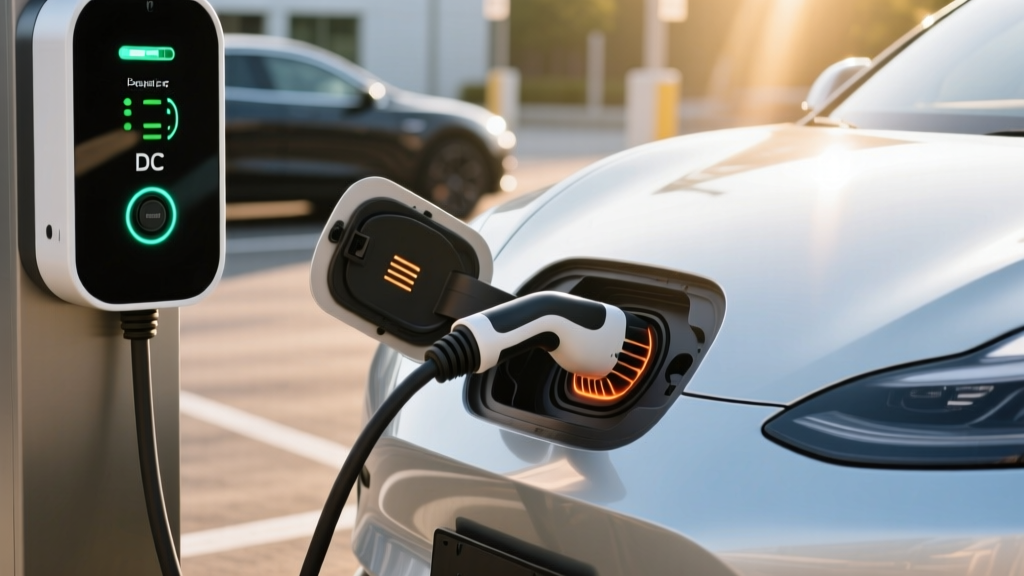
If you've touched your EV charging cable or connector after a long session and felt significant warmth, you're not imagining things. Heat generation is an unavoidable byproduct of pushing high electrical current through conductors, connectors, and internal charger components. But understanding why your charger gets hot — and when that heat crosses from normal to dangerous — is essential for safe, long-term EV ownership.
Every electrical system generates heat proportional to the square of the current flowing through it (P = I²R). A Level 2 home charger pulling 32 to 48 amps continuously for hours creates substantial thermal load across the cable, the J1772/NACS connector, your home's wiring, and the breaker panel. DC fast chargers pushing 150 to 350 kW generate even more heat — which is why public charging stations use liquid-cooled cables.
The most common reasons your EV charger or cable gets hotter than expected include:
- Undersized wiring: A circuit wired with 10-gauge wire on a 40A breaker will run hotter than 8-gauge or 6-gauge wire rated for that load.
- Loose connections: Any loose terminal at the breaker, outlet (for NEMA 14-50), or charger hardwire point creates resistance — and resistance creates heat.
- Continuous-load derating: The National Electrical Code (NEC) requires EV chargers to be treated as continuous loads, meaning the circuit must be rated for 125% of the charger's maximum draw. A 40A charger needs a 50A circuit. Skipping this derating is a fire risk.
- Ambient temperature: Charging in a hot garage or direct summer sunlight raises baseline cable and connector temps.
- Aging or damaged connectors: Worn pins, corrosion, or debris inside the J1772 or NACS plug increase contact resistance and heat.
- High sustained DC fast-charging sessions: Repeated back-to-back DC sessions heat-soak the battery and cable, triggering thermal throttling (slower charge speeds to protect components).
Charging Levels Explained: Speeds, Heat, and What to Expect
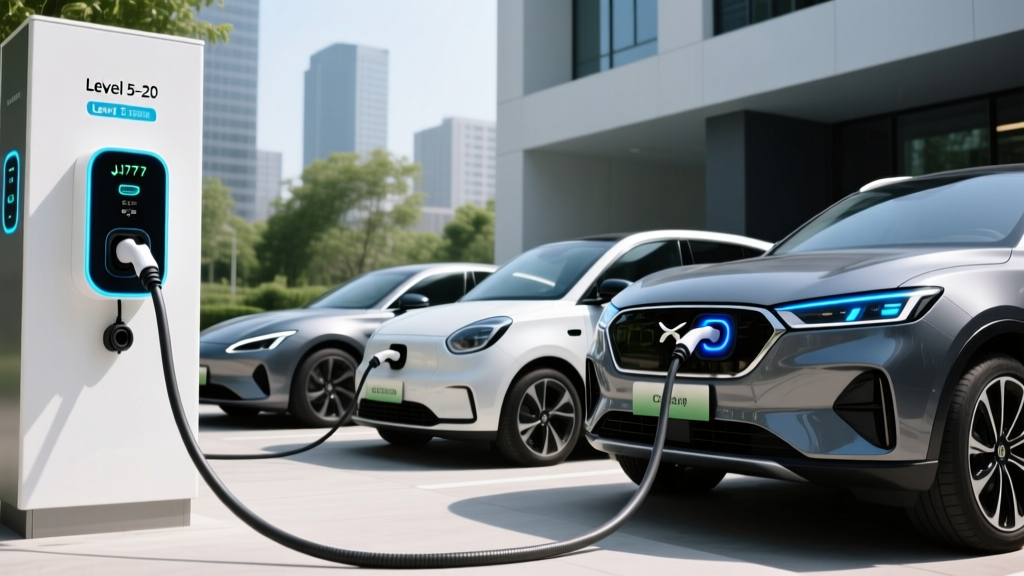
Heat generation scales directly with power delivery. Understanding the three EV charging levels helps explain why some setups run cooler than others — and how fast you can realistically add range.
| Level | Voltage / Phase | Power (kW) | Miles of Range Added/Hour | Typical Use Case | Heat Profile |
|---|---|---|---|---|---|
| Level 1 | 120V / Single | 1.0–1.4 kW | 3–5 mi/hr | Overnight trickle, emergency top-up | Minimal — cable stays near ambient |
| Level 2 | 240V / Single | 3.3–19.2 kW | 12–70 mi/hr | Home daily charging, workplace | Warm cable/connector; normal at 32–48A |
| DC Fast Charge | 200–1000V / DC | 50–350 kW | 150–1,000+ mi/hr | Road trips, quick top-ups | Hot — liquid-cooled cables required above ~150 kW |
For most home charging, a Level 2 station delivering 7.7 kW (32A on a 40A circuit) or 11.5 kW (48A on a 60A circuit) covers daily needs. A 75 kWh battery (like the Ford Mustang Mach-E Extended Range or Volkswagen ID.4 Pro S) charges from 10–80% in roughly 7–8 hours at 7.7 kW, or about 5 hours at 11.5 kW. That's ideal for overnight sessions where heat buildup is gradual and manageable.
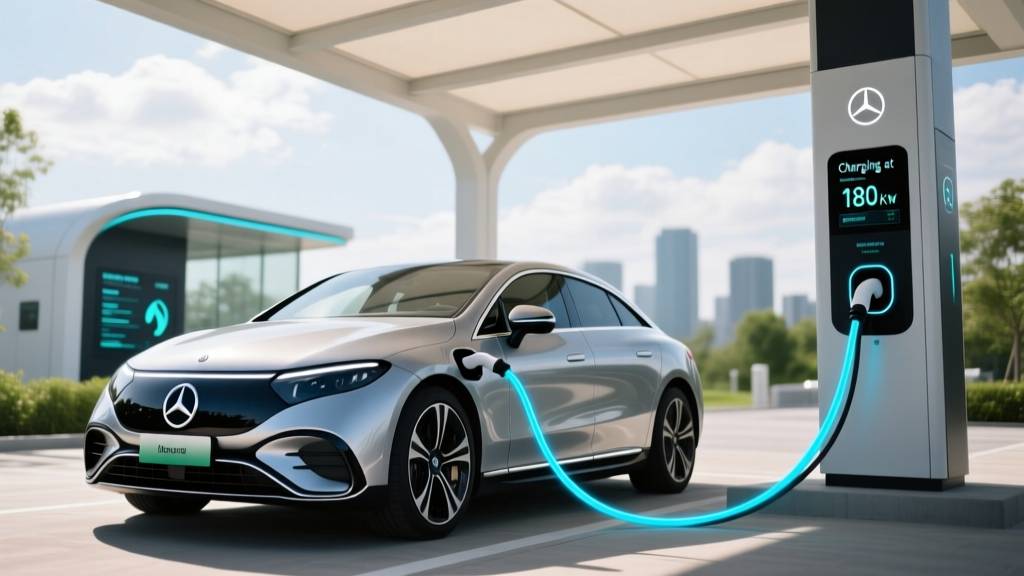
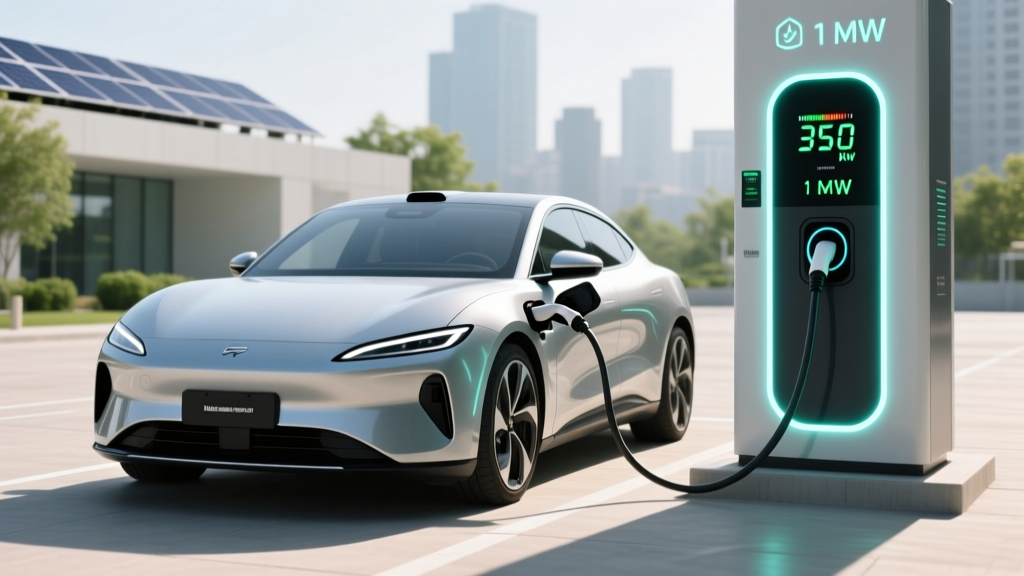
DC fast charging is a different thermal story. A 350 kW charger like those at Electrify America or IONITY stations pushes enormous current directly into the battery. The vehicle's thermal management system actively cools the battery pack during these sessions, and the charging cable itself uses liquid cooling to prevent overheating. If you notice a DC fast-charge session slowing from its peak rate (e.g., dropping from 250 kW to 80 kW mid-session), that's thermal management at work — the car is protecting itself.
Home Charger Installation: Electrical Requirements, Costs & Panel Upgrades
Installing a Level 2 home charger isn't just about mounting a box on the wall. The electrical infrastructure behind it determines safety, performance, and whether your charger runs cool or dangerously hot. Here's what a proper installation involves.
Electrical Requirements
A typical 48A Level 2 charger (delivering 11.5 kW) requires a dedicated 60-amp, 240-volt circuit using 6 AWG copper wire (or 4 AWG aluminum). A 32A charger (7.7 kW) needs a dedicated 40A circuit with 8 AWG copper. The NEC continuous-load rule (Article 625) mandates that the circuit breaker be rated at 125% of the charger's maximum amperage — you cannot install a 48A charger on a 48A breaker.
Most installations use one of two methods:
- Hardwired: The charger is directly connected to the circuit with no plug. This is the safest and most common approach for 48A+ chargers, eliminates outlet-related heat points, and is required by many local codes for circuits above 50A.
- NEMA 14-50 outlet: A 50A receptacle allows charger portability but introduces an additional connection point that can overheat if the outlet is low quality or improperly installed. Use only an industrial-grade outlet (Hubbell or Bryant brand) — residential-grade 14-50 outlets from big-box stores have been linked to melting and fire incidents.
Panel Upgrade Considerations
Before any installation, an electrician will perform a load calculation on your electrical panel. If your home has a 100A service panel and you're already running electric HVAC, an electric dryer, and an electric range, adding a 60A EV circuit may exceed capacity. In that case, you'll need a panel upgrade to 200A — a significant but increasingly common project.
Permits and Code Compliance
Virtually every jurisdiction requires a permit for EV charger installation. The inspection verifies proper wire gauge, breaker sizing, GFCI protection (required for outdoor outlets by NEC 2023 and later), and adequate grounding. Skipping the permit risks insurance claim denial if an electrical fire occurs.
| Cost Component | Basic Install (32A, Short Run) | Standard Install (48A, Moderate Run) | Complex Install (Panel Upgrade + Long Run) |
|---|---|---|---|
| Level 2 Charger (Equipment) | $350–$500 | $500–$750 | $500–$750 |
| Electrician Labor | $400–$800 | $800–$1,500 | $1,500–$3,000 |
| Wire, Conduit, Breaker | $100–$250 | $250–$500 | $500–$1,000 |
| Permit & Inspection | $50–$150 | $100–$250 | $150–$350 |
| Panel Upgrade (if needed) | N/A | N/A | $1,500–$3,500 |
| Total Range | $900–$1,700 | $1,650–$3,000 | $4,150–$8,600 |
Source: Cost ranges compiled from electrician surveys and U.S. Department of Energy EV charging guidance. Actual costs vary by region, run length, and local code requirements.
Connector Compatibility: NACS, CCS, and CHAdeMO in 2026
The connector landscape has consolidated significantly since Ford, GM, Rivian, Volvo, and most other automakers adopted the North American Charging Standard (NACS) — originally developed by Tesla. As of the 2026 model year, the vast majority of new EVs sold in the U.S. ship with a native NACS charge port.
| Connector | Brands Using It (2026 Models) | Home Level 2 | DC Fast Charge | Adapter Needed? |
|---|---|---|---|---|
| NACS (Tesla) | Tesla, Ford, GM, Rivian, Volvo, Polestar, Mercedes, BMW, Hyundai, Kia (most 2025+ models) | Yes — NACS wall connectors widely available | Yes — Tesla Superchargers + growing third-party networks | CCS-to-NACS adapter needed for legacy CCS stations (~$150–$200) |
| CCS1 | Remaining Stellantis, some legacy models, used EVs (pre-2025) | Yes — J1772 connector (Level 2) | Yes — Electrify America, EVgo, ChargePoint | NACS-to-CCS adapter needed for Tesla Superchargers |
| CHAdeMO | Nissan Leaf (discontinued after 2025), Mitsubishi Outlander PHEV (legacy) | Yes — J1772 connector (Level 2) | Declining availability | CHAdeMO-to-NACS adapters limited; plan around CCS stations |
For home Level 2 charging, the connector question is simpler: all Level 2 chargers in the U.S. use either a NACS plug or a J1772 plug (the rectangular connector used for CCS1 AC charging). If your EV has a NACS port, buy a NACS Level 2 charger. If it has a J1772/CCS port, buy a J1772 charger. Adapters exist for cross-compatibility but add a connection point — and every connection point is a potential heat source.
Charging Cost Per Mile: EV vs. Gas in 2026
One of the strongest ownership arguments for EVs remains fuel cost savings, but the math depends heavily on where and when you charge. Here's a realistic breakdown using current 2026 electricity rates and gas prices.
| Charging Scenario | Rate ($/kWh) | Vehicle Efficiency | Cost Per Mile |
|---|---|---|---|
| Home — Off-Peak (Time-of-Use) | $0.08–$0.12 | 3.0 mi/kWh (avg EV) | $0.027–$0.040 |
| Home — Standard Rate | $0.14–$0.20 | 3.0 mi/kWh | $0.047–$0.067 |
| Public Level 2 (ChargePoint, etc.) | $0.20–$0.35 | 3.0 mi/kWh | $0.067–$0.117 |
| DC Fast Charge (Electrify America, EVgo) | $0.35–$0.55 | 3.0 mi/kWh | $0.117–$0.183 |
| Gas Vehicle (28 MPG combined, $3.40/gal) | — | 28 MPG | $0.121 |
The takeaway: home charging on off-peak rates delivers fuel costs at roughly one-quarter to one-third the cost of gasoline per mile. Exclusive reliance on DC fast charging at premium public rates, however, can equal or exceed gas costs — making home charging access the single biggest factor in EV ownership economics.
For efficiency data on specific models, the EPA's fueleconomy.gov database provides official kWh/100mi and MPGe figures for every EV sold in the U.S.
Recommended Level 2 Home Chargers: Power, Features & Pricing
Choosing the right charger means matching power output to your electrical panel capacity, selecting the correct connector, and deciding whether you want smart features like scheduling and energy monitoring. Here are top picks across categories for 2026.
Tesla Wall Connector (NACS)
- Power Output: Up to 11.5 kW (48A)
- Connector: NACS (native Tesla plug)
- Cable Length: 24 ft
- Smart Features: Wi-Fi, OTA updates, power sharing between two units, load management
- Price: ~$475
- Best For: Tesla owners and NACS-equipped EVs; excellent value for output
ChargePoint Home Flex (J1772 / NACS)
- Power Output: Up to 12 kW (50A) — adjustable from 16A to 50A
- Connector: Available in J1772 or NACS
- Cable Length: 23 ft
- Smart Features: App scheduling, Alexa integration, energy tracking, flexible amperage
- Price: ~$550–$600
- Best For: Homes with variable panel capacity — dial the amperage to match your circuit
Emporia Vue Level 2 Charger
- Power Output: Up to 11.5 kW (48A)
- Connector: J1772 (NACS adapter available)
- Cable Length: 24 ft
- Smart Features: Real-time energy monitoring, solar integration, time-of-use scheduling, whole-home energy panel
- Price: ~$400
- Best For: Budget-conscious buyers who want detailed energy data and solar pairing
Grizzl-E Smart (J1772 / NACS)
- Power Output: Up to 10 kW (40A)
- Connector: J1772 or NACS
- Cable Length: 24 ft
- Smart Features: OCPP-compatible, works with multiple networks, adjustable amperage
- Price: ~$450–$500
- Best For: Outdoor installations (rated -40°F to 122°F), Canadian-built durability
Safety, Code Compliance & Preventing Overheating
Heat-related EV charging incidents are rare but almost always trace back to improper installation or damaged equipment. Follow these non-negotiable safety rules:
- Always use a dedicated circuit. Your EV charger must not share a breaker with any other appliance. Shared circuits risk overloading and overheating.
- Respect the 125% continuous-load rule. Per NEC Article 625, a 48A charger requires a 60A breaker. A 32A charger requires a 40A breaker. Never undersize.
- GFCI protection for outdoor outlets. If you install a NEMA 14-50 receptacle outdoors, NEC 2023+ requires GFCI breaker protection. Hardwired outdoor installations are exempt but must be in a weatherproof enclosure.
- Use outdoor-rated equipment. Any charger or outlet installed outside must carry a NEMA 3R or NEMA 4 weatherproof rating. Check the charger's IP rating — IP55 or higher is recommended for exposed installations.
- Inspect connectors regularly. Look for pitting, discoloration, or melted plastic on the plug face and the vehicle's charge port. Clean debris with compressed air. Replace damaged cables immediately — do not attempt repair.
- Never use extension cords. No extension cord is rated for sustained 32–48A EV charging. The voltage drop and heat generation create a serious fire hazard.
- Monitor with a thermal camera (optional). A $200 infrared camera or a $50 smartphone thermal attachment can identify hot spots at connections during your first few charging sessions. Anything above 140°F (60°C) at a terminal warrants an electrician visit.
Charging Time Examples for Common 2026 EV Battery Sizes
Charge time depends on battery capacity (measured in kWh — the total energy stored) and charger power (measured in kW — the rate of energy delivery). Here's how long common 2026 EVs take to charge from 10% to 80% State of Charge at various Level 2 speeds. Note that charging slows significantly above 80% to protect battery health — the 10–80% window is where the fastest charging occurs.
| Vehicle | Battery (kWh Usable) | 7.7 kW (32A) | 11.5 kW (48A) | DC Fast Peak Rate |
|---|---|---|---|---|
| Tesla Model Y Long Range | 75 kWh | ~6.8 hrs | ~4.6 hrs | 250 kW → 10-80% in ~25 min |
| Ford Mustang Mach-E Ext. Range | 78 kWh | ~7.1 hrs | ~4.7 hrs | 150 kW → 10-80% in ~35 min |
| Hyundai Ioniq 5 (Std Range) | 58 kWh | ~5.3 hrs | ~3.5 hrs | 350 kW → 10-80% in ~18 min |
| Chevrolet Equinox EV | 85 kWh | ~7.7 hrs | ~5.2 hrs | 150 kW → 10-80% in ~38 min |
| BMW iX xDrive50 | 105 kWh | ~9.5 hrs | ~6.4 hrs | 200 kW → 10-80% in ~32 min |
DC fast-charge times assume ideal conditions: battery preconditioned to optimal temperature, starting at 10% SoC, and a charger capable of delivering the vehicle's peak rate. Real-world sessions often take 20–30% longer due to charge-curve tapering, cold battery temperatures, and station power sharing. For detailed charging-curve data and battery chemistry explanations (LFP vs. NMC), see our battery technology guide.
Frequently Asked Questions
How much does it cost to install a home EV charger?
A straightforward Level 2 installation (32–48A charger, short wire run, adequate panel capacity) typically costs $900–$1,700 including the charger, electrician labor, materials, and permit. A standard 48A installation with a moderate wire run runs $1,650–$3,000. If your home needs a 200A panel upgrade, total costs can reach $4,150–$8,600. Always get at least two quotes from licensed electricians who have specific EV charger installation experience.
How fast will each charging level add range?
Level 1 (120V) adds roughly 3–5 miles of range per hour — adequate only for plug-in hybrids or overnight trickle charging. Level 2 (240V) adds 12–70 miles per hour depending on amperage (32A ≈ 25 mi/hr; 48A ≈ 37 mi/hr; 80A ≈ 60+ mi/hr for vehicles that support it). DC fast charging adds the equivalent of 150–1,000+ miles per hour, which is why a 10–80% session takes only 18–40 minutes depending on the vehicle and charger.
Which connector/charger is compatible with my EV?
Check your vehicle's charge port. If it's a 2025 or newer model from Tesla, Ford, GM, Rivian, Hyundai, Kia, or most other major brands, it almost certainly uses NACS. Older EVs (pre-2025) typically use CCS1 (J1772 for Level 2). For home Level 2 charging, match the charger plug to your car's port. If you drive a NACS vehicle and want access to legacy CCS public chargers, budget $150–$200 for a CCS-to-NACS adapter from your automaker.
How much does charging cost per mile vs. gas?
Home charging on off-peak electricity rates ($0.08–$0.12/kWh) costs roughly $0.03–$0.04 per mile — about one-third the cost of gasoline at $3.40/gallon in a 28 MPG vehicle ($0.12/mile). Standard-rate home charging runs $0.05–$0.07/mile. Public DC fast charging at $0.35–$0.55/kWh costs $0.12–$0.18/mile, which equals or exceeds gas costs. The economic case for EVs depends heavily on reliable home charging access.
What electrical upgrades might I need?
The most common upgrade is a panel capacity increase from 100A to 200A, needed in roughly 20–30% of older homes. Other potential upgrades include adding a new 240V circuit with appropriate wire gauge (6 AWG for 60A, 8 AWG for 40A), installing a GFCI breaker for outdoor receptacles, and upgrading the meter socket if your utility requires it for a high-amperage circuit. A licensed electrician will perform a load calculation before recommending any upgrades.
Is it normal for my EV charger plug to be warm?
Yes. A warm plug (up to ~120°F / 49°C) during a sustained Level 2 session at 32–48A is expected physics — current flowing through any conductor generates heat. However, if the plug is too hot to touch comfortably, shows discoloration, or emits a burning smell, stop charging and have the installation inspected. Chronic overheating usually points to a loose connection, undersized wiring, or a worn connector that needs replacement.