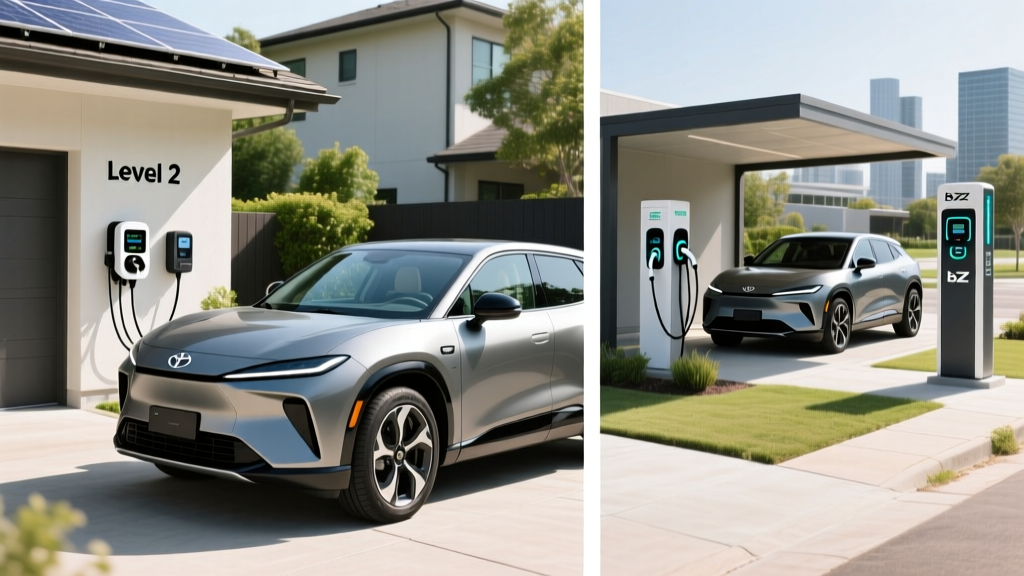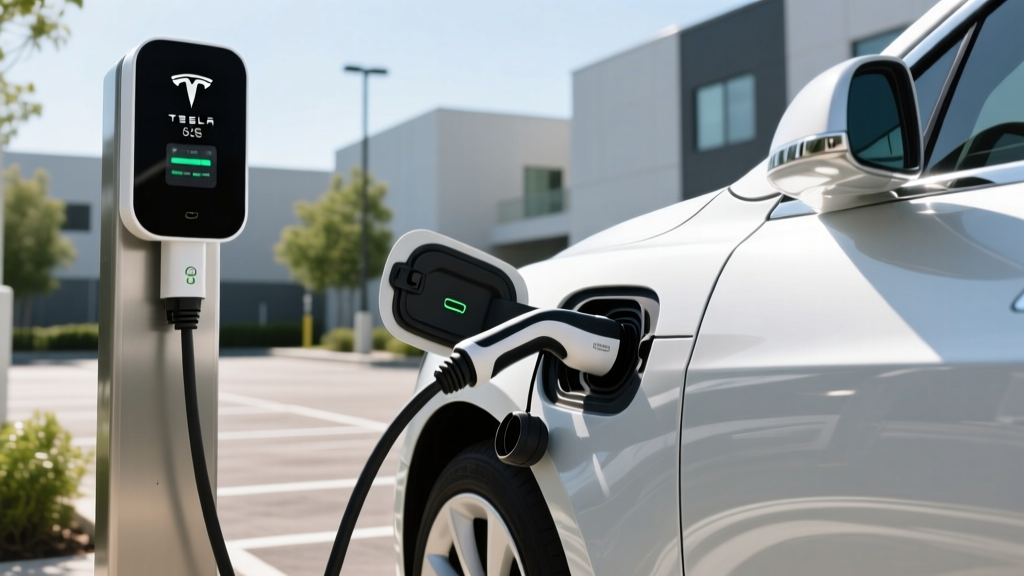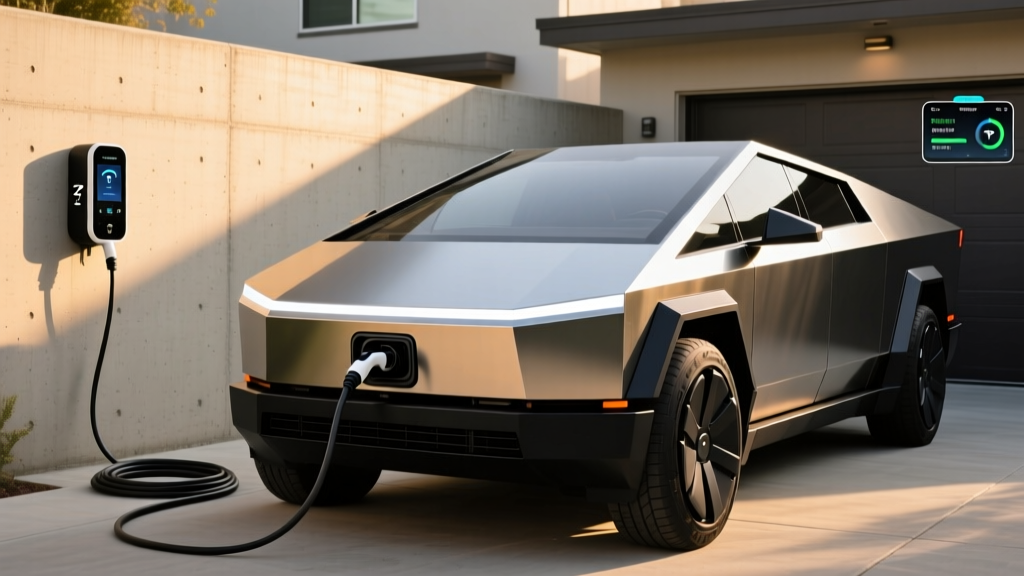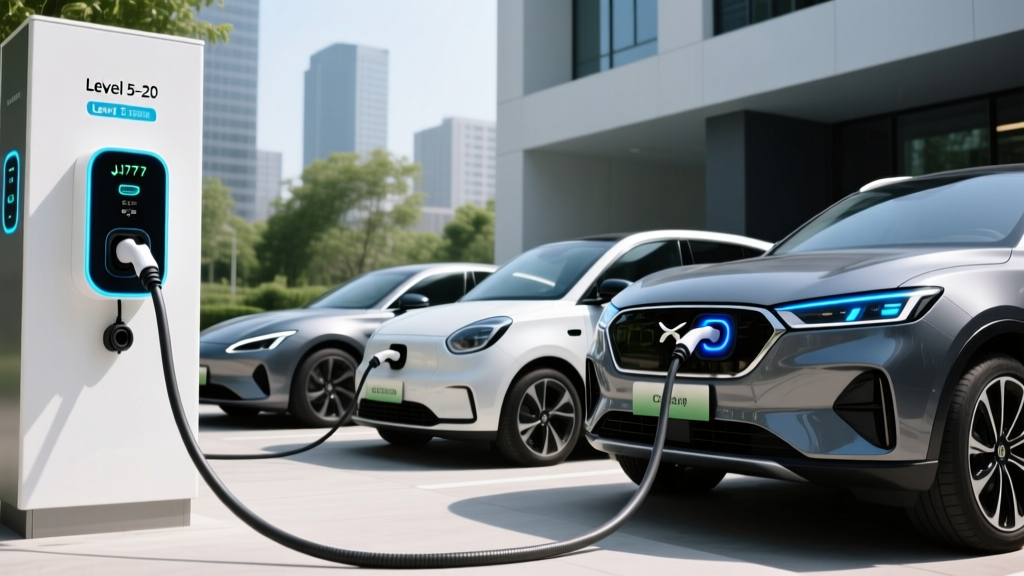
If you're transitioning from a performance gas car — maybe you've been holding onto an 07 Cobalt SS Supercharged with its 2.0L supercharged Ecotec pushing 205 hp and 25 MPG combined — the jump to an electric vehicle requires rethinking how you "refuel." The good news: home charging is cheaper and more convenient than any gas station once you understand the fundamentals. This guide breaks down every charging level, real installation costs, connector compatibility, and exactly what you'll pay per mile in 2026.
Charging Levels Explained: kW, Speed, and Real-World Range Added
The single most important distinction in EV charging: kW (kilowatts) measures power — how fast energy flows into your battery. kWh (kilowatt-hours) measures energy — the total capacity of your battery, like gallons in a fuel tank. A 75 kWh battery charged at 7 kW takes roughly 10+ hours from empty to full (accounting for efficiency losses). Confusing these two is the most common EV literacy gap.
| Level | Voltage | Power (kW) | Miles of Range per Hour | Best Use Case | Typical 10-80% Time (75 kWh Battery) |
|---|---|---|---|---|---|
| Level 1 | 120V AC | 1.0–1.4 kW | 3–5 mi/hr | Overnight top-off, PHEVs, low daily mileage | ~50+ hours (not practical) |
| Level 2 | 240V AC | 3.3–19.2 kW | 12–75 mi/hr | Daily home/workplace charging | ~5–10 hours (depending on kW) |
| DC Fast (Level 3) | 200–800V DC | 50–350 kW | 150–1,000+ mi/hr | Road trips, quick top-ups | 18–45 minutes (see charge curve below) |
The charge curve reality: DC fast charging does not sustain peak kW for the entire session. A vehicle rated at 250 kW peak may only hold that rate between 10-30% State of Charge (SoC), then taper to 150 kW, then drop below 50 kW past 80%. This is why manufacturers quote 10-80% times rather than 0-100%. Charging past 80% on DC fast chargers is painfully slow and generates excess heat — most EV route planners will skip you to the next charger at 80%.
Home Level 2 Installation: Electrical Requirements and Real Costs
Level 2 home charging is where 85%+ of EV charging happens for owners with garage or driveway access. Here's what your electrical system actually needs:
Core Electrical Requirements
- Circuit: Dedicated 240V circuit, typically 40A or 50A (breaker rated 125% above continuous load, so a 40A charger needs a 50A breaker)
- Wire gauge: 6 AWG copper for 50A circuits; 8 AWG for 40A (longer runs may require upsizing)
- Panel capacity: Most homes need 200A service minimum. Older homes with 100A panels often require a panel upgrade ($1,500–$3,000) or a load-management device that throttles charger amperage when other large loads are running
- Permit: Required in nearly all jurisdictions; electrical permit fees run $50–$200 depending on municipality
- GFCI protection: NEC 2023 (and carried into 2026 code adoption) requires GFCI protection for EV receptacles; many hardwired chargers have built-in ground-fault protection
- Outdoor rating: If mounting outside, the charger must carry a NEMA 4 or NEMA 4X rating for weather resistance
| Component | Low-End | Typical | High-End / Complex |
|---|---|---|---|
| Level 2 EVSE equipment (charger unit) | $300 (basic 32A) | $500–$650 (40-48A smart) | $700–$1,000 (premium/48A+) |
| Electrician labor (standard install, <50 ft run) | $400 | $600–$900 | $1,200+ (long runs, conduit, wall penetrations) |
| Materials (wire, conduit, breaker, junction box) | $100 | $150–$300 | $400+ (long runs, underground conduit) |
| Permit & inspection | $50 | $100–$150 | $200–$300 |
| Panel upgrade (if needed — 100A→200A) | — | $1,500–$2,500 | $3,000–$4,000 |
| Total (no panel upgrade) | $850 | $1,350–$2,000 | $2,500–$3,500+ |
| Total (with panel upgrade) | $2,350 | $3,000–$4,500 | $5,500+ |
The panel upgrade gotcha: If you're coming from a home built before 2000 with a 100A or 125A panel, adding a 40-50A EV circuit may push your calculated load beyond code limits. An electrician will perform a NEC Article 220 load calculation. If you fail it, you have three options: upgrade the panel, install a smaller-amperage charger (e.g., 24A or 32A), or use a smart load-management device like the Emporia V2H gateway or a Span smart panel that dynamically adjusts charger draw.
According to the U.S. Department of Energy, some utility companies offer rebates of $250–$1,000 for home charger installation or off-peak charging programs — check with your local utility before scheduling work.
Connector Compatibility: NACS, CCS1, and CHAdeMO in 2026
The connector landscape has consolidated significantly. Here's where things stand for the 2026 model year:
| Connector | Brands Using It (Native) | DC Fast Charge Availability | Adapter Situation |
|---|---|---|---|
| NACS (J3400) | Tesla, Ford, GM, Rivian, Volvo, Polestar, Nissan (2025+), Hyundai/Kia (2025+), BMW (2026+) | Tesla Supercharger network (20,000+ stalls), plus growing third-party NACS stations | CCS1→NACS adapters available from Tesla, Lectron, A2Z (~$150–$250) |
| CCS1 | VW, Audi, Porsche, some legacy models from Ford/GM/Hyundai (pre-transition) | Electrify America, EVgo, ChargePoint DC network | NACS→CCS1 adapters available for Tesla Supercharger access on CCS vehicles |
| CHAdeMO | Nissan Leaf (legacy), Mitsubishi Outlander PHEV | Declining — many networks have removed CHAdeMO connectors | No reliable CHAdeMO→NACS adapter; limited future network access |
What this means practically: If you're buying a new EV in 2026, NACS is the dominant standard. Nearly every major automaker has transitioned. If you own a CCS1-equipped vehicle from the 2022-2024 era, a NACS adapter ($150–$250) unlocks the Tesla Supercharger network — a major advantage for road trips given Supercharger reliability (consistently 95%+ uptime vs. 75-85% for some CCS networks, per J.D. Power EV Experience Index data).
For Level 2 home charging, the J1772 connector remains the universal plug for non-Tesla vehicles. Tesla provides a J1772 adapter with every vehicle, and most aftermarket Level 2 chargers ship with J1772 (or now, NACS) connectors. If you buy a NACS-connector home charger, you'll need a J1772 adapter for any non-Tesla, pre-transition EV.
Cost to Charge: Home vs. Public vs. Gas — The Per-Mile Math
This is where leaving behind a supercharged gas car becomes financially satisfying. Let's compare real costs using a representative 2026 EV (Hyundai Ioniq 5, 84 kWh battery, 3.5 mi/kWh efficiency) against a performance gas car baseline.
| Charging Scenario | Cost per kWh | Cost to Add 100 Miles | Cost per Mile | Annual Cost (12,000 mi) |
|---|---|---|---|---|
| Home Level 2 (national avg residential, off-peak TOU) | $0.12–$0.16 | $3.40–$4.55 | $0.034–$0.046 | $408–$548 |
| Home Level 2 (California, peak summer TOU) | $0.28–$0.45 | $8.00–$12.85 | $0.080–$0.129 | $960–$1,543 |
| Public Level 2 (ChargePoint, EVgo L2) | $0.20–$0.35 | $5.70–$10.00 | $0.057–$0.100 | $684–$1,200 |
| DC Fast Charging (Electrify America, EVgo DC) | $0.35–$0.55 | $10.00–$15.70 | $0.100–$0.157 | $1,200–$1,884 |
| Tesla Supercharger (avg 2026 pricing) | $0.28–$0.40 | $8.00–$11.40 | $0.080–$0.114 | $960–$1,370 |
| Gas car (25 MPG combined, $3.40/gal) | — | $13.60 | $0.136 | $1,632 |
The bottom line: Home off-peak charging costs roughly one-quarter to one-third what gasoline costs per mile. Even DC fast charging on road trips is generally cheaper than gas at current 2026 fuel prices. The exception is California peak-rate TOU charging, which can approach gas costs — which is why off-peak scheduling (charging between 11 PM and 6 AM) is critical in high-rate states.
Compared to an 07 Cobalt SS Supercharged averaging 22 MPG in mixed driving at $3.40/gallon, you'd spend $1,854 annually on fuel for 12,000 miles. A home-charged EV cuts that to $400–$550 — savings of $1,300+ per year, or $6,500+ over five years.
Charging Time Examples: What to Expect with Common Battery Sizes
Real charging times depend on battery capacity (kWh), onboard charger acceptance rate, and the charger's power output. Here are practical examples for popular 2026 EV battery sizes:
60 kWh Battery (e.g., base Chevy Equinox EV, Nissan Ariya)
- Level 1 (1.4 kW): 0-100% in ~43 hours — emergency use only
- Level 2 at 7.7 kW (32A): 0-100% in ~8 hours — comfortable overnight charge
- Level 2 at 11.5 kW (48A): 0-100% in ~5.5 hours
- DC Fast at 150 kW peak: 10-80% in ~22 minutes (sustained average ~100 kW after taper)
84 kWh Battery (e.g., Hyundai Ioniq 5, Kia EV6)
- Level 2 at 7.7 kW: 0-100% in ~11 hours
- Level 2 at 11.5 kW: 0-100% in ~7.5 hours
- DC Fast at 240 kW peak (800V architecture): 10-80% in ~18 minutes — among the fastest in production
100+ kWh Battery (e.g., GMC Sierra EV, Chevy Silverado EV Max Range)
- Level 2 at 11.5 kW: 0-100% in ~9 hours
- Level 2 at 19.2 kW (80A): 0-100% in ~5.5 hours — requires heavy-duty circuit
- DC Fast at 350 kW peak: 10-80% in ~25–35 minutes (varies heavily by thermal management)
Key insight for road trips: Smaller batteries charge faster in absolute time but may require more stops. An 84 kWh pack with 240 kW peak DC charging often delivers the best road-trip experience — enough range to go 200+ miles between stops, with 18-minute charge breaks that align with rest stops.
Equipment Recommendations: Top Level 2 Home Chargers for 2026
ChargePoint Home Flex (NACS or J1772)
- Power output: Up to 12 kW (50A) — adjustable down to 16A for smaller circuits
- Connector options: NACS or J1772 at purchase
- Cable length: 23 feet
- Smart features: Wi-Fi, scheduled charging, Alexa/Google integration, energy tracking via app
- Price: ~$550–$600
- Best for: Most EV owners — flexible amperage, UL-listed, reliable app
Emporia Level 2 EV Charger
- Power output: Up to 11.5 kW (48A)
- Connector: J1772 (NACS adapter available separately)
- Cable length: 24 feet
- Smart features: Wi-Fi, solar integration (pairs with Emporia VUE energy monitor), load management, TOU scheduling
- Price: ~$350–$400
- Best for: Budget-conscious buyers, solar homes, panel-load management scenarios
Tesla Wall Connector (NACS)
- Power output: Up to 11.5 kW (48A)
- Connector: NACS native
- Cable length: 24 feet
- Smart features: Wi-Fi, OTA updates, Power Sharing (link multiple units on one circuit), vehicle-integrated scheduling
- Price: ~$475
- Best for: Tesla owners or NACS-vehicle households — cleanest integration, best aesthetics
Grizzl-E Smart (J1772)
- Power output: Up to 10 kW (40A)
- Connector: J1772
- Cable length: 24 feet
- Smart features: Wi-Fi via SmartEVSE app, OCPP-compatible (works with utility demand-response programs)
- Price: ~$400–$450
- Best for: Cold-climate durability (built in Canada, rated to -40°F), outdoor installations
Choosing amperage: Don't buy a 48A charger if your panel can only spare a 40A circuit (which supports a 32A continuous charger). Have your electrician confirm available capacity before ordering. A 40A/9.6 kW charger is the sweet spot for most homes — it adds roughly 30-35 miles of range per hour for a mid-size SUV, which covers a full overnight replenishment for nearly any daily driving pattern.
Safety, Code, and Installation Best Practices
EV chargers draw sustained high current for hours — this is fundamentally different from intermittent loads like a dryer or oven. Key safety requirements:
- Dedicated circuit: Your EVSE must be on its own breaker — never shared with other outlets or appliances. NEC 625.40 requires this for hardwired and plug-in units above 16A.
- Hardwired vs. plug-in: Hardwired installations (no receptacle) are preferred for 48A+ chargers because NEMA 14-50 receptacles are rated for 50A but not designed for sustained multi-hour draws at that load. If using a 14-50 receptacle, use a commercial-grade (Hubbell, Bryant) receptacle — residential-grade units have shown overheating issues under continuous EV charging loads.
- GFCI: NEC 2023/2026 requires GFCI protection on EV receptacles. Hardwired units with internal ground-fault protection satisfy this requirement. Your electrician will confirm compliance.
- Outdoor installations: Require NEMA 4-rated enclosures and weatherproof conduit entries. Ensure the charger is rated for your local temperature extremes — some units derate output above 110°F ambient.
- Cable management: Wall-mounted retractors or holsters prevent cable damage and tripping hazards. Never let cables rest on the ground where vehicles can run over them.
Always hire a licensed electrician experienced with EVSE installations. According to the National Fire Protection Association (NFPA), the NEC Article 625 specifically governs EV charging infrastructure — your installer should be fluent in it.
Frequently Asked Questions
How much does it cost to install a home EV charger?
A typical Level 2 home installation (40-48A charger, standard panel, under 50-foot wire run) costs $1,350–$2,000 all-in, including equipment, electrician labor, materials, and permit. If your home needs a panel upgrade from 100A to 200A service, add $1,500–$3,000, bringing the total to $3,000–$5,000+. Utility rebates and the federal Residential Clean Energy Credit (which covers certain energy-storage-adjacent equipment — consult a tax professional for EVSE eligibility) can offset costs.
How fast will each charging level add range?
Level 1 (120V) adds 3-5 miles per hour — adequate only for plug-in hybrids or very low daily mileage. Level 2 (240V, 32-48A) adds 20-40 miles per hour for most EVs, easily replenishing a day's driving in 2-4 hours. DC fast charging adds 150-1,000+ miles per hour at peak rates, but sustained rates taper significantly above 80% SoC. Real-world 10-80% DC fast charge times range from 18 minutes (800V vehicles like the Ioniq 5) to 45 minutes (older or lower-power vehicles).
Which connector/charger is compatible with my EV?
For 2026 models, NACS is now the dominant standard across Tesla, Ford, GM, Rivian, Hyundai, Kia, Nissan, BMW, and others. CCS1 remains on some 2022-2024 models and is supported at Electrify America and EVgo stations. CHAdeMO is effectively legacy — only older Nissan Leafs and Mitsubishi PHEVs use it, and network support is declining. For home Level 2 charging, most non-Tesla EVs still use J1772, while Teslas and new NACS vehicles use the NACS connector. Adapters bridge the gap in both directions ($150–$250).
How much does charging cost per mile vs gas?
Home off-peak charging averages $0.03–$0.05 per mile — roughly one-quarter the cost of gasoline at $3.40/gallon and 25 MPG ($0.136/mile). Public DC fast charging averages $0.08–$0.16 per mile, still competitive with or cheaper than gas. Over 12,000 annual miles, home charging saves $1,000–$1,400 per year vs. a comparable gas vehicle. The savings are even larger vs. performance vehicles like the 07 Cobalt SS Supercharged, which averages closer to 20-22 MPG in spirited driving.
What electrical upgrades might I need?
The most common upgrade is a panel capacity increase from 100A to 200A service, required when the NEC load calculation shows your existing panel can't accommodate a 40-50A EV circuit alongside existing loads. Alternatives include installing a lower-amperage charger (24A or 32A), using a smart load-management device that throttles the charger when other large loads are active, or upgrading to a smart electrical panel (Span, Lumin) that provides circuit-level control. Your electrician's load calculation will determine which path is necessary. According to fueleconomy.gov, most homes built after 2000 with 200A service can accommodate Level 2 charging without a panel upgrade.