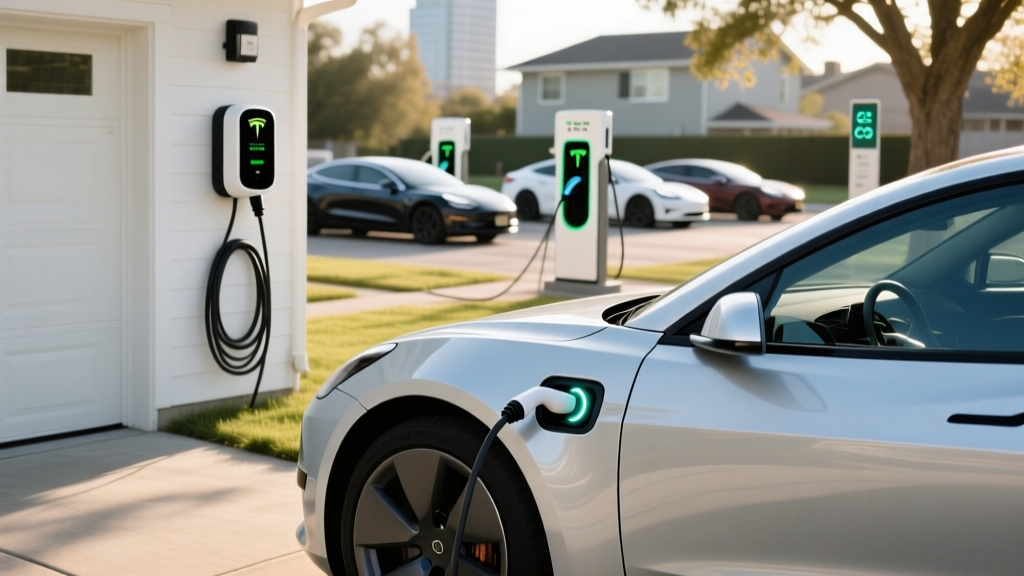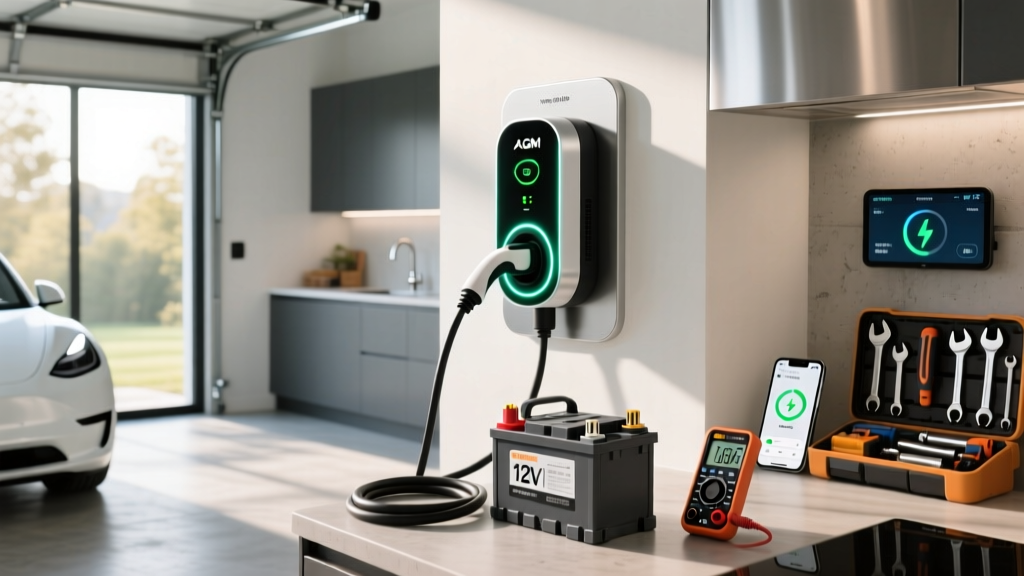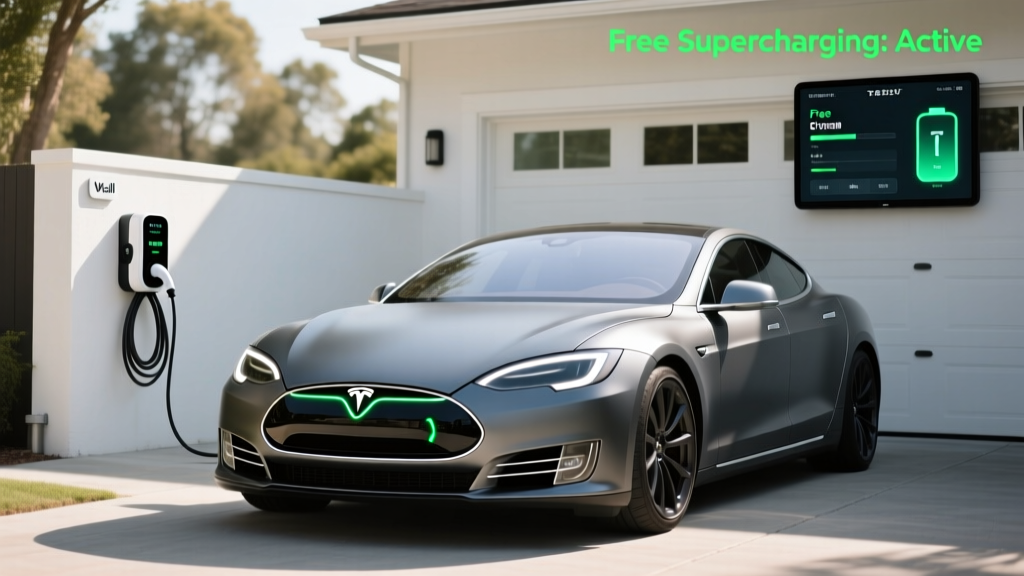
If you are shopping for a Tesla—new or used—you have likely encountered the phrase "free Supercharging" and wondered whether it still exists. The short answer: for new Tesla buyers in 2026, complimentary unlimited Supercharging is essentially gone. But the full picture is more nuanced, especially when you factor in used-vehicle transfers, promotional credits, and the economics of home charging versus public fast charging.
This guide answers exactly which Teslas have free Supercharging, traces how the policy evolved, and then walks you through building a cost-effective home charging setup—the single biggest ownership advantage any EV driver can secure.
Which Teslas Have Free Supercharging in 2026?
Tesla's free Supercharging policy has gone through several distinct eras. Here is where things stand today:
Vehicles That May Still Have Free Supercharging
- 2012–2017 Model S and Model X (original owners): Vehicles ordered before January 15, 2017, received free unlimited Supercharging tied to the original owner. This benefit is non-transferable upon resale in most cases.
- 2017–2019 Model S/X with transferable credits: Some vehicles ordered in this window received free Supercharging that transfers with the car. Check the Tesla app or vehicle listing to confirm.
- Promotional referrals and limited-time offers: Tesla periodically runs referral promotions granting 10,000–40,000 free Supercharging miles to new buyers. These are time-limited and vary by quarter.
- Used Tesla inventory (select vehicles): Tesla's certified used inventory occasionally includes vehicles with remaining free Supercharging credits. Always verify on the listing page.
Vehicles That Do NOT Have Free Supercharging
- All new Model 3 and Model Y: These have never included free Supercharging as standard.
- New Model S and Model X (2020+): Tesla removed complimentary Supercharging for new orders. You pay per kWh at Supercharger stations.
- Cybertruck: No free Supercharging program exists for Cybertruck.
Understanding EV Charging Levels: What Each Adds Per Hour
Before installing home equipment, you need to understand the three charging tiers and what they deliver. Power is measured in kW (kilowatts—the rate of energy flow), while battery capacity is measured in kWh (kilowatt-hours—the total energy stored). Confusing these is the most common EV mistake. Think of kW as how fast water flows from a hose, and kWh as the size of the bucket.
| Level | Voltage | Power (kW) | Miles of Range Added Per Hour | Best Use Case |
|---|---|---|---|---|
| Level 1 | 120V AC | 1.0–1.4 kW | 3–5 miles | Overnight trickle; PHEVs; emergency backup |
| Level 2 | 240V AC | 3.3–19.2 kW | 12–75 miles | Daily home charging; workplace; destinations |
| DC Fast Charge | 400–800V DC | 50–350 kW | 150–1,000+ miles (equivalent rate) | Road trips; rapid top-ups; 10–80% in 15–30 min |
Real Charging Time Examples
Here is what charging looks like in practice for common Tesla battery sizes:
- Model 3 RWD (57.5 kWh usable): Level 2 at 11.5 kW (48A) charges 10–80% in approximately 4.5 hours. DC fast charge at 170 kW peak: 10–80% in ~25 minutes.
- Model Y Long Range (75 kWh usable): Level 2 at 11.5 kW charges 10–80% in approximately 5.5 hours. DC fast charge at 250 kW peak (V3 Supercharger): 10–80% in ~22 minutes.
- Model S Plaid (95 kWh usable): Level 2 at 11.5 kW charges 10–80% in approximately 7 hours. DC fast charge at 250 kW: 10–80% in ~27 minutes.
Important caveat: DC fast charging follows a taper curve. You will see peak kW only between roughly 10–40% state of charge. Above 80%, speeds drop dramatically to protect battery health. This is why 10–80% time is the standard benchmark—not 0–100%.
Home Charger Installation: Electrical Requirements and Real Costs
Installing a Level 2 home charger is the single best investment for any EV owner. You wake up every morning with a full "tank," and electricity costs a fraction of public fast charging. But the upfront installation cost varies enormously depending on your home's electrical panel.
Electrical Requirements
- Circuit: A dedicated 240V circuit is required. Most homeowners install a 60A circuit to support a 48A continuous charger (the National Electrical Code requires circuits rated at 125% of continuous load).
- Wire gauge: 6 AWG copper for 60A circuits; 4 AWG for longer runs exceeding 100 feet.
- Outlet vs. hardwired: A NEMA 14-50 outlet provides flexibility (you can unplug and take the charger with you). Hardwired units allow higher amperage (up to 80A/19.2 kW) and avoid GFCI breaker requirements that can nuisance-trip.
- Panel capacity: Your main service panel must have enough spare amperage. A 200A panel with a 60A EV circuit leaves 140A for all other household loads—usually sufficient, but tight in all-electric homes with heat pumps and electric ranges.
Panel Upgrade: The Hidden Cost
If your home has a 100A or 150A service panel (common in homes built before 2000), adding a 60A EV circuit may require a panel upgrade to 200A. This is the single largest variable in installation cost.
| Component | Simple Install (Panel Has Capacity) | Complex Install (Panel Upgrade Needed) |
|---|---|---|
| Level 2 Charger Equipment | $400–$700 | $400–$700 |
| Electrician Labor (2–4 hrs simple / 6–12 hrs complex) | $500–$1,200 | $1,500–$3,500 |
| Electrical Permit | $50–$200 | $100–$300 |
| Panel Upgrade (if needed) | $0 | $1,500–$4,000 |
| Conduit, Wire, Misc. Materials | $100–$300 | $200–$600 |
| Total Estimated Range | $1,050–$2,400 | $3,700–$9,100 |
Connector Compatibility: NACS, CCS, and What You Need
The charging connector landscape has consolidated dramatically since 2023, when Ford, GM, Rivian, and nearly every major automaker committed to adopting Tesla's North American Charging Standard (NACS). Here is where things stand in 2026:
| Connector Type | Used By | Notes |
|---|---|---|
| NACS (Tesla) | All Teslas; Ford, GM, Rivian, Volvo, Polestar, and most 2025+ EVs | Industry standard going forward. Smaller, lighter than CCS. Access to Tesla Supercharger network. |
| CCS1 (Combo) | Hyundai, Kia, BMW, VW, and most pre-2025 non-Tesla EVs | Being phased out on new vehicles. Adapters available to use NACS chargers. |
| CHAdeMO | Nissan Leaf (legacy), Mitsubishi Outlander PHEV | Effectively discontinued. Limited public charger availability. |
| J1772 | All EVs (Level 1 and Level 2 AC charging) | Universal for AC charging. Teslas include a J1772 adapter in the glovebox. |
Adapter Requirements
- Tesla owners charging at non-Tesla Level 2 stations: Use the J1772 adapter included with your vehicle (or a third-party Tesla-to-J1772 adapter like the Lectron, ~$40).
- Non-Tesla EVs with CCS ports charging at Tesla Superchargers: As of 2025, Tesla opened Superchargers to non-Tesla EVs via the Magic Dock adapter built into select Supercharger stalls. Availability varies by location.
- CCS vehicles using NACS home chargers: A CCS-to-NACS adapter ($150–$250) is required.
Cost to Charge: Home vs. Public vs. Gas per Mile
The economics of EV charging depend entirely on where you charge. Home charging on off-peak utility rates is dramatically cheaper than public DC fast charging—and both are cheaper than gasoline for equivalent miles.
| Scenario | Cost per kWh | Cost for 300 Miles (Model Y LR, ~27 kWh/100mi) | Cost Per Mile |
|---|---|---|---|
| Home (national avg. electricity, $0.16/kWh) | $0.16 | $12.96 | $0.043 |
| Home (off-peak/utility time-of-use, $0.09/kWh) | $0.09 | $7.29 | $0.024 |
| Tesla Supercharger (avg. $0.32/kWh) | $0.32 | $25.92 | $0.086 |
| Public DCFC – Electrify America ($0.48/kWh) | $0.48 | $38.88 | $0.130 |
| Gasoline vehicle (28 MPG combined, $3.40/gal) | — | $36.43 | $0.121 |
The takeaway: If you charge primarily at home on average utility rates, you will spend roughly $0.04 per mile—less than half the cost of gasoline. Even at Tesla Supercharger rates, you pay less per mile than a 28 MPG gas car. But relying exclusively on third-party DC fast chargers (Electrify America, EVgo) can push costs to or above gasoline parity.
This is why home charging is non-negotiable for most EV owners. It is where the savings live. Source: fueleconomy.gov EV side-by-side comparison.
Recommended Level 2 Home Chargers (2026)
Not all Level 2 chargers are created equal. Here are three proven options across different budgets, all with NACS connectors (the dominant standard in 2026):
Tesla Wall Connector (Gen 3)
- Power Output: Up to 11.5 kW (48A on 60A circuit)
- Connector: NACS (native Tesla)
- Cable Length: 24 feet
- Smart Features: Wi-Fi, OTA updates, load sharing with multiple units, Power Sharing
- Price: ~$475
- Best For: Tesla owners who want a clean, integrated experience
ChargePoint Home Flex
- Power Output: Up to 12 kW (50A, configurable from 16A–50A)
- Connector: NACS (2025+ models) or J1772 with adapter
- Cable Length: 23 feet
- Smart Features: Wi-Fi, app scheduling, Alexa integration, energy tracking
- Price: ~$599
- Best For: Multi-EV households (non-Tesla + Tesla)
Emporia Vue EV Charger
- Power Output: Up to 11.5 kW (48A on 60A circuit)
- Connector: NACS or J1772 (select at purchase)
- Cable Length: 24 feet
- Smart Features: Wi-Fi, solar integration with Emporia Vue energy monitor, scheduling, load management
- Price: ~$399
- Best For: Budget-conscious buyers; solar-panel households
Safety and Electrical Code Considerations
EV charging involves sustained high-current draw—more like running a clothes dryer for 8 hours than plugging in a lamp. Proper installation is critical:
- Dedicated circuit: Your EV charger must have its own dedicated breaker. Never share a circuit with other major appliances.
- GFCI protection: The 2020 NEC requires GFCI protection for outlets used for EV charging. However, hardwired chargers are exempt from this requirement, and many electricians recommend hardwiring to avoid nuisance GFCI trips that some breakers experience with EV loads.
- Outdoor rating: If your charger is installed outdoors (garage exterior, carport, driveway), ensure the unit carries a NEMA 4 or IP65 weather rating. All three chargers recommended above are outdoor-rated.
- Permit and inspection: Most jurisdictions require an electrical permit and post-installation inspection for EV charger circuits. Do not skip this—it protects you and is required for insurance coverage of any electrical fire.
- Wire sizing: Undersized wire on a long run creates voltage drop and fire risk. Your electrician should calculate voltage drop for runs exceeding 50 feet and upsize wire accordingly.
Frequently Asked Questions
How much does it cost to install a home EV charger?
A straightforward Level 2 installation on an existing 200A panel typically costs $1,050–$2,400 including equipment, electrician labor, permit, and materials. If your home needs a panel upgrade from 100A/150A to 200A, total costs can reach $3,700–$9,100. Always get 2–3 quotes from licensed electricians.
How fast will each charging level add range?
Level 1 (120V) adds 3–5 miles per hour. Level 2 (240V) adds 12–75 miles per hour depending on amperage. DC fast charging can add 150+ miles in 15–20 minutes but is not practical for daily use due to cost and battery wear at high states of charge.
Which connector is compatible with my EV?
All new Teslas use NACS natively. Most 2025+ non-Tesla EVs (Ford, GM, Rivian, Volvo) also use NACS. Older non-Tesla EVs typically use CCS1. For home Level 2 charging, all EVs can use J1772 with the adapter included in Tesla vehicles. Check your vehicle's charge port or owner's manual to confirm.
How much does EV charging cost per mile compared to gas?
Home charging averages $0.04 per mile (national electricity average). Tesla Supercharging averages $0.09 per mile. A comparable 28 MPG gasoline vehicle costs about $0.12 per mile at $3.40/gallon. Home charging delivers 60–70% fuel cost savings versus gasoline.
What electrical upgrades might I need for a home charger?
The most common upgrade is a panel capacity increase from 100A or 150A to 200A service, which costs $1,500–$4,000. You may also need a new breaker slot, upgraded wire for long conduit runs, or a sub-panel if your charger is far from the main service panel. Homes with existing 200A service and available breaker slots usually need no upgrades.
Can I still get free Supercharging on a new Tesla in 2026?
No. Tesla discontinued complimentary Supercharging on new vehicle orders. You may occasionally receive limited promotional credits through referral programs or seasonal sales events, but these are temporary and measured in miles or kWh—not unlimited. Plan your ownership economics around paying per-kWh at Superchargers and charging at home whenever possible.
For the latest IRS federal tax credit rules on EV charger installation (up to $1,000 under §30C for home charging equipment), consult IRS.gov §30C guidelines and a qualified tax professional, as income and location-based requirements apply.