Range is the single most searched spec among EV shoppers, and the question we hear most is straightforward: which EV has the longest range? But the answer on the EPA sticker is only half the story. A 400-mile battery paired with a sluggish charge rate or a home electrical panel that can't support Level 2 charging can make a "long-range" EV feel like a compromise. This guide pairs the current longest-range EVs with the charging infrastructure you actually need to use them — covering home installation costs, connector compatibility, real-world range expectations, and the per-mile economics that determine whether that big battery saves or costs you money.
The Longest-Range EVs for 2026: EPA Sticker vs Real-World Reality
For the 2026 model year, the Lucid Air Grand Touring continues to lead the pack with an EPA-estimated 516 miles of range, followed by the Chevrolet Silverado EV 4WT at 492 miles and the Tesla Model S Long Range at 402 miles. But EPA estimates assume a specific mix of city and highway driving at moderate temperatures. Real-world results vary significantly based on speed, terrain, climate, and battery chemistry.
| Model | EPA Range | Battery (usable kWh) | Chemistry | Peak DC Charge (kW) | 10–80% Time | Base MSRP |
|---|---|---|---|---|---|---|
| Lucid Air Grand Touring | 516 mi | 112 kWh | NMC | 300 kW | ~20 min | $125,600 |
| Chevrolet Silverado EV 4WT | 492 mi | 200+ kWh (est.) | NMC | 350 kW | ~30 min | $74,800 |
| Tesla Model S Long Range | 402 mi | 100 kWh | NMC | 250 kW | ~25 min | |
| Hyundai Ioniq 6 SE Long Range | 361 mi | 77.4 kWh | NMC | 240 kW | ~18 min | $42,750 |
| Rivian R1T Dual-Motor Max | 410 mi | 149 kWh | NMC | 220 kW | ~35 min | $87,600 |
Charging Levels Explained: How Fast Does Each Add Range?
Understanding the difference between kW (kilowatts — the rate of power delivery, like water pressure from a hose) and kWh (kilowatt-hours — the total energy stored in the battery, like the size of the tank) is essential. A charger's kW rating tells you how fast it can fill your battery's kWh capacity.
| Level | Voltage / Amps | Power (kW) | Approx. Miles Added per Hour | Best Use Case |
|---|---|---|---|---|
| Level 1 | 120V / 12A | 1.4 kW | 3–5 mi/hr | Overnight top-up, PHEVs, low daily mileage |
| Level 2 | 240V / 32–48A | 7.7–11.5 kW | 25–45 mi/hr | Home daily charging, workplace, destinations |
| DC Fast Charge | 400–800V DC | 50–350 kW | 150–1,000+ mi/hr (peak) | Road trips, quick top-ups on the go |
DC fast charging speeds are not linear. A vehicle advertising "350 kW peak" will only sustain that rate for a narrow portion of the charge curve — typically between 10–30% state of charge (SoC). Above 80%, the battery management system (BMS) throttles charging speed dramatically to protect cell health. This is why manufacturers quote 10–80% times rather than 0–100%.
Home Charger Installation: Electrical Requirements, Costs, and Panel Upgrades
Installing a Level 2 home charger is the single most impactful upgrade an EV owner can make. Most daily driving (the U.S. average is under 40 miles) can be fully replenished overnight on a 240V circuit. But the real question is whether your home's electrical panel can handle it.
Typical Electrical Requirements
- Circuit: A dedicated 40A or 50A, 240V circuit (NEMA 14-50 outlet or hardwired connection)
- Charger draw: 32A (7.7 kW) or 40A (9.6 kW) continuous — code requires the circuit to be rated 125% above continuous load, so a 40A charger needs a 50A breaker
- Wire gauge: 6 AWG copper for 50A circuits (varies by run length and local code)
- GFCI protection: Required by NEC 2020+ for outdoor receptacles; some jurisdictions require it indoors as well
Do You Need a Panel Upgrade?
Homes with a 100A main service panel often lack the spare capacity for a 50A EV circuit, especially if you already run electric range, dryer, HVAC, and water heater. A licensed electrician will perform a load calculation (NEC Article 220). If your panel is maxed out, expect a service upgrade to 200A — a significant added cost but one that future-proofs your home for additional electrification (heat pumps, solar, etc.).
| Component | Typical Cost Range | Notes |
|---|---|---|
| Level 2 Charger (Equipment) | $350–$750 | Smart Wi-Fi chargers at upper end |
| Electrician Labor (standard install) | $500–$1,500 | Depends on panel-to-outlet distance, wall type |
| Permit & Inspection | $50–$300 | Varies by municipality; required for code compliance |
| Electrical Panel Upgrade (if needed) | $1,500–$3,500 | 100A → 200A service upgrade |
| Total (no panel upgrade) | $900–$2,550 | Most homes with 200A panel |
| Total (with panel upgrade) | $2,400–$6,050 | Older homes with 100A service |
Some utilities offer rebates of $250–$500 for Level 2 charger installation, and the federal Alternative Fuel Vehicle Refueling Property Credit (IRC §30C) covers up to 30% of home charging equipment and installation costs (max $1,000) for eligible taxpayers in qualifying census tracts. Always confirm eligibility with a tax professional.
Connector Compatibility: NACS, CCS, and CHAdeMO in 2026
The connector landscape has consolidated significantly since Ford, GM, Rivian, and most major automakers adopted the North American Charging Standard (NACS), originally developed by Tesla. For 2026 model-year vehicles, here's what you need to know:
| Connector | Brands Using It (2026) | Adapter Needed? |
|---|---|---|
| NACS (Tesla plug) | Tesla, Ford, GM, Rivian, Volvo, Polestar, Mercedes, Fisker, Honda (new models) | CCS → NACS adapter (~$100–$200) for older CCS-equipped vehicles |
| CCS1 | Hyundai, Kia, Volkswagen, BMW, remaining Stellantis models | NACS → CCS adapter for Tesla Supercharger access |
| CHAdeMO | Nissan Leaf (legacy only — discontinued in US) | No adapters widely available; network is shrinking |
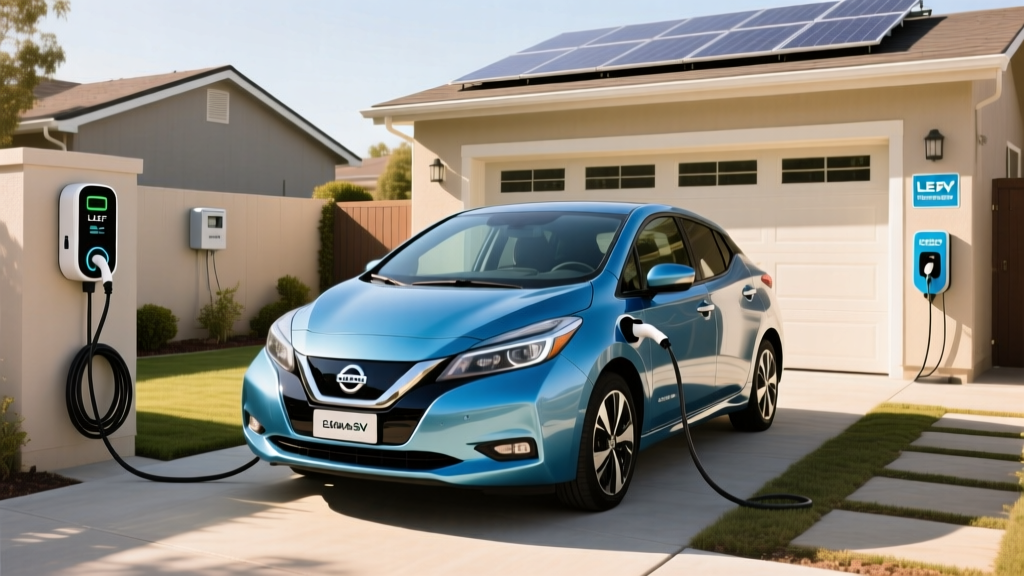
For home Level 2 charging, most chargers ship with a J1772 connector (the universal Level 2 standard). Tesla vehicles use a proprietary plug for Level 2 but include a J1772-to-Tesla adapter in the glovebox. NACS-native vehicles also accept J1772 via adapter. When buying a home charger, confirm the connector matches your vehicle or plan for an adapter.
Cost to Charge: Home vs Public vs DC Fast Charging Per Mile
The economic case for an EV hinges on charging cost. Electricity prices vary widely by region and time of use, but the per-mile math generally favors EVs over gasoline vehicles — especially when charging at home on off-peak rates.
| Scenario | $/kWh | Cost to Add 200 Miles* | Cost Per Mile |
|---|---|---|---|
| Home (off-peak utility rate) | $0.10–$0.15 | $6.00–$9.00 | $0.03–$0.045 |
| Home (standard residential avg) | $0.16–$0.20 | $9.60–$12.00 | $0.048–$0.06 |
| Public Level 2 (network pricing) | $0.25–$0.49 | $15.00–$29.40 | $0.075–$0.147 |
| DC Fast Charge (Electrify America / EVgo) | $0.35–$0.56 | $21.00–$33.60 | $0.105–$0.168 |
| Gas Vehicle (28 MPG avg, $3.40/gal) | — | $24.29 | $0.121 |
*Based on an EV averaging 3.3 kWh/mile (roughly 100 MPGe). Actual consumption varies by model, speed, and temperature.
The takeaway: home charging is dramatically cheaper than gas — often a third of the cost. But exclusive reliance on DC fast charging can push your per-mile cost above that of a fuel-efficient hybrid. The 400+ mile EVs listed above are most economical when charged at home overnight; their large batteries make DC fast charging sessions expensive and longer due to charge-curve tapering above 80%.
Recommended Home Level 2 Chargers for 2026
We evaluated chargers based on power output, cable length, smart features, build quality, and price. These are our top picks for pairing with a long-range EV:
ChargePoint Home Flex
- Power: Up to 12 kW (50A) on a 60A circuit; configurable down to 16A
- Connector: J1772 (NACS adapter available)
- Cable: 23 ft
- Smart features: Wi-Fi, app scheduling, utility demand-response integration, Alexa
- Price: ~$549
- Best for: Flexibility across circuit sizes; strong app ecosystem
Tesla Wall Connector
- Power: Up to 11.5 kW (48A) on a 60A circuit
- Connector: NACS native (J1772 adapter included in newer versions)
- Cable: 24 ft
- Smart features: Wi-Fi, OTA updates, power sharing (multiple units on one circuit)
- Price: ~$475
- Best for: Tesla and NACS-native vehicle owners; cleanest integration
Emporia Level 2 Smart Charger
- Power: Up to 11.5 kW (48A)
- Connector: J1772 (NACS adapter sold separately)
- Cable: 24 ft
- Smart features: Wi-Fi, energy monitoring, solar integration, load management
- Price: ~$399
- Best for: Budget-conscious buyers who want smart features and energy tracking
Grizzl-E Smart
- Power: Up to 10 kW (40A)
- Connector: J1772
- Cable: 24 ft
- Smart features: OCPP-compatible, adjustable amperage, outdoor-rated (NEMA 4)
- Price: ~$449
- Best for: Outdoor installs in harsh climates; Canadian-built durability
Safety, Code, and Installation Best Practices
EV charging involves sustained high-current draw — far more than typical household appliances. Cutting corners on installation is both dangerous and a potential insurance liability.
- Dedicated circuit: Your Level 2 charger must be on its own dedicated breaker. Sharing a circuit with other 240V appliances risks overloading and tripping.
- Hardwired vs outlet: Hardwired installations (no plug) are preferred for 48A+ chargers and eliminate the need for a GFCI breaker in many jurisdictions. A NEMA 14-50 outlet offers portability but requires a GFCI breaker under NEC 2020+ for outdoor installs — adding $50–$150 in parts.
- Outdoor rating: If your charger is mounted outside, ensure it carries a NEMA 4 (weatherproof) rating. Not all indoor-rated chargers are safe for uncovered outdoor use.
- Permit and inspection: Most municipalities require an electrical permit for new 240V circuits. Skipping the permit risks code violations, failed home inspections at sale time, and denied insurance claims in the event of a fire.
- Load management: If your panel is near capacity but you want to avoid a full upgrade, consider a smart charger with load-management features (e.g., Emporia, ChargePoint with panel monitor) that dynamically reduces charge rate when other circuits are active.
Frequently Asked Questions
How much does it cost to install a home EV charger?
A standard Level 2 home charger installation (equipment + electrician + permit) typically costs $900–$2,550 in homes with an existing 200A panel. If your home has a 100A panel and needs a service upgrade, total costs can reach $2,400–$6,050. The federal §30C credit may offset up to $1,000 of equipment and installation costs for qualifying taxpayers.
How fast will each charging level add range?
Level 1 (120V) adds roughly 3–5 miles of range per hour. Level 2 (240V) adds 25–45 miles per hour depending on amperage. DC fast charging can add 150–1,000+ miles per hour at peak rates, but sustained rates taper significantly above 80% SoC. For a 100 kWh battery, a 10–80% DC fast charge typically takes 18–35 minutes depending on the vehicle's peak charge rate.
Which connector is compatible with my EV?
For 2026 models: Tesla, Ford, GM, Rivian, Volvo, and most new models use NACS. Hyundai, Kia, VW, and BMW still use CCS1. CHAdeMO is effectively discontinued in the US market. For home Level 2, all vehicles accept J1772 (either natively or via included adapter). Check your vehicle's charge port before purchasing a home charger.
How much does charging cost per mile vs gas?
Home charging at off-peak rates costs roughly $0.03–$0.045 per mile — about one-third the cost of gasoline at $3.40/gallon and 28 MPG. Even public DC fast charging at $0.48/kWh averages $0.14/mile, competitive with gas. The savings are greatest when you charge at home, which is why Level 2 installation is the top priority for new EV owners.
What electrical upgrades might I need?
If your home has a 100A main panel with existing high-draw appliances (electric range, dryer, central AC), you'll likely need a 200A service upgrade ($1,500–$3,500) to safely add a 50A EV circuit. Homes with 200A panels usually have sufficient spare capacity. A licensed electrician will perform an NEC Article 220 load calculation to determine your exact situation.
Does a longer-range EV charge slower at home?
Yes, in practical terms. A 200 kWh Silverado EV battery takes roughly 20+ hours to charge from 10–100% on an 11.5 kW Level 2 charger, compared to about 9 hours for the 100 kWh Model S. However, since most drivers rarely deplete below 20% and don't need a full 100% daily, overnight Level 2 charging is still sufficient for daily use — even with the largest batteries. The key is consistent nightly plug-in habits rather than waiting for the battery to run low.