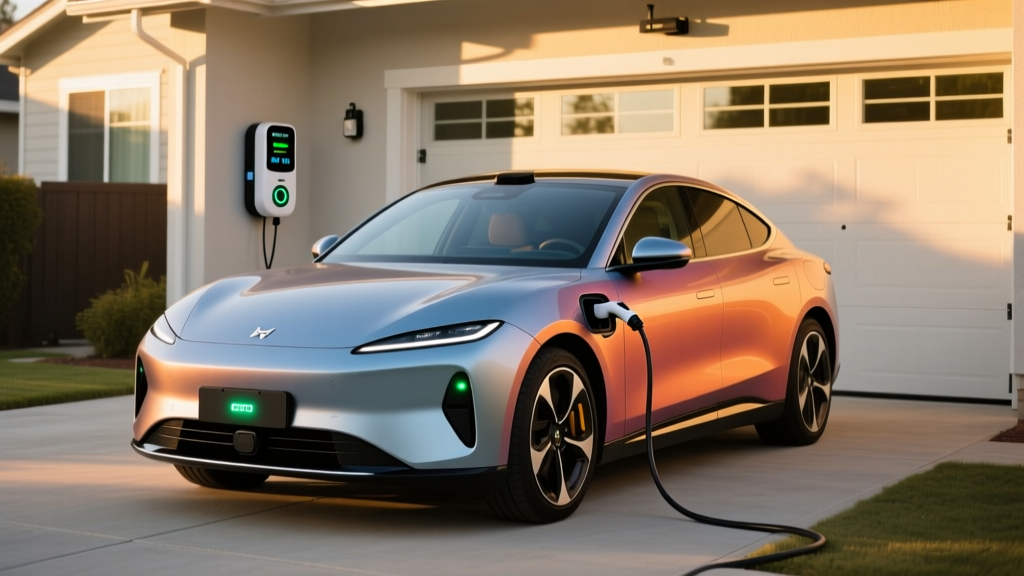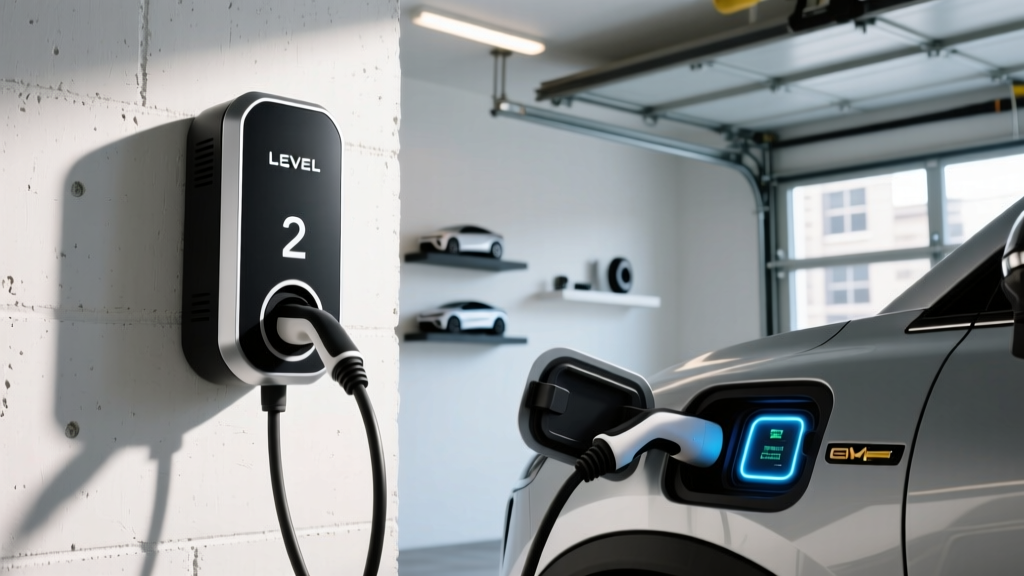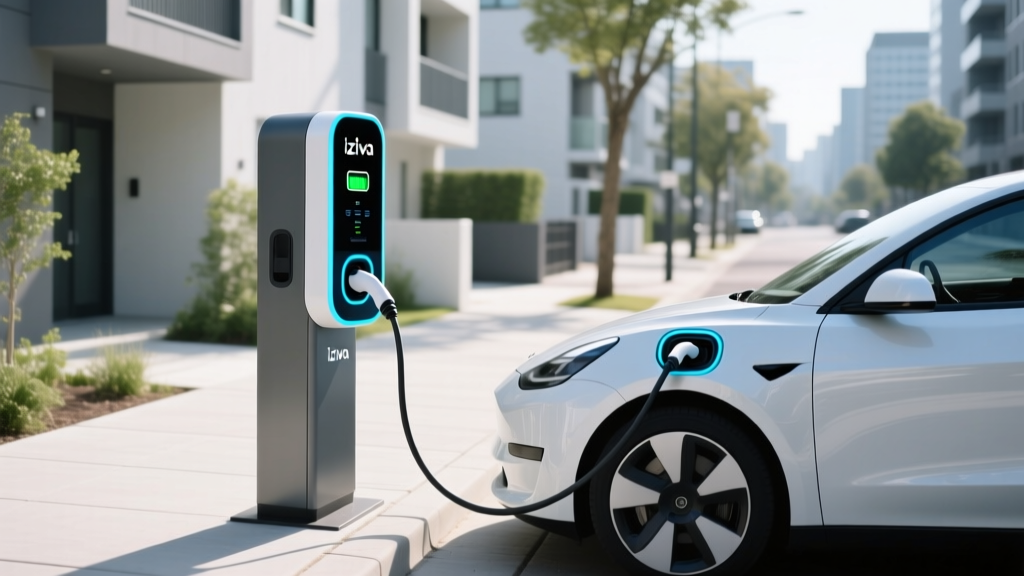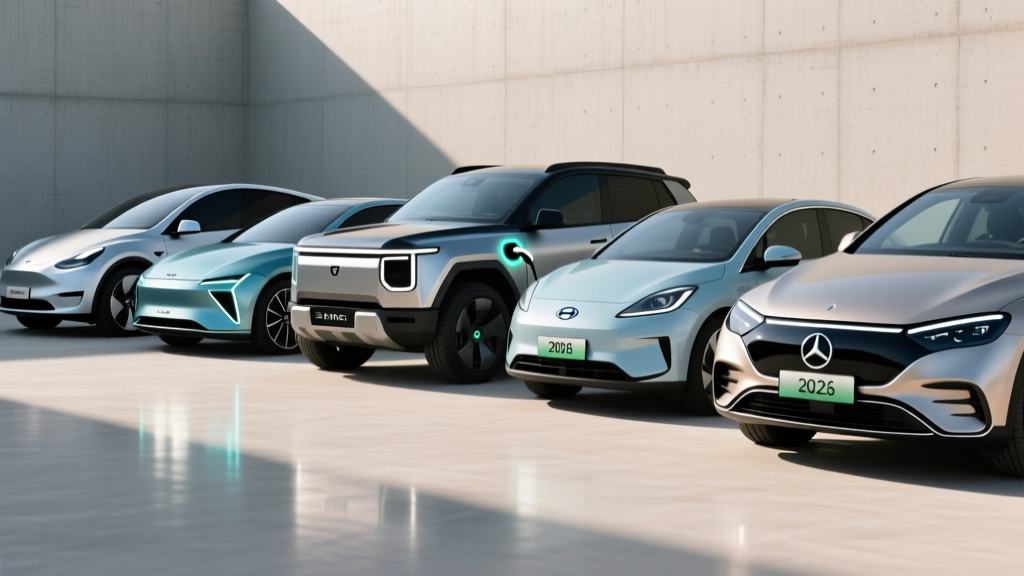
If you've just bought your first electric vehicle—or you're pulling into a public charging station for the first time—one question pops up fast: where is the charging port? Unlike gas cars, where the fuel door is almost always on the same side, EV charging ports are scattered across the front fender, rear quarter panel, nose badge, or even hidden behind a grille. Knowing your port location before you pull up to a charger can mean the difference between a smooth 30-second plug-in and an awkward multi-point turn to get your cable to reach.
This guide maps the charging port locations for every major EV on the US market in 2026, explains which connector each one uses, and covers the practical realities of plugging in at home and on the road.
Where Is the Charging Port? A Brand-by-Brand Map
Charging port placement is one of the most inconsistent design choices in the EV world. Some automakers cluster ports on the driver's side rear (easy for right-hand parking spots), while others put them on the front fender or even dead-center in the nose. Here's where to look on the most popular 2026 models:
| Make / Model | Port Location | Side | Connector |
|---|---|---|---|
| Tesla Model 3 | Rear quarter panel | Driver (left) | NACS |
| Tesla Model Y | Rear quarter panel | Driver (left) | NACS |
| Tesla Cybertruck | Rear quarter panel | Driver (left) | NACS |
| Ford Mustang Mach-E | Rear quarter panel | Driver (left) | NACS (2025+) |
| Ford F-150 Lightning | Front fender | Driver (left) | NACS (2025+) |
| Hyundai Ioniq 5 | Rear quarter panel | Passenger (right) | NACS (2026+) |
| Hyundai Ioniq 6 | Rear quarter panel | Passenger (right) | NACS (2026+) |
| Kia EV6 | Rear quarter panel | Passenger (right) | NACS (2026+) |
| Kia EV9 | Rear quarter panel | Passenger (right) | NACS |
| Chevrolet Equinox EV | Rear quarter panel | Driver (left) | NACS |
| Chevrolet Blazer EV | Rear quarter panel | Driver (left) | NACS |
| Cadillac Lyriq | Rear quarter panel | Driver (left) | NACS |
| BMW i4 | Rear quarter panel | Passenger (right) | CCS1 / NACS (adapter) |
| BMW iX | Rear quarter panel | Passenger (right) | CCS1 / NACS (adapter) |
| Mercedes EQE / EQS | Rear quarter panel | Passenger (right) | CCS1 / NACS (adapter) |
| VW ID.4 | Rear quarter panel | Passenger (right) | NACS (2025+) |
| Rivian R1T | Front fender | Driver (left) | NACS |
| Rivian R1S | Front fender | Driver (left) | NACS |
| Lucid Air | Rear quarter panel | Driver (left) | CCS1 / NACS (adapter) |
| Subaru Solterra | Rear quarter panel | Passenger (right) | CCS1 / NACS (adapter) |
| Toyota bZ4X | Front fender | Passenger (right) | CCS1 / NACS (adapter) |
| Nissan Ariya | Front (hood/badge area) | Center | CCS1 / NACS (adapter) |
| Nissan Leaf (2025 carryover) | Front (hood/badge area) | Center | CHAdeMO |
| Volvo EX30 | Rear quarter panel | Passenger (right) | NACS |
| Volvo EX90 | Rear quarter panel | Passenger (right) | NACS |
| Polestar 3 | Rear quarter panel | Passenger (right) | NACS |
| Toyota RAV4 Prime (PHEV) | Rear quarter panel | Passenger (right) | J1772 |
| Jeep Wrangler 4xe (PHEV) | Front fender | Driver (left) | J1772 |
The NACS Transition: What Connector Does Your EV Actually Use?
The biggest shift in EV charging since 2024 is the industry-wide migration to the North American Charging Standard (NACS), originally Tesla's proprietary connector. By the 2026 model year, nearly every major automaker has adopted NACS natively on new vehicles. That said, millions of CCS1-equipped EVs from 2022–2025 are still on the road, and CHAdeMO persists on older Nissan Leafs.
| Connector | Used By | DC Fast Charge Support | Adapter Needed? |
|---|---|---|---|
| NACS (native) | Tesla (all), Ford, GM, Hyundai/Kia (2026+), VW, Rivian, Volvo/Polestar | Yes — Supercharger + open networks | No (native) |
| CCS1 | BMW, Mercedes, Lucid, Subaru, Toyota (bZ4X), legacy Hyundai/Kia (2022–2025) | Yes — Electrify America, EVgo, ChargePoint | NACS-to-CCS adapter for Superchargers |
| CHAdeMO | Nissan Leaf (legacy) | Yes — shrinking network | No native adapter to NACS; limited future |
| J1772 (AC only) | All PHEVs, older BEVs for Level 2 AC | N/A (AC charging) | J1772-to-NACS adapter included with most NACS EVs |
If you own a CCS1-equipped EV from 2023–2025, most automakers now offer or have announced a CCS-to-NACS adapter (typically $150–$250) that grants access to Tesla's Supercharger network. Ford and Rivian began shipping these adapters in 2024; Hyundai and Kia followed in 2025. Check your manufacturer's owner portal for availability.
How Fast Does Each Charging Level Add Range?
Understanding charging speed starts with the difference between kW (kilowatts) and kWh (kilowatt-hours). kW measures power—the rate at which energy flows into your car. kWh measures energy—the total capacity of your battery, like gallons in a fuel tank. A 150 kW charger delivers energy faster than a 50 kW charger, filling your kWh battery in less time.
| Level | Voltage | Max Power (kW) | Miles of Range per Hour | Best For |
|---|---|---|---|---|
| Level 1 (120V household) | 120V AC | 1.0–1.4 kW | 3–5 mi/hr | Overnight top-ups, PHEVs, emergencies |
| Level 2 (240V home/public) | 240V AC | 3.3–19.2 kW | 14–75 mi/hr | Daily home charging, workplace, shopping centers |
| DC Fast Charge | 400–800V DC | 50–350 kW | 150–1,000+ mi/hr (peak) | Road trips, quick 10–80% stops |
Real-World Charging Time Examples
Charging times depend on battery size (kWh), peak charge rate (kW), and the charge curve—most EVs slow charging significantly above 80% State of Charge to protect the battery. Here are realistic 10–80% times for popular 2026 models:
- Tesla Model Y Long Range (75 kWh battery, 250 kW peak): ~22 minutes at a V3 Supercharger
- Hyundai Ioniq 5 (77.4 kWh, 800V architecture, 240 kW peak): ~18 minutes at a 350 kW station
- Ford F-150 Lightning Extended Range (131 kWh, 150 kW peak): ~41 minutes at a 150 kW DC charger
- Chevrolet Equinox EV (85 kWh, 150 kW peak): ~30 minutes at a 150 kW DC charger
- BMW i4 eDrive40 (81.5 kWh, 200 kW peak): ~27 minutes at a 200 kW+ station
These times assume a preconditioned battery (the car has warmed or cooled the pack before arrival) and a charger capable of delivering the vehicle's peak rate. In cold weather below 32°F, expect 10–80% times to increase by 20–40% unless you precondition via the vehicle's navigation-routed charging feature.
How Much Does It Cost to Install a Home EV Charger?
Home Level 2 charging is where 80%+ of all EV charging happens, according to fueleconomy.gov. A proper Level 2 installation requires a dedicated 240V circuit, a hardwired or plug-in charger, and a permit in most jurisdictions. Costs vary enormously depending on your electrical panel's capacity and the distance from panel to charger location.
| Component | Typical Range | Notes |
|---|---|---|
| Level 2 charging equipment (40A–48A) | $350–$750 | Smart Wi-Fi chargers cost more; basic units start ~$300 |
| Electrician labor (standard install) | $500–$1,500 | Short run from panel, drywall, conduit |
| Permit & inspection | $50–$250 | Varies by municipality; some waive for EV circuits |
| Total (no panel upgrade) | $900–$2,500 | Average: ~$1,400 for a 48A hardwired unit |
| Electrical panel upgrade (100A → 200A) | $1,500–$3,500 | Required if existing panel has no capacity for a 40A+ breaker |
| Total (with panel upgrade) | $2,400–$6,000 | Older homes (pre-1990) are most likely to need this |
Electrical Requirements & Panel Capacity
Most Level 2 chargers draw between 32A and 48A at 240V. By the National Electrical Code (NEC), a continuous load like an EV charger can only use 80% of a circuit's rated capacity. That means:
- 40A charger → requires a 50A breaker and 6-gauge wire
- 48A charger → requires a 60A breaker and 4-gauge wire
- 32A charger → requires a 40A breaker and 8-gauge wire
If your home has a 100A main panel that's already near capacity (common in homes with electric ranges, dryers, and AC), adding a 50–60A EV circuit may exceed the panel's safe load. A licensed electrician will perform a load calculation per NEC Article 220 to determine if an upgrade is needed. Some newer solutions like the Span smart panel or Eaton circuit-level management can avoid a full panel upgrade by intelligently shedding non-essential loads during charging.
Safety & Code Considerations
- Dedicated circuit: Your EV charger must be on its own dedicated breaker—never shared with other appliances.
- GFCI protection: NEC 2020 and later requires GFCI protection for all 240V EV charging outlets (not required for hardwired units in most jurisdictions).
- Outdoor rating: If your charger is mounted outside, it must be rated NEMA 4 (weatherproof). Most major chargers (ChargePoint, Emporia, Wallbox) carry this rating.
- Cable management: NEC prohibits running charging cables across walkways or through doorways. Plan your charger location near your parking spot.
Charging Cost Per Mile: EV vs. Gas
One of the strongest ownership arguments for an EV is fuel cost savings—but the actual number depends heavily on where and when you charge. Here's a realistic breakdown using 2026 electricity and gas prices:
| Scenario | Cost per kWh | EV Efficiency (kWh/mi) | Cost per Mile |
|---|---|---|---|
| Home, off-peak (utility time-of-use rate) | $0.08–$0.12 | 0.28–0.35 | $0.02–$0.04 |
| Home, standard residential rate | $0.13–$0.18 | 0.28–0.35 | $0.04–$0.06 |
| Public Level 2 (ChargePoint, etc.) | $0.20–$0.35 | 0.28–0.35 | $0.06–$0.12 |
| DC Fast Charge (Electrify America, EVgo) | $0.35–$0.55 | 0.28–0.35 | $0.10–$0.19 |
| Tesla Supercharger (average) | $0.25–$0.36 | 0.28–0.32 | $0.07–$0.12 |
Gas comparison: A 2026 Toyota RAV4 AWD averaging 30 MPG combined at $3.40/gallon costs $0.11/mile. A comparable EV (like the Equinox EV at ~3.0 mi/kWh) charged at home off-peak costs roughly $0.03/mile—a 73% savings. Even exclusive DC fast charging at $0.45/kWh yields ~$0.15/mile, which is still competitive with gas in many markets.
The takeaway: home charging is where the economics shine. If you can install a Level 2 charger and charge overnight on a time-of-use plan, your per-mile fuel cost drops to a third or less of a gas car. If you rely exclusively on public DC fast charging, the savings narrow significantly—and in some regions, DC fast charging can actually cost more per mile than gas.
Recommended Home Chargers for 2026
Not all Level 2 chargers are equal. Here are top picks based on power output, connector, build quality, smart features, and value. All units below are NEMA 4 rated for outdoor use and UL-listed.
Emporia Vue Level 2 Smart Charger
- Power: 48A / 11.5 kW (240V, hardwired)
- Connector: NACS (J1772 adapter included)
- Cable: 24 ft
- Smart features: Wi-Fi, app scheduling, solar integration, energy monitoring
- Price: ~$399
- Best for: Budget-conscious buyers who want smart features and energy tracking
ChargePoint Home Flex
- Power: Up to 50A / 12 kW (configurable 16A–50A)
- Connector: NACS (J1772 version also available)
- Cable: 23 ft
- Smart features: Wi-Fi, Alexa/Google, app scheduling, flexible amperage
- Price: ~$699
- Best for: Flexibility on amperage (great if your circuit is 40A but you want a future-proof unit)
Tesla Wall Connector
- Power: 48A / 11.5 kW (240V, hardwired)
- Connector: NACS (J1772 adapter included)
- Cable: 24 ft
- Smart features: Wi-Fi, OTA updates, power sharing (link multiple units on one circuit), load management
- Price: ~$475
- Best for: Tesla owners and multi-EV households (power sharing is unique)
Wallbox Pulsar Plus
- Power: 48A / 11.5 kW (240V)
- Connector: NACS (J1772 version available)
- Cable: 25 ft
- Smart features: Wi-Fi + Bluetooth, app scheduling, Eco-Smart mode (solar matching), Power Sharing
- Price: ~$599
- Best for: Solar-panel owners who want to charge on excess production
For most homeowners, a 48A hardwired charger on a 60A circuit is the sweet spot—it delivers ~11.5 kW, adding roughly 35–45 miles of range per hour for a typical EV with 3.0 mi/kWh efficiency. That means even a large 100 kWh battery charges from 10–80% in about 6–7 hours overnight, which is more than enough for daily driving.
Frequently Asked Questions
How much does it cost to install a home EV charger?
A standard Level 2 home charger installation runs $900–$2,500 if your electrical panel has capacity. If you need a 100A-to-200A panel upgrade—common in older homes—total costs rise to $2,400–$6,000. Always get a load calculation from a licensed electrician before committing.
How fast will each charging level add range?
Level 1 (120V) adds 3–5 miles per hour—fine for PHEVs with small batteries. Level 2 (240V, 48A) adds 35–45 miles per hour—enough to fully replenish most EVs overnight. DC fast charging at 150+ kW can add 150–300+ miles in a 20–30 minute session, though charge rates taper significantly above 80%.
Which connector/charger is compatible with my EV?
For 2026 models, most new EVs use the NACS connector natively (Tesla, Ford, GM, Hyundai/Kia, VW, Rivian, Volvo). Older 2022–2025 models from BMW, Mercedes, Subaru, and Toyota use CCS1 and require an adapter for Supercharger access. The Nissan Leaf uses CHAdeMO. Check the connector table above for your specific model.
How much does charging cost per mile vs. gas?
Home off-peak charging averages $0.02–$0.04 per mile—roughly 70–75% cheaper than a 30 MPG gas car at $3.40/gallon ($0.11/mile). Public DC fast charging at $0.40–$0.55/kWh costs $0.11–$0.19 per mile, which is comparable to or slightly higher than gas. Maximize home charging for the best economics.
What electrical upgrades might I need?
If your home has a 200A main panel with available capacity, you likely need only a new 50–60A breaker and wiring run. Homes with 100A panels, or panels already loaded with electric HVAC, range, dryer, and water heater circuits, may need a panel upgrade ($1,500–$3,500) or a smart load-management device. Your electrician's NEC Article 220 load calculation will determine this.
Does the charging port location affect which stall I should pull into?
Yes. If your port is on the passenger (right) side, pull into the stall with the charger on your right—typically this means backing in. If your port is on the driver (left) side, pull in forward or back in depending on cable reach. Front-mounted ports (Rivian, Nissan Ariya) are the easiest—just pull in forward. At tight urban charging stations, knowing your port side saves significant maneuvering time.
Can I use a Tesla Supercharger with a non-Tesla EV?
Yes, as of 2026, Tesla has opened thousands of Superchargers to non-Tesla EVs via the "Open Supercharging" program. NACS-equipped vehicles plug in directly. CCS1-equipped vehicles need a CCS-to-NACS adapter (available from your automaker or aftermarket for $150–$250). Check the Tesla app for station availability—some older Supercharger sites with short cables may not accommodate non-Tesla port locations.