If you've spotted an Izivia-branded charger on a street corner, in a retail parking lot, or along a European highway and wondered who operates it, you're not alone. Izivia is one of the largest charging networks on the continent, but for North American EV drivers researching options — or expats and fleet managers evaluating cross-border infrastructure — understanding the company behind the badge matters just as much as understanding how to set up charging at home.
This guide covers Izivia charging station company information, including its corporate structure, network footprint, and hardware, then pivots into a practical breakdown of home Level 2 charging: install costs, electrical requirements, connector compatibility, equipment recommendations, and the per-mile economics that determine whether plugging in at home beats filling up at the pump.
Izivia Charging Station Company Information: Who They Are
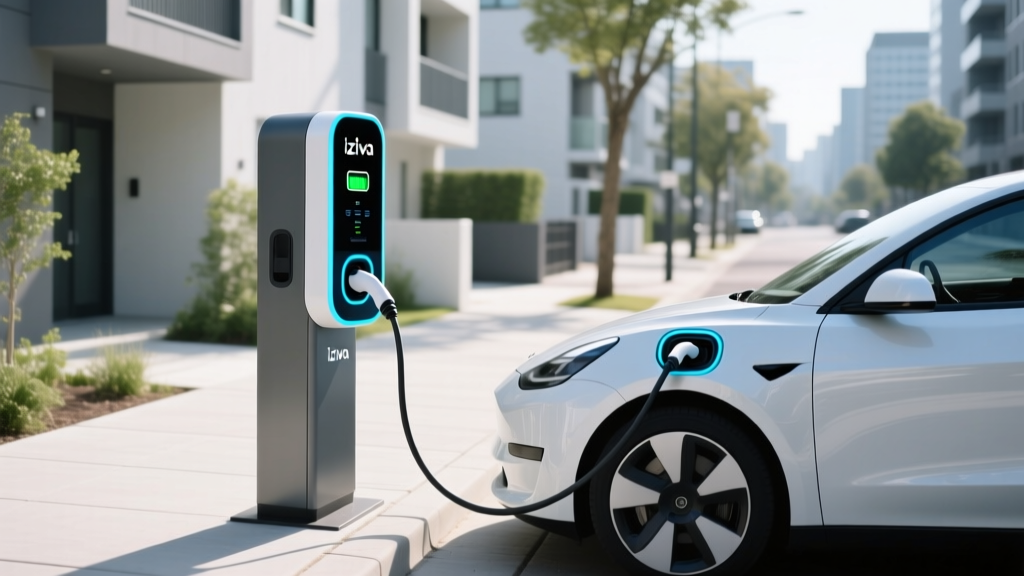
Izivia is a French electric-vehicle charging network operator and a wholly owned subsidiary of EDF Group, France's state-backed electricity utility. The company rebranded from its former name, Sodetrel, in 2019 to unify its public and private charging offerings under a single identity. As of 2025–2026, Izivia operates and maintains more than 100,000 charging points across France and parts of Western Europe, making it one of the region's largest networks alongside Ionity, Fastned, and TotalEnergies.
Izivia's business spans three segments:
- Public fast-charging corridors: DC fast chargers (typically 50–350 kW) deployed along motorways and in urban hubs, primarily using CCS2 connectors (the European standard, distinct from North America's CCS1).
- Destination and retail charging: Level 2 AC chargers (7–22 kW) at shopping centers, hotels, parking garages, and workplaces.
- Private and fleet solutions: Turnkey charging installations for businesses, apartment buildings, and fleet depots, including load-management software.
For North American drivers, Izivia does not currently operate public charging stations in the US or Canada. However, EDF Group's North American investments and the global harmonization toward NACS (North American Charging Standard) mean that Izivia's hardware choices and network-management strategies offer useful context for where the industry is headed. If you're evaluating charging companies for fleet procurement or cross-border operations, Izivia's EDF backing and scale make it a significant player worth tracking.
Charging Levels Explained: kW Speeds and Miles per Hour
Before evaluating any charging network or home setup, you need to understand the three charging tiers. The critical distinction: kW (kilowatts) measures power — how fast energy flows into your battery. kWh (kilowatt-hours) measures energy — the total capacity of your battery. Think of kW as the width of a hose and kWh as the size of the bucket.
| Level | Voltage | Power (kW) | Miles of Range per Hour | Typical Use Case |
|---|---|---|---|---|
| Level 1 | 120V AC | 1.0–1.9 kW | 2–5 mi/hr | Overnight top-up, PHEVs, emergency |
| Level 2 | 240V AC | 3.3–19.2 kW | 10–60 mi/hr | Home daily charging, workplace, destination |
| DC Fast (Level 3) | 400–800V DC | 50–350 kW | 150–1,000+ mi/hr | Road trips, highway corridors, rapid top-up |
A few real-world caveats: DC fast-charging speeds peak at low states of charge (typically 10–30% SoC) and taper significantly above 80%. A charger rated at 250 kW may only sustain that rate for a few minutes before dropping to 150 kW, then 75 kW, then slower still. That's why manufacturers and reviewers cite 10–80% charge times rather than peak kW alone. For example:
- Hyundai Ioniq 5 (84 kWh battery, 800V architecture): 10–80% in ~18 minutes on a 350 kW charger.
- Tesla Model Y Long Range (75 kWh usable, 400V): 10–80% in ~25–30 minutes on a 250 kW Supercharger.
- Ford F-150 Lightning Extended Range (131 kWh usable): 10–80% in ~41 minutes on a 150 kW charger.
Home Level 2 Charger Installation: Electrical Requirements and Cost
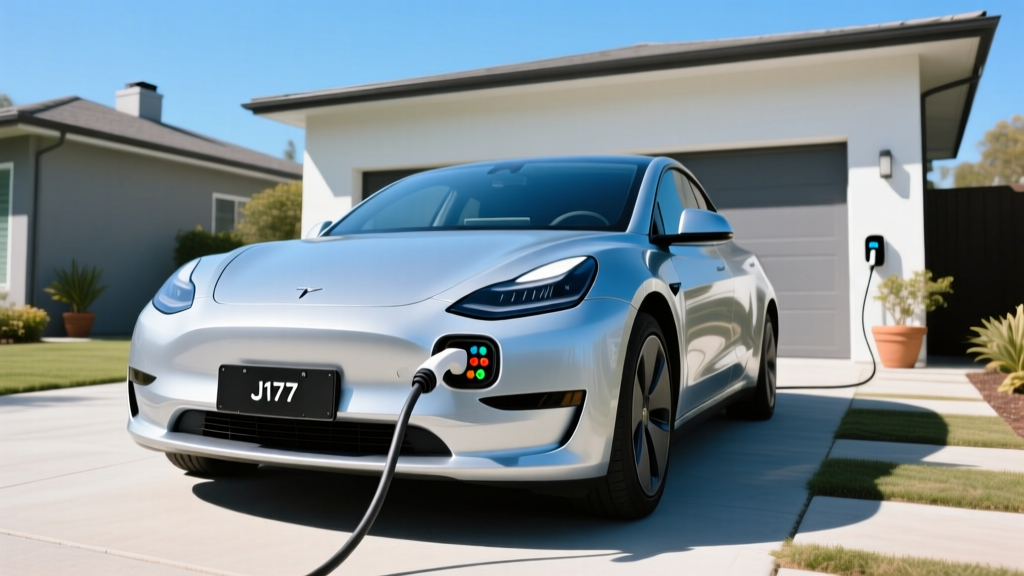
Most EV owners do 80% or more of their charging at home on a Level 2 circuit. A proper installation requires a dedicated 240V circuit — the same voltage your electric dryer or oven uses — typically rated at 40A to 60A to support charge rates of 9.6 kW to 11.5 kW continuously.
Home Level 2 Charger Installation Cost Breakdown (2026 Estimates)
| Component | Low End | High End | Notes |
|---|---|---|---|
| Level 2 charger hardware | $350 | $750 | Smart Wi-Fi chargers, 32A–48A |
| Electrician labor | $400 | $1,500 | Depends on run length, conduit, wall type |
| Electrical permit | $50 | $250 | Varies by municipality |
| Panel upgrade (if needed) | $1,500 | $4,000+ | Required if panel is 100A or near capacity |
| Total (no panel upgrade) | $800 | $2,500 | Most homes with 200A service |
| Total (with panel upgrade) | $2,300 | $6,500+ | Older homes with 100A panels |
The single biggest variable is whether your home's electrical panel can handle the added load. A 48A continuous-draw charger requires a 60A breaker (NEC rules mandate that continuous loads not exceed 80% of breaker rating). If your panel is already near capacity — common in homes built before 2000 with 100A service — you'll need a panel upgrade to 200A, which adds $1,500–$4,000+ to the project. Always have a licensed electrician perform a load calculation before committing to equipment.
Federal incentives may help: the Residential Clean Energy Credit (IRS §25D) has historically covered 30% of qualified home EV charging equipment costs up to $1,000, though eligibility and caps are subject to change — confirm current-year rules with a tax professional.
Connector Compatibility: NACS, CCS1, and CHAdeMO
The connector landscape in North America has consolidated rapidly since Tesla opened its Supercharger network and the NACS (North American Charging Standard, SAE J3400) was adopted as the industry standard. Here's where things stand for 2026 model-year vehicles:
| Connector | Type | Brands Using It (Native) | Adapter Needed? |
|---|---|---|---|
| NACS (J3400) | AC + DC | Tesla, Ford, GM, Rivian, Volvo, Polestar, Hyundai/Kia (2025+) | No — growing native support |
| CCS1 | AC + DC | VW, BMW, older Hyundai/Kia, legacy models | NACS-to-CCS adapter for Tesla Superchargers |
| CHAdeMO | DC only | Nissan Leaf (legacy), Mitsubishi Outlander PHEV | Limited network; CHAdeMO infrastructure declining |
For home Level 2 charging, nearly all chargers use a J1772 connector (or NACS for Tesla-compatible units). If your EV has a NACS port, you'll want a NACS-equipped home charger. If it has a J1772/CCS port, any standard Level 2 charger will work. Adapters are available for cross-compatibility but add $100–$250 to your setup cost.
Izivia's European chargers use CCS2 (the European equivalent of CCS1) and CHAdeMO. North American drivers won't encounter Izivia hardware directly, but the company's transition toward multi-standard deployments mirrors the NACS consolidation happening stateside.
Charging Cost per Mile: Home vs. Public vs. Gas
The economics of EV charging depend heavily on where and when you plug in. Here's a realistic comparison using a mid-size EV with an efficiency of 3.0 miles per kWh (roughly 112 MPGe combined, similar to a Tesla Model Y or Hyundai Ioniq 5):
| Scenario | Rate | Cost per kWh | Cost per Mile |
|---|---|---|---|
| Home (off-peak utility rate) | Time-of-use plan | $0.08–$0.14 | $0.027–$0.047 |
| Home (standard residential rate) | Flat rate | $0.14–$0.20 | $0.047–$0.067 |
| Public Level 2 (network pricing) | Per kWh or per session | $0.25–$0.49 | $0.083–$0.163 |
| DC Fast Charging (public) | Per kWh | $0.35–$0.65 | $0.117–$0.217 |
| Gasoline (30 MPG vehicle) | $3.50/gallon | — | $0.117 |
| Gasoline (22 MPG truck/SUV) | $3.50/gallon | — | $0.159 |
The takeaway: home charging on an off-peak rate delivers fuel costs roughly one-quarter to one-third of an equivalent gasoline vehicle. Even public DC fast charging at premium rates is often cost-competitive with gasoline, especially for less efficient trucks and SUVs. However, frequent reliance on expensive public DC chargers ($0.50+/kWh) can erode the EV cost advantage — which is why home Level 2 access remains the single most important factor in EV ownership satisfaction.
Recommended Home Level 2 Chargers for 2026
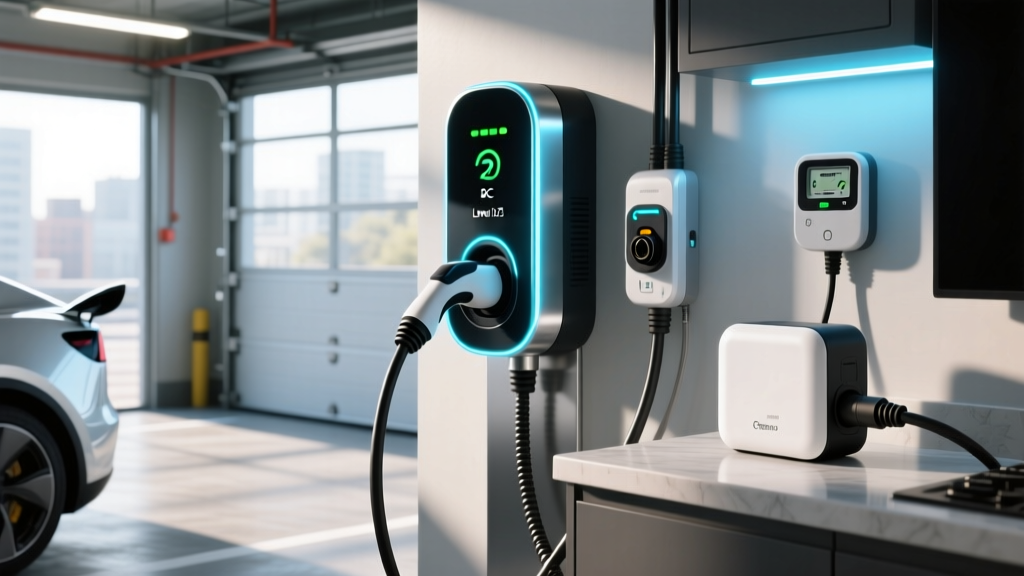
Based on power output, build quality, smart features, connector options, and real-world reliability, here are four chargers worth considering for a 2026 home installation:
ChargePoint Home Flex
- Power: Up to 12 kW (50A) on a 60A circuit; adjustable down to 16A
- Connector: J1772 (NACS adapter available)
- Cable length: 23 ft
- Smart features: Wi-Fi, app scheduling, Alexa integration, energy reports
- Price: ~$550–$650
- Best for: Flexible amperage for older panels; strong app ecosystem
Tesla Wall Connector
- Power: Up to 11.5 kW (48A) on a 60A circuit
- Connector: NACS native (J1772 adapter included)
- Cable length: 24 ft
- Smart features: Wi-Fi, OTA updates, Power-Share (dual-unit load balancing)
- Price: ~$425–$475
- Best for: Tesla and NACS-native vehicles; best value per kW
Emporia Vue EV Charger
- Power: Up to 11.5 kW (48A) on a 60A circuit
- Connector: J1772 (NACS version available)
- Cable length: 24 ft
- Smart features: Integrated energy monitoring, solar integration, app scheduling
- Price: ~$400–$500
- Best for: Solar-owning households wanting whole-home energy visibility
Grizzl-E Smart
- Power: Up to 10 kW (40A) on a 50A circuit
- Connector: J1772 or NACS
- Cable length: 24 ft
- Smart features: OCPP compatibility, basic app, adjustable amperage
- Price: ~$450–$550
- Best for: Extreme cold climates (rated to -40°F); rugged outdoor builds
Regardless of which unit you choose, ensure it's UL-listed (or ETL-listed to UL standards), hardwired rather than plug-in for circuits above 40A, and installed on a dedicated breaker. For outdoor installations, verify the charger carries a NEMA 4 or IP65 weather-resistance rating.
Safety, Code, and Permit Considerations
EV charger installation is governed by the National Electrical Code (NEC Article 625) and local amendments. Key requirements include:
- Dedicated circuit: Your EV charger must have its own breaker — no sharing with other appliances.
- GFCI protection: NEC 2020 and later require ground-fault circuit-interrupter protection for all EV charging outlets (hardwired units often have GFCI built in).
- Continuous-load derating: EV charging is classified as a continuous load, meaning you must size the breaker at 125% of the charger's rated amperage (a 40A charger requires a 50A breaker; a 48A charger requires a 60A breaker).
- Permit and inspection: Most jurisdictions require an electrical permit and a post-installation inspection. Skipping this can void home insurance coverage in the event of an electrical fire.
- Outdoor rating: If the charger is mounted outside, it must be rated for wet locations (NEMA 4 / IP65 minimum).
Always hire a licensed electrician familiar with NEC Article 625. A qualified installer will perform a load calculation on your panel, pull the required permits, and ensure the installation passes inspection — protecting both your home and your warranty coverage.
How Izivia's Network Strategy Informs the Global Charging Picture
While Izivia's chargers don't appear at American rest stops, the company's approach to network management reflects trends that North American drivers will benefit from:
- Utility-backed infrastructure: Like Izivia's relationship with EDF, US utilities (PG&E, ConEdison, Duke Energy) are increasingly investing in charging buildouts, which tends to improve reliability and lower rates.
- Load management software: Izivia deploys dynamic load-balancing for multi-charger sites — technology now appearing in US residential setups via chargers like the Tesla Wall Connector's Power-Share feature.
- Multi-standard flexibility: Izivia's European chargers support CCS2 and CHAdeMO simultaneously, paralleling the North American transition where networks are adding NACS cables alongside legacy CCS1.
For fleet operators and commercial property managers evaluating charging partners, studying how Izivia scaled to 100,000+ charge points under a utility umbrella offers a blueprint for the kind of vertically integrated, grid-aware charging that reduces peak-demand costs and improves uptime.
Frequently Asked Questions
How much does it cost to install a home EV charger?
Expect $800–$2,500 for a typical Level 2 installation in a home with a 200A panel and short conduit runs. If your home has a 100A panel that needs upgrading, total costs can reach $2,300–$6,500+. Equipment itself runs $350–$750; the remainder is electrician labor, materials, and permitting.
How fast will each charging level add range?
Level 1 (120V) adds 2–5 miles per hour — sufficient only for PHEVs or overnight trickle-charging. Level 2 (240V, 40A–48A) adds 25–45 miles per hour, enough to fully recharge most EVs overnight. DC fast charging (50–350 kW) adds 150–1,000+ miles per hour at peak rates, though speeds taper above 80% SoC.
Which connector/charger is compatible with my EV?
Check your vehicle's charge port. Tesla, Ford, GM, Rivian, and 2025+ Hyundai/Kia models use NACS. Most other current models use CCS1/J1772. The Nissan Leaf uses CHAdeMO. For home charging, match your charger's connector to your vehicle's port — or budget $100–$250 for an adapter.
How much does charging cost per mile vs gas?
Home charging on off-peak rates costs roughly $0.03–$0.05 per mile — about one-quarter to one-third the cost of gasoline at $3.50/gallon in a 30 MPG vehicle ($0.12/mile). Public DC fast charging at $0.45–$0.65/kWh costs $0.15–$0.22/mile, which is still competitive with gasoline for less efficient vehicles.
What electrical upgrades might I need?
The most common upgrade is a panel replacement from 100A to 200A service ($1,500–$4,000+), needed when your existing panel lacks capacity for a 50A–60A dedicated EV circuit. Older homes may also need new conduit runs, a service mast upgrade, or coordination with the utility for a higher-capacity drop. A licensed electrician's load calculation will determine exactly what's required.
Is Izivia available in the United States?
No. Izivia operates exclusively in France and parts of Western Europe as a subsidiary of EDF Group. North American drivers will not encounter Izivia chargers domestically. The company's network uses CCS2 connectors, which are not compatible with North American CCS1 or NACS ports without specialized adapters not intended for consumer use.