What Is a Destination Charger (Tesla)? The Quick Answer
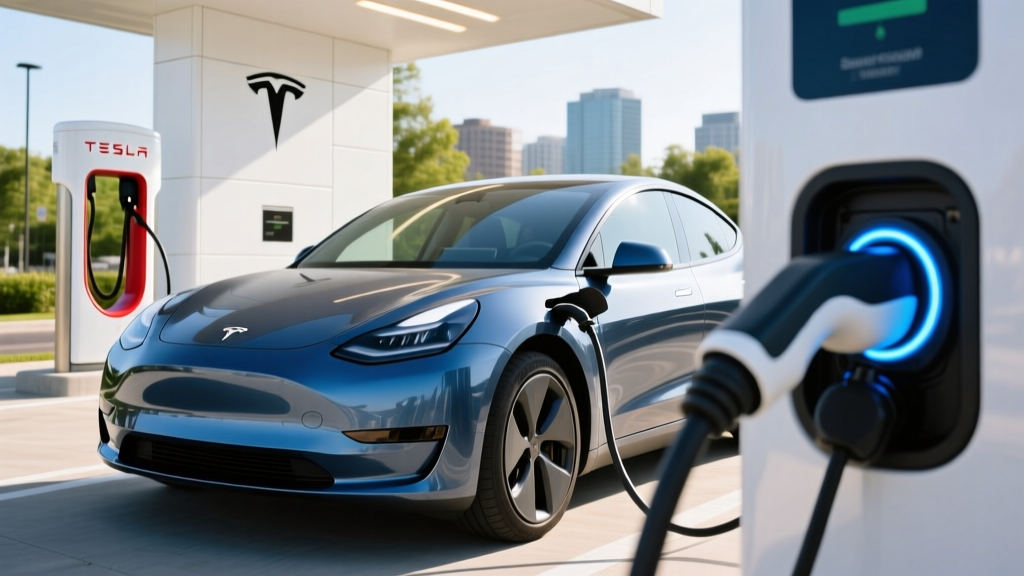
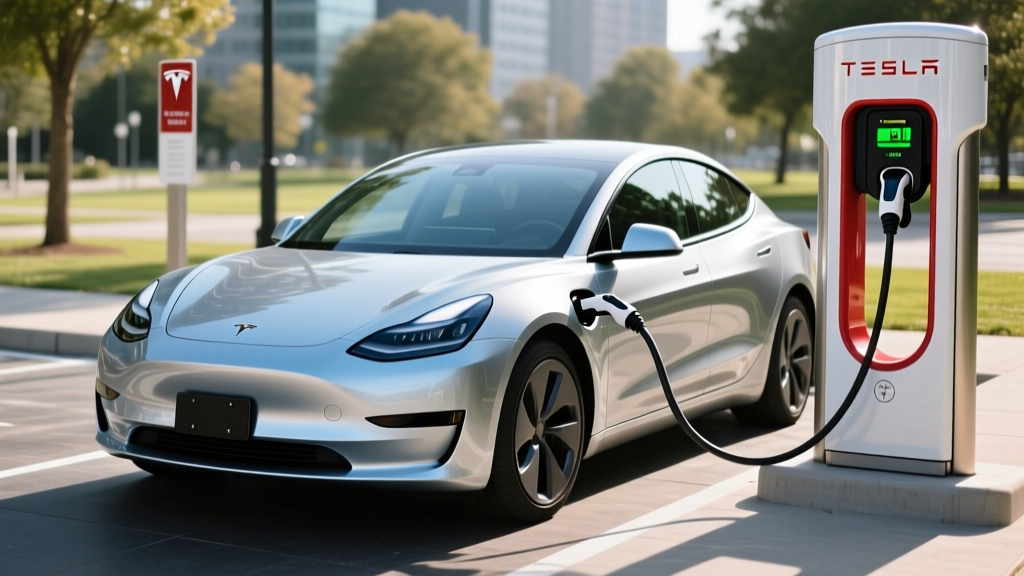
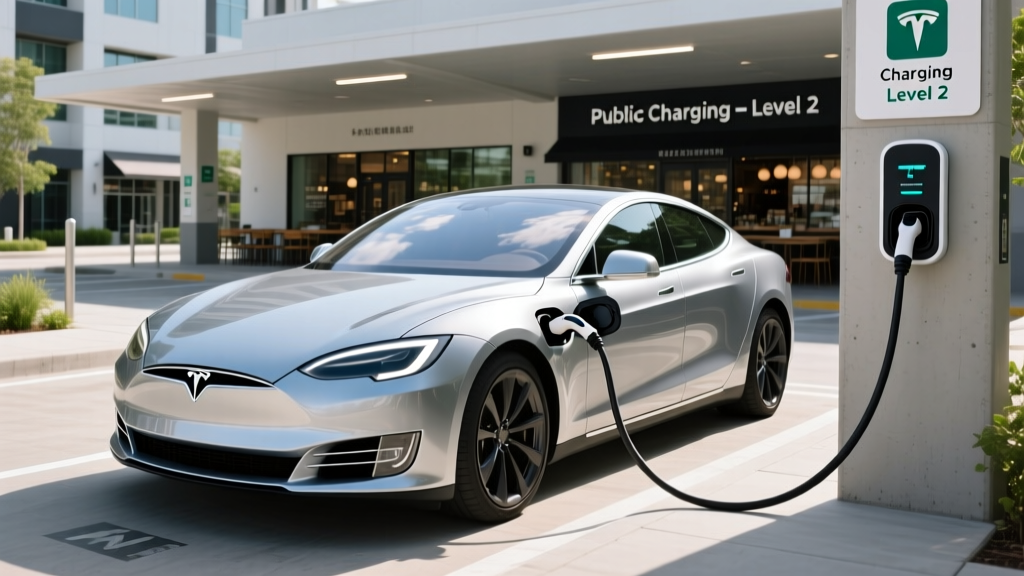
A Tesla Destination Charger is a Level 2 AC charging station installed at hotels, restaurants, shopping centers, and other locations where drivers typically spend one to several hours. Unlike Tesla's Supercharger network—which delivers DC fast charging at up to 350 kW for quick highway stops—Destination Chargers provide slower, convenience-based charging using the same NACS (North American Charging Standard) connector found on Tesla vehicles.
As of 2026, Tesla operates over 60,000 Destination Charging connectors globally, and the program has expanded to include Universal Wall Connectors that serve both NACS-equipped Teslas and CCS/NACS-adopting vehicles from Ford, GM, Rivian, Hyundai, and others. If you're asking "what is a destination charger Tesla" in a search, you're likely trying to understand how these differ from Superchargers, whether your non-Tesla EV can use them, and what speeds to expect.
Charging Levels Explained: Where Destination Chargers Fit
Understanding destination charging requires context on the three EV charging levels. Here's the breakdown every EV owner should know:
| Level | Voltage | Power (kW) | Miles of Range Added/Hour | Typical Use Case |
|---|---|---|---|---|
| Level 1 | 120V AC | 1.0–1.4 kW | 3–5 mi/hr | Overnight home trickle charge |
| Level 2 | 208–240V AC | 3.3–19.2 kW | 12–70 mi/hr | Home, workplace, destination charging |
| DC Fast (Level 3) | 400–800V DC | 50–350 kW | 150–1,000+ mi/hr | Highway road trips (Superchargers, EA, EVgo) |
A Tesla Destination Charger is firmly in the Level 2 category. The AC power from the station flows into your vehicle's onboard charger, which converts it to DC to fill the battery. This means your charging speed is bottlenecked by your car's onboard charger—not just the station's output.
Real-world example: A Tesla Model Y Long Range (75 kWh usable battery, EPA 310 miles) plugged into an 11.5 kW Destination Charger will gain approximately 44 miles of range per hour. A full 10%–80% charge (roughly 52.5 kWh) takes about 4.5 hours. By contrast, a 250 kW Supercharger V3 delivers that same 10%–80% in approximately 25–30 minutes, though the charge curve tapers significantly above 60% SoC.
Tesla Destination Charger vs. Supercharger: Which Do You Need?
The two networks serve fundamentally different purposes:
| Feature | Tesla Destination Charger | Tesla Supercharger |
|---|---|---|
| Charging type | AC Level 2 | DC Fast (Level 3) |
| Power output | 11.5–22 kW | 72–350 kW |
| 10%–80% time (Model Y) | ~4–5 hours | ~15–30 min (V3/V4) |
| Typical locations | Hotels, restaurants, malls, resorts | Highway corridors, urban fast-charge hubs |
| Cost to user | Often free (complimentary with stay/meal) | $0.25–$0.48/kWh (varies by location/time) |
| Connector (2026) | NACS (increasingly Universal) | NACS (open to CCS vehicles via adapter/Magic Dock) |
The practical rule: Use Destination Chargers when you'll be parked for 2+ hours—overnight at a hotel, during a long dinner, or while working at an office. Use Superchargers when you need to add 150+ miles in under 30 minutes during a road trip.
Which Connector/Charger Is Compatible with My EV?
The connector landscape shifted dramatically in 2024–2025 when nearly every major automaker adopted NACS (Tesla's connector standard, now formally SAE J3400). By 2026, the picture is clearer than it's ever been:
| EV Brand (2026 Models) | Native Connector | Tesla Destination Charger Access | Tesla Supercharger Access |
|---|---|---|---|
| Tesla (all models) | NACS | Native — plug and charge | Native — plug and charge |
| Ford (F-150 Lightning, Mustang Mach-E 2025+) | NACS | Native | Native |
| GM (Equinox EV, Blazer EV, Silverado EV) | NACS | Native | Native |
| Hyundai/Kia (Ioniq 5/6, EV6/9 2025+) | NACS | Native | Native |
| Rivian (R1T, R1S 2025+) | NACS | Native | Native |
| Older CCS1 vehicles (2024 and earlier non-NACS) | CCS1 | CCS-to-NACS adapter needed (~$150–$250) | Magic Dock or adapter required |
| Nissan Leaf (CHAdeMO) | CHAdeMO | Not compatible (no viable adapter) | Not compatible |
Important for non-Tesla owners: Tesla's newer Universal Wall Connector (launched 2024, widely deployed by 2026) features a built-in CCS1 adapter, meaning it can charge both NACS and CCS-equipped vehicles without the driver needing a separate dongle. When searching the Tesla app or in-car navigation for Destination Chargers, look for the "Universal" label to confirm CCS compatibility.
How Much Does Charging Cost Per Mile vs. Gas?
One of the strongest arguments for EV ownership is the per-mile energy cost. Here's how destination charging (and EV charging broadly) stacks up against gasoline in 2026:
| Scenario | Rate | Cost per Mile* | Annual Cost (12,000 mi) |
|---|---|---|---|
| Home charging (off-peak utility rate) | $0.08–$0.14/kWh | $0.027–$0.047 | $324–$564 |
| Home charging (standard rate) | $0.15–$0.20/kWh | $0.050–$0.067 | $600–$804 |
| Destination Charger (complimentary) | Free | $0.00 | $0 |
| Destination Charger (paid, typical) | $0.20–$0.30/kWh | $0.067–$0.10 | $804–$1,200 |
| DC Fast Charging (public) | $0.30–$0.48/kWh | $0.10–$0.16 | $1,200–$1,920 |
| Gasoline vehicle (28 MPG avg, $3.40/gal) | $3.40/gallon | $0.121 | $1,457 |
*Based on an EV efficiency of 3.0 miles/kWh (typical for a midsize crossover like the Tesla Model Y, Hyundai Ioniq 5, or Ford Mustang Mach-E). Per fueleconomy.gov, the 2026 Tesla Model Y Long Range achieves 122 MPGe combined, equating to roughly 3.4 mi/kWh.
The takeaway: Home charging remains the cheapest option by a wide margin. Destination Chargers that are complimentary (many hotels offer them free to guests) make EV travel essentially cost-free for the charging portion. Even paid Level 2 destination charging undercuts gasoline on a per-mile basis in most markets.
Home Level 2 Charger Installation: Costs, Electrical Requirements, and What to Expect
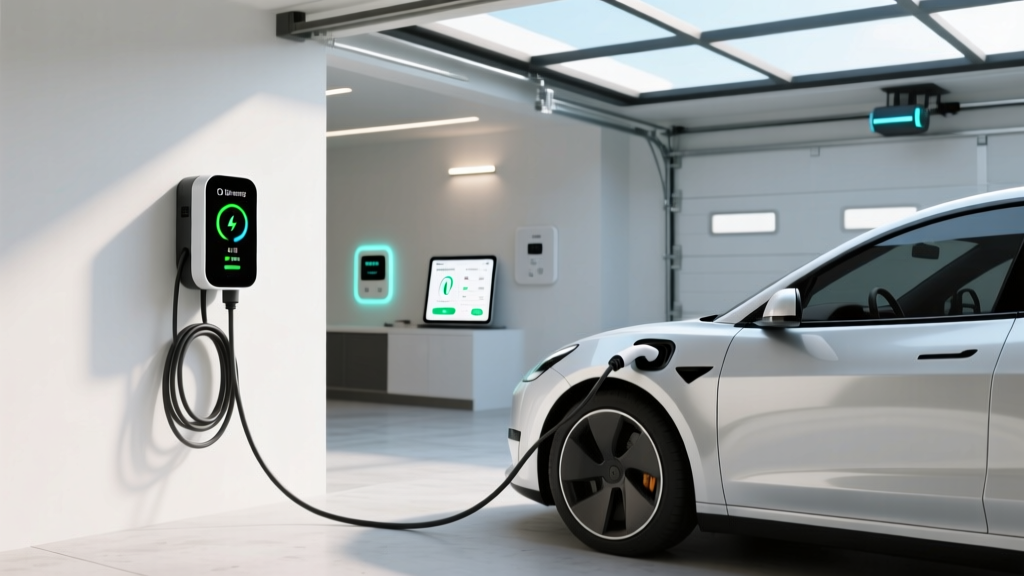
If you're considering installing your own Level 2 charger at home—whether a Tesla Wall Connector or a third-party unit—here's what the project actually involves in 2026.
Electrical Requirements
A Level 2 home charger requires a 240V dedicated circuit, similar to what powers an electric dryer or oven. The most common configurations:
- 40A circuit / 32A continuous → delivers 7.7 kW (most common residential setup)
- 50A circuit / 40A continuous → delivers 9.6 kW
- 60A circuit / 48A continuous → delivers 11.5 kW (Tesla Wall Connector max)
- 80A circuit / 64A continuous → delivers 15.4 kW (requires robust panel; rare in residential)
EVs draw continuous load for hours, so the National Electrical Code (NEC) requires circuits to be rated at 125% of the charger's maximum draw. A 48A charger needs a 60A breaker.
Do You Need a Panel Upgrade?
This is the cost variable most online guides gloss over. If your home has a 100A electrical panel (common in homes built before 2000), adding a 60A EV circuit may exceed your panel's capacity—especially if you also run electric heat, a dryer, and an oven simultaneously. A licensed electrician will perform a load calculation per NEC Article 220.
If you need a panel upgrade from 100A to 200A, expect to add $1,500–$3,500 to your project cost. Homes with 200A panels (standard in most post-2010 construction) typically have sufficient headroom for a 40A–60A EV circuit without upgrades.
Installation Cost Breakdown
| Component | Simple Install (panel nearby) | Complex Install (long run, conduit) | With Panel Upgrade |
|---|---|---|---|
| EVSE equipment (charger) | $400–$650 | $400–$650 | $400–$650 |
| Electrician labor | $300–$600 | $800–$2,000 | $1,500–$3,000 |
| Electrical permit | $50–$150 | $50–$200 | $100–$300 |
| Panel upgrade (if needed) | N/A | N/A | $1,500–$3,500 |
| Total estimated cost | $750–$1,400 | $1,250–$2,850 | $3,500–$7,450 |
Federal incentive note: The IRS §30C Alternative Fuel Vehicle Refueling Property Credit offers up to 30% of equipment and installation costs (capped at $1,000) for home charger installations placed in service through 2032, subject to census-tract eligibility. This is separate from the §30D vehicle purchase credit. Consult a tax professional to confirm eligibility.
Recommended Home Level 2 Chargers (2026)
Whether you drive a Tesla or a NACS-equipped EV from another brand, these are the Level 2 chargers we recommend based on power output, build quality, smart features, and value:
Tesla Wall Connector (Gen 3)
- Power: Up to 11.5 kW (48A)
- Connector: NACS native
- Cable length: 24 ft
- Smart features: Wi-Fi updates, Tesla app integration, load sharing (pair up to 6 units on one circuit)
- Price: ~$420
- Best for: Tesla owners; cleanest integration with Tesla vehicles
Tesla Universal Wall Connector
- Power: Up to 11.5 kW (48A)
- Connector: NACS with built-in CCS1 adapter (Magic Dock-style)
- Cable length: 24 ft
- Smart features: Wi-Fi, auto-detects connector type, works with Tesla app
- Price: ~$600
- Best for: Multi-EV households (Tesla + non-Tesla)
ChargePoint Home Flex
- Power: Up to 12 kW (50A, configurable down to 16A)
- Connector: NACS or J1772 (select at purchase)
- Cable length: 23 ft
- Smart features: Wi-Fi, ChargePoint app, scheduling, Alexa integration, amperage adjustable via app
- Price: ~$550–$700
- Best for: Flexible amperage for older panels; strong app ecosystem
Emporia Level 2 EV Charger
- Power: Up to 11.5 kW (48A)
- Connector: NACS or J1772
- Cable length: 24 ft
- Smart features: Wi-Fi, Emporia app, integrates with Emporia home energy monitor, solar-aware scheduling
- Price: ~$350–$400
- Best for: Budget-conscious buyers; solar-home integration
Safety, Code, and Installation Best Practices
EV charging places sustained electrical demand on your home's wiring for 6–12 hours at a stretch. Cutting corners here is dangerous and potentially illegal. Here's what the NEC and best practices require:
- Dedicated circuit: Your EV charger must have its own breaker—never share a circuit with other major appliances.
- GFCI protection: NEC 2020 and later requires GFCI (Ground Fault Circuit Interrupter) protection for outdoor receptacles. Hardwired installations (which most Level 2 chargers use) are exempt from the GFCI requirement in many jurisdictions, but check local code. Hardwiring is generally preferred for reliability and safety.
- Outdoor rating: If installing outdoors or in an unenclosed carport, ensure your charger carries a NEMA 4 (weatherproof) rating. All units listed above meet this standard.
- Wire gauge: A 60A circuit typically requires 6 AWG copper wire (THHN in conduit). Your electrician will size this based on run length and local amendments.
- Permit and inspection: Most jurisdictions require an electrical permit and post-installation inspection. Skipping this can void your homeowner's insurance coverage for electrical fires.
Frequently Asked Questions
How much does it cost to install a home EV charger?
A straightforward Level 2 home charger installation with an existing 200A panel and a short wire run typically costs $750–$1,400 all-in (equipment, electrician, and permit). Complex installations with long conduit runs range from $1,250–$2,850. If your home needs a panel upgrade from 100A to 200A, total project costs can reach $3,500–$7,450. Always get at least two quotes from licensed electricians.
How fast will each charging level add range?
Level 1 (120V) adds about 3–5 miles per hour. Level 2 (240V) adds 12–70 miles per hour depending on the charger's kW output and your vehicle's onboard charger. DC fast charging adds 150–1,000+ miles per hour in peak conditions, though the charge curve tapers significantly above 80% State of Charge. A Tesla Destination Charger at 11.5 kW adds approximately 44 miles per hour to a Model Y.
Can non-Tesla EVs use Tesla Destination Chargers?
Yes, with conditions. Tesla's newer Universal Wall Connectors at destination sites feature a built-in CCS1 adapter, allowing CCS-equipped vehicles to charge without a separate dongle. For older Tesla-only Destination Chargers, non-Tesla EVs need a CCS-to-NACS adapter (approximately $150–$250 from brands like Lectron or A2Z). Check the Tesla app or in-car map for "Universal" designations before planning a stop.
What's the difference between a Tesla Destination Charger and a Supercharger?
Destination Chargers are Level 2 AC chargers (11.5–22 kW) located at hotels, restaurants, and similar venues where you'll spend hours. They add 30–60 miles of range per hour and are often free. Superchargers are DC fast chargers (72–350 kW) along highways that add 150–1,000+ miles per hour, designed for 15–30-minute stops during road trips, and always cost money per kWh.
How much does charging cost per mile vs. gas?
Home charging at $0.14/kWh costs roughly $0.04–$0.05 per mile for a typical EV. Gasoline at $3.40/gallon in a 28 MPG vehicle costs about $0.12 per mile. Even paid public Level 2 charging at $0.25/kWh ($0.08/mi) undercuts gasoline. DC fast charging at $0.40/kWh ($0.13/mi) approaches gas parity but is used sparingly for road trips, not daily driving.
What electrical upgrades might I need for a home charger?
The most common upgrade is a panel capacity increase from 100A to 200A service, needed in older homes with limited electrical headroom ($1,500–$3,500). You may also need a new dedicated breaker slot, upgraded wire runs (6 AWG or 4 AWG copper), and conduit for outdoor runs. Some utilities offer time-of-use (TOU) plans that may require a smart meter. A licensed electrician's load calculation will determine exactly what's needed before you buy equipment.
Sources: U.S. EPA Fuel Economy, IRS §30C Credit, Tesla Destination Charging program documentation, manufacturer specification sheets for 2026 model-year vehicles.