The Real Cost at a Tesla Charging Station — And How It Compares
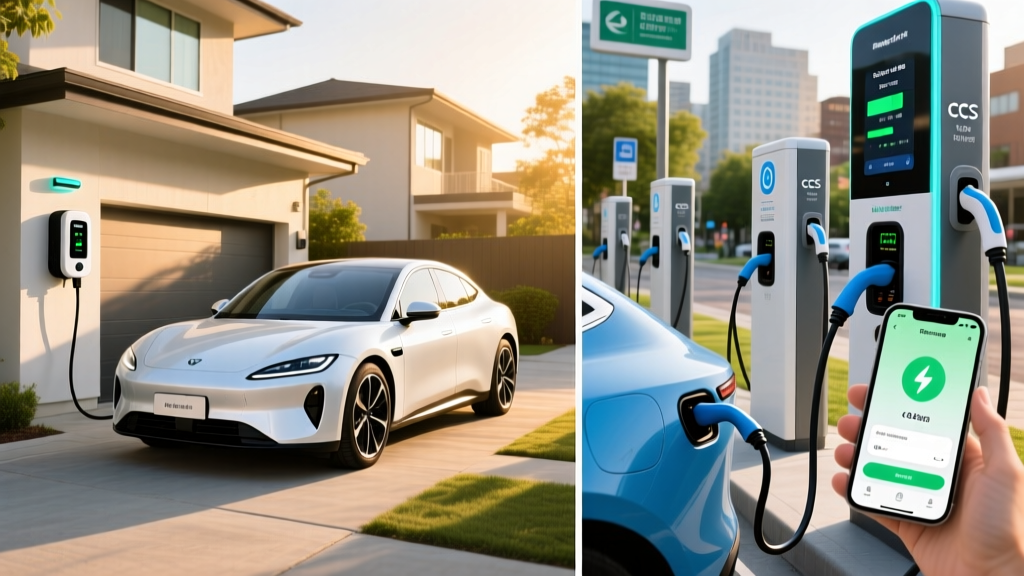
If you're researching the cost at a Tesla charging station, you're likely weighing whether public DC fast charging or a home Level 2 setup makes more financial sense for your daily driving. The short answer: Tesla Supercharger rates in 2026 average between $0.28 and $0.48 per kWh depending on location and time of day, while home charging on a 240V Level 2 circuit can drop that to $0.09–$0.17 per kWh. Over a year of driving, that difference adds up to hundreds — sometimes over a thousand — dollars.
But the full picture involves more than just the per-kWh rate. Installation costs, electrical panel capacity, connector compatibility, and how often you actually need DC fast charging all factor into the equation. This guide breaks down every cost layer with exact numbers, so you can make a spec-driven decision.
Charging Levels Explained: Speeds, Costs, and When to Use Each
Before comparing costs, you need to understand the three charging tiers. The key distinction: kW (kilowatts) measures power — how fast energy flows into your battery — while kWh (kilowatt-hours) measures energy — the total amount stored. Think of kW as the width of a hose and kWh as the size of the bucket.
| Level | Voltage | Power (kW) | Miles Added/Hour | Typical Use | Cost Range ($/kWh) |
|---|---|---|---|---|---|
| Level 1 | 120V AC | 1.0–1.9 kW | 3–5 mi/hr | Overnight top-ups, PHEVs | $0.09–$0.17 (home) |
| Level 2 | 240V AC | 7.2–19.2 kW | 25–65 mi/hr | Daily home/workplace charging | $0.09–$0.17 (home); $0.20–$0.39 (public) |
| DC Fast (incl. Supercharger) | 400–800V DC | 50–350 kW | 150–1,000+ mi/hr | Road trips, rapid top-ups | $0.28–$0.56 (varies by network) |
For context, a Tesla Model Y Long Range (82 kWh usable battery, ~310 miles EPA) charging from 10% to 80% at a V3 Supercharger (peak 250 kW) takes roughly 25–28 minutes in optimal conditions. That same charge at home on an 11.5 kW Level 2 wall connector takes about 5 hours — which is perfectly practical when plugged in overnight.
Tesla Supercharger Pricing in 2026: What You'll Actually Pay
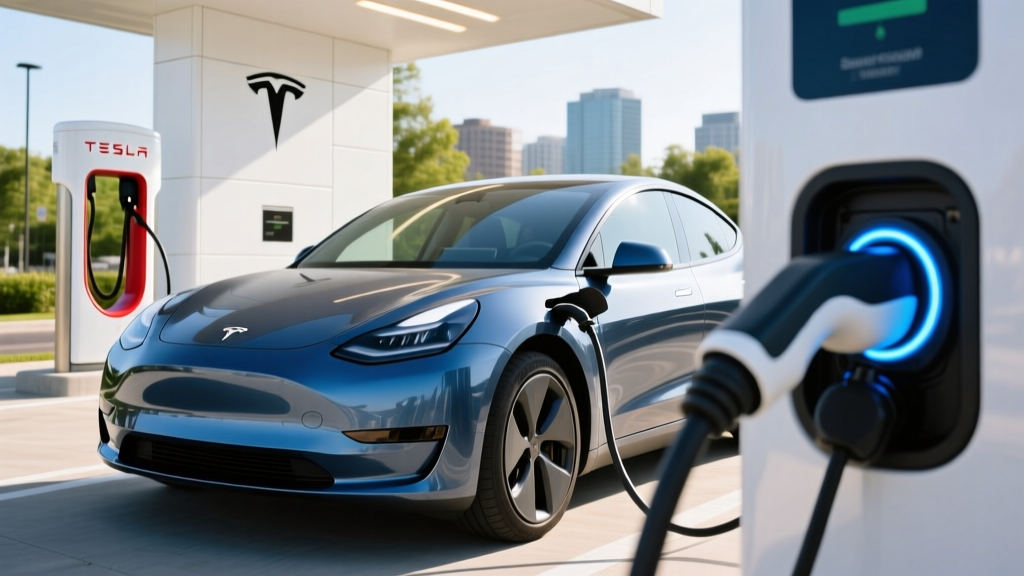
Tesla's Supercharger network has expanded significantly, and pricing varies by station, region, and whether you're in a Tesla or using the now-open network with a non-Tesla EV (via the built-in Magic Dock CCS adapter at select locations). Here's what the rate landscape looks like:
- Standard Supercharger rate: $0.28–$0.48/kWh (national average ~$0.35/kWh)
- Peak-hour surcharge (metro stations): Up to $0.56/kWh in high-demand urban corridors
- Off-peak discount (where available): $0.22–$0.30/kWh at select stations during overnight hours
- Non-Tesla vehicles at Superchargers: Typically $0.48–$0.64/kWh (higher rate without Tesla membership pricing)
- Idle fees: $0.50–$1.00/minute if your vehicle remains plugged in after reaching its charge limit at a busy station
Cost-Per-Mile Calculation: Supercharger vs Home vs Gas
Using a 2026 Tesla Model Y Long Range (310 mi EPA, ~82 kWh usable, ~27 kWh/100mi efficiency) as our baseline:
| Charging Method | Rate | Cost Per 100 Miles | Cost Per Mile |
|---|---|---|---|
| Home Level 2 ($0.13/kWh avg) | $0.13/kWh | $3.51 | $0.035 |
| Tesla Supercharger ($0.35/kWh avg) | $0.35/kWh | $9.45 | $0.095 |
| Peak Supercharger ($0.52/kWh) | $0.52/kWh | $14.04 | $0.14 |
| Electrify America ($0.48/kWh avg) | $0.48/kWh | $12.96 | $0.13 |
| Gas car (28 MPG combined, $3.40/gal) | $3.40/gal | $12.14 | $0.12 |
The data is clear: home Level 2 charging is the cheapest option by a wide margin, while Supercharger costs are competitive with — or slightly above — gasoline on a per-mile basis depending on time of day. For road trips, the Supercharger premium buys you speed and convenience. For daily commuting, home charging is the economic winner.
Home Level 2 Charger Installation: Full Cost Breakdown
Installing a 240V Level 2 home charger is the single highest-impact upgrade an EV owner can make. Here's the realistic cost structure for a professional installation in 2026:
| Component | Typical Cost Range | Notes |
|---|---|---|
| Level 2 charger unit (hardwired or NEMA 14-50 plug) | $350–$750 | Varies by brand, power output, smart features |
| Electrician labor (run 240V circuit, mount unit) | $500–$2,000 | Depends on distance from panel, wall type, conduit run |
| Electrical permit | $50–$200 | Required in most jurisdictions; varies by municipality |
| Panel upgrade (if needed: 100A → 200A) | $1,500–$4,000 | Older homes with 100A service may need this for a 40A+ circuit |
| Total (no panel upgrade) | $900–$2,950 | Most homes with 200A service fall in this range |
| Total (with panel upgrade) | $2,400–$6,950 | Common in pre-1990 homes |
Electrical Requirements for a Level 2 Home Charger
A standard Level 2 installation requires a dedicated 240V circuit. The amperage determines your charging speed:
- 40A circuit / 32A continuous: 7.7 kW — adds ~28 miles/hour for a Model Y. This is the most common residential setup and works with a NEMA 14-50 outlet or hardwired connection.
- 50A circuit / 40A continuous: 9.6 kW — adds ~35 miles/hour. Requires a NEMA 14-50 or hardwired.
- 60A circuit / 48A continuous: 11.5 kW — adds ~42 miles/hour. Must be hardwired; this is the Tesla Wall Connector's maximum output.
- 80A circuit / 64A continuous: 15.4 kW — adds ~56 miles/hour. Requires hardwired installation and a high-capacity panel; supported by vehicles like the Ford F-150 Lightning (with optional 80A Charge Station Pro) and certain Lucid configurations.
Safety and Code Requirements
Proper installation isn't optional — it protects your home and ensures warranty compliance:
- Dedicated circuit: Your EV charger must have its own breaker — no sharing with other appliances.
- GFCI protection: Required for outdoor installations and garages in most jurisdictions per NEC 2023/2026 updates.
- Outdoor-rated equipment: If mounted outside, the charger and any receptacle must carry a NEMA 4 or NEMA 4X weather rating.
- Permit and inspection: Most municipalities require a permit and post-installation inspection. Skipping this can void homeowner's insurance coverage for electrical fires.
- Wire gauge: 6 AWG copper for 40–50A circuits; 4 AWG for 60A. Your electrician will spec this based on run length and local code.
Connector Compatibility: NACS, CCS, and CHAdeMO in 2026
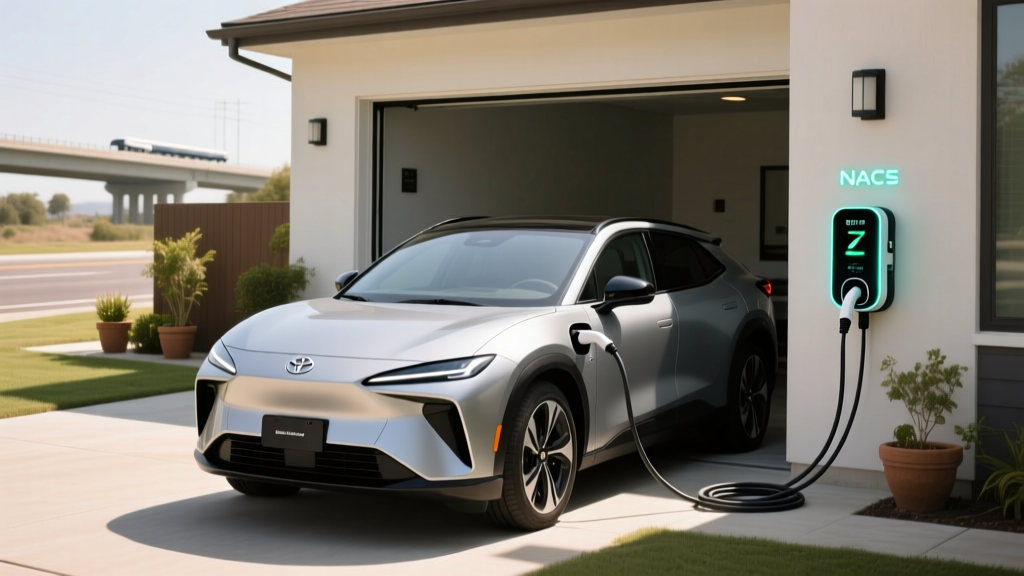
The connector landscape has consolidated significantly. Tesla's North American Charging Standard (NACS) is now the dominant connector in the US, with Ford, GM, Rivian, Hyundai, Kia, and most major automakers adopting it for 2025–2026 model-year vehicles.
| Connector | Brands Using It (Native) | Adapter Needed for Superchargers? | Adapter Needed for CCS Stations? |
|---|---|---|---|
| NACS (Tesla) | Tesla, Ford (2025+), GM (2025+), Rivian (2025+), Hyundai/Kia (2026+) | No — native at Superchargers | Yes — NACS-to-CCS adapter (~$150–$200) |
| CCS1 | VW, BMW, Mercedes, Stellantis, older Ford/GM/Hyundai | Yes — CCS-to-NACS adapter or Magic Dock at select Superchargers | No — native at Electrify America, EVgo, ChargePoint |
| CHAdeMO | Nissan Leaf (legacy only) | Not compatible | Not compatible — limited network |
If you own a CCS-equipped EV and want Supercharger access, Tesla sells a CCS-to-NACS adapter for approximately $200 through the Tesla app. Third-party adapters from brands like Lectron are also available. For Tesla owners needing access to Electrify America or other CCS networks, a NACS-to-CCS adapter is required.
The CHAdeMO connector is effectively discontinued in the US for new vehicles. Nissan switched the Ariya to CCS, and the Leaf — the last CHAdeMO holdout — ended production. Existing CHAdeMO stations are still operational but the network is shrinking.
Recommended Home Level 2 Chargers: Specs and Pricing
Not all Level 2 chargers are equal. Here are four proven units we recommend based on power output, build quality, smart features, and real-world reliability:
Tesla Wall Connector
- Power: 11.5 kW (48A) max
- Connector: NACS (native); J1772 adapter available
- Cable: 24 ft
- Smart features: Wi-Fi, OTA updates, Power Sharing (link two units on one circuit), Tesla app integration
- Price: ~$475
- Best for: Tesla owners wanting maximum home charge speed
ChargePoint Home Flex
- Power: Up to 12 kW (50A) — configurable 16A–50A via DIP switch
- Connector: J1772 (NACS adapter included in 2025+ models)
- Cable: 23 ft
- Smart features: Wi-Fi, ChargePoint app, scheduled charging, Alexa integration
- Price: ~$550–$650
- Best for: Non-Tesla EVs; flexible amperage for older panels
Emporia Level 2 EV Charger
- Power: Up to 11.5 kW (48A)
- Connector: J1772 or NACS (select at purchase)
- Cable: 24 ft
- Smart features: Wi-Fi, Emporia energy monitoring (pairs with Emporia Vue home energy monitor), solar integration
- Price: ~$400–$500
- Best for: Budget-conscious buyers with solar panels or energy monitoring
Grizzl-E Smart
- Power: Up to 10 kW (40A)
- Connector: J1772 or NACS
- Cable: 24 ft
- Smart features: Wi-Fi, OCPP protocol, adjustable amperage, extreme cold rated (-40°F)
- Price: ~$450–$550
- Best for: Cold-climate owners; rugged outdoor installations
All four units are UL-listed (or ETL-listed), which is required for permit approval and insurance compliance. Avoid uncertified chargers from online marketplaces — they may not pass inspection and can pose fire risks.
Charging Time Examples: How Long to Reach 80%
Here are realistic 10–80% charge times for common battery sizes across charging levels. Note that DC fast charging times assume optimal battery temperature (preconditioned) and a station delivering sustained peak power:
| Vehicle (Battery Size) | Level 1 (1.4 kW) | Level 2 (11.5 kW) | DC Fast (250 kW peak) |
|---|---|---|---|
| Tesla Model 3 RWD (57.5 kWh) | ~29 hours | ~3.5 hours | ~22 minutes |
| Tesla Model Y LR (82 kWh) | ~41 hours | ~5 hours | ~27 minutes |
| Ford F-150 Lightning Ext. Range (131 kWh) | ~66 hours | ~8 hours | ~41 minutes (at 170 kW sustained) |
| Hyundai Ioniq 5 (77.4 kWh) | ~39 hours | ~4.7 hours | ~18 minutes (800V architecture, 350 kW station) |
The Hyundai Ioniq 5's 800V battery architecture allows it to accept up to ~240 kW at compatible 350 kW stations, making it one of the fastest-charging EVs available. Tesla's 400V architecture peaks around 250 kW at V3 Superchargers but tapers more aggressively above 50% SoC.
Frequently Asked Questions
How much does it cost to install a home EV charger?
A typical Level 2 home charger installation costs $900–$2,950 when your electrical panel has sufficient capacity. This includes the charger unit ($350–$750), electrician labor ($500–$2,000), and permit fees ($50–$200). If your home has an older 100A panel that needs upgrading to 200A, add $1,500–$4,000. Always get a load calculation from a licensed electrician before committing to a circuit amperage. The IRS Residential Clean Energy Credit may cover up to 30% of installation costs (up to $1,000) — consult a tax professional for eligibility.
How fast will each charging level add range?
Level 1 (120V) adds 3–5 miles per hour — adequate for plug-in hybrids with small batteries but impractical for full EVs. Level 2 (240V, 40–48A) adds 25–42 miles per hour, which fully replenishes most EVs overnight. DC fast charging (150–350 kW) can add 150–1,000+ miles per hour at peak, but sessions are typically limited to 10–80% SoC (20–40 minutes) to protect battery health and respect charge-curve tapering.
Which connector/charger is compatible with my EV?
For 2026 models: Tesla, Ford, GM, Rivian, and newer Hyundai/Kia EVs use NACS natively and can plug directly into Superchargers. Most VW, BMW, Mercedes, and older Ford/GM/Hyundai EVs use CCS1 and need a CCS-to-NACS adapter for Supercharger access. CHAdeMO is limited to legacy Nissan Leafs. At home, any Level 2 charger with a J1772 connector works with CCS vehicles, and NACS connectors work with Tesla-ecosystem vehicles. Check your vehicle's charge port before purchasing a charger.
How much does charging cost per mile vs gas?
At the US average residential electricity rate of ~$0.16/kWh (per EIA data), a Tesla Model Y costs approximately $0.043/mile to charge at home. At a Tesla Supercharger averaging $0.35/kWh, that rises to ~$0.095/mile. A comparable gas SUV at 26 MPG with $3.40/gallon fuel costs ~$0.13/mile. Home charging saves roughly 65–70% per mile vs gasoline; Supercharging saves 25–30%.
What electrical upgrades might I need?
The most common upgrade is a panel capacity increase from 100A to 200A, which costs $1,500–$4,000 and is common in homes built before 1990. You may also need: a new breaker slot (if your panel is full), conduit run from the panel to your garage or parking spot (especially if the panel is on the opposite side of the house), or a sub-panel if your garage is detached. Some utilities offer rebates for panel upgrades tied to EV adoption — check with your local provider.
Is the cost at a Tesla charging station higher than Electrify America or EVgo?
It depends on location and time. Tesla Superchargers average $0.28–$0.48/kWh, while Electrify America typically charges $0.43–$0.56/kWh for guest rates (lower with a $4/month Pass+ subscription). EVgo ranges from $0.36–$0.52/kWh. Tesla's pricing is generally competitive or lower, especially at off-peak hours, and the network consistently rates highest for reliability and uptime in owner surveys.